
A fire caused 400,000 in damage because one crucial task was overlooked! How important are insurance and property management when renting in New Zealand?
Can being a landlord in New Zealand still be a positive experience?
Landlords often meet prospective tenants only once, and appearances reveal little about a person’s true character. New Zealand’s tenancy laws have always been strict on landlords and lenient towards tenants. Disputes can be taken to the Tenancy Tribunal, but that costs money, time and energy. Meanwhile, the Residential Tenancies Amendment Bill 2020, described as the most tenant-friendly in history, is just one step away from becoming law. Can being a landlord in New Zealand still be a positive experience?
Of course it can, provided you have these two valuable sources of support.
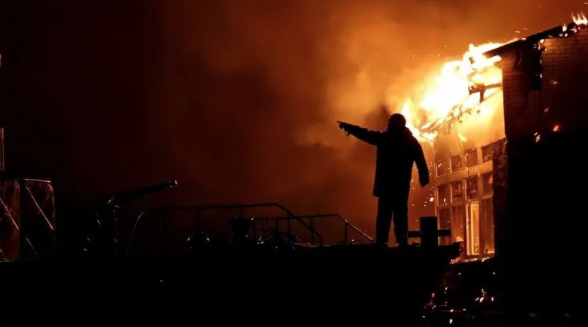
The Auckland Tenancy Tribunal recently heard a dispute involving a tenant who had sublet a property without the landlord’s knowledge. The subtenant’s cannabis operation caused a fire that severely damaged the house.
The only saving grace was that the landlord had insurance. The insurer covered house repairs of up to NZ$400,000 and the landlord’s lost rent of NZ$20,000. Apart from more than $20,000 in rent arrears, the tenant involved had to pay only the NZ$800 insurance excess.
The insurance provided crucial support in a time of need for both the landlord and the tenant.
{ad}
In this case, the tenant who had sublet the property and the property management company had carried out a routine inspection only a month before the incident, but found nothing unusual. That failure could also be considered a contributing factor in the eventual disaster.
We interviewed Bill Wang, senior insurance manager at Zhicheng Insurance, and Lawson Sun, North Shore regional manager at Guilin Property Management. We asked how insurance and property management can work together to protect the interests of both landlords and tenants.
In this case, the landlord relied entirely on insurance to minimise the loss. What risks might landlords face when renting out a property?
How can they choose insurance to protect against these risks?
Bill: There are two main types of insurance for landlords, which between them can cover almost all the different risks that may arise when renting out a property.
One is house insurance
This mainly provides the following protection:
- Malicious, deliberate or accidental damage to, or theft of, the owner’s property and possessions by tenants during the tenancy or after they move out.
- Loss or damage to the house resulting from tenants’ illegal activities during the tenancy or after they move out, such as drug use, manufacture or storage, or illegal gatherings. Cover includes post-tenancy inspection costs, cleaning, drug decontamination and restoration costs, and lost rent.
The other is landlord’s protection insurance
This offers relatively broad cover. As well as overlapping with some house insurance protection, it can cover the landlord’s lost rent, including:
- Rent lost when tenants leave the rental property without notice.
- Rent lost when tenants are evicted for failing to pay rent on time.
- Rent lost when malicious or accidental damage or theft by tenants means repairs or replacements are needed, preventing new tenants from moving into the property.
- Rent lost when public utility issues prevent the property from being rented out as normal, such as cable repairs, roadworks, or a lack of water or electricity making it uninhabitable.
Beyond dedicated landlord insurance, contents insurance is also important for protecting both landlords’ and tenants’ interests.
For example, movable appliances and furniture, electronics, luxury handbags, watches and necklaces are covered by contents insurance. Landlords and tenants are therefore advised to take out their own contents insurance to protect against losses.
One final point must be emphasised: Landlords must have a lawful tenancy agreement. If a property is rented out privately without an agreement, the insurer has the right to decline all claims.
In this case, the insurer paid because the subletting happened without the landlord’s knowledge. If a landlord knows about subletting but does not immediately notify the insurer, the insurer has the right to decline a claim after an incident.
Cover and claim limits also vary between insurers. Compare policies carefully before purchasing and choose the insurance that best suits your needs.
Will a large claim affect a landlord’s future insurance renewal?
Bill: Insurers vary considerably on this. Some offer a no-claims discount of 10%–40% to new customers or those with a good record.
If a claim is made on the customer’s property, that discount is removed the following year. A claim also affects the premium itself.
The following year’s premium will increase based on the claims record over the preceding 12–36 months, depending on the insurer, and the no-claims discount will be removed. A claim can therefore lead to a substantial increase in the following year’s premium.
However, if the customer subsequently remains claim-free for 2–3 years, the insurer will reinstate the no-claims discount.
Remember: After making a claim with one insurer, you must truthfully disclose your claims history even if you switch insurers.
If you do not disclose it beforehand, the insurer will decline your claim.
The tenant in this case ultimately paid only NZ$800. Does a landlord’s insurance also reduce the compensation tenants must pay when a house is damaged?
Bill: Yes. If the landlord has insurance, tenants who cause damage usually need to pay only a limited amount slightly above the landlord’s insurance excess, depending on the insurer. So tenants should certainly not assume that their landlord’s insurance has nothing to do with them.
When establishing a tenancy, landlords and tenants need to clarify the insurance position, including whether the home being rented has house insurance and landlord’s protection insurance. Once occupancy numbers are confirmed, they must promptly and accurately inform the insurer so the policy’s cover can be adjusted.
Then, if tenants cause an accidental fire, damage, theft or another loss, the landlord can promptly recover their losses through house insurance once the police, insurer and assessors have established responsibility. The tenant will also avoid a huge financial burden from compensation.
Again, insured amounts and the scope of claims cover differ between insurers.
How can landlords promptly detect tenants’ rule-breaking, illegal or dangerous behaviour?
Lawson: Regular routine inspections of rental properties are the most direct way to identify unusual tenant behaviour.
For example, we generally inspect rental properties every three months. Insurers also usually require owners to carry out routine inspections. During an inspection, the property manager checks the house inside and out, taking photographs and making written records of cleanliness, damage and anything else unusual.
A professional, experienced property manager will usually have a keen instinct for problems and must be particularly thorough and attentive. For example, they should understand the composition of the tenant’s household. If conditions at the property clearly do not match that household, they should be suspicious.
In this case, cannabis was being grown in two rooms. The rooms must have had unusual layouts, and the illegal wiring should also have left detectable signs.
If anything unusual is found, the tenant should be contacted immediately and asked for an explanation. Neighbours can also be approached to find out whether they have noticed anything unusual at the rental property.
In this case, lights were on for long periods in two rooms, something neighbours would normally have been able to notice.
Landlords who have not engaged a property management company can follow the same approach when carrying out routine inspections.
Unauthorised subletting by the tenant was arguably the starting point for everything that happened in this case. How can landlords control tenants’ subletting?
How can they tell whether tenants have sublet without permission, and what should they do if they discover it?
Lawson: Under current tenancy law, owners have the right to prohibit subletting of all or part of a property during a fixed-term tenancy.
However, under the new tenancy law reforms due to take effect on 11 February next year, all tenants will have the right to request subletting during their tenancy. Owners must consider the request and cannot refuse without a reason.
The tenant must first make a request before subletting. In this case, the tenant sublet without notifying the owner, breaching tenancy law.
A professional, responsible property manager may be able to detect problems promptly. During the routine inspections mentioned earlier, for example, a property manager who finds circumstances clearly inconsistent with the tenant’s household composition can question whether subletting is taking place.
They should also be alert if rent payments are made under the name of someone who is not a tenant.
If unauthorised subletting is confirmed, the owner should require the tenant to comply strictly with the tenancy agreement and demand that occupants not named in it leave immediately. The owner also has the right to seek termination of the tenancy through the Tenancy Tribunal.
In this case, the tenant’s illegal activities came to light only because of the fire. If they had been discovered earlier, what would have been the quickest way to resolve the problem?
Lawson: For ordinary tenancy breaches, such as poor cleanliness, rent arrears of no more than 21 days, or minor damage, tenancy law allows owners to issue a 14-day notice to remedy.
The notice tells tenants what they have done to breach the agreement, what they must do to put it right, and how long they have to do so.
For breaches that cannot be repaired or remedied, such as malicious damage or illegal drug-related activities, owners can apply to the Tenancy Tribunal to terminate the tenancy or seek other remedies, such as appropriate exemplary damages.
Given the particular circumstances of this case, we also recommend that owners carry out drug testing at rental properties. Testing before and after a tenancy is an effective way to protect owners’ interests and is also an insurance requirement.
If a drug problem arises but no testing was carried out before the tenancy, insurers will usually decline the claim outright, leaving the owner to bear the substantial decontamination costs.
Interviewees
 Bill Wang
 Lawson Sun