Is the land subdivision everyone is talking about really that easy? Turning from investor to developer may be more complicated than you think!
Is the land subdivision everyone is talking about really that easy? Are there no barriers to entry? Is funding all you need to get started? Does every purchase guarantee a profit?


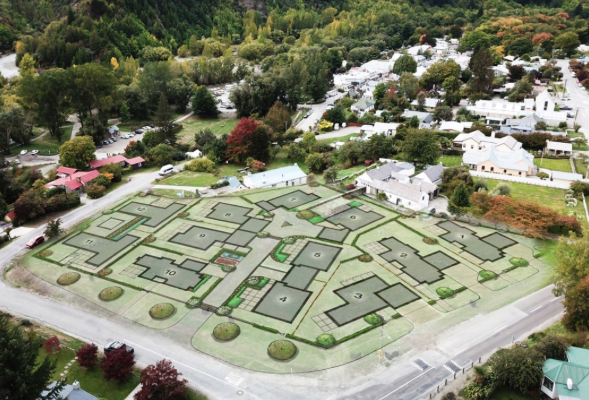
Recently, few topics have generated as much discussion in construction and investment circles as land subdivision. Before the pandemic, a wide range of New Zealand industries were flourishing. Afterwards, everyone seemed to turn their attention to property. There now appear to be just two kinds of people in these circles: those already pursuing projects and those eager to enter the market. The property and construction market looks buoyant everywhere. Yet alongside the excitement, questions inevitably arise: is the land subdivision everyone is talking about really that easy? Are there no barriers to entry? Is funding all you need to get started? Does every purchase guarantee a profit?
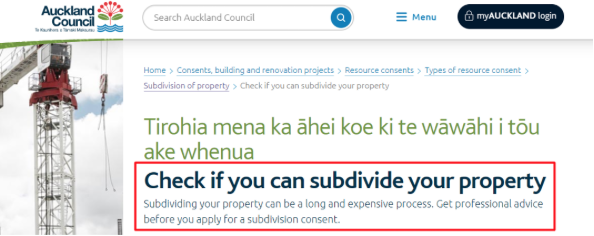
Auckland Council has already given a clear answer: subdivision can be a lengthy and expensive process, and it is essential to consult professionals before applying for subdivision consent.
Indeed, without professional support, a council refusal may not be the first hurdle. Many investors are turned away by banks at the lending stage because they lack professional experience and an established team. Banks must consider the risks of projects failing to meet deadlines or quality standards, or generating insufficient revenue. That need not put you off, however. Subdivision profits can be highly attractive. If you buy the right land, engage the right people, make the right decisions and spend where it matters, subdivision can be a sound investment choice.
To make sound decisions, you first need a basic understanding of the entire subdivision and construction process: initial planning, surveying and valuation; construction, materials and risk management during the middle stages; and marketing and sales at the end. This knowledge will help you choose partners wisely, budget sufficient funds and keep costs under reasonable control.

“It is not easy for an investor to become a developer. Without professionals alongside you, it is easy to take the wrong path,” said Hero International chairman Gavin Liu.

Hero International is a wholly locally owned and operated New Zealand business that has focused on high-quality property development since 2010. It has accumulated extensive experience in property construction and management, and projects it has helped develop and build have repeatedly won Master Builders awards. As chairman, Gavin Liu brings valuable experience on construction sites, alongside considerable achievements in property investment, construction and large-scale project management.
During the interview, Gavin said:
“I advise everyone to consider investments carefully. Buying land blindly can even lead to losses. Being a developer involves considering more factors than simply investing. Once you buy a site, subdivision requires a resource consent application, while construction requires a building consent application. Even a small mistake can mean much more work for much less return.”
“Many people consider building townhouses after subdividing land. Constructing medium- and high-density projects like these demands more experience from developers and builders. Take exterior wall materials, for example: townhouses have stricter fire performance requirements than standalone houses. If the exterior walls do not meet the required fire rating, the project may ultimately fail to gain council approval. All of this needs to be considered during initial planning,” Gavin added.
Asked which exterior wall materials they choose when building townhouses, Gavin said:
“We work frequently with James Hardie on townhouse projects, mainly because its products have certified fire performance and meet consent requirements. They also perform strongly in durability, moisture resistance and sound insulation. We have also used its Secura Flooring in townhouses. Alongside those benefits, it saves time and labour during installation, helping us keep to the construction schedule. As a leading building materials supplier, James Hardie also provides technical support and follow-up service after purchase, helping projects progress smoothly.”
You might not realise just how many considerations go into choosing building materials alone. Managing an entire project requires far more knowledge. If you are eager to invest, or have already taken the plunge, you could work with a construction team such as Hero International that offers a one-stop service. If you would like to learn more about land subdivision, you are welcome to register for this Thursday’s “Golden age of subdivision for all” seminar. We have specially invited a representative of the brand mentioned earlier, the global leader in fibre cement products, James Hardie, whose general manager of business development, Menglong Zhang, will explain “how to choose compliant exterior wall materials for construction projects on subdivided land”。