
Setting up a company for a joint development: a shareholders’ agreement is crucial
2020 could be described as the year property development became everyone’s business in New Zealand, with everyone wanting a share of the exceptionally buoyant subdivision market. Yet not everyone has the capability and experience of the “ideal developer”. Larger, more complex projects, in particular, require ample funding, extensive experience and well-established resources. Joining forces has therefore become a popular model: establish a company, acquire a development project and undertake the property development through the joint venture company, with each investor becoming a shareholder.

2020 could be described as the year property development became everyone’s business in New Zealand, with everyone wanting a share of the exceptionally buoyant subdivision market.
Yet not everyone has the capability and experience of the “ideal developer”. Larger, more complex projects, in particular, require ample funding, extensive experience and well-established resources.
Joining forces has therefore become a popular model: establish a company, acquire a development project and undertake the property development through the joint venture company, with each investor becoming a shareholder.
New Zealand is regarded as one of the easiest countries in the world in which to establish a company. But while setting one up with business partners is easy, running it successfully requires favourable timing, circumstances and relationships.
Shareholders establishing a company together is like entering a marriage. Sharing resources and risks can be a happy experience, but when the relationship deteriorates, or “divorce” is contemplated, whether a legally binding “prenuptial agreement” was signed becomes crucial.
A shareholders’ agreement is a voluntary contract that gives legal effect to arrangements agreed between a company’s shareholders.
Signing a shareholders’ agreement is not a compulsory requirement for establishing a company. However, New Zealand’s Companies Act offers shareholders limited protection and does not address every aspect of every company’s structure.
A tailored shareholders’ agreement can help prevent friction between business partners, reduce the likelihood of disputes and speed up their resolution. Both majority and minority shareholders benefit from its protection.
Case one: Minority shareholders need greater protection
In 2009, Mr A met property developer Mr B through a friend. Mr B said he wanted to develop a large Auckland property that could be subdivided into approximately 80 lots, offering an attractive return on investment.
Mr A reasoned that Mr B had been introduced by a friend, understood the development process, had extensive development experience and a construction team, and was willing and able to take responsibility for all the technical expertise and contacts needed to develop the land.
In 2010, Mr A therefore established ABC with 2 other shareholders and secured the project. Mr A held 24% of the company’s shares, while the principal shareholder, Mr B, and another shareholder, Ms C, each held 38%. Mr A alone was appointed as the company’s legal representative.
What happened next took Mr A somewhat by surprise.
• In 2012, halfway through the development, Ms C wanted to leave the company and withdraw the funds she had invested. The project stalled for a time.
• Without Mr A being informed, all of Ms C’s shares were sold to Mr B. His holding rose from 38% to a controlling 76%, making him the largest shareholder.
• Mr B consequently gained control of the entire operation. Decisions such as choosing contractors, preselling land and setting prices, which did not constitute major company decisions, were subsequently made by Mr B alone. Legally, major decisions were defined as those involving changes to more than half the company’s assets. Mr B also had sole access to all bank payments and controlled other payments and receipts.
• As this was a long-term land development project, the dividend policy provided for no dividends until the company made a profit. Clear annual accounts were not provided to shareholders, and requests for subsidiary accounts were deliberately put off. An eventual examination of the accounts revealed that Mr B had diverted company funds to his other developments, including numerous project payments and expenses unrelated to the company. Without an understanding of shareholder rights, relying solely on a “handshake agreement” was wholly inadequate to protect a minority shareholder. Mr A ultimately had to pursue his losses through litigation lasting more than 3 years.
In this case, the three parties established a company together without a shareholders’ agreement. There was therefore no shareholding exit mechanism or clear provision for existing shareholders’ pre-emptive purchase rights, additional decision-making rights for minority shareholders, or rights to inspect company accounts. This directly led to Mr A’s predicament.
Although Mr A held less than 25% of the shares, as a company founder he could have required the parties to sign a shareholders’ agreement at the outset, including the following provisions to protect his rights as a minority shareholder:
1. Restrictions on share transfers
In New Zealand, if a company has no constitution, there are no restrictions on shareholders transferring their shares. A shareholders’ agreement can address several important matters through provisions restricting shareholder exits:
First, it can prevent certain or all shareholders from selling their shares during the company’s initial operating period, for example within 24 months, or before a particular milestone, such as the granting of resource consent.
Secondly, it can specify who has the first right to purchase a shareholder’s shares if they need to sell. In case one, an agreement could have stipulated that when a shareholder sold their shares, the remaining shareholders could purchase them in proportion to their existing holdings. Ms C’s departure would then not have left Mr B
alone with a shareholding that gave him absolute decision-making power.
Thirdly, it can specify whether existing shareholders must consent to new shareholders joining. Without such a provision, a third party can easily join the company as a new shareholder by purchasing a departing shareholder’s shares.
2. Participation in company decision-making
Generally, company decision-making powers fall into two categories: those exercised by the board and those exercised by shareholders.
a. Board decision-making powers
Company directors are primarily responsible for day-to-day management and operational decisions, including signing everyday company contracts before they can take effect. If there are multiple directors, a board meeting must be held before decisions are made. Who, then, can appoint company directors? Section 156 of New Zealand’s Companies Act provides for directors to be appointed or removed by a shareholder vote of more than 50%. In particular circumstances, a shareholders’ agreement can give minority shareholders the right to appoint a director.
In case one, an agreement could have given each of the three shareholders the right to appoint a company director. Mr A could then also have become a director and participated in resolutions requiring a vote by all directors.
b. Shareholder decision-making powers
Part Seven of the Companies Act provides that most company matters can be decided by a 50% shareholder vote.
However, section 106 of the Companies Act requires a 75% shareholder vote for four matters: adopting or amending the company constitution; approving a major company transaction; amalgamating the company; and liquidating the company. Shareholders holding less than 25% therefore have relatively limited rights.
Minority shareholders can expand their rights through provisions in a shareholders’ agreement. Matters such as changing the company’s capital, taking out substantial loans, mortgaging major company assets and paying salaries to relevant shareholders can be placed on a list requiring approval from all shareholders or shareholders holding more than 75%.
There is no standard list of these rights.
Majority shareholders can, of course, also use an agreement to raise voting thresholds, or introduce mechanisms such as veto rights in specified circumstances or arrangements to act in concert, increasing their control over the company.
3. Rights to review company bank accounts and annual accounts
Under the Companies Act, shareholders have only limited rights to obtain company information. They may request it through the process set out in section 178. However, after receiving a request, directors may refuse to provide the information if they consider that doing so would adversely affect the company’s commercial interests.
If the company does not provide the relevant information, or refuses because it does not accept the shareholder’s reasons for requesting it, the shareholder’s only recourse is to apply to the court for enforcement.
Specifying in advance in the shareholders’ agreement what information must be provided openly and transparently can therefore avoid unnecessary applications and even litigation.
Timely access to relevant company information, particularly the right to inspect company accounts, is especially important for shareholders who are not also directors.
4. Minority shareholders’ rights to require a buyout by majority shareholders
A minority shareholder can use a shareholders’ agreement to require majority shareholders to purchase their shares in specified circumstances. If a shareholder has only a small holding but disagrees with the majority shareholder, this provision can help them sell their shares promptly, giving them another option.
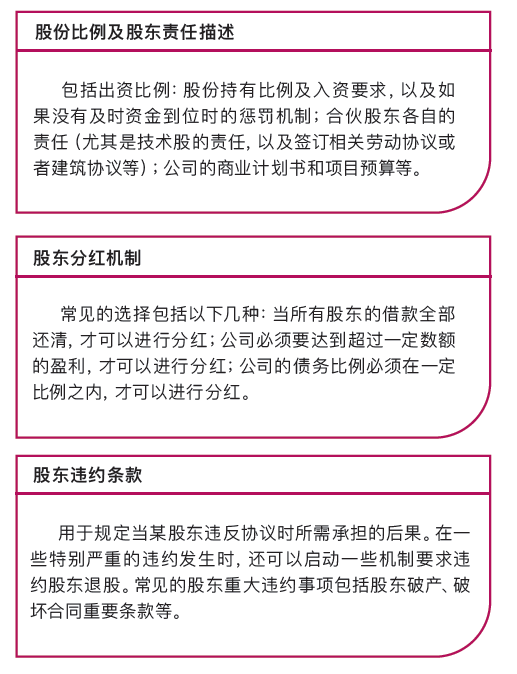
As these examples show, a shareholders’ agreement can give minority shareholders many additional rights. Beyond the rights directly relevant to the case discussed above, it can also cover shareholding proportions, shareholder responsibilities, dividend arrangements and provisions addressing shareholder breaches.
Case two: majority shareholders cannot always rest easy either
A shareholder who holds more than 50% is a company’s “majority shareholder”, but this does not mean they can make every decision independently.
The Companies Act expressly provides that major company decisions, such as selling substantial company assets or projects, or liquidating the company, require approval by a shareholder vote of at least 75%.
A recent Supreme Court judgment is closely related to this issue. In Baker v Hodder [2018] NZSC 78, an ordinary New Zealand family farm business operated through a company in which the parents held 70% and their daughter and son-in-law held 30%.
As the company’s majority shareholders, the parents decided to put the farm on the market. However, selling the business was a “major transaction” under the Companies Act. Without a shareholders’ agreement or an amendment to the constitution, it required approval by a shareholder vote of 75% or more. The daughter and son-in-law disagreed.
The parents therefore took their daughter’s family to the High Court, arguing that her refusal as a minority shareholder to approve the farm sale was oppressive, unfairly harmful and prejudicial to the company.
The High Court held that, in this case, the minority shareholders’ refusal to sell the business was unfairly prejudicial to the company. The judge therefore required them to approve the special resolution so the company could sell the farm.
The farm was sold following the judgment. However, the daughter and son-in-law, as minority shareholders, challenged the initial ruling in the Court of Appeal. After that appeal was dismissed, they appealed to the Supreme Court.
The Supreme Court disagreed with the High Court and Court of Appeal and reversed their decisions. It stated that courts should not readily exercise their powers, but should uphold statutory provisions and default requirements. Major decisions must receive a 75% shareholder vote; otherwise, the legal process for passing a special resolution should be followed.
The Supreme Court also emphasised that, when voting on a major company transaction, shareholders are not obliged to consider the interests of the company or other shareholders. Each shareholder may decide and vote according to their own interests.
Such situations also arise frequently in property development companies. If two shareholders hold 70% and 30% respectively, and the majority shareholder wants to sell the project as a package while the market is strong but the shareholder holding 30% disagrees, the majority shareholder cannot make that decision. The importance of a shareholders’ agreement in protecting one’s interests is clear.
A shareholders’ agreement can also introduce mechanisms for resolving disputes or deadlocks. It needs to define “deadlock” and the mechanisms for resolving it very clearly.
This provision is particularly important for shareholders with a 50/50 split. There are many ways to resolve a deadlock. A common approach is negotiation, followed by mediation if negotiations fail. If mediation also fails, some situations may proceed to arbitration, while others may lead directly to an auction of the company’s assets. The choice depends on how quickly the parties want to resolve the deadlock and their requirements.
Although a shareholders’ agreement is voluntary, it can provide practical protection for shareholders’ rights.
Drafting a shareholders’ agreement helps shareholders consider matters thoroughly at the start of a project. Putting the agreement in place can prevent problems, reduce the legal risks of working together and avoid unnecessary litigation later.
As lawyers, we believe both majority and minority shareholders have commercial interests they need to protect and actively pursue, and should clearly understand all their legal rights.
When shareholders disagree or a project does not progress as expected, our approach is for both parties to understand their legal responsibilities and find a practical solution with a long-term business relationship in mind.
About the author:

Joy Yuan
Joy Yuan is a lawyer of the High Court of New Zealand and a principal at Turner Hopkins. She holds degrees in law and management, and an MBA from Babson College in Boston with a specialisation in entrepreneurship.
She specialises in commercial law, including company structures, shareholders’ agreements and establishing trusts, as well as property law, including subdivisions and property transactions.