
Will 2021 be the golden age? Promising financial prospects for land subdivision
Among G20 countries, New Zealand ranks second on the housing unaffordability index. It has become a country with some of the world's least affordable housing, particularly in Auckland, where medium- and high-density residential development has become an inevitable response to the housing crisis. This also explains the recent succession of record-breaking land sales at residential auctions, with large properties in areas allowing medium- and high-density housing particularly sought after.
Another record land sale! Large properties command a premium
In mid-September, a pair of ordinary homes built in 1960 in Pakuranga, east Auckland, sold together for an extraordinary NZ$4,050,000. Their combined land area was 1610 square metres, and the sale price was more than double their government valuation (Capital Value, CV) of NZ$205,000;
In October, a three-bedroom home in Mt Eden dating from the nineteen-50s sold for NZ$3,080,000. Although its 736 square metres of land was unremarkable among large development sites, its prime location still pushed the sale price 54% above its CV of NZ$2,000,000.
On 11 November, a 1373-square-metre property fetched a record NZ$7,060,000 at auction, prompting Barfoot & Thompson's WeChat account to declare that large properties 'command a premium'. The property at 12 King Edward Avenue, Epsom, contains 4 units dating from the nineteen-30s. The buyer's intention to subdivide and redevelop the site would appear clear.
{ad}
In mid-December, a pair of properties at 20 and 20a Mahoe Avenue, Remuera, dating from the nineteen-20s, were also marketed together and fetched NZ$6,500,000, exceeding their CV by NZ$900,000. The properties have a combined land area of 1788 square metres.
Successive land-price records repeatedly demonstrate an undeniable fact: flat properties larger than 1000 square metres are now scarce across Auckland and highly sought after by investors and developers. Barfoot & Thompson managing director Peter Thompson noted that this trend was particularly apparent in certain parts of Auckland. He identified Millwater in the north, Kuemu in the west, and Flatbush and Drury in the south, which are rapidly developing into centres, as areas likely to see explosive growth in future property projects.
New Zealand Chinese Building Industry Association (NZCBIA) president Frank. Xu said in an interview that although recent auction prices had been astonishing and explanations varied, an objective professional assessment showed that these highly sought-after
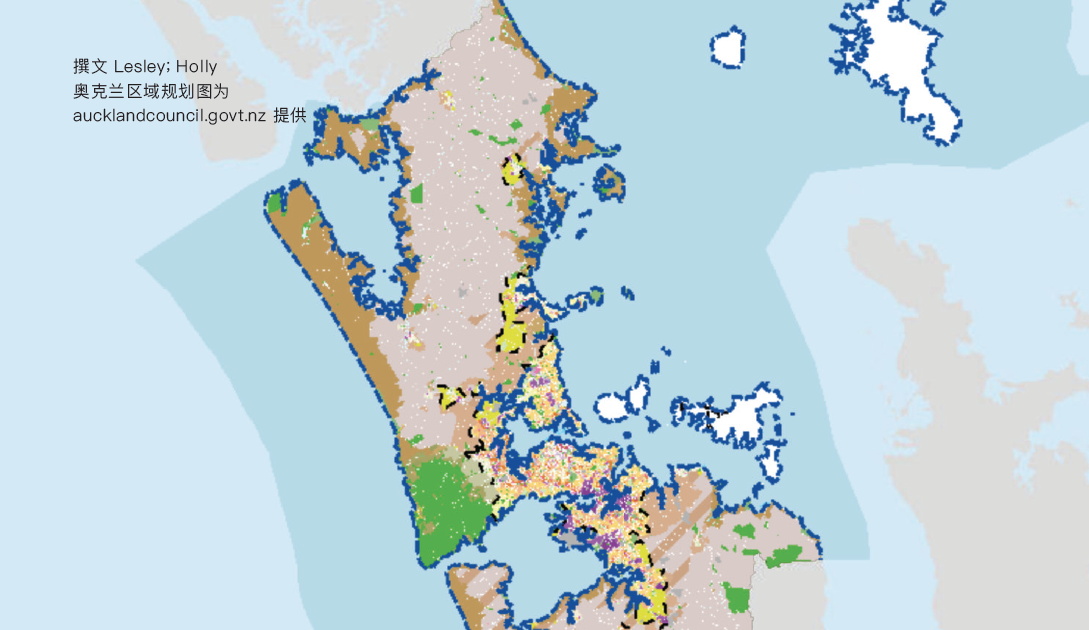
properties shared a pair of characteristics: sufficiently large sites, generally exceeding 800 square metres, and locations in areas allowing medium- and high-density housing. For example, the Pakuranga properties mentioned earlier were respectively in the Terrace Housing and Apartment Buildings Zone and the Mixed Housing Urban Zone.
The substantial profit potential from subdividing and developing a large site is a major reason investors and developers are flocking to these properties. 'Auckland currently has a housing shortage and an imbalance between supply and demand, particularly for affordable homes. Subdividing a large site and building townhouses or apartments offers enormous potential returns. This is a fundamental reason behind the buying frenzy,' Frank Xu said.
A media analysis of the property at 12 King Edward Avenue, Epsom, stated: 'Looking simply at land area, this 1373-square-metre site with a 20-metre frontage could easily be subdivided for 8–11 new homes. Under its Terrace House and Apartment Building Zone rules, if 8 three-storey homes were built, each could theoretically have a maximum internal floor area exceeding 260 square metres. Assuming a sale price of NZ$2,300,000 per home, land acquisition costs of NZ$7,060,000, subdivision costs of NZ$120,000 per home, construction costs of NZ$2800 per square metre and all-inclusive selling costs of 3%, the project could achieve a profit margin as high as 25% if entirely self-funded.'
By comparison, the major banks offer less than 1% on a one-year term deposit.
Is 'subdivision for everyone' just clickbait? Proceed carefully to manage risk
As noted above, most investors buy land with subdivision potential intending to increase its value through subdivision. The process appears simple: buy land with subdivision potential → apply for subdivision resource consent → carry out subdivision works once approved → sell the land or build homes once works are complete. Auckland therefore experienced something approaching a citywide subdivision and development craze in 2020. But can simply following the 'instructions' really deliver a fortune? Behind this straightforward process lie numerous complicated pitfalls. Subdivision can indeed increase land value and generate higher returns, but rushing to join the crowd can also leave investors mired in difficulty. '
'Subdivision for everyone' sounds rather like clickbait to me as a technical professional. Is a project as specialised and risky as land subdivision really suitable for everyone? Do not assume subdivision and development are guaranteed to be profitable. In reality, only a minority succeed.' Dylan Huang, NZCBIA secretary-general and founder of Archiland Auckland, expressed this view candidly in his closing address at the final session of the 'Golden Age of Land Subdivision' lecture series.
Dylan. Huang reminded less experienced developers that minimising risk requires care at every step and thorough investigation beforehand, rather than discovering problems during construction, sale or occupation, when remedies become difficult. Purchase contracts should require the existing owner to allow designers and engineers to carry out necessary surveys before settlement. No detail should be overlooked: even bin locations or the roof slopes of neighbouring homes can create problems, which need to be identified and resolved early. Follow the process methodically rather than rushing and skipping steps. Before architectural design begins, for example, wait for all necessary reports and obtain all required data rather than blindly trusting experience. Each discipline has its own expertise, so engineers in the relevant fields must be involved early when developing sites with potential risks. For flood-prone sites, for instance, advice from waterproofing and civil engineers is particularly important. Large projects must also consider infrastructure capacity and obtain prior agreement from the council and relevant government agencies, including discussing substantial traffic increases with the transport authority.
A lack of experience can also make financing difficult. For example, Huarong Credit chairman York. Zhang noted that banks place considerable weight on developers' and builders' experience when approving construction loans. Inexperienced small and medium-sized developers find it difficult to obtain bank lending.
Ethan Fu, an Auckland Council development engineer and guest lecturer at BIET, frequently encounters sites zoned for medium- and high-density housing that cannot be developed as intended because of various restrictions. Sometimes developers need repeated discussions with the council to address these issues. However, Chinese developers may face language barriers, unfamiliarity with New Zealand policy and legislation, or an incomplete understanding of English documents, making effective communication and resolution difficult.
Even the final sale requires careful consideration. James Law Realty Ltd founder James. Law repeatedly emphasised the importance of understanding the local market. If competing alternatives exist nearby, such as similarly priced medium- or high-density developments, or even townhouses or standalone homes, developers will struggle to achieve their expected returns.
With so many pitfalls, is subdivision and development still worth pursuing? Even the experts above, with their extensive knowledge of project risks, would answer yes. Why? To answer that, let us look at the property outlook for 2021.
Prepare well for promising financial prospects in 2021
On the direction of the property market in 2021, the overwhelming majority of forecasts from government, experts and the public point to the same conclusion: if interest rates remain unchanged, house prices will keep rising and the market will remain buoyant in 2021.
In the Treasury's Half Year Economic and Fiscal Update (HYEFU), released on 16 December, Treasury secretary Caralee. McLiesh said New Zealand house prices were forecast to rise 8.5% in 2021 and 4.5% in 2022, with total growth of 34.9% expected between 2020 and 2025. Economists' forecasts were even more striking. Westpac chief economist Dominick. Stephens believed annual house price growth would peak at 16% in June next year, before easing slightly to 12.2% by the end of 2021. 'All indicators suggest the market is gradually entering a period of readjustment, but house prices will continue rising rapidly for at least the next few months. Low interest rates are driving the current increases.'
The public is even more convinced than economists that prices will rise. ASB's housing confidence survey conducted in November found that 67% of respondents expected prices to keep rising over the next 12 months. This was the highest third-quarter confidence reading in the survey's 24-year history. ASB economists also supported this outlook, forecasting double-digit house price growth until at least the third quarter of 2021. Colliers International traditionally forecasts the coming year in its year-end market report. This year's report suggested demand would probably continue to exceed supply in the 2021 property market for the following reasons:
1. Interest rates will remain low as the Reserve Bank of New Zealand and the government continue prioritising employment and economic growth. Large-scale quantitative easing and an appreciating New Zealand dollar may continue putting downward pressure on interest rates throughout 2021.
2. The government's substantial fiscal stimulus measures, including infrastructure construction, employment support and measures to protect owner-occupied housing, will provide a considerable economic boost.
3. Skilled worker shortages will persist until border restrictions are fully lifted. This will delay construction schedules and put upward pressure on building costs.
4. New Zealand's success in controlling COVID-19 has further enhanced its established reputation as a safe haven. Overseas investor interest in local property will remain strong once opportunities to travel to New Zealand and inspect properties improve.
REINZ chief executive Bindi. Norwell believed soaring house prices were 'not sustainable. Home ownership is currently at its lowest level in 70 years. Unless effective action is taken promptly to address housing shortages and supply, the gap between renting and owning a home will continue to widen.' She said: 'We hope to hear more from the government over the coming months about its plans to reform the Resource Management Act (RMA) and address the time and cost challenges developers and builders face in residential construction. Unless large-scale construction can be delivered affordably, affordability will remain a major barrier for New Zealanders trying to enter the property market and buy their own homes.'
In fact, the previous Labour government had sought to resolve New Zealand's housing crisis from the time it took office, without success. With the indirect impetus of the COVID-19 pandemic, house prices finally surged uncontrollably. As Norwell analysed, the underlying cause remains demand exceeding supply. Alongside assistance for first-home buyers, rapidly increasing housing supply is urgent. This means further policy support for subdivision and medium- and high-density housing is an inevitable direction.
The government has already begun taking action. The clearest move was the Ministry for the Environment's release of the National Policy Statement on Urban Development (NPS-UD) in late July. Minister for Urban Development Phil. Twyford said the statement would bypass the Resource Management Act's complicated approval procedures, aiming to speed up approvals for high-density developments.
How far the government will go in encouraging medium- and high-density housing in 2021 remains unknown. However, the signs point to strong momentum for such housing in 2021, with promising financial prospects for subdivision and development.