Medium- and high-density housing puts ‘100 ways of living’ within reach in land-scarce Auckland
Most people choose to migrate to New Zealand for a cleaner environment and a better quality of life. Auckland, which has repeatedly ranked among the world’s top 10 most liveable cities, is a first choice for many. Yet after moving here, many discover a gap between expectations and reality. Auckland certainly lives up to its reputation as the ‘City of Sails’, with scenery at every turn and a relaxed lifestyle—but that lifestyle requires deep pockets.
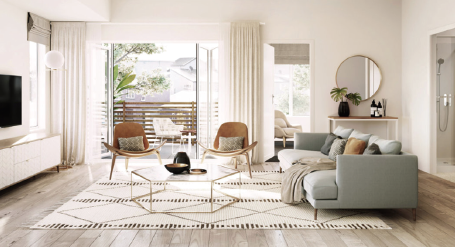
Most people choose to migrate to New Zealand for a cleaner environment and a better quality of life. Auckland, which has repeatedly ranked among the world’s top 10 most liveable cities, is a first choice for many. Yet after moving here, many discover a gap between expectations and reality. Auckland certainly lives up to its reputation as the ‘City of Sails’
with scenery at every turn and a relaxed lifestyle—but that lifestyle requires deep pockets. A settled home provides the foundation for a fulfilling working life, and for new migrants, the first major expense that can empty their pockets after arriving in Auckland is buying a house. Quality often means compromising on location; a lower price often means sacrificing convenience… Once the decision is finally made, they become ‘mortgage slaves’, with little money likely to remain each month for enjoying life after everyday expenses.
There may be 100 ways you want to live, but how many can you actually achieve?
Fortunately, the government has also recognised the imbalance between housing supply and demand and high house prices in New Zealand, particularly Auckland, and has begun vigorously promoting affordable housing projects. Although the results have been mixed, these efforts have helped establish some good communities, including Hobsonville, a jewel among Auckland’s new urban developments.
{ad}
Hobsonville: a textbook example of medium- and high-density planning
Hobsonville, in north-west Auckland, was originally a small town within Waitakere City. As Auckland expanded, Hobsonville was incorporated into the city. In 2013, Auckland Council adopted the Auckland Unitary Plan, with the aim of developing Hobsonville into a fully functioning ‘satellite town’ centred on medium- and high-density housing.
After 7 years, Hobsonville has become a textbook planning project, showing us what Auckland’s future could look like.
Hobsonville Point in particular prompted Auckland residents and investors from New Zealand and overseas to exclaim, once its medium- and high-density plan was released and construction began: ‘Who knew a densely developed Auckland neighbourhood could be this good!’
Hobsonville already enjoys the geographical advantages of flat land, nearby hills and a coastal setting. With strong government support, homes have sprung up rapidly, accompanied by well-regarded schools, shopping centres and markets, all thoughtfully laid out. Tree-lined walkways, green spaces and parks are interspersed throughout, bringing the area to life.
Meanwhile, public transport and infrastructure continue to improve, making it easy to visit Kumeu for wine tasting, unwind on the west coast, or travel to the North Shore and city centre.
Most importantly, homes here offer better value for money than those in other parts of Auckland. Some newly completed developments in particular provide larger homes and more outdoor space, making them excellent value for both first-home buyers and investors looking to hold property.
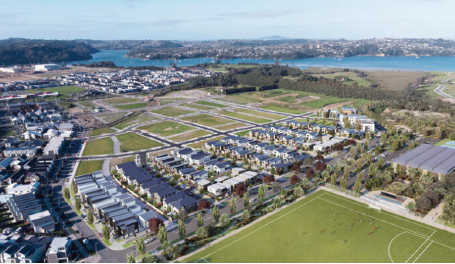
Hobson Green: a boutique development for homeowners and investors alike
Located in Hobsonville. Point, Hobson. Green is a standout among newly completed medium- and high-density housing developments.
The homes feature contemporary design, outstanding quality and premium fittings and appliances. Attractive landscaping creates a relaxing outdoor setting. Adding to the appeal are numerous well-regarded schools with a decile rating of 10, coastal cycling and walking routes, and public transport facilities nearby.
Some may wonder whether an affordable housing development can remain ‘affordable’ while offering a good location, comprehensive amenities and convenient transport.
Is it ‘Mission Impossible’? Could there be problems with funding, design or material selection? To explore these questions, YIJU New Zealand interviewed Edison Xin, executive director of Kingstone Property, the company behind Hobson Green.
Discussing the development and funding of Hobson Green, Edison said: ‘We are very confident about Hobsonville’s long-term development prospects.
We also have ample experience and funding to support the long-term planning and delivery of large projects.
With support from the team at our parent company, Brilliant Stone, we will soon deliver all 81 townhouses in the first stage of Hobson Green. The second and third stages, including shops, are also being planned. We hope to create a well-rounded, diverse community that makes residents’ lives more convenient.
’ On the project’s design, Edison said: ‘Hobson Green adopts a “classic contemporary” design style throughout.
On the exterior, alternating vertical and horizontal cladding, combined with coordinated timber elements and glass, gives the neighbourhood a harmonious, well-composed appearance. Natural timber tones complement contrasting colours for a more contemporary look. Inside, we maximise living space wherever possible to give residents more options.’
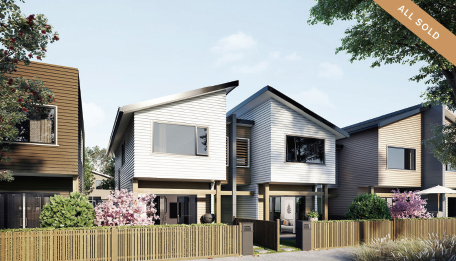
Most importantly, Edison said: ‘As an experienced developer, we select high-quality building material suppliers for our projects. For cladding and underlay, for example, we chose the global leader in fibre cement, James. Hardie. First, it is a very well-established brand. Its products excel in fire and moisture resistance, durability and sound insulation. They are also easy to install and recognised and trusted by tradespeople. Its supply and after-sales services are equally strong, meeting the needs of large projects like ours. The company checks in regularly with stock updates, helping ensure smooth progress and on-time delivery. This undoubtedly also gives us greater confidence when dealing with homebuyers and investors.’
If you are considering buying a home to live in or as an investment, Hobsonville is certainly worth considering.
Here, you can rediscover a long-missed sense of belonging without spending a fortune, putting those 100 ways of living within reach!
It is understood that the first stage of Hobson Green has now sold out.
Whether you are buying an investment property or selecting building materials for a project, look for established brands such as James Hardie that perform well across the board. They really can save considerable effort during construction and maintenance!
To better serve Chinese customers and provide more comprehensive product information and knowledge, James Hardie has launched an official WeChat account. Scan the QR code to follow!