Neighbourhoods with potential: more buyers discover the benefits of living beside the tracks outweigh the drawbacks
Far from the city centre, short on amenities and plagued by noise… Are homes along railway lines unpopular? That is old news.
Although most migrants consider New Zealand a desirable place to live, many share local Kiwis’ exasperation with its public transport. Unlike other international cities, New Zealand’s main urban centres have congested rail networks, with services falling well short of demand. Neighbourhoods along railway lines have therefore remained relatively affordable, being further from the central business district, less well served by amenities and often disturbed by passing trains.
{ad}
However, government forecasts suggest house prices will rise substantially each year until 2025. First-home buyers, predominantly young couples and families, are gradually being priced out of established central neighbourhoods. In Auckland and Wellington, people are therefore starting to think differently: buying near a railway station can keep commuting times relatively short without adding too much to the purchase price.
Auckland today: homes near railway stations now command higher prices
In a research report, Auckland Council chief economist Stan Martin noted that houses and apartments within an easy walk of a railway station, up to 500m away, were selling for more than comparable properties further away.
On the Eastern and Southern lines, properties within a 260m walk of a station are the most valuable, commanding prices around 19% higher than comparable properties further away.
Sarah West, a 30-year-old insurance broker, rents an apartment directly overlooking Newmarket railway station for an easy commute to her city-centre workplace.
She says passing trains make some noise, but the biggest annoyance comes from the station itself. “When the station’s loudspeakers come on, it feels as though the announcer is standing in my kitchen shouting through a megaphone.” Even so, she says she would not move anywhere without easy access to a railway station.
House prices in railway neighbourhoods and commuting times to the city centre
- Manukau
Eastern Line terminus; commuting time: 37 minutes.
Median house price within 500m of the station (referred to below as “price”): NZ$411,000, up NZ$18,000 on a year earlier.
- Swanson
Western Line terminus; commuting time: 54 minutes.
Price: NZ$991,000, up NZ$121,000 on a year earlier.
- Avondale
Western Line; commuting time: 31 minutes.
Price: NZ$936,000, up NZ$136,000 on a year earlier.
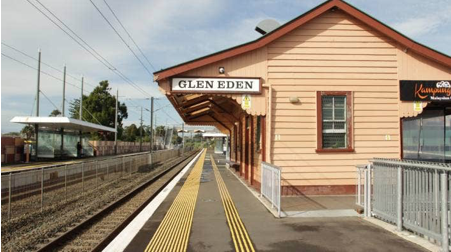
- Glen Eden
Western Line; commuting time: 40 minutes.
Price: NZ$816,000, up NZ$101,000 on a year earlier.
- Papakura
Southern Line terminus; commuting time: 50 minutes.
Price: NZ$681,000, up NZ$92,000 on a year earlier.
- New Lynn
Western Line; commuting time: 34 minutes.
Price: NZ$680,000, up NZ$92,000 on a year earlier.
- Glen Innes
Eastern Line; commuting time: 13 minutes.
Price: NZ$785,000, up NZ$96,000 on a year earlier.
- Otahuhu
Southern Line; commuting time: 25 minutes.
Price: NZ$797,000, up NZ$162,000 on a year earlier.
Auckland’s future: City Rail Link set to influence house prices
Real Estate Institute of New Zealand chief executive Bindi Norwell says that although properties along railway lines may have drawbacks such as noise, their convenient access to public transport means commuting considerations can easily outweigh those disadvantages. Home improvements such as double or triple glazing can also reduce noise effectively enough for it to cease being a problem.
“Generally, the closer you are to the city centre, the higher the median house price,” Norwell says. However, Auckland’s City Rail Link will be completed in the second half of 2024, cutting train journeys to and from the CBD by 10 minutes or more and doubling service frequencies on most lines.
According to the latest Core Logic data, median house prices in railway suburbs such as Glenn Innes and Otahuhu remain relatively low, at NZ$785,000 and NZ$797,000 respectively. Homes within 500m of New Lynn station typically cost NZ$680,000, yet the Western Line journey from the city takes just 34 minutes. Prices are even lower in Manukau, where homes near the railway sell for just NZ$411,000, reflecting their South Auckland location.
However, Core Logic senior property economist Kelvin Davidson says homes in these “commuter areas” have recorded striking value increases over the past 12 months. “What may matter more to buyers is that most homes in these areas are still much cheaper than Auckland’s median price, which has passed a million dollars.”
Colliers International head of residential project marketing Peter Evans says young professionals seem finally to have recognised the appeal of rail. “Some astute buyers have moved early into emerging suburbs such as New Lynn and Onehunga. They can sit back and enjoy the gains when prices rise. Other buyers may wait until all the amenities are in place before acting, missing the early opportunity,” he says.
Stan Martin says he is “reasonably confident” that living conditions along West Auckland’s railway corridor will improve significantly once the CRL opens. He says it will save 20 minutes on a one-way commute into the city: “Saving 40 minutes every working day would be an enormous windfall for many people, and I hope that will be reflected in property prices.”
Wellington: house prices near stations rise with the market
In Wellington, properties along railway lines generally remain cheaper than the regional median, at least for now. But as house prices surge overall, prices near railway stations are rising too.
Over the past year, Wellington’s average house price rose 22.5% to NZ$980,000, and a third of homes across the city now sell for more than NZ$1,000,000. In Porirua, however, the local median house price of NZ$800,500 is around NZ$100,000 higher than the median for homes near the railway station.
Although modern train engines are much quieter than older locomotives, long trains still produce a deep, unpleasant rumble as they travel along the tracks. Some buyers can turn a deaf ear to the intrusive noise, but for others it can be a deal-breaker.
House prices in railway neighbourhoods and commuting times to the city centre
- Crofton Downs
Johnsonville Line; commuting time: 8 minutes.
Median price within 500m of the station (referred to below as “price”): NZ$1,090,000.
- Johnsonville
Johnsonville Line; commuting time: 23 minutes.
Price: NZ$768,000.
- Ngaio
Johnsonville Line; commuting time: 10 minutes.
Price: NZ$1,070,000.
- Petone
Hutt Valley Line; commuting time: 12 minutes.
Price: NZ$900,000.
- Tawa
Kāpiti Line; commuting time: 15 minutes.
Price: NZ$821,000.
- Porirua
Kāpiti Line; commuting time: 21 minutes.
Price: NZ$644,000.
- Upper Hutt
Hutt Valley Line; commuting time: 45 minutes.
Price: NZ$661,000.
Christchurch: school zones matter more than railway disturbance
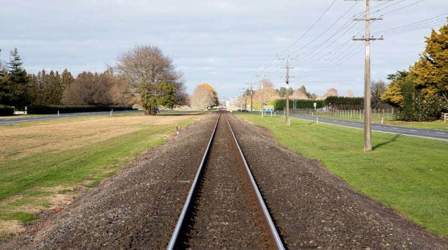
With no commuter trains and a relatively ample supply of property, Christchurch once offered buyers good-value homes along freight railway lines. Those days, however, are long gone.
Tall Poppy real estate agent Debi Pratt says: “Before the Christchurch earthquakes, homes beside railway lines could be almost 10% cheaper than comparable homes a couple of blocks away. They had to be discounted to sell.” Now, however, there are far fewer freight trains, and in a market where demand outstrips supply, buyers are less concerned.
Pratt recently sold a property on Mona Vale Avenue, immediately beside the railway, for more than NZ$1,000,000. She hosted more than 100 groups at open homes and received 12 offers. To her surprise, only a few people asked how often freight trains passed, which was actually only once or twice a day. The tracks are visible from the windows, “but people weren’t even concerned about the railway”. She says: “Many homes along railway lines are in good school zones, and people will pay whatever it takes for that.”