
Adding a child’s bedroom to your existing home is easier than you might think
As New Zealand house prices climb and homes become harder to find, many first-home buyers are being held back, while some families hoping to upgrade are also discouraged. An old Chinese saying describes creating something remarkable within a tiny snail shell—so imagine what is possible in New Zealand’s comparatively spacious homes. With ideas and creativity, you can add a playful children’s bedroom to your existing home.
New Zealand families have an average of 1.9 children, so a typical three-bedroom home generally meets their needs. But if you have more than two children, need to keep a guest bedroom available, or plan to turn a bedroom into a study or home office, you may find yourself short of rooms. Adding another bedroom for a child could help resolve your family’s space problem.
{ad}
Reasons to add a child’s bedroom to your existing home
- You and your family are happy with your current home and location
- You can borrow against some of the equity in your existing home if necessary
- You want to increase your home’s value further
- Your property has land available for an extension, or you are prepared to build upwards
- You do not want to enter a competitive property market to move house
How to add a child’s bedroom
An extra child’s bedroom can be created by extending the house, converting the loft or garage, or moving internal walls.
Consulting a professional registered architect can help you achieve a satisfying design and is also a basic requirement of the city council and building legislation. They will adapt the design to your requirements and budget, using the existing structural plans and available land. This may involve adding accessways or another storey. If the new design affects the home’s structural integrity or weathertightness, licensed building practitioners will need to carry out the work. They have the qualifications and experience required for restricted building work, such as extensions or alterations to load-bearing walls.
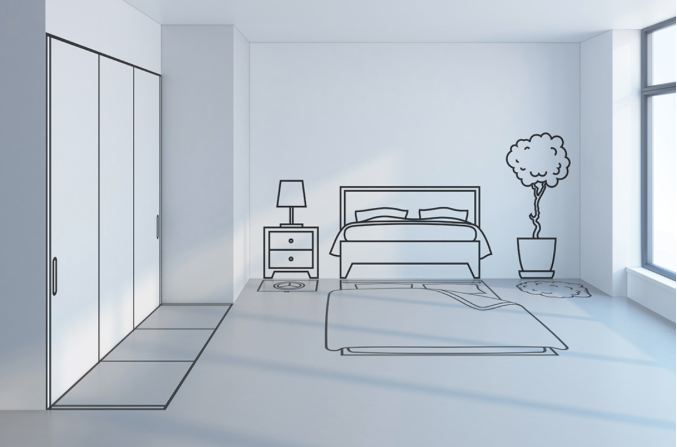
Adding a small single bedroom may seem more economical and practical, but that may not hold true in the long term. Double bedrooms are generally more popular in the market than single bedrooms. So although a single bedroom may meet your child’s needs, a double bedroom is more likely to recover the cost of the alterations and decorating when you sell.
Choosing suitable doors, windows and accessways is also important. A door opening directly outside may be unsuitable, particularly if the room is intended for a child approaching their rebellious teenage years. Windows need to meet practical requirements for daylight, ventilation and insulation, while their size and appearance should also match those already in the home.
How to decorate a child’s bedroom
Once the new bedroom is built, it is time to decorate. Decorating a child’s bedroom is an enjoyable but challenging task. Consider these tips from professional designers: they are easy to follow, make good use of space, and bring personality and playfulness to the room.
Respect their individuality
When you begin decorating, remember to consider your child’s particular interests and personality. Whether they love football, marine life or Batman, children enjoy seeing their interests reflected in their bedroom’s design. Attention to these details will help make the room feel right for your child.
Where possible, involve your child in decorating. After all, this will be their space for resting, playing and studying on their own, and for sharing with friends or siblings over the coming years, so their views deserve full consideration. Getting the whole family involved can also be a wonderful bonding experience!
Creating space
Creative storage can free up floor space. For example, brightly coloured storage boxes or crates can be stacked or fixed to the wall. Children may also like a raised bed with space underneath for a desk or storage. Particularly when decorating a boy’s bedroom, it is a good idea to include space for practical projects or activities.
A desk or workbench will often be a favourite spot in a child’s bedroom, proving useful for homework and hobbies alike.
It is best to take a long-term view when decorating. As children grow, their room may need further changes or even a complete redesign. If the room is mainly intended for play during the toddler or primary school years, keep more lasting elements in the wall paint and flooring design. The room can then be rearranged and redesigned to reflect your child’s growth.
Popular themes
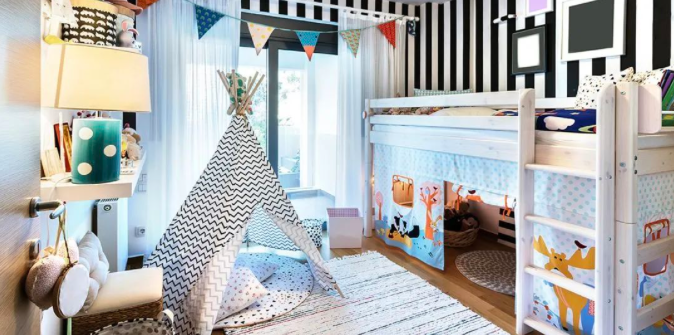
Wall art, rugs, curtains and bedding can all be replaced relatively easily and inexpensively, with little disruption to daily life. Consider using these elements to highlight popular themes your child enjoys.
Themes for girls’ bedrooms might include Disney princesses, enchanted forests, cute cartoon animals, favourite celebrities or pop groups. For boys’ bedrooms, possibilities include superheroes, cars and trains, jungles, insects, the All Blacks, the Warriors or other New Zealand sports teams. You could also choose a gender-neutral theme such as animals, marine life, beaches, sailing or space. Let your budget and your child’s preferences guide your creativity, or keep the décor simple and consistent using their favourite colours.
Wall paint
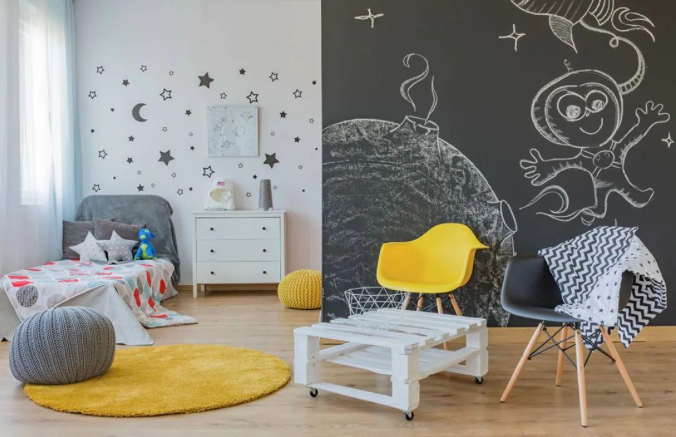
Be bold and creative with wall paint rather than sticking to neutral background colours. Consider starting with a base coat in a basic colour, then adding wall art or decals to suit the room’s theme. Leaving an area as a chalkboard wall is another good idea, giving your child somewhere to draw freely and use their imagination.
Decorative rugs
Even a small rug can bring plenty of fun to a child’s bedroom. If you and your child like a transport theme, for example, choose a rug printed with streets and railway tracks so they can drive toy cars around it. For a jungle-themed bedroom, choose a rug featuring various animals against a bright background. These rugs are readily available at major homeware stores.
Furniture and furnishings
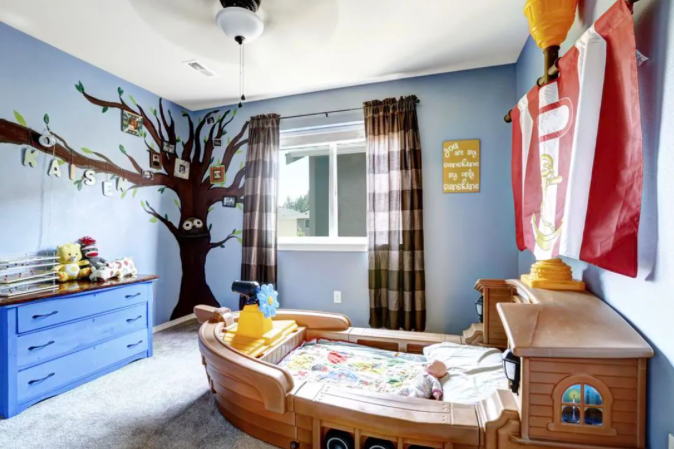
Design and buy bedroom furniture to suit your child’s age and the available space. For safety, choose sturdy, durable furniture. Accessories can help the bed fit the room’s overall theme. A car-shaped bed frame, for example, is a great choice for a transport- or car-themed bedroom, made even more distinctive with matching drawers, a desk and a chair.
Hanging photographs or putting pictures on the walls can also strengthen the room’s overall theme. Fixed wall shelves can display toys and ornaments that suit it.
Above all, remember not to crowd beds with fluffy cushions and soft toys, especially for younger children. If your child likes them, the floor or rug may be a better place for them.