
LVR restrictions officially return, but the housing market remains red-hot! Reserve Bank warns it will keep tackling house prices until satisfied
Yesterday, the Reserve Bank of New Zealand formally reinstated loan-to-value ratio (LVR) restrictions to curb the current housing market boom. Their return means investors now need a 30% deposit to buy property. Tighter controls will follow two months later, with the investment property deposit requirement rising to 40% from 1 May.
Industry analysis: a 30% deposit requirement will have little impact on the housing market!
Industry figures say raising investors’ deposit requirement to 30% has not had a pronounced impact on the property market, because the financial gains from rising house prices far outweigh the additional financing proportion investors face. With the global economy subdued and central banks around the world flooding markets with liquidity, property is currently the only investment that preserves its value. New Zealand’s low interest rates will keep investors enthusiastic about housing. LVR restrictions are not expected to affect house prices until tighter lending rules take effect on 1 May.
{ad}
1: monthly property sales hit a 17-year high; Auckland median house prices trend downwards
We learned from Barfoot & Thompson, New Zealand’s largest locally owned real estate agency, referred to below as Barfoot, that Auckland’s January property sales reached a 17-year high.
Barfoot managing director Peter Thompson said: “Auckland property sales continue to surge despite the pandemic. January sales reached a 17-year high, with large numbers of buyers still active in the market. Even during the previous peak, we never achieved such high sales volumes in January.
In January this year, Auckland’s median house price trended downwards compared with last year. Data shows it fell 2.2% from last December, although it remained clearly higher than in January of the previous year.
Peter Thompson said that although the average price in January was 2.2% below December, this did not mean prices had peaked.
January is traditionally a quiet month for the housing market because of the holidays. Even so, it delivered its strongest performance since 2013, far exceeding the same period in previous years.
Prices rebound in February as properties worth over a million become hot favourites
Barfoot’s February data shows Auckland property sales in February were stronger than during the previous peak, from 2015 to 2017. Both prices and sales volumes rose, with no sign that house prices had been restrained.
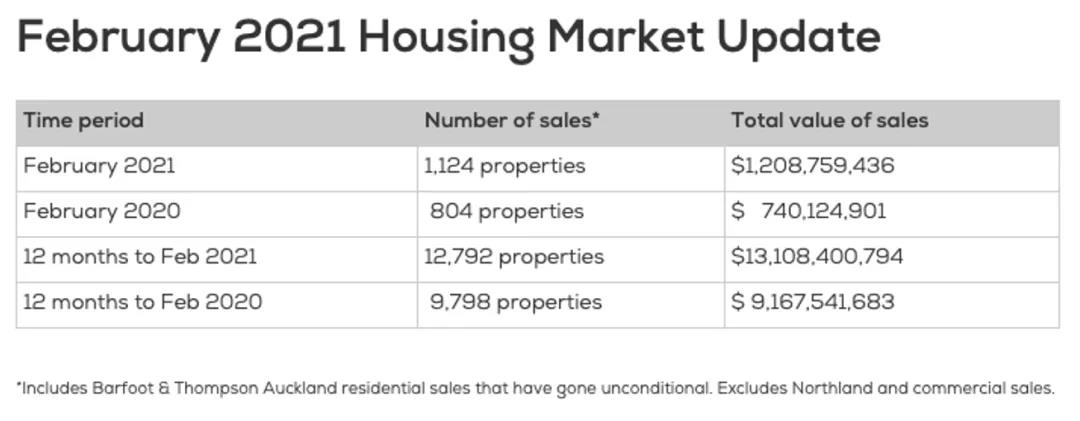
Peter Thompson said: “More than half the homes sold this month fetched over NZ$1,000,000. The median house price rose 3.6% from January, while the number of homes sold for more than NZ$1,000,000 was 7% higher than in January.
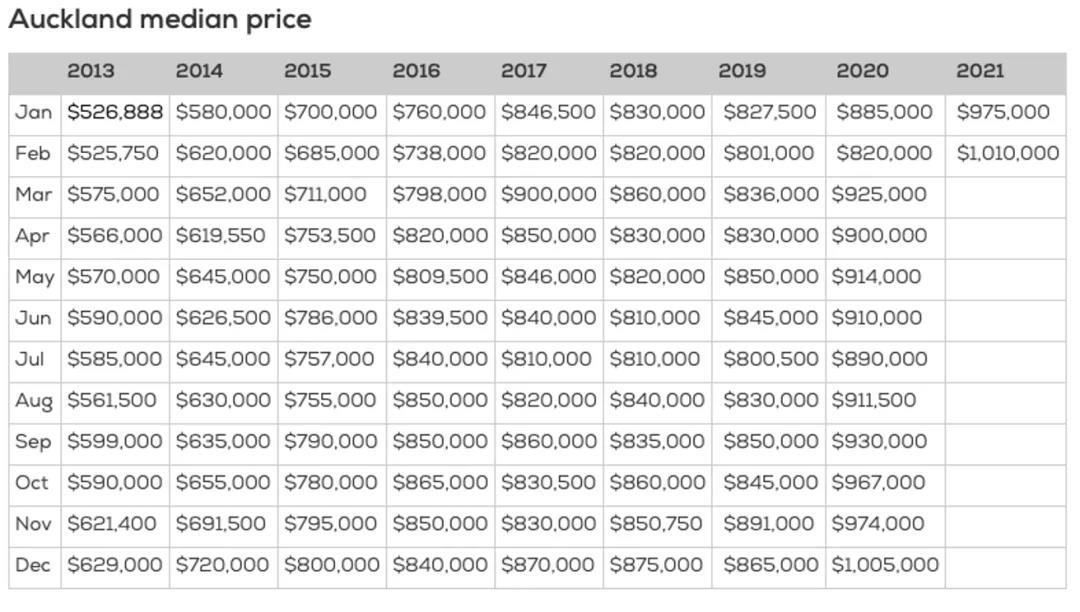
Peter Thompson said: “This percentage increase highlights the significant recent shift in prices. These figures show that February brought neither a reduction in Auckland buyer demand nor a restraint on house price growth.”
New Zealand’s largest agency calls for listings as housing stock runs low
Auckland recorded remarkable property sales in January and February this year. New listings far exceeded the same period in previous years, reaching an 8-year high. Yet even these numbers could not meet current housing market demand.
Peter Thompson said: “Our housing stock is currently very low, and we urgently need substantial numbers of new listings to meet demand in this hot market.”
Buyers and sellers alike have their sights set on the gains available in the booming housing market. Some sellers believe it is currently a seller’s market. Concerned that new lending restrictions could cool the market, lower prices and even make poorer-quality properties difficult to sell, many rushed to list before LVR restrictions returned.
High-end property sales decline as the CBD apartment market faces a chill
A recent Barfoot report shows that Auckland’s high-end property sales have declined since the start of the year. Sales of homes priced at around $2,000,000 were down compared with the final three months of last year. Peter Thompson said high-end sales fell because people were still celebrating Christmas and New Year in January. He said the CBD apartment market was currently the segment hardest hit by the pandemic. Border closures had prevented international students from returning to study, cooling the CBD apartment market and causing a marked decline in sale prices for the small apartments popular with those students. Overall, the apartment market remained subdued, with most apartment investors choosing to wait and see.
Suburban homes become new favourites as sales surge at the start of the year
The rise of remote working in recent years has made suburban homes new favourites among investors and owner-occupiers. Data shows the suburban property market also made an exceptionally strong start to this year, with sales volumes tripling compared with previous levels.
Peter Thompson said: “As more people are able or willing to work from home, suburban properties will become increasingly popular, generating strong demand.”
North Shore property remains the favourite, leading regional sales
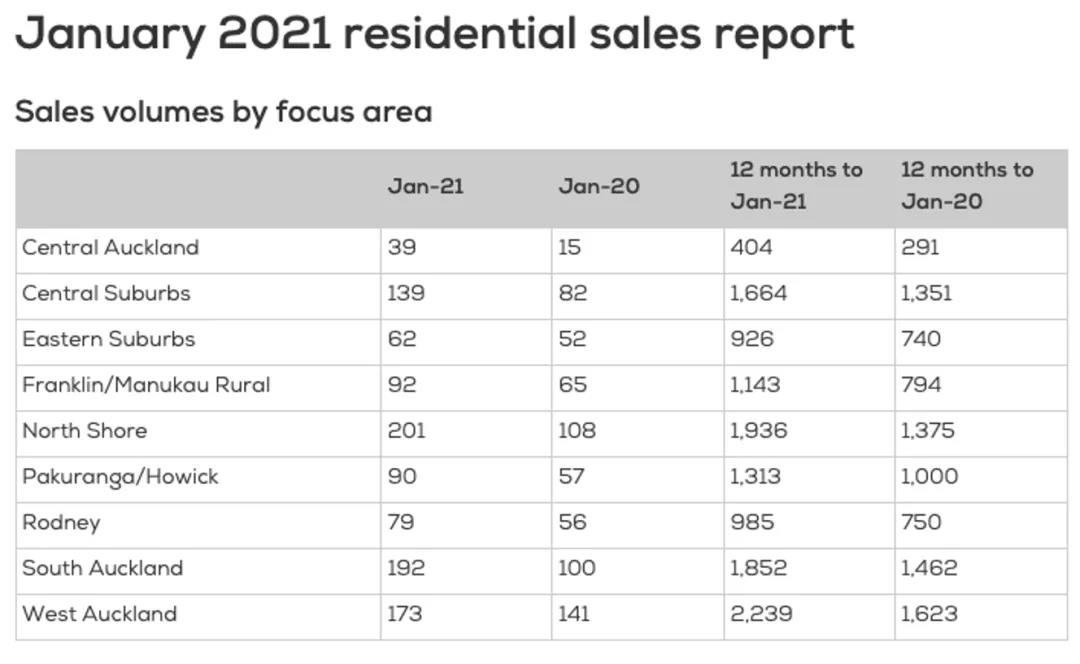
Barfoot’s January sales data shows the northern area remained the most popular location for investors and owner-occupiers, holding the top position for a second consecutive year. Sales in the south and west followed closely. Notably, apart from the north, the south recorded the fastest year-on-year sales growth in January.
Central Auckland has long appealed to owner-occupiers and investors because of its prime location at the heart of the city and its quality schools. However, with central house prices currently so high, some investors have shifted their focus to the south, west and other areas where they still have an opportunity to enter the market.
A last-minute rush: the return of LVR restrictions adds heat to the housing market
Auckland’s housing market remains hot despite the pandemic, with most investors choosing to enter before LVR restrictions return. Although raising the financing requirement to 30% has had little impact on the property market, most investors say they “still want to minimise the proportion of their own investment funds committed”. This is also a key reason sales have continued to heat up since the start of the year.
A report from the Real Estate Institute of New Zealand (REINZ) this year likewise identified investors and owner-occupiers moving quickly before LVR restrictions were reinstated as the main driver of Auckland’s persistently hot housing market, pushing sales above the same period last year.
Reserve Bank warns the property market: if LVR restrictions do not work, more measures will follow
LVR restrictions officially returned yesterday. Just last month, however, the Reserve Bank warned property investors: “If LVR restrictions do not work, further measures will be introduced to curb the current rise in house prices.”
Reserve Bank Governor Adrian Orr said: “We believe the return of LVR restrictions will have an impact on the property investor market. If it does not, we will keep working until we are satisfied!”