
Latest rankings released! These 67 New Zealand areas are the luckiest for house-price gains. Is your area on the list?
Over the past five years, house prices in 67 New Zealand areas have risen by at least NZ$500,000, with some gains even exceeding NZ$1,000,000. These astonishing amounts far exceed most people's earnings over the same period, making these areas New Zealand's luckiest for house-price gains.

According to OneRoof's latest house price index, Auckland currently has 28 areas among New Zealand's largest house-price gainers, while another 22 are in Wellington. Some homes in these areas have risen in value by more than NZ$1,000,000.
{ad}
The ten luckiest areas revealed: Auckland and Wellington's premium suburbs are the market's biggest winners
The ranking of house-price gains across 67 areas shows that the largest increases are concentrated in Auckland and Wellington's premium suburbs. Central Auckland's Herne Bay tops the list, with a five-year increase of NZ$1,080,000, making it the area with the largest house-price gains in New Zealand.
Wellington's affluent Oriental Bay ranks second for house-price gains, behind Auckland's Herne Bay, with an increase of NZ$915,000.
Central Auckland's Saint Marys Bay is New Zealand's third-luckiest area for house-price gains over five years, with an increase of NZ$862,000.
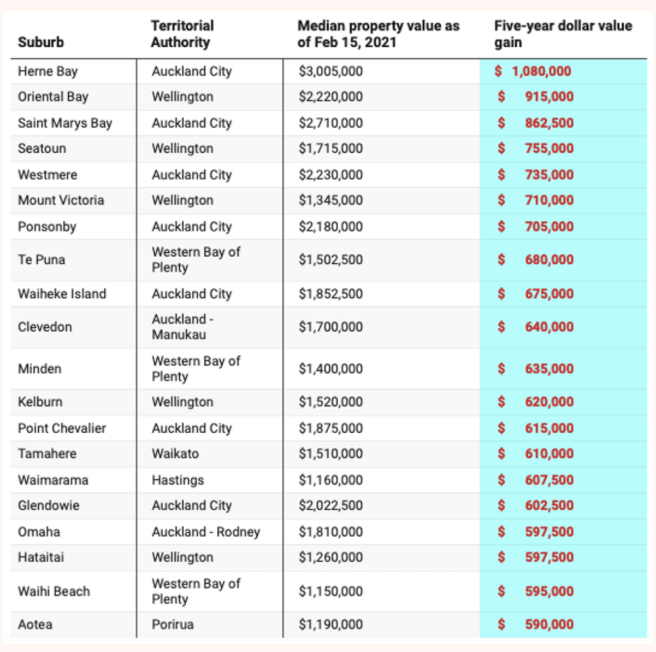
The table shows that Seatoun in Wellington, Westmere in Auckland, Mount Victoria in Wellington, Ponsonby in Auckland, Te Puna in the Bay of Plenty, Auckland's Waiheke Island and Clevedon in Auckland's Manukau area have also seen astonishing house-price growth over the past five years. These 7 areas recorded gains ranging from NZ$755,000 to NZ$640,000, securing their places among New Zealand's ten luckiest areas for house-price increases.
There is a saying in New Zealand's housing market: “New Zealand's best city is Auckland, and Auckland's best place is Herne Bay.”
The data shows that Herne Bay house prices rose by NZ$510,000 in the pandemic year alone, making it the area with New Zealand's largest house-price increase.
Herne Bay's median house price now exceeds NZ$3,000,000, firmly establishing it as New Zealand's most expensive and luxurious area.
Wilson, director of valuations at OneRoof's data partner Valocity, said: “As one of Auckland's most affluent suburbs, Herne Bay's premium waterfront views make it a favourite with wealthy buyers. The sharp jump in values also reflects the scarcity of homes in the area.
Leading local agent Edward Pack said: “Herne Bay is very distinctive and highly sought after. Its exceptional location and scarcity of land offer a lifestyle close to the city that is hard to find anywhere else in the world.”
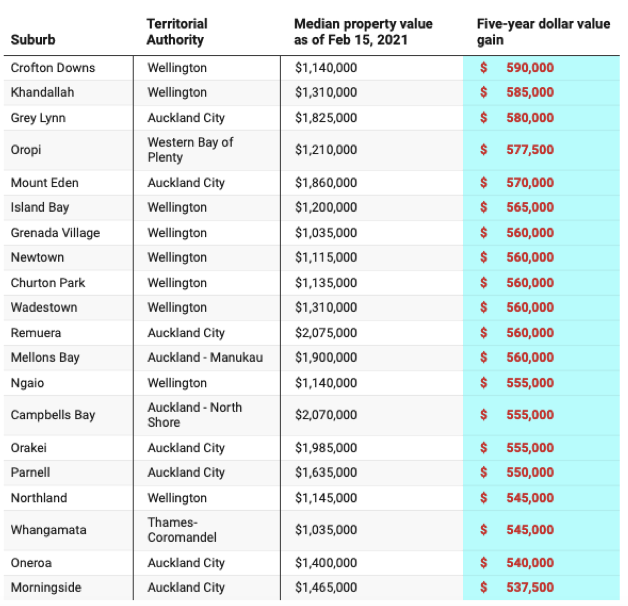
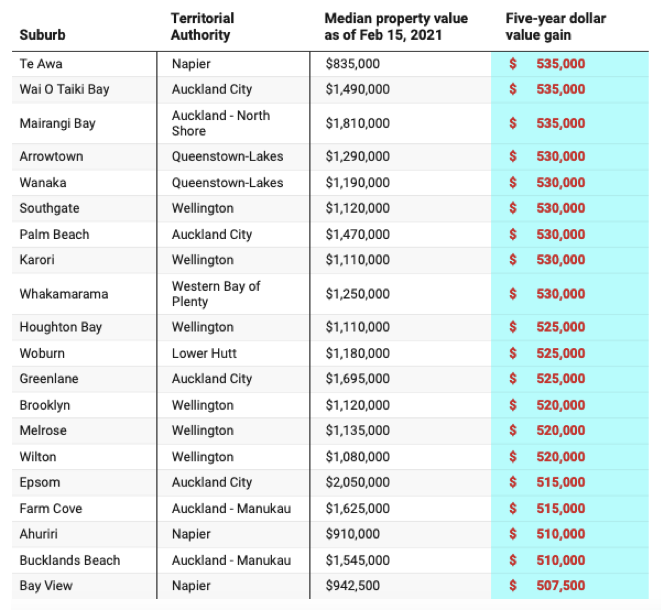
The data shows that other Auckland areas with five-year gains exceeding NZ$500,000 include Remuera, Orakei, Mt Eden, Ponsonby, Pt Chevalier, Gray Lynn, Kingsland and Parnell. These areas remain buoyant and popular with investors and owner-occupiers.
Parts of Wellington have also seen substantial growth. Over the past five years, the median house price in well-known Oriental Bay rose 70%, an increase of NZ$915,000 second only to Auckland's Herne Bay. This brought the area's median house price to NZ$2,220,000, making it New Zealand's second-largest gainer.
In beautiful Seatoun on Wellington's eastern coast, home to the film industry, the median house price rose by NZ$755,000 to NZ$1,715,000, making it New Zealand's third-largest gainer over five years.
Also in Wellington, centrally located Crofton Down has a median house price of NZ$1,140,000, up NZ$590,000 over the past five years. Wellington areas matching this increase include Newton, Churton Park, Wadestown, Karori, Houghton Bay, Brooklyn, Melrose, Wilto, Berhampore, Aro Valley and Island Bay.
Wilson said: “Owner-occupied homes in areas such as Miramar and Mount Victoria are seeing renewed market activity. With the impact of the pandemic, the first buyers jumped straight in, but now we are seeing them move towards the traditional owner-occupier market. We are seeing them begin to follow their own homebuying priorities.”
kiwi returnees favour seaside homes, with Napier and Hawke's Bay popular among investors
One set of figures shows that returning New Zealanders bought 25% of homes last year. These buyers said they were more interested in homes near the sea or close to a beach.
The data shows that, as at 15 February 2021, median house prices in Napier's Te Awa, Ahuhiri and Bay View had risen by between 117% and 178%. Average prices in all three areas were below NZ$500,000 five years earlier.
James Wilson, director of valuations at OneRoof's data partner Valocity, said Napier had performed exceptionally well over the past decade. Its relatively low house prices compared with other places, together with its renowned coastal scenery, made it a preferred destination for investors.
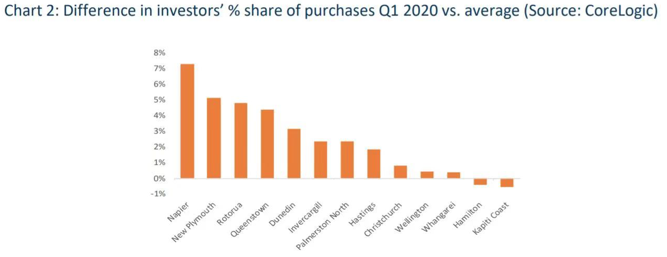
CoreLogic data shows that investors account for a very large share of Napier's housing market. Their strong interest is also an important factor driving house-price growth in the area.
Although most areas on the list have median house prices above NZ$1,000,000, 3 areas in Hawke's Bay still have prices below NZ$1,000,000.
He said Hawke's Bay house prices had risen sharply in recent years. The data shows that many Auckland buyers have made Hawke's Bay their preferred investment destination. The influx of buyers has increased housing demand, pushing prices up in turn.
Coastal properties become a leading choice for investment, retirement and owner-occupation, with house-price gains in the Bay of Plenty and elsewhere outstripping most Auckland areas
The data shows that homes in coastal and harbour areas have also recorded dramatic growth over five years. In Hawke's Bay and the seaside village of Waimarama, for example, average prices rose by NZ$607,000 to NZ$1,610,000. Whangamata's housing market likewise recorded a five-year rise of NZ$545,000, a gain exceeding those in most Auckland areas.
House prices at Waihi Beach in the Bay of Plenty also rose substantially, increasing by NZ$595,000 over five years to a median price of NZ$1,150,000.
Gary Alway of Waihi Beach said many factors had made the area more attractive, including widespread access to fibre broadband, allowing people to work from home. He believed the pandemic had made many people realise that life offered options beyond the big cities.
He also said Waihi Beach had long been Waikato's playground. Another possible factor driving house prices higher was the gradual retirement of generations of local farmers, who were choosing Waihi Beach as their retirement destination.
Gary Always said Waihi Beach was an ideal place to retire. Farms once worth NZ$500,000 were now worth NZ$8,000,000. Rather than passing them down through sales to their “children”, who could not afford the farms, owners were selling directly to retirees seeking a place to spend their retirement.
Wilson said interest in coastal properties had surged over the past year or so as inflation arrived and people were unable to travel overseas.
The price-growth figures in this ranking show that, beyond the traditionally desirable areas of Auckland and Wellington, coastal properties have attracted considerable attention in recent years. As lifestyles change, many people are turning to these scenic seaside areas for investment, their own homes and retirement, driving gains that have outstripped those in most Auckland areas.