
Major news! New Zealand's tax system ranks third in the world! Inland Revenue plans a crackdown on tax evasion: is legitimate “tax avoidance” really possible?
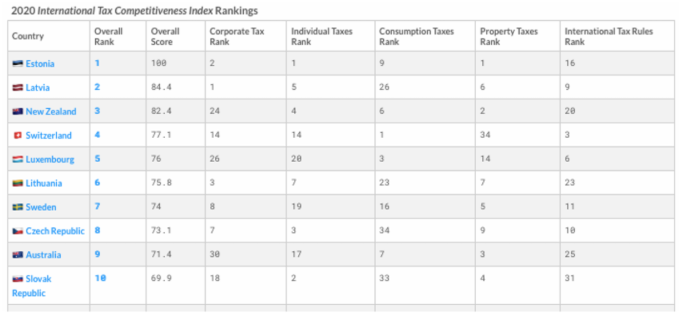
A recently published report from the US Tax Foundation, the “2020 International Tax Competitiveness Index”, shows that New Zealand ranked third globally in 2020, with an overall score of 82.4.

A recently published report from the US Tax Foundation, the “2020 International Tax Competitiveness Index”, shows that New Zealand ranked third globally in 2020, with an overall score of 82.4.
{ad}
The rankings show that New Zealand's individual income, consumption and property taxes are among the world's best because of their relatively low rates and well-designed structures. However, its corporate income and international taxes lag behind other countries because of their higher rates.
Estonia tops the table thanks to its excellent tax system, followed by Latvia with 84.4 points and New Zealand in third place. Positions 4–10 are occupied, in order, by Switzerland, Luxembourg, Lithuania, Sweden, the Czech Republic, Australia and the Slovak Republic.
Compared with 2019, New Zealand dropped one place, from second to third globally, because of the pandemic's impact.
The assessment explains that a tax code's competitiveness is scored according to each country's marginal tax rates (MTR). A marginal tax rate is the proportion of additional income that a business or individual pays in additional tax.
Tax neutrality is another key measure. Generally, the more complex a tax code becomes, the more neutrality it sacrifices.
The assessment ranked 36 countries across five tax areas: corporate income, individual income, consumption, property and international taxation. New Zealand's relatively high corporate income and international taxes placed it lower among the 36 countries, at positions 24 and 20 respectively. This means domestic businesses and overseas income face higher marginal tax rates.
New Zealand's individual income, consumption and property taxes are relatively low. All three rank ahead of many other countries and enjoy international recognition and praise.
The report says New Zealand has a relatively effective system for taxing labour income. It has relatively stable, low individual income taxes, well-structured property taxes and a broadly applied value-added tax. New Zealand also exempts capital gains from tax, with a combined top tax rate of 33%. These favourable features distinguish New Zealand among the 36 countries assessed and have earned it considerable international acclaim.
Inland Revenue will crack down on tax evasion: is legitimate “tax avoidance” really possible?
A competitive tax code maintains low marginal tax rates, while high marginal rates may encourage tax evasion. We have recently learned from industry insiders and media reports that Inland Revenue has announced a forthcoming crackdown on tax evasion in the real estate agency sector, aimed at addressing excessive expense claims.
Although New Zealand's three major tax categories enjoy a strong international reputation, tax evasion still occurs frequently. Tony, a well-known chartered accountant at New Zealand's Bocheng accounting firm, said: “Starting a business in New Zealand is very hard for Chinese people. Most Chinese-owned businesses are small, and employers often do the work themselves to save on staffing and other expenses. Yet we still frequently see Chinese employers repeatedly fined for tax evasion.”
So is it possible to use legitimate “tax avoidance” methods without evading tax? Chartered accountant Tony says that, in appropriate circumstances, it is entirely possible!
Below, Tony shares practical methods for businesses and individuals to legitimately reduce tax in 2021. We recommend saving these tips after reading them, as they could help reduce your tax costs.
A leading New Zealand tax expert presents: 2021 tax-saving advice for the year: 12 tips for legitimate tax savings, each delivering immediate results!
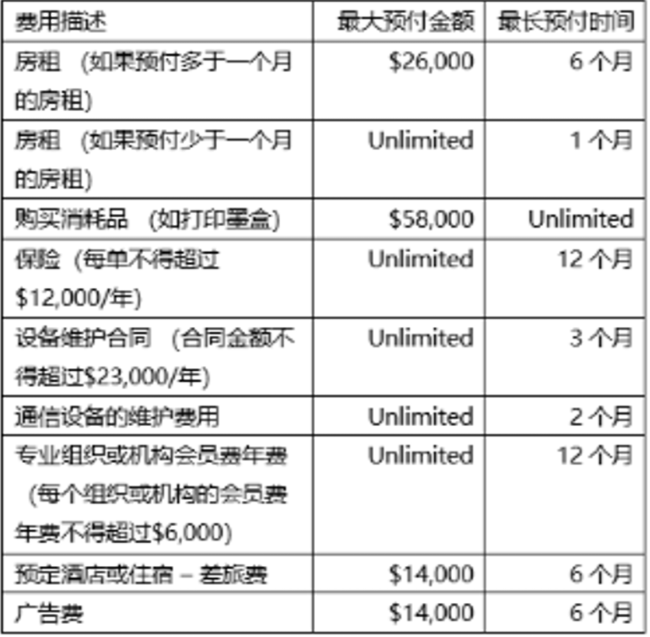
1 Prepaid expenses: These involve paying now for future expenses, such as stationery, newspaper subscriptions, road user charges for diesel vehicles or road tax, courier tickets or postage stamps, council rates, water charges, and prepaid audit or accounting fees. These can all be deducted from current-period profits. The following prepaid expenses may also be deductible from current-period profits if certain conditions are met. Employees' holiday pay, bonuses or commissions. Holiday pay, bonuses or commissions payable but unpaid before 31 March can be tax-deductible. However, they must be paid to employees before 3 June to qualify as deductions against current-period profits. If payment is not made before 3 June, the deduction must wait until the following year.
- Stocktaking and inventory valuation. Inventory must be valued at cost. A lower market value can be used only when the goods' market price is below their cost. Obsolete stock cannot simply be deducted for tax in the current period. From a tax perspective, consider minimising such stock, disposing of it, or valuing it at market prices. If you use accounting software to record inventory movements, obsolete stock must be written off in the inventory system; otherwise, it cannot be deducted.
- Repair and maintenance expenses. If you are already considering repairs or maintenance to equipment or premises in the near future, bringing the work forward to before 31 March would allow those costs to be deducted from current-period profits.
- Bad debts are receivables that a business cannot recover or is highly unlikely to recover. If you cannot recover a debt, you can write the receivable off in your system before 31 March and claim it as a bad-debt deduction in the current period.
- Allocate some income to your spouse, children or other relatives who work for you, reducing your own pre-tax income and obtaining a more favourable tax rate. Be mindful of the tax law's anti-avoidance provisions: some business structures do not permit this kind of income splitting. Pay allocated to family members working for you must also reflect market wages. Otherwise, Inland Revenue may adjust it, resulting in more tax and leaving you worse off.
- Home office expenses. If you use part of your home for work, an appropriate proportion of certain household expenses can be treated as business expenses. Floor area is often used to calculate that proportion.
- Review fixed assets. Fixed assets that have no value, have been lost or can no longer be used can be written off before 31 March. Losses from writing off fixed assets can be deducted from current-period profits.
- Please do not, before 3/31, change the company's shareholding, as this may affect shareholder continuity and wipe out previously accumulated losses. If a shareholding change is genuinely necessary, please consult us carefully.
- Review your contract's retention clauses, meaning clauses covering retentions or final payments. These retentions are final amounts paid several months or even years after a project is completed, provided no problems have arisen. Please be sure to notify us if this applies. Retention payments need to be recognised as income only when received.
- If you have received a customer's deposit or advance payment, but have not provided any services or products before 31 March, please be sure to notify us. The deposit or advance payment you received cannot be treated as income.
- If your top personal tax rate is already 33%, consider converting your bank term deposit to a PIE (portfolio investment entity) investment. All banks offer conventional or PIE investments when accepting term deposits. The advantage of a PIE is that its maximum tax rate is only 28%, and for individuals, 28% is the final tax rate. In this situation, you save 5 percentage points in tax.
About the author:
Tony Su

Bocheng Chartered Accountants was established in 2009. Its founder, Tony Su, is a fully licensed member of Chartered Accountants Australia and New Zealand (CAANZ),CPA Australia (CPA Australia) and the Association of Chartered Certified Accountants (ACCA). Tony has specialist knowledge and extensive experience in taxation,tax audits,business planning and business advisory work and related fields.
Tony leads a dedicated team providing companies, partnerships and individuals across different sectors with accounting,tax and business advisory services. Years of dedicated service have earned consistent praise from clients. We are tax agents registered with Inland Revenue and are Xero certified advisers and a Xero platinum partner, as well as a senior partner of Tax Traders. We offer clients FeeSmart payment options and Audit Shield (audit insurance). We are an approved training enterprise of Chartered Accountants Australia and New Zealand (CAANZ) and an approved platinum training employer of the Association of Chartered Certified Accountants (ACCA), holding Approved Employer for Trainee Development – Platinum and Professional Development status.