Now that's a humblebrag! Renovating existing homes takes know-how: see how a North Shore home's value doubled in 2 months!
In the wake of the pandemic, two trends have emerged in New Zealand's property and construction markets: a subdivision boom and a renovation wave. As favourable economic stimulus policies continue to be introduced, more investors with the means to do so are moving into land subdivision and development.
In the wake of the pandemic, two trends have emerged in New Zealand's property and construction markets: a subdivision boom and a renovation wave. As favourable economic stimulus policies continue to be introduced, more investors with the means to do so are moving into land subdivision and development. Repeated lockdowns have also prompted more homeowners to prioritise their living environment, spending money originally earmarked for overseas travel on renovating their homes. The newly introduced Healthy Homes Standards have brought many investment properties into the renovation wave too.

Whether to make their own homes more enjoyable, meet rental compliance requirements or increase property values, 35.2% of respondents to economist Tony Alexander's survey following the first lockdown said they would spend money on home renovations. Are you one of them?
Renovating an older home covers a wide range of work, including upgrading or replacing bathrooms, doors, windows, plumbing, gardens and decks. But how can you improve your living environment as much as possible while also increasing your home's value? Refurbishing and repainting interior and exterior walls deserves particular attention: it may be the most effective way to give an older home a fresh look.
Chinese people place great importance on appearances. Refurbishing and repainting interior and exterior walls can transform an older home's appearance and naturally add considerable value.
Today, we look at a successful example. Although it is not recent, it is a textbook case: refurbishing the interior and exterior walls added more than $500,000 to the value of this home in Pinehill on the North Shore, and the increase could be much greater today. Here, homeowner Jenny Lim shares her experience.
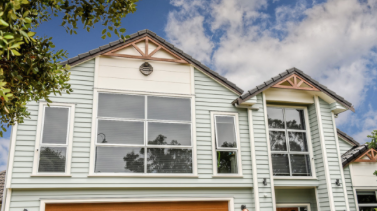
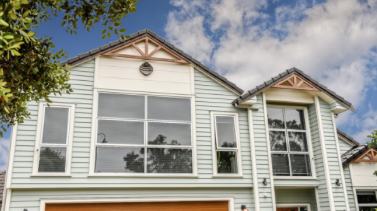
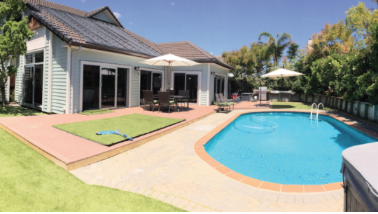
This two-storey, five-bedroom home occupies a 330-square-metre site near the sea. That may sound like a humblebrag, but having been built in early 2000, it looked somewhat dated and needed a makeover to restore its shine. With a background in building, Jenny Lim naturally had considerable experience in selecting materials. After considering the home's location, long-term maintenance and other factors, she chose James Hardie fibre cement products. Outside, she used pale blue-green Linea™ weatherboards as the main material, off-white Stria™ Cladding as an accent, and muted Morandi-brown Axon™ Panel. The combination was inspired. Inside, she cleverly incorporated HardieGroove™ soffit lining and used the same textured material on the cabinetry. Together with blue walls, these elements created a harmonious, sophisticated finish.
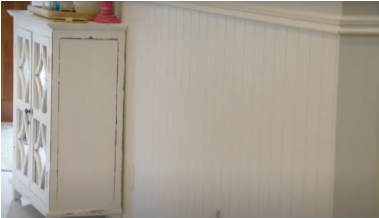
HardieGroove™ soffit lining incorporated into the interior wall renovation
In an interview, Jenny said: “When choosing wall cladding products, you need to consider practicality as well as appearance.”
“My husband and I run Namu Construction, and we often use James Hardie products in our projects. We know the advantages of fibre cement products very well: they are fire-resistant and, when correctly installed, resistant to moisture, corrosion and warping, among other things. That made James Hardie our clear choice when renovating our own home,” Jenny said.
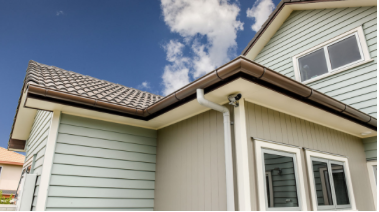
Many homeowners hesitate to tackle interior and exterior wall renovations because they fear a large, lengthy and expensive project. Jenny said the work was done in 2016. The exterior renovation took around two months and cost approximately NZ$200,000, immediately adding $550,000 to the home's value. The renovated home could also command higher rent, making the overall return on investment very strong.
As readers are likely to have many more questions about recladding, we also interviewed Zhang Menglong, James Hardie New Zealand's general manager of business development, for his professional advice.
What are the benefits of recladding?
Recladding can give your home a fresh appearance. It also allows you to identify and address problems during the work, improving the property's overall value. It offers opportunities to:
- Identify problems with and repair the house framing, flooring, underlay, balustrades or waterproof decks
- Upgrade the home to meet current Building Code requirements for external moisture
- Upgrade cladding materials, replacing sheet cladding with weatherboards
- Upgrade untreated timber framing
- Inspect and replace waterproofing layers to meet current E2/AS1 requirements
- Alter the home's internal layout
What approvals are needed for recladding?
Recladding requires building consent, even when the replacement material is the same as the original. Assessment generally takes around 3–4 weeks. Both the design and recladding work must be carried out by Licensed Building Practitioners. Involving them early is recommended to help the project progress smoothly and avoid unnecessary setbacks.
After the renovation, if your home meets the requirements, the council will issue a new Code Compliance Certificate, commonly called a 3C certificate. This will be very helpful when you sell the property in future.
How much does recladding cost?
Because every home differs in size and in the extent and severity of deterioration, contractors generally find it difficult to offer a fixed price. Quotes also depend on how much repair work is needed after the existing cladding is removed, and on the condition of the framing.
How long does recladding take?
A standalone home takes around 12 weeks on average. A larger home with a more complex design may take 16 weeks.
What should you consider when choosing replacement exterior cladding?
As homeowner Jenny said, choosing cladding involves practicality as well as appearance and design requirements. Materials need particularly careful consideration in a country such as New Zealand, surrounded by sea, with strong sunshine and damp, rainy conditions throughout the year. Our fibre cement products, designed for New Zealand's climate, address these issues well. They are durable and resistant to moisture and corrosion, effectively reducing maintenance costs. Fibre cement is also non-combustible and offers excellent fire resistance, giving homeowners extra peace of mind. Some investment properties are renovated specifically to achieve a better sale price. Alongside these benefits, fibre cement offers sound insulation and a slimmer profile, improving the living environment while maximising usable floor area.
Renovating an older home takes knowledge. To maximise its value, you need to spend wisely, identify the right work, plan carefully and choose suitable building materials. If you have further questions about renovating an older home, please send them to our editorial team. We will seek answers from industry experts.