
In depth | Voting with their wallets! Large sections in sought-after areas fetch sky-high prices: who is driving the deals?
One of the hottest topics of everyday conversation among New Zealanders recently has been the succession of large sections in established suburbs fetching sky-high prices at auction. Large sites in good school zones, particularly those zoned Terrace Housing and Apartment Building, are selling almost as soon as they are listed, at jaw-dropping prices:
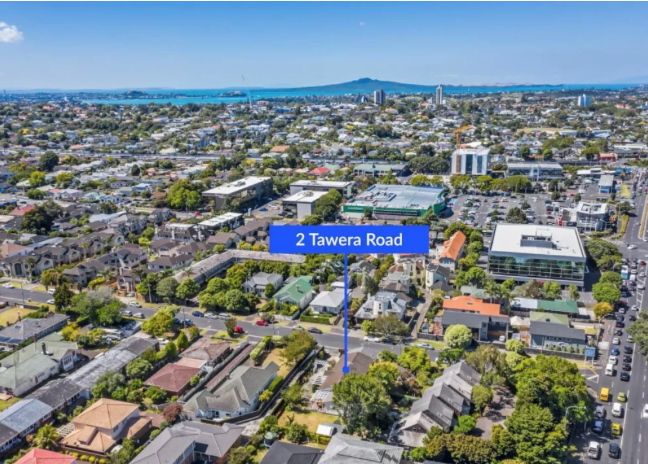
Auctioned on 9 March, 2 Tawera Road, Greenlane occupies 701 square metres, is in the Double Grammar Zone and is zoned Terrace Housing and Apartment Building. Bidding opened at NZ$2,500,000 and reached NZ$3,350,000 within just 2 minutes, when the property was declared on the market. After fierce competition among several groups of buyers, it sold for NZ$4,460,000. OneRoof data puts its capital value (CV) at $2,450,000.
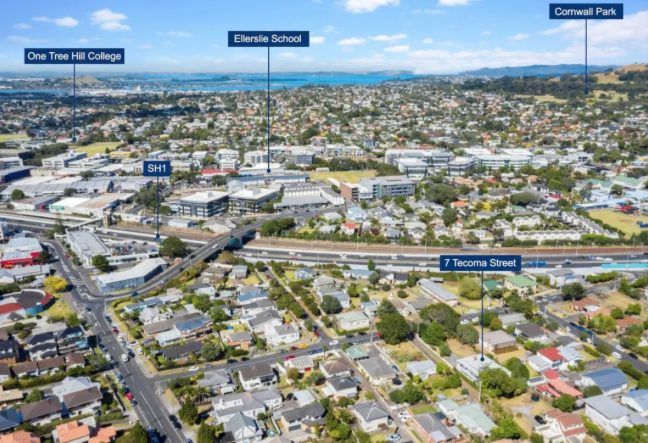
On 16 March, 7 Tecoma Street in Ellerslie also fetched an expected high price at auction. The 1075-square-metre property is in the Ellerslie School zone and is also zoned Terraced Housing and Apartment. Its significant development potential prompted sustained bidding from several developers, and it eventually sold for NZ$3,910,000. OneRoof records show its 2017 CV was $1,765,000, meaning the auction price exceeded CV by $2,145,000. Notably, the dwelling accounted for just $40,000 of its CV, with the remaining $1,725,000 attributed to the land, illustrating the remarkable land premium.
Investors and developers are repeatedly “voting with their wallets”, making soaring values for large sections in sought-after areas an open secret. Why is this happening? Who exactly is competing for these sites? Will sky-high prices persist? I will offer some observations and suggestions from the perspective of a construction and development consultant.
Why are large sections in sought-after areas fetching sky-high prices?
The reasons behind any phenomenon are complex and interconnected. Here, I will analyse the property-related factors alone, setting aside other influences such as the government's quantitative easing policies.
Since the Auckland Unitary Plan began taking effect in late 2016, much of the land in established suburbs has been rezoned for higher density. With urban resources limited, increasing density offers many benefits: concentrating residents in areas with shorter commutes can improve economic productivity; public transport can be used more fully; concentrated public facilities make daily life more convenient; and nearby shops gain a larger customer base. There are many successful examples of high-density urban planning worldwide to draw on, with Singapore a good example.
Under the new Auckland Unitary Plan, land that could previously only be subdivided into two lots may now accommodate 5 homes or more. This is also what Auckland Council wants to see: easing density restrictions in established suburbs to release more land for development, make the most of existing infrastructure and support the construction of more homes.
We can already foresee many new homes being built in established suburbs. These smaller homes could help improve Auckland's housing affordability. With well-established surrounding communities and amenities, new homes in older suburbs also have a competitive advantage over those in new areas. Education is another essential consideration: it takes years of development and proven results for a good school to gain a prestigious reputation, giving homes in the zones of long-established leading schools a distinctive advantage.
These advantages are driving prices for scarce, large, subdividable sections in established suburbs ever higher, producing one sky-high auction result after another.
Who is behind the bidding wars for large sections?
These advantages of established suburbs have not appeared overnight, and the Auckland Unitary Plan has been in place for more than 4 years. Why, then, are prices suddenly rising so quickly? In my view, prices in an open market are ultimately determined by supply and demand. The supply of large sections in Auckland's established suburbs will not increase in the short term. Over the longer term, high-quality large sites in these areas will become increasingly scarce and may even disappear. Meanwhile, more and more money is seeking to buy them. Recent buyers competing for these sites generally fall into the following categories:
- Long-term investors:
For long-term investors, the immediate purchase price is less important than the long-term return. Although the market is hot and prices are high, the development potential of these large sites means they may still meet investors' long-term expectations. Notably, recent low-interest-rate policies have also significantly increased these buyers' purchasing power.
- Construction industry professionals:
Compared with large tracts of land in new areas, development sites in established suburbs are smaller and have a lower barrier to entry. People working in construction-related fields may use their professional advantages to enter land development.
- Professional developers:
This category includes small property developers who previously bought only serviced sections to build homes for sale. The recent shortage of serviced sections in new areas has shifted their attention to development sites in established suburbs. I believe another group consists of developers who have long undertaken small and medium-sized land development projects. They may have entered the market soon after the Auckland Unitary Plan was introduced, successfully completed projects and returned to buy new stock once their capital was released.
- New entrants moving into property from other industries:
Covid-19 has severely affected many traditional industries, prompting them to seek profits in new fields. New Zealand property, which has continued to stand out despite the pandemic, is naturally an attractive prospect. As these investors are crossing industry boundaries, some deploy their capital with land development advice from professional consultancies, while others enter the property sector by investing in property project funds. Whatever their route, the role of this capital in the current surge in large-section prices cannot be ignored.
- Others:
Some buyers may combine several of these characteristics. They may work in construction themselves but, after buying a large site, intend to hold it and wait for an opportunity rather than develop it immediately.
Can sky-high prices for large sections in sought-after areas continue?
As large sections in sought-after areas sell rapidly at high prices, many people are still watching from the sidelines. Will this continue? Would entering the market now mean buying at the peak?
My view is that the imbalance between supply and demand will make high-quality large development sites in established suburbs increasingly scarce and sought after, making a substantial price correction unlikely. If these irrationally high sale prices persist, how should professional developers respond?
From a professional perspective, blind optimism about the future carries considerable risk. If a feasibility study conducted today shows limited or even negative profits, buying land at a high price means relying on future increases in the selling prices of completed homes. The risks of such a bet on the future are self-evident. In my view, professional developers facing high land prices could wait and observe the market first. If completed-home prices show a clear upward trend, such as consistently rising new-home sale prices or a substantial increase in sales volumes, target selling prices could be adjusted upwards appropriately in feasibility assessments. Conversely, if completed-home prices show no upward trend, that would further vindicate a cautious approach to land purchases and the decision not to chase rising prices.
Beyond completed-home prices, another important indicator is rental income. If supply and demand determine prices, rental income is also an important measure of that balance. Continuously rising rents indicate that housing demand genuinely exceeds supply; conversely, rents that are not rising indicate sufficient housing supply. For Build to Rent developers, rental income is also one of the most important measures in a feasibility study.
Developers who are confident about future house prices but concerned that reasonably priced land may be unavailable once their current projects are completed could also consider changing strategy and retaining some completed homes as rentals. This can provide cash flow and lay the groundwork for acting decisively when future opportunities arise.
Author:

Benny Pan
Executive Director, United Portfolio Limited
Master of Construction Management, Auckland University of Technology
Master of Business Administration, Auckland University of Technology
First-class honours degree in Mathematics and Computer Science, University of Auckland
Ice Angel investor