
The direction is set! South Auckland is poised to boom — and could become unaffordable!
Two years ago, a three- or four-bedroom house in South Auckland could be bought for around NZ$700,000–800,000. Following the latest reshuffle of the housing market, both prices and sales volumes have risen in the south. Recent auction results repeatedly show three-bedroom homes there reaching more than a million New Zealand dollars. Manukau in particular is gathering momentum, having been named Auckland's most promising area by OneRoof last year.
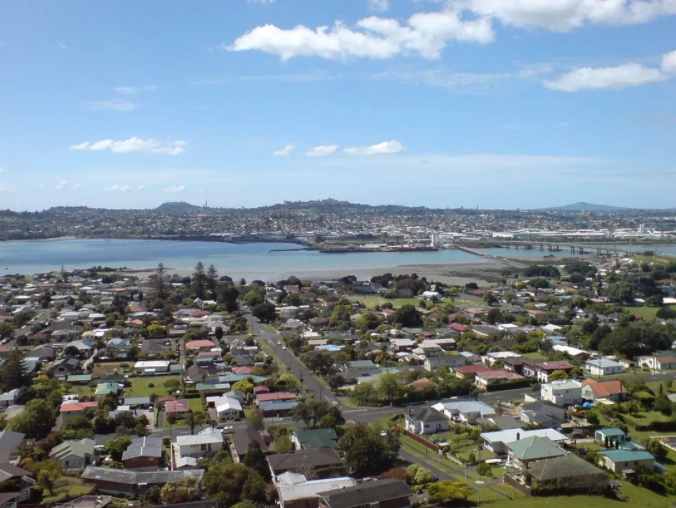
So why has South Auckland become such a sought-after area? In the writer's view, its popularity today is closely linked to government development plans and Auckland's population moving south.
South Auckland's rapid development
1
2015-2016: The fastest house price growth for two consecutive years
South Auckland's development began drawing sustained attention around 2015 and 2016, when it recorded the fastest house price growth for two consecutive years. CoreLogic data show that prices rose remarkably in 2015 and 2016, overtaking several of Auckland's prominent million-dollar areas, including central Auckland and the North Shore, to become the biggest winner in price growth.
2
2019: Auckland plans six satellite towns, with the south the preferred choice
Auckland's high house prices and living costs in recent years have made the south the most popular destination for residents moving outwards. Both in urban development planning and through its existing role as a major transport hub, South Auckland is an important part of the city's development.
In 2019, the city council in New Zealand decided to turn Franklin in South Auckland into a new development area, or satellite town, over the following thirty years, with an eventual population of 80,000. Development at Drury-Opāheke and Pukekohe-Paerata became Auckland Council's largest government planning project in 2019.
Auckland Deputy Mayor Bill Cashmore said Drury-Opāheke would see more commercial development and business areas, while Pukekohe-Paerata would focus on improving transport and increasing residential density.
Under the Government's satellite-town plans, Drury-Opāheke will gain 220,000,000 new homes, while 12500 homes will be built in Pukekohe and Paerata.
When the projects are completed over the next 30 years, Drury-Opāheke is expected to accommodate more than 80000 people and Pukekohe-Paerata 34000. Their combined population will exceed that of Palmerston North, New Zealand's eighth-largest city.
We can imagine that, with tens of thousands of new homes, increasingly established development plans and more transport hubs, Drury, Pukekohe and Paerata will inevitably experience another round of house price growth.
3
1,400,000,000 New Zealand dollars for a South Auckland transport corridor
Manukau—Drury to be the biggest beneficiary
In 2020, Auckland Council and the New Zealand Transport Agency announced an investment of NZ$1,400,000,000 in a South Auckland highway to support residential development and employment growth.
The highway will provide an alternative route from Manukau to Drury. We understand that land for the highway between Redoubt Road in Manukau and Alfriston, north of Papakura, has now been secured. Construction will begin in the second half of 2022.
The 21.5-kilometre transport corridor will transform commuting for 120,000 South Auckland residents and bring more employment and development opportunities to communities in Manukau, Manurewa, Papakura and Drury.
A recent OneRoof property report shows that house price growth in Mangere and Mangere Bridge has outpaced most of Auckland. Ray White's Tom Rawson said: ‘Everything has happened very quickly. Ray White plans substantial expansion in Manurewa and Mangere over the next six years.’
4
Auckland's transport plans for the next decade
South and central Auckland become key areas for transport network development
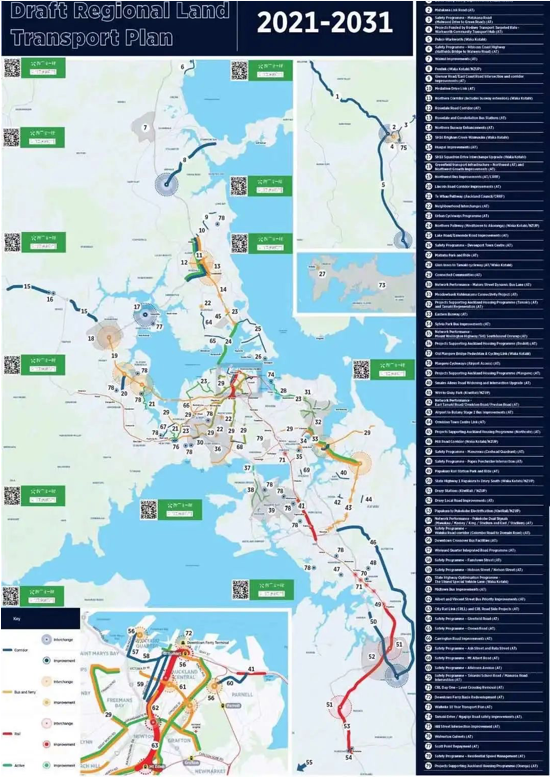
In 2021, Auckland Transport announced its ‘Auckland transport plan for the next decade’, identifying south and central Auckland as key development areas. The plan shows the Government encouraging Auckland's population to move outwards and seeking to make the south a priority area for development and housing to address population density. South Auckland's development is now the clear direction of travel.
5.
As Auckland's development moves south, Manukau becomes Auckland's fastest-growing area by population
After Auckland's long period of northward expansion, traffic pressure on the North Shore has placed a heavy burden on urban commuting in recent years. Another direction for Auckland's development is therefore southwards. According to a 2020 OneRoof report, Auckland's eight most promising areas are Northcote, New Lynn, Glen Innes, Manukau, Onehunga, Albany, Mt Roskill and Waterview. Manukau in South Auckland is the fastest-growing area by population in all of New Zealand.
Pete Evans, Colliers' national director of residential project marketing, said: ‘Manukau is currently one of Auckland's areas with the greatest development potential. In the coming years, it will be a very liveable place and, under Auckland Council's development plans, a popular choice as a future urban centre. Rail and bus hubs will be built here, main roads will be upgraded, and more new buildings will rise.’
As demand for housing in Manukau heats up, property transaction volumes have soared. Three adjoining properties at 32 + 34 + 36 Sullivan Avenue, Mangere Bridge, Manukau City recently attracted strong investor and developer interest as soon as they were listed. Together, the properties cover 2496 square metres of flat land, potentially divisible into 21 lots. Zoned Mixed Housing Suburban and close to local waterways, Ambury Regional Park and the motorway, they offer convenient transport links and became sought-after listings immediately.
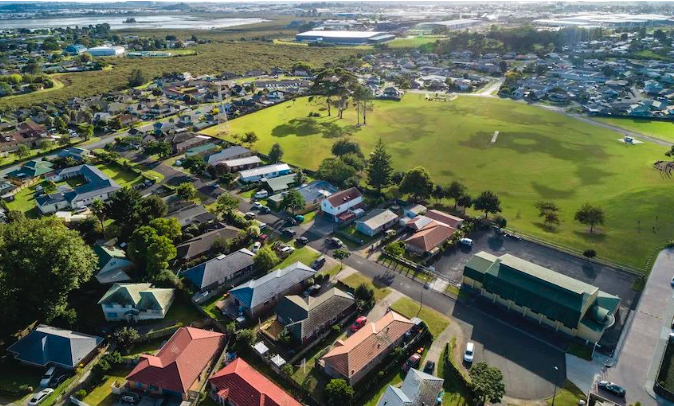
Property highlights:
Large site: 2496 square metres
Highly flexible: two-storey homes can be built, offering strong development potential
Easy subdivision: potentially divisible into 21 lots
The properties are in the Mixed Housing Suburban zone, currently one of the most common residential development zones. Under the new plan, subdivision potential in the Mixed Housing Suburban and Mixed Housing Urban zones makes properties within them highly sought after. Investing in such a large, flat site also offers considerable potential for future capital appreciation.
1、32 Sullivan Avenue,Mangere Bridge:
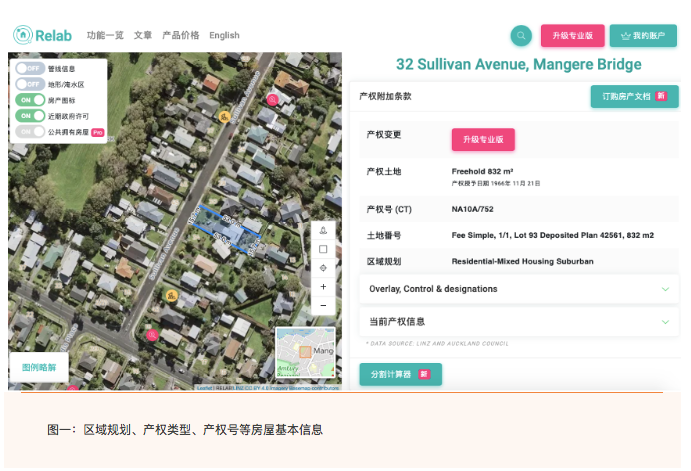
For more information, visit relab.co.nz to search for property details, including title type and zoning. The website also provides information about subdivision of the land.
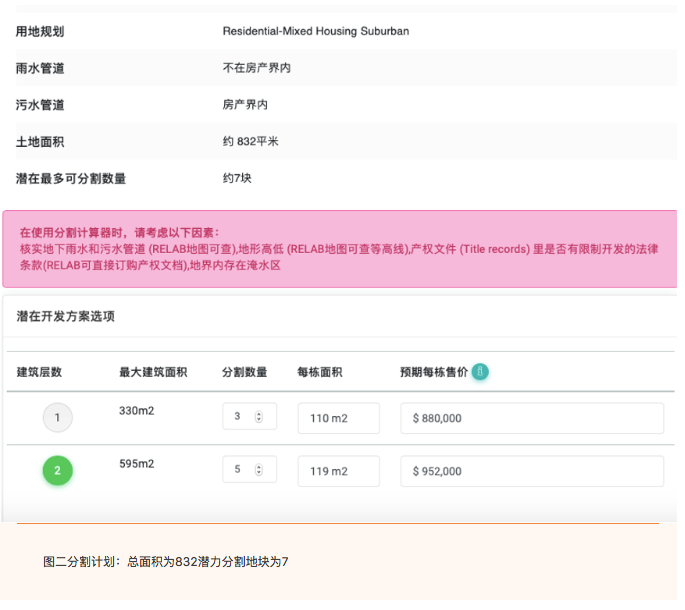
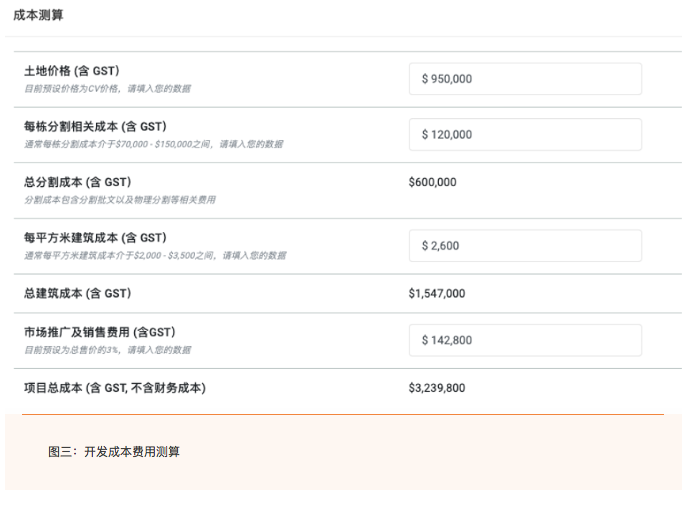
For example, searching for 32 Sullivan Avenue, Mangere Bridge shows a land area of 831 square metres, potential subdivision into approximately 7 lots, and an estimated total development cost of $3,239,800. The website offers searches in both Chinese and English.
2、34 Sullivan Avenue,Mangere Bridge:
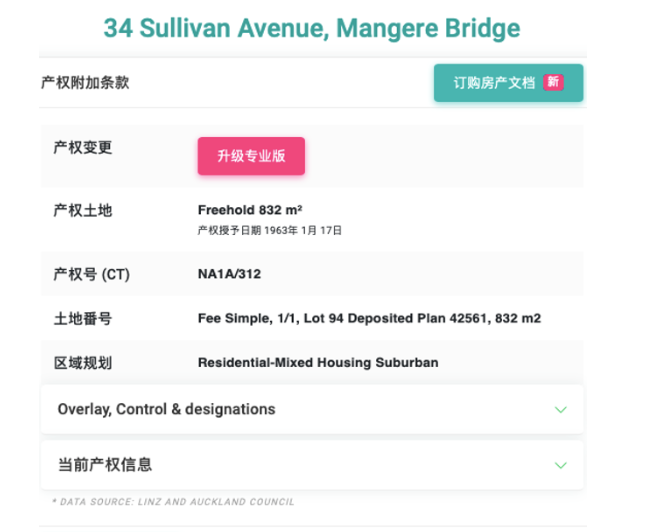
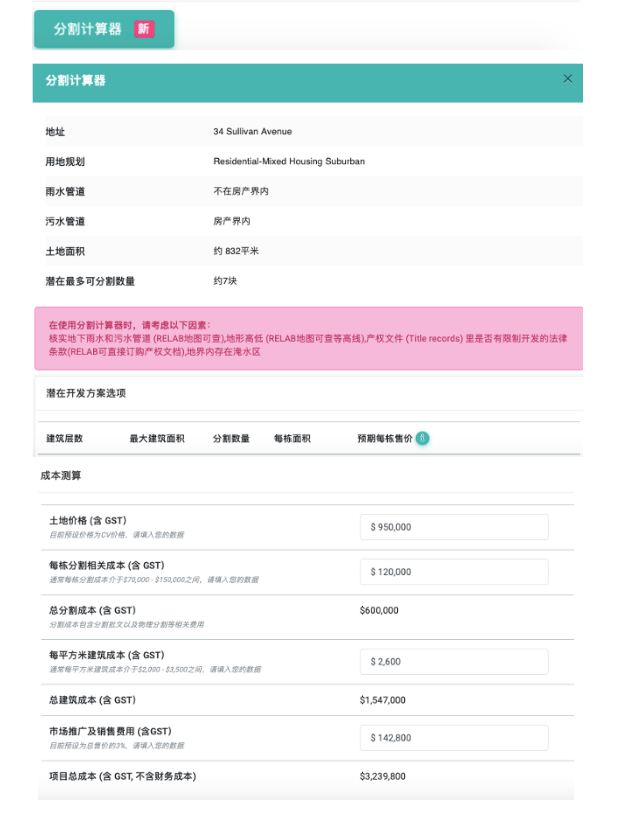
This property has a total land area of 832 square metres, with potential subdivision into 7 lots and a total development cost of $3,239,800. For more information, visit relab.co.nz.
36 Sullivan Avenue,Mangere Bridge:
The property has a total land area of 832 square metres, with potential subdivision into 7 lots and a total development cost of $3,239,800. It is zoned Residential – Mixed Housing Suburban. For more information, visit relab.co.nz.
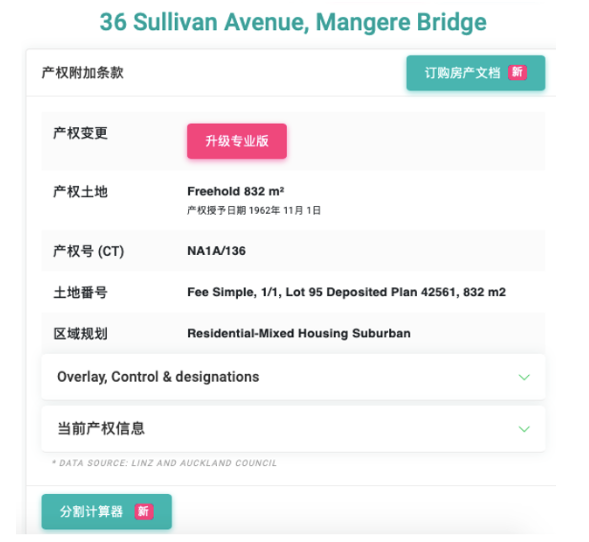
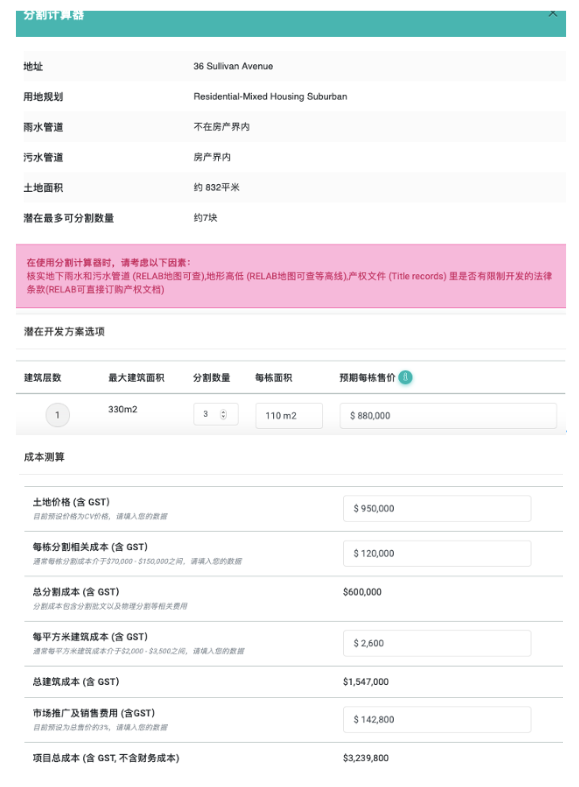
Development costs for the properties include the following:
Once a development plan is established, you need an approximate understanding of the overall subdivision cost. On average, the total cost of obtaining a title for a lot is around NZ$120,000 to NZ$150,000.
Costs generally include:
1. Infrastructure connection fees, including water, electricity and telecommunications
2. Driveway costs
3. Surveyor's fees
4. Planner's fees
5. Legal fees
6. Engineering and other fees
If you decide to subdivide the property, consider the following:
- Engage a professional to advise on financing arrangements;
- Engage a surveyor to plan the site;
- Engage an engineer to establish whether water can be supplied and to provide stormwater and wastewater solutions;
- Engage a development planner to prepare the development consent application.
It is important to understand the feasibility of subdividing the land clearly from the outset. This will help you understand what can be done and what restrictions will apply during development. Make sure you fully understand any constraints, as mistakes in planning and development can be extremely costly. Common development constraints include:
1. Scale of development
2. Environmental factors, such as protected vegetation and flood-prone areas
3. Available public infrastructure that can be connected to
4. Legal factors, including whether the development stays within what the law permits
{ad}
‘Lixing's property picks” Closing thoughts for this edition:
Before starting any work, the best advice is to meet with a development planning consultant or architect, or with a council planning officer, to establish the details. Property ownership brings many responsibilities. Before buying any investment property, it is wise to make sure you have prepared thoroughly and done sufficient research.
For detailed information about the three properties at 32 + 34 + 36 Sullivan Avenue, Mangere Bridge, Manukau City, please visit https://relab.co.nz to search for more information. The website provides building consent information, a subdivision calculator, property title documents, nearby schools and local property sales. It is a very useful resource for investors, developers and owner-occupiers.