
Potential and proven strengths! A dark horse emerges in central Auckland as Mt Albert house prices prepare for their next take-off!
Recent data show Auckland house prices joining the million-dollar club across the board, with only a handful of South Auckland areas still recording home values below a million dollars. Does this mean buyers seeking a home with a budget of $1,000,000–1,500,000 can only buy in outlying, distant areas? Today we analyse Mt Albert, an undervalued pocket tucked into the heart of central Auckland.

Auckland leads population growth
Homes set to hold their value increasingly well
Many people ask why Auckland house prices are so much higher than those in other New Zealand cities. As we all know, a city’s house prices are linked to its development and population share. According to the latest data from Stats NZ (Stats NZ), Auckland currently has a population of around 1,700,000, accounting for a third of the national population (34%). It is also currently New Zealand’s fastest-growing city by population. By around 2033, its population is expected to reach 2,000,000。
According to Stats NZ’s population projections: “Over the next 30 years, Auckland could have the highest average annual population growth rate of any New Zealand city.” In other words, Auckland already accommodates as much as a third of New Zealand’s population, and will continue to attract substantial net population inflows each year.
Market forces tell us that as the population grows, home values will rise. I also firmly believe that most people moving to Auckland will settle in its central urban areas.
So, to anyone preparing to buy a home in Auckland, my advice is to buy boldly and buy soon!
{ad}
As cities develop,
central locations become increasingly scarce
The development blueprints of cities are strikingly similar. The centre is invariably a city’s biggest engine, with a strong financial hub, the most comprehensive transport infrastructure and the best educational resources. Looking back at urban development, city centres bear the imprint of successive generations’ contributions. As people gather and economies grow, cities expand and residential areas move further out. In the world’s crowded megacities, the more central a location, the more it is regarded as a scarce source of value.
Every city’s centre will be where land is scarcest as the city develops.
Wealthy buyers cluster in central Auckland, Mt Albert offers a final opportunity for buyers seeking a home
Central Auckland and the North Shore are currently Auckland’s most expensive areas. In central Auckland especially, scarce locations, comprehensive transport links and numerous prestigious schools mean much of New Zealand’s wealthy population is concentrated there. For buyers seeking a home, finding a good central Auckland property for around a million dollars has become extremely difficult. With Auckland house prices so high, the central suburb we strongly recommend today is Mt Albert。
WHY?
A central city location
01
Google Maps shows that property prices near Auckland’s CBD are already very high in areas such as Newmarket, Remuera, Epson, Mount Eden and Ellerslie. Mt Albert, however, enjoys an excellent central location close to the CBD and alongside Mount Eden. Motorways 16 and 20 are right on the doorstep, offering direct access to the city centre, West Auckland and South Auckland. Such convenient transport access seems hard to find elsewhere.
An established transport network
02
Alongside its excellent location, Mt Albert has an established transport network connecting it throughout central Auckland. Several bus routes run directly to the city centre, there is a railway station, and motorways 16 and 20 are on the doorstep. City workers can choose how to travel: around 10 minutes by car, 20 minutes by train or about 25 minutes by bus. Compared with CBD commuters living on the North Shore or in East Auckland, those living in Mt Albert are fortunate indeed.
Comprehensive amenities
03
The main factors in assessing an area’s home values are location, transport, amenities and school zones. Mt Albert has all of these practical strengths.
Nearby are the well-known Alan Wood Reserve, Auckland’s largest zoo, Auckland Zoo, across the road, and Western Springs Park, a favourite with parents and children. There is also PAK’nSAVE, New Zealand’s largest local supermarket, and Westfield St Lukes, a major shopping centre ranked among the country’s five busiest by foot traffic. Such an established location with such comprehensive amenities is arguably difficult to match anywhere else in Auckland.
Quality educational resources
04
Mt Albert is also renowned for its educational resources, with options from primary school through to tertiary study. The well-known Gladstone primary school is located here and is currently among New Zealand’s largest primary schools. Hebron Christian College is also in the area, offering a full range of classes from Year 1 to Year 15. Kowhai and Mt Albert Grammar have strong academic progression records and teaching reputations.
The area also has well-known tertiary institutions, including Unitec and A.I.S.
Sharing a central location with Mt Eden and Epsom, where school-zone homes command high prices, Mt Albert can be described using a popular online expression——isn’t a location like this irresistible?
Accessible house prices
05
I believe Mt Albert’s biggest competitive advantage within central Auckland is its house prices. Compared with nearby Newmarket, Remuera, Epson, Mount Eden and Ellerslie, where prices readily reach $3,000,000–4,000,000, Mt Albert is among the most popular locations for buyers seeking a home in central Auckland because of its prices. Prices in the area currently sit mostly between $1,000,000–1,500,000. For families needing a home, buying in such a scarce location offers unbeatable value, whether for owner occupation or investment.
Market potential
Mt Albert is set to gain 4000 homes,
becoming New Zealand’s largest residential development
Mt Albert has officially entered a phase of accelerated development.
In 2020, the government announced plans to build 4000 homes in Mt Albert, making it New Zealand’s largest current residential development programme. The government bought 26.5 hectares of land from Unitec, with plans over the next 10-15 years to create a mix of high-density apartments and low-density housing. These homes will be only about 8 kilometres from the city centre.
We can imagine the remarkable development ahead for Mt Albert, with 4000 homes rising from the ground. The project also includes parks, cycleways, footpaths and the reuse of heritage buildings, all just a few kilometres from the CBD.
In my view, this will become another high-priced area of central Auckland. Buyers seeking a home still have an opportunity to get in now.
Notably, Auckland’s light rail plans remain under government discussion. Reports say Mt Albert will be included in station planning for the future north-western light rail link. Although light rail plans have faced considerable controversy, with rapid urban development and substantial population growth, construction of Auckland’s light rail is simply waiting for the right moment.
Market signals
The former prime minister’s family has also chosen Mt Albert for a property purchase
According to mainstream newspaper the New Zealand Herald, former prime minister Sir John Key’s son Max Key bought a home in central Auckland’s Mt Albert last year for NZ$1,400,000. Sir John Key attended the auction with his wife Bronagh Key. The Key family are said to be skilled investors who have also recognised Mt Albert’s development potential.
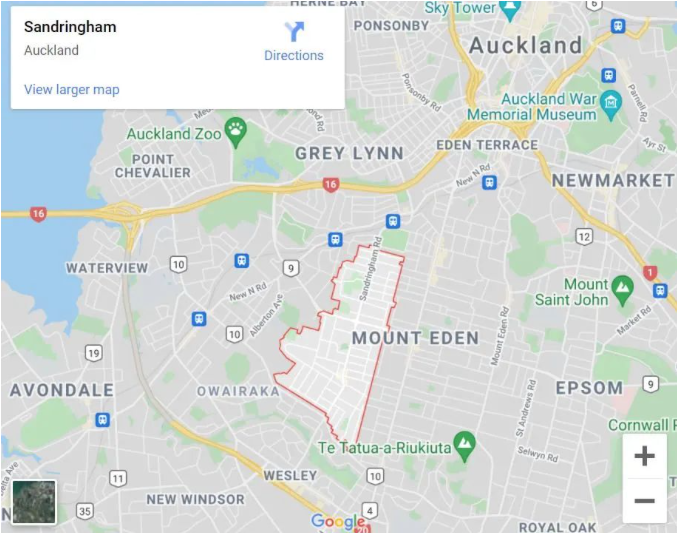
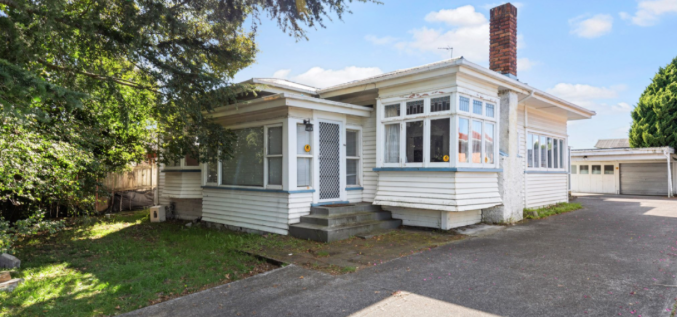
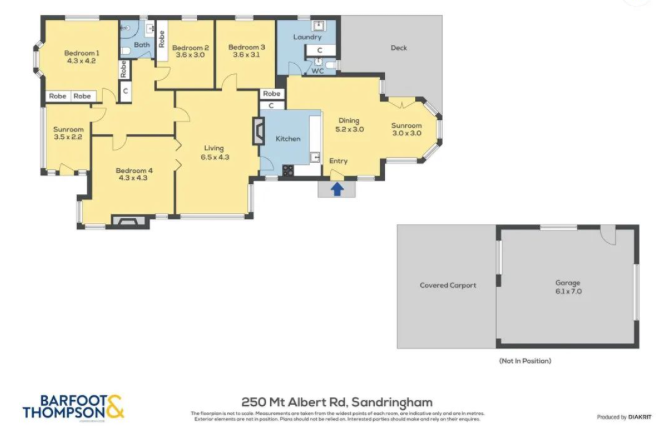
The property we recommend today happens to be at 250 Mount Albert Road, with a value of around $1,300,000 based on its 2017 council valuation. The property’s standout feature is its large, flat site of 674 square metres. The house has a floor area of 150 square metres, with 4 in total: Bedroom, plus a double garage.
Property highlights
This property suits three main types of buyer:
01
1. Owner-occupiers can renovate and reconfigure the house, for example to create more rental accommodation, allowing them to live in part and rent out the rest. Good school zones, established transport links and amenities make the area convenient for both tenants and owner-occupiers.
2. Developers will also find it suitable. The property is zoned for townhouses and apartments, and the nearly 700-square-metre site could accommodate 6 townhouses. We understand that 2–3-bedroom townhouses and apartments in the area currently sell for around NZ$900,000–1,200,000.
3. The property is also well suited to investors. The entire 4-bedroom house currently rents for around NZ$950 a week. With Mt Albert’s central location, excellent transport links and low housing vacancy rate, owners can earn cash flow through rent.
For developers building townhouses, current market construction costs of NZ$3000–5000 per square metre would put development costs at around $2,100,000–$3,500,000 (an estimate only).
Flexible zoning: townhouses and apartments permitted
02
This is a high-intensity development zone that allows development space to be maximised. Apartments of 5 to 7 storeys can be built here. Proximity to the city centre, surrounding centres and the public transport network supports the highest level of development density. However, owners and developers should also be aware of restrictions. For example, land in this zone must be of a suitable size for development. Anyone considering apartments must establish the scale of these restrictions.
High rental returns: rented as a whole, the property earns approximately 950 New Zealand dollars a week, generating cash flow.
03
Notably, the property is valued at around $1,300,000 under its 2017 council valuation. This year’s new council valuations will be updated on 1 July 2021, when its value is expected to increase. Council valuations take place every three years, with assessed sale values determined by current market conditions.
Overall, I am very optimistic about Mt Albert and its development. Its infrastructure is outstanding and its location central. Whether in education, transport or development potential, finding the same advantages elsewhere as in Mt Albert, with house prices still within reach of buyers seeking a home, would be difficult. I believe that, in Auckland, only Mt Albert has this unique appeal.