
A year of sweeping change! Two pieces of good news and one of bad news! An immigration lawyer examines the latest immigration announcement of 7.16!
2021 has been a turbulent year for New Zealand immigration policy. Following several major policy changes this year, Immigration New Zealand announced another significant series of changes to visa categories last Friday. Today, we have invited Sonny, a former immigration officer and practising immigration lawyer familiar to YIJU readers, to explain these changes in depth. Overall, there are both positives and negatives.

Changes to Essential Skills Work Visas announced on 16 July 2021:
{ad}
Job responsibilities
- Hourly pay below NZ$27 = a 2-year work visa
- Hourly pay above NZ$27 or at NZ$27 = a 3-year work visa
- The new Accredited Employer Work Visa, originally scheduled for 1 November, has been postponed until mid-2022
- Applying for a work visa for your current job: no advertising required
- Applying for a work visa for your current job: no police certificate or medical examination required unless special circumstances warrant it
One. Analysis
1. The biggest change from Immigration New Zealand is the introduction of a 2-year Essential Skills Work Visa. This means that from today (19 July), for jobs paying below the median wage of NZ$27, the maximum duration of an Essential Skills Work Visa increases from 12 months to 24 months. For Essential Skills Work Visas for jobs paying above the median wage, including NZ$27, the maximum duration remains 3 years.
2. The new Accredited Employer Work Visa (AEWV) has been postponed until mid-2022 (months 6–7). The Government remains committed to introducing the Accredited Employer Work Visa, which will ensure that work visas reflect genuine regional skills shortages and strengthen labour market testing.
3. A simpler process. The Essential Skills Work Visa application process will also be simplified for applicants whose jobs remain unchanged. If visa holders are applying for their current full-time positions, their employers will not need to complete a labour market test or advertise the jobs. Applicants who have previously submitted medical and police certificates will not need to provide them again.
Employers will still need to complete a labour market test where they must demonstrate that they could not find a suitable New Zealander before employing a migrant worker. This is consistent with the Government’s goal of giving New Zealanders priority for jobs.
Two. My personal views
We have some good news to share today. When discussing the previous immigration changes concerning employer accreditation, I said employers and employees would be unable to complete accreditation within Immigration New Zealand’s deadline of 1 November 2021. At the time, I also produced a ‘simulated timetable’ based on the dates announced by Immigration New Zealand to demonstrate fully how ‘rushed’ its previous decision had been.
It turns out that the immigration policy office ‘agrees’ with my view. Last Friday, Immigration New Zealand postponed employer accreditation until some time in mid-2022. This is good news for employers and employees, giving them more time to complete new applications. I am pleased to see Immigration New Zealand making positive changes in the right direction.
Overall, these work visa changes provide all work visa holders with some security for the near future, although questions about employer status and employment agreements will still arise.
The changes announced suggest that Immigration New Zealand is now focusing on investigating employers. As an experienced immigration and employment lawyer and former immigration officer, I have witnessed historic changes of this kind. My advice is:
- Employers should prepare for more workplace visits by Immigration New Zealand and greater scrutiny;
- If your employer is not accredited, they must prepare their accreditation application.
Good news for employees of accredited employers
Before Friday’s announcement, we advised WTR visa holders to submit all visa applications before 31 October 2021. Immigration New Zealand has now announced an extension, but in my personal view, WTR visa applicants should submit their applications as soon as possible. Immigration policy changes rapidly, and we do not yet know what further changes Immigration New Zealand will make to WTR visas. The longer applicants wait to submit, the more “precarious” their position will become.
For example, the changes Immigration New Zealand announced last Friday (16 July) take effect just three days later, leaving visa holders little time to respond. Nevertheless, this is still good news, as accredited employers will have more time to employ workers on WTR visas.
#02 Good news for residence visa applicants
Holders of these two visa types seeking residence now have more time to find work with accredited employers, including those on Long Term Skill Shortage List (LTSSL) and WTR visas. Both visas provide pathways to residence without an English-language requirement.
#03 Skilled Migrant Category——Regarding EOI, a bad “feeling”
Judging by Immigration New Zealand’s current ‘mood’ and announcements, I expect EOI will not reopen until 2022-4 (April). Please note that this is only my opinion. If you cannot wait and are eligible to apply for an LTSSL or WTR visa, I suggest trying as soon as possible.
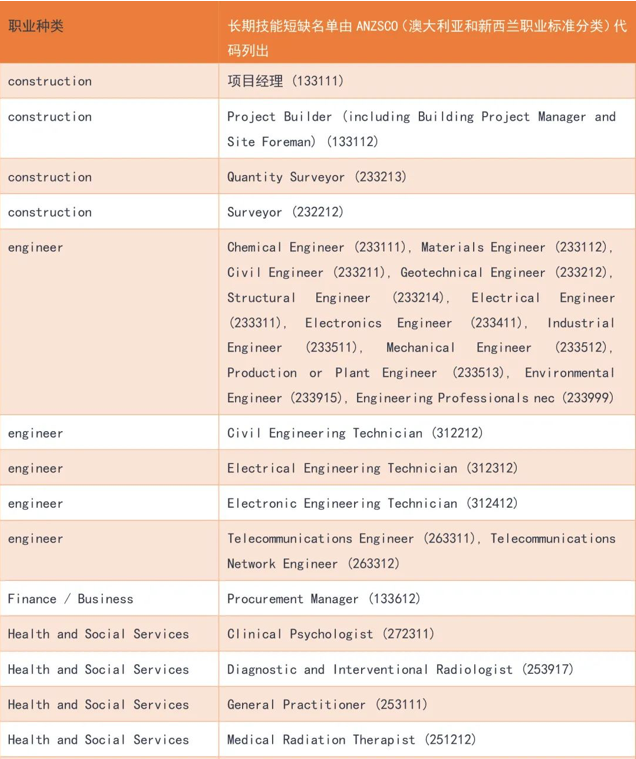
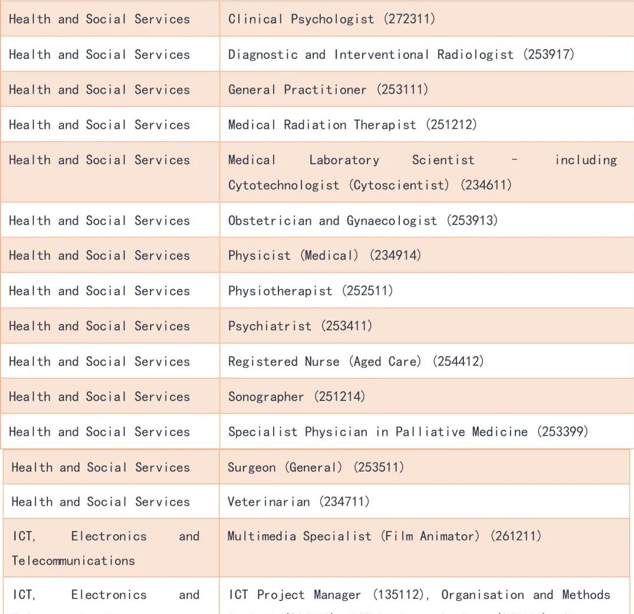
Three. See the table below for occupations on the Long Term Skill Shortage List (LTSS)
Closing remarks:
Immigration New Zealand’s introduction of 2-year Essential Skills Work Visas and a simpler application process for applicants whose jobs remain unchanged will benefit more than 70,000 visa holders. With the borders still closed, we can see Immigration New Zealand making some positive responses to onshore applicants. However, when EOI submissions will reopen remains a ‘mystery’…
In a year of sweeping immigration policy changes and amid the uncertainty caused by the pandemic, those waiting to immigrate may face a difficult ‘winter’. Yet we must keep believing that once we endure winter’s cold, spring will bring new life.