One fire, two hours, a three-storey apartment building and thirty households evacuated! What can we learn from the Hobsonville Point fire?
Do you remember the Hobsonville Point fire in 2017? The blaze that dominated New Zealand's media headlines overnight remains fresh in many people's memories.
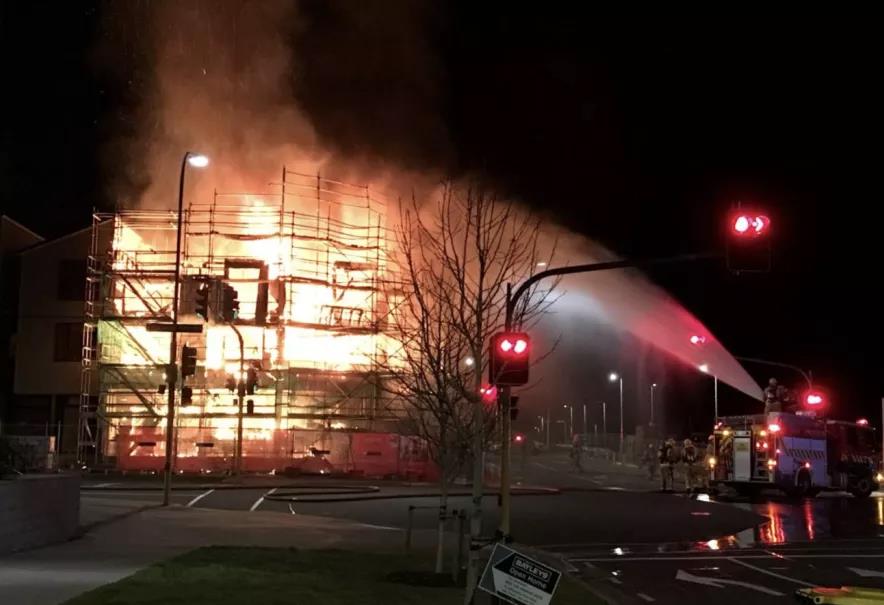

According to Herald delivery worker Nick Pennel, who was working nearby at the time, he saw flames shooting skywards, thirty or forty feet above the building.
The affected apartments were at the intersection of Hobsonville Point Rd and Squadron Dr. The Lot 8 development where the fire broke out was in the final stages of construction and surrounded by scaffolding. 16 firefighters attended the blaze, while police quickly evacuated 30 neighbouring households.
Fire Service duty communications manager Colin Underdown said, “When firefighters arrived, the building was already engulfed in flames.”
Fortunately, nobody was inside the affected building, and no one was injured or killed.
Another fortunate factor was that Universal Homes, entrusted with developing this medium-density housing project, had selected high-quality materials meeting NZBC fire safety requirements. This prevented the fire from spreading further.
Considering that the fire had already been burning for more than an hour before firefighters arrived, these materials performed exceptionally well. So which exterior wall materials were used in this development that survived the blaze?
The Lot 8 development where the fire occurred was still under construction, with exterior walls fitted with HomeRAB pre-cladding, while the boundary walls of neighbouring Lot 7 and Lot 9 used James Hardie's 30-minute fire-rated exterior wall system (JHETGR30)— Linea Oblique Weatherboard as exterior cladding, with James Hardie 6 mm RAB Board fixed directly to the framing.
Thanks to this fire-rated exterior wall system, the blaze at Lot 8 was effectively contained, and the Linea Oblique Weatherboard on neighbouring units' exterior walls did not suffer serious fire damage. More notably, the HomeRAB pre-cladding installed on Lot 8 was neither consumed by the fire nor allowed it to spread. Its outstanding performance minimised damage and exceeded fire safety requirements.
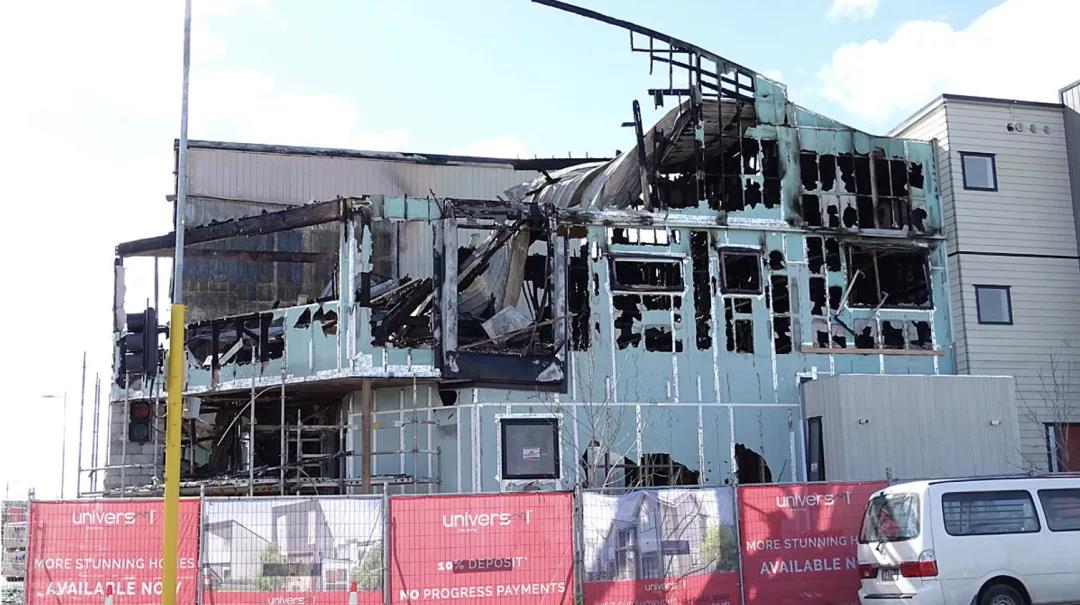
Damage to HomeRAB pre-cladding caused by high-pressure water jets during firefighting
Buildings over 7 metres must use non-combustible exterior wall materials
From day 31 of month 5 in 2017, New Zealand introduced new fire safety requirements for buildings over 7 metres. The new rules apply to commercial and multi-unit residential buildings, requiring medium-density developments such as Hobsonville Point to use non-combustible exterior wall materials.
Universal Homes construction manager Grant Coutts said the fire further demonstrated the importance of using non-combustible exterior wall materials and certified fire-rated exterior wall systems in appropriate areas.
The fire was regrettable, but the incident has also given us greater confidence in the high-performance exterior wall products and systems we selected.
All James Hardie exterior cladding products and rigid air barrier boards are non-combustible and can therefore meet fire safety requirements. By comparison, timber products without fire retardants generally cannot meet these requirements. As Auckland's housing density increases, using compliant, non-combustible materials in appropriate developments is critical. Coutts said,
For Universal Homes, James Hardie is a logical choice, offering both outstanding performance and excellent service.
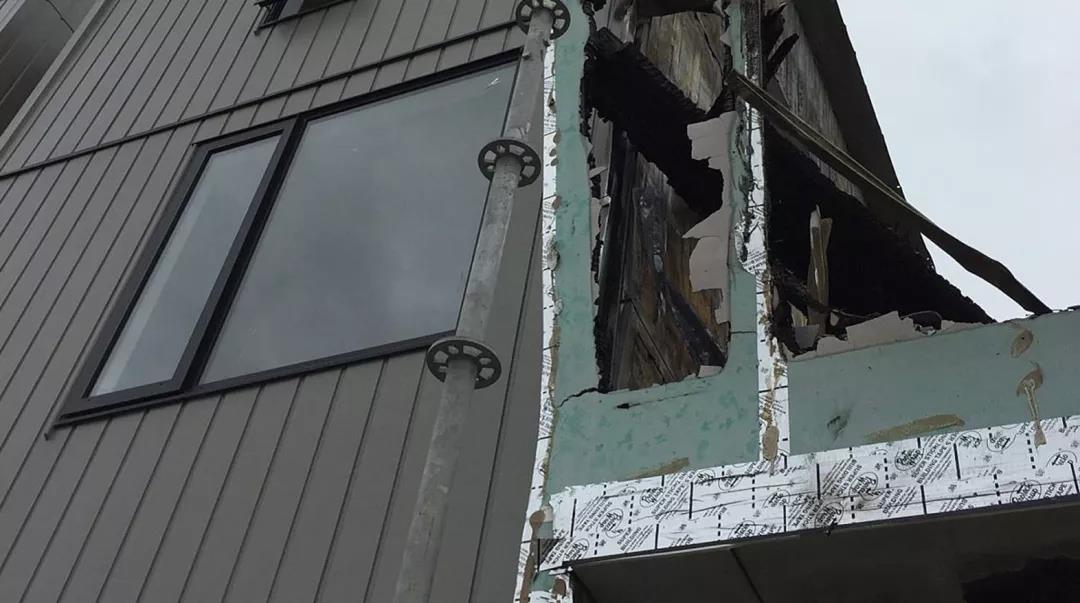
In the image above, the development on the left uses Linea Oblique Weatherboard and is separated by only a wall from Lot 8, where the fire occurred. On the right is HomeRAB pre-cladding, which helped minimise fire damage.
HomeRAB pre-cladding and RAB Board receive CodeMark certification
James Hardie's RAB Board and HomeRAB pre-cladding are effective rigid air barrier systems whose outstanding performance meets NZBC requirements. To demonstrate these performance qualities, James Hardie followed MBIE's product certification scheme and successfully obtained CodeMark certification.
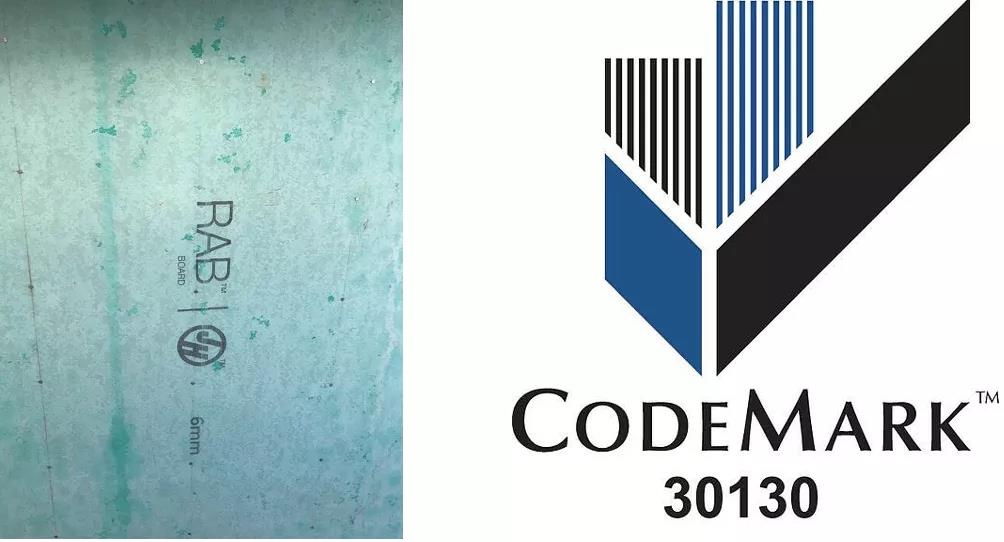
The CodeMark certification for RAB Board includes the following points:
RAB Board is suitable for specific engineering design (SED) buildings up to 25 m high. Where inter-storey height does not exceed 3 metres, RAB Board can accommodate inter-storey deflection up to Span/180 (SLS).
Suitable for buildings with a maximum design wind pressure of 4.5 kPa (ULS).
Suitable for timber-framed buildings over 10 metres, and meets the performance requirements of NZBC Clause C3, provisions C3.5 and C3.7, for “Fire affecting areas beyond the source”.
For details, please see the full CodeMark certification:

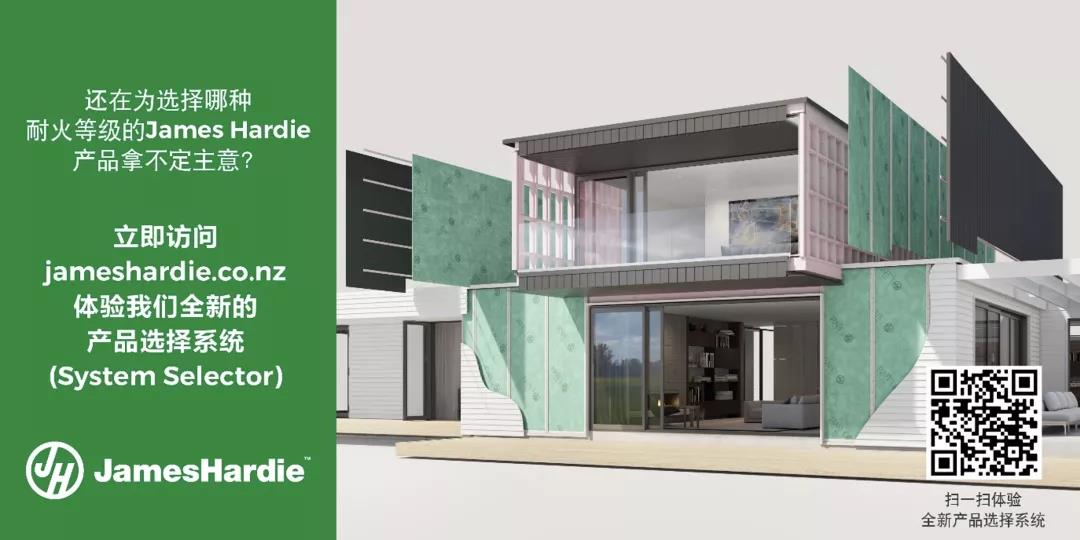
Scan the QR code to
find a fire-rated exterior wall system suited to your project.
You are also welcome to follow James Hardie's official WeChat account or visit our Chinese-language website https://www.cn.jameshardie.co.nz/ for more inspiring case studies, product knowledge and industry news.