Immigration lawyer warns of a major loophole in the November work visa policy, could you be affected? Check now
On 7 May this year, Immigration New Zealand brought immigration advisers together for a webinar to formally announce its 2021 work visa policy. The update primarily implements the work visa proposals put forward in September 2019, combining six existing work visa categories into one. Employer checks will drive the new work visa application process, with the new policy taking effect on 1 November 2021.

All employers should note that applicants under the current WTR (Work to Residence) policy must submit their applications before 1 November. In other words, after 1 November, employers sponsoring employees' work visa applications will need to apply for and obtain the new Accredited Employer status.
{ad}
We have compiled the following list of visa categories that will be replaced by the new work visa from 1 November this year:
- Essential Skills Work Visa and ESWV – Approval in Principle
- WTR – Talent (Accredited Employer) Work Visa
- WTR – Long Term Skill Shortage List Work Visa
- Silver Fern Job Search and Silver Fern Practical Experience Visa
We recently learned from immigration lawyer and former immigration officer Sonny Lam that this visa policy change could create a major loophole. Although Immigration New Zealand plans to introduce the new work visa category on 1 November this year to replace existing categories, a range of factors suggests applications for the new category will not open until at least the middle of 2022! This means there will be no WTR visa to replace the current arrangements for nearly 8 months. The vast majority of WTR work visa holders may therefore have to apply for an Essential Skills Work Visa to continue working and living legally in New Zealand, potentially forcing a break in their pathway to residence. Despite the difficulties posed by the pandemic, we urgently contacted Sonny to discuss the issue.
Q1: Immigration New Zealand will make major changes to its WTR visa policy from 1 November this year. Could you explain how this loophole will affect existing WTR visa applicants?
Certainly. Unlike ordinary work visas approved by Immigration New Zealand, WTR is a special type of work visa that allows applicants to apply for New Zealand residence after working for two years. In theory, many applicants under the existing WTR work visa policy could be affected by this loophole. There are several points I need to reiterate:
1. Applicants seeking residence through the WTR pathway must hold a WTR work visa that remains valid at least until their residence visa is approved.
2. If an applicant's WTR visa expires and they have to switch to another work visa to remain legally in New Zealand, their earlier residence application will be treated as invalid.
3. A conservative estimate is that this legal issue will affect 12,000 to 18,000 applicants.
4. The relevant case law has already been established through earlier IPT decisions.
If that is still unclear, let me illustrate with an example:
Mr C obtained a WTR work visa through the Accredited Employer WTR scheme in June 2019 and has held it since then. As it is a 30-month visa, it will expire in December 2021. After completing his 2-year work requirement, Mr C submits a new WTR visa application in June 2021. Based on Immigration New Zealand's current processing timeframe of no more than 12 months for applications of this kind, his valid WTR visa is very likely to expire before his residence application is approved. By December 2021, the old WTR work visa category will have closed, meaning Mr C will be unable to obtain another WTR work visa. He can only apply for an Essential Skills Work Visa to continue living and working in New Zealand. Under current immigration law, Mr C's residence application is likely to be declined because he no longer holds a valid WTR work visa when his residence application is assessed.
Let me also explain using the statistics:
On the INZ website, we can find the number of residence applications accepted by Immigration New Zealand over the past ten financial years. Taking applications submitted under the Accredited Employer category in 2019 and 2020 as examples, 6370 and 12262 applications respectively were received, a total of 18632 applications.
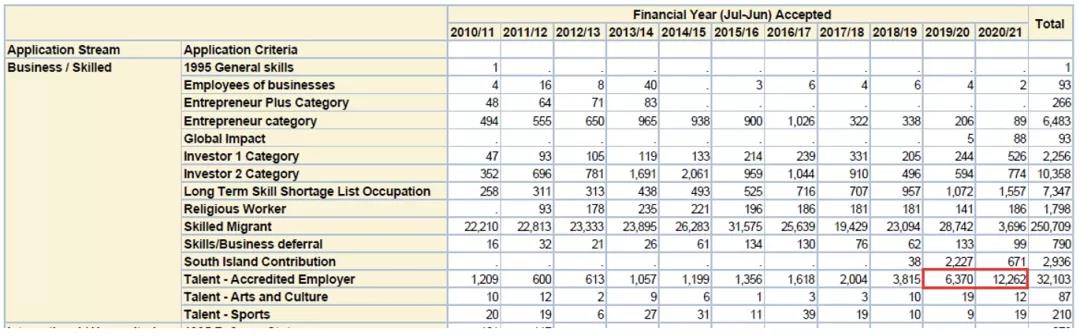
Chart source: INZ website
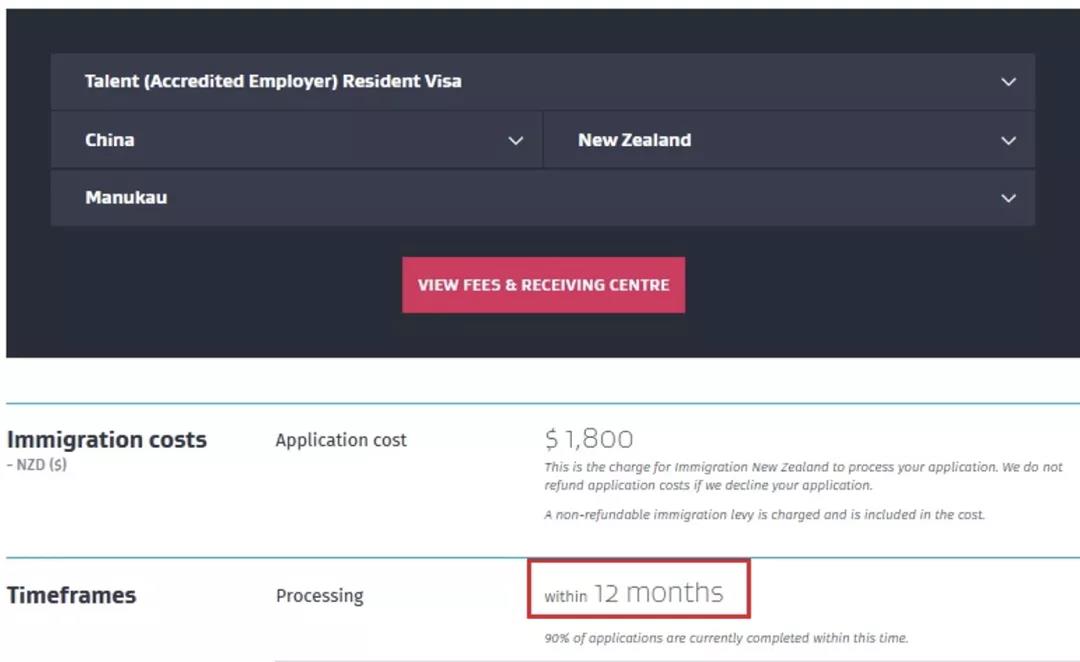
The website explicitly states that the average processing time for this visa category is within 12 months.
From this, we infer that many of those who have applied for WTR visas may have their residence applications declined unless Immigration New Zealand makes a legal change.
Q2: If, as you say, applications for Immigration New Zealand's new visa category will not open until at least the middle of 2022, is there any remedy for applicants whose current WTR visas remain valid until 31 October but expire during the 8-month gap?
With little time remaining before the 31 October deadline, my advice is to apply for a new WTR work visa as soon as possible. Anyone with questions or difficulties can seek help from an immigration professional.
Q3: Have you discussed this loophole with others in the profession?
Honestly, I think most immigration lawyers and advisers have not even realised how serious this issue is. Perhaps nobody has recognised it as a loophole, as everyone is exhausted by Immigration New Zealand's continual introduction of new policies. However, I am willing to discuss it with other professionals because I believe this loophole will soon have a major impact. Unless Immigration New Zealand fixes it, many people will be unable to obtain residence through work in the future.
Q4: Historically, applicants have taken a number of disputed immigration cases to court. Do you think bringing some applicants together to lodge a court appeal would be feasible?
Judicial review is possible. Our firm's immigration team is already considering it. But I want to reiterate that this is not an isolated case. Many people could be affected, and more applicants need to come together to address it.
Q5: What advice would you give applicants facing this issue?
This issue is unlikely to surface within the next 3–4 months. I am raising the alarm now in the hope that, amid the pandemic, it may help you navigate your future immigration applications with greater confidence. My personal advice is prevention: the first step is to act before problems arise. If you are concerned about your visa application, contact an immigration professional as soon as possible. You are also very welcome to contact me directly with your visa questions.
Disclaimer: The above reflects the personal views of an industry professional only and should not be used as a formal assessment standard.
About the expert
Sonny Lam

With 15 years of litigation experience and a background as an Immigration New Zealand immigration officer, he currently works as an immigration lawyer at Queen City Law.
After leaving Immigration New Zealand in 2015, he began specialising in immigration, offering sound professional advice on immigration and employment law from the perspectives of both applicants and the immigration officers assessing their cases.
Scan the code to enquire for more information