No jab, no job? Exclusive analysis: can employers require staff to be vaccinated?
With New Zealand's daily coronavirus case numbers continuing to rise, the Prime Minister announced this afternoon that the government would require all healthcare workers and teachers to be vaccinated against COVID before they could work. One of the most widely discussed questions recently has been whether every New Zealand resident should be vaccinated.
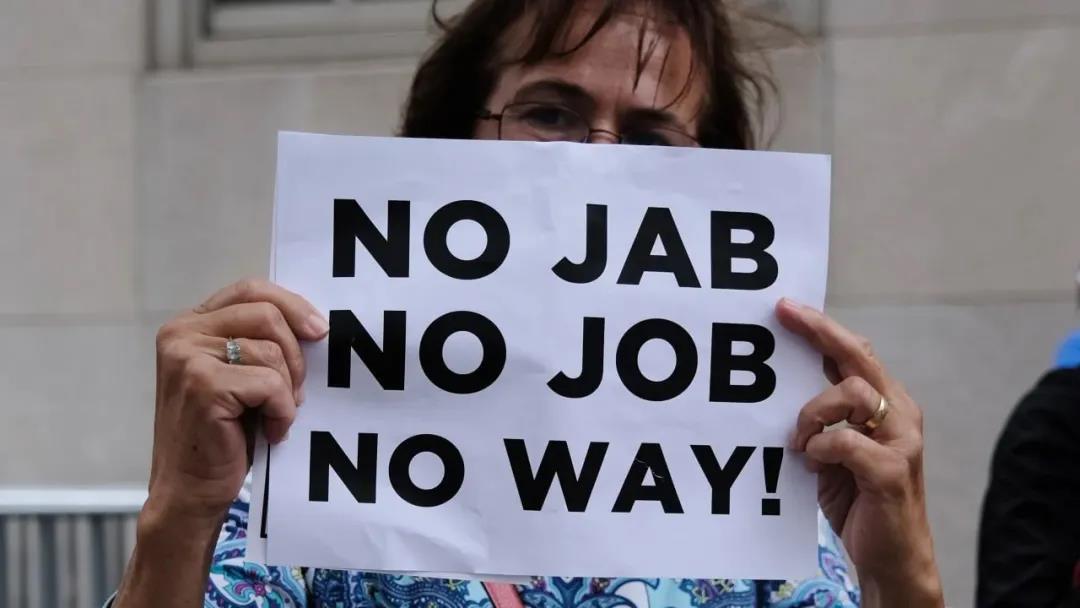
With New Zealand's daily coronavirus case numbers continuing to rise, the Prime Minister announced this afternoon that the government would require all healthcare workers and teachers to be vaccinated against COVID before they could work. One of the most widely discussed questions recently has been whether every New Zealand resident should be vaccinated. As Auckland and other regions move to alert level three or below, that question has also reached individual businesses. Increasing numbers of businesses are grappling with questions about whether they should require employees and customers to be vaccinated...
Newsroom.co.nz recently interviewed a representative example: Keith Johnson, the owner of a small Auckland renovation company with 9 employees. As a private business owner, he says he understands his responsibility and obligation under the Health and Safety at Work Act, which took effect in April 2016, to keep employees and visitors safe 'so far as is reasonably practicable'. But like hundreds of thousands of small and medium-sized business owners in New Zealand, he is confused about his legal responsibilities during the pandemic, particularly around vaccination.
{ad}
On construction sites, physical distancing is often not an option. On one hand, business owners such as Johnson face people who only want to deal with vaccinated individuals, or clients who require that only vaccinated staff work at their premises. On the other hand, a minority firmly refuses vaccination. One employee at his company is adamantly opposed to being vaccinated, representing roughly 10% of his workforce. Legally, he is caught in a dilemma: businesses may face government penalties if they cannot ensure staff safety, but could requiring staff to be vaccinated breach other laws?
YIJU urgently contacted experienced New Zealand employment relations lawyer Sonny Lam to discuss the issue.
Does an employer have the right to dismiss an employee who refuses vaccination?
Sonny: Let me start with an example. The Employment Relations Authority (ERA) recently ruled that a border worker dismissed for refusing a COVID vaccination had not been unjustifiably dismissed and would not be reinstated.
Why was dismissal acceptable in this particular situation?
- A thorough health and safety risk assessment had been conducted for the role, establishing that the employee faced a risk of exposure to the virus and therefore needed to be vaccinated.
- A public health order had been issued.
- The woman refused to disclose why she did not want to be vaccinated.
- The employer offered to help her find another role, but if an alternative role was not viable, terminating her employment was the only option. She was also offered paid leave, which she accepted.
- As the virus mutates, more border workers need to recognise the importance of caution in hazardous work and the need for vaccination.
On 27 September 2021, the appeal in this case was dismissed. However, its circumstances were highly specific and offered no guidance for other employment disputes, such as those arising in construction and hospitality.
The legal basis:
Under New Zealand law, requiring employees to be vaccinated is unlawful. An exception applies if a public health order requires workers to be vaccinated, as in the example above.
The courts are not the answer:
Chris Alderson is chief executive of Construction Health and Safety New Zealand (CHASNZ) and a key figure in developing best-practice guidance on how businesses should operate during the pandemic. He says that without government guidance, the risk is that going through the courts becomes the only way to resolve uncertainty. He adds that this is too expensive to be a practical way of obtaining answers.
The situation in practice:
Across New Zealand, from government to communities, efforts are under way to lift our vaccination rate above 90%. Many policies therefore support and encourage employee vaccination, but gaps in the law can easily create unprecedented legal issues. New Zealand also has strong protections for individuals, including the Bill of Rights Act, covering freedom over taking medication or receiving medical treatment; the Human Rights Act, protecting against discrimination; and the Privacy Act, protecting the freedom not to disclose vaccination status. The Employment Relations Act also requires employers to act in good faith and follow fair employment procedures.
Advice for all employers:
- Employers could begin by educating staff. If an employee says they are unvaccinated, could they work in isolation, at home, over the long term? Does their role require contact with other people? Does their unvaccinated status pose a threat to other employees' safety? Employers need to avoid discriminating against or treating unvaccinated team members unfairly. The law is gradually developing, and that takes time. We hope more legislation will be introduced in this area to give us a legal framework to follow.
- Because the law in this area is still incomplete, employers are advised against adopting an aggressive stance or taking drastic action. Wherever possible, avoid seeking resolution through the courts or the Employment Relations Authority unless absolutely necessary.
Join the debate
As an employer in New Zealand's construction industry, what effective ways have you found to motivate employees to follow pandemic safety rules? How do you encourage staff to get vaccinated against COVID? Join the discussion in the comments below. If you have related legal questions, you can also contact lawyer Sonny Lam directly.
About the expert
Sonny Lam
With 15 years of litigation experience and a background as an Immigration New Zealand officer, he currently works as an immigration lawyer at Queen City Law.
After leaving Immigration New Zealand in 2015, he began specialising in immigration, offering sound professional advice on immigration and employment law from the perspectives of both applicants and immigration officers assessing cases.
Scan the QR code to enquire further.