
The big debate: in a property bull market, is building a new home or buying an existing one the better investment?
With New Zealand's property market booming, and the pandemic and construction costs proving unpredictable, we think it is time to discuss an age-old property investment question: should you build a new home or buy an existing one?
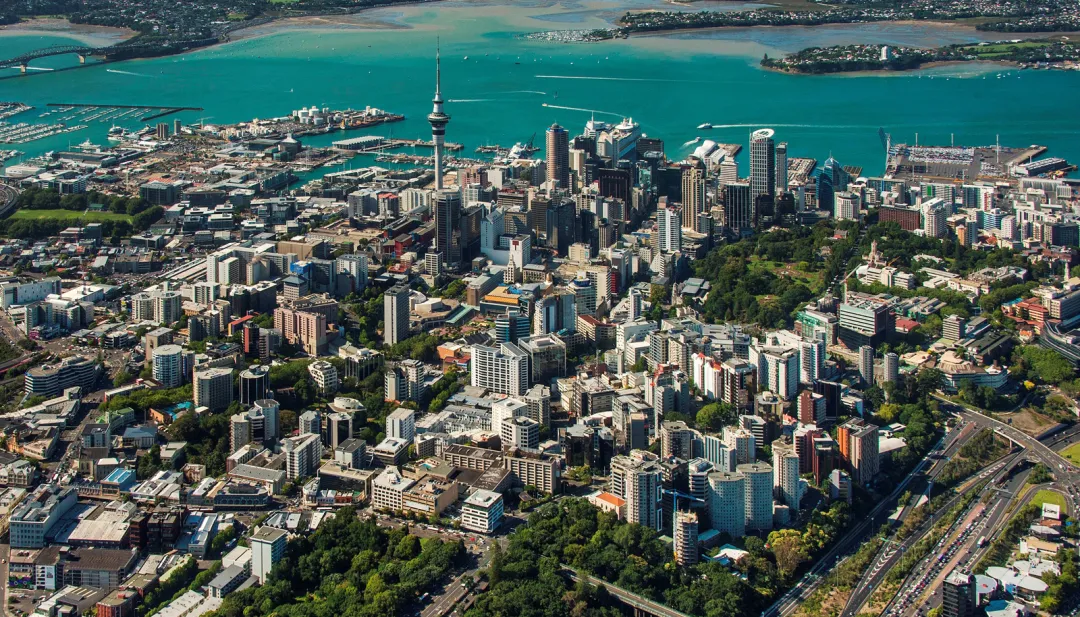
In the past, investors' final decisions were often guided by their personal aspirations to build an ideal home to live in, weighing factors such as location, proximity to work and school zones. In recent years, however, as housing shortages have become increasingly apparent across New Zealand's major cities, people have recognised the potential for capital gains. This has encouraged more investors to enter the property market and start building or buying new homes.
{ad}
The advantages of new builds
For investors, new builds make it easier to secure bank lending, because although the Reserve Bank's loan-to-value ratio restrictions limit bank lending to borrowers with small deposits, they do not apply to loans for new builds. Many banks also offer special lending options for new-build customers. New homes can also be expected to need less maintenance in the first few years of ownership, keeping maintenance costs lower. Furthermore, under the government's recently announced new interest deductibility rules for investors, new builds are exempt, making them even more sought after in the market.
Of course, we will not rush to a conclusion on whether to build a new home or buy an existing one. First, let us look at the runaway house prices around New Zealand. YIJU New Zealand reported in an article on 14 September: New Zealand house prices have reached a new milestone, with the national average exceeding NZ$1,000,000 for the first time! After a year of soaring house prices, median sale prices have risen significantly across the country.
According to the Real Estate Institute of New Zealand, the median house sale price in Auckland in August this year was NZ$1,200,000, compared with NZ$875,000 in Wellington and NZ$619,000 in Canterbury. Although Auckland and Wellington had the highest house prices, median prices in the Bay of Plenty, Tasman and Waikato all exceeded NZ$750,000, at NZ$840,000, NZ$800,000 and NZ$780,000 respectively. The West Coast had the lowest median, at NZ$300,000.
Next, let us compare construction costs around New Zealand.
The latest Stats NZ figures show that in the year to June, the national average construction cost was NZ$2325 per square metre, excluding land, design, resource consent and building consent costs. Stats NZ's data shows that the average floor area of all dwellings granted building consent in 2021 was 155 square metres. The average construction cost of a single-storey home measuring 155 square metres was NZ$2325 × 155 square metres = NZ$360,375. However, land, design, consent and other costs come on top of this and may be highly unpredictable.
Taking a 155-square-metre home as an example, Auckland's construction cost is NZ$2319 per square metre, equivalent to an average of NZ$359,445 per dwelling. Wellington's cost is NZ$2604 per square metre, equivalent to an average construction cost of NZ$403,620 per dwelling, while Canterbury's is NZ$2089 per square metre, bringing its average construction cost to NZ$323,795. Canterbury clearly has the lowest average cost, followed by the West Coast at NZ$2118 per square metre and an average of NZ$328,290 per dwelling. Taranaki follows closely at NZ$2147 per square metre, with an average construction cost of NZ$332.875 per dwelling. By comparison, Otago has the highest construction costs, at NZ$2707 per square metre and an average of NZ$419,585 per dwelling. Hawke's Bay ranks second, at NZ$2650 per square metre and an average of NZ$410,750 per dwelling, while Wellington ranks third.
Of course, the actual cost of each building is far more complicated than these calculations suggest. AUT construction professor John Yookey says actual construction costs depend on whether a home is single-storey or multi-storey, and building on sloping land often costs much more than building on flat land. Materials also affect costs. If someone wants a high-end home, construction costs can increase exponentially, so the design and level of luxury matter too. John also notes that the largest expense is actually land, which accounts for differences in building costs between locations and types of land.
Construction cost trends
Core Logic data shows that in 2021, buyers paid a national average of NZ$829,747 for new builds, compared with NZ$889,055 for existing properties. In other words, new builds cost less than existing homes, but the data also shows that the gap is narrowing. Core Logic chief property economist Kelvin Davidson notes that although the current gap is only NZ$60,000, last year's average price for new builds was NZ$621,000, compared with NZ$739,000 for existing homes—a difference of as much as NZ$118,000. This means average sale prices for new homes have recently been rising faster than those for existing homes.
Davidson says buying a new build or finding land to build on remains a very worthwhile investment, but the process can be complicated because land is hard to find in many places. Rising construction costs and government-driven demand for new developments will also keep pushing new-build prices up.
Master Builder chief executive David Kelly says new builds offer several advantages beyond lower costs:
Although the many variables make comparisons difficult, and it is hard to establish whether choosing a new build is cheaper, with existing house prices rising so quickly, building a new home can still be more attractively priced if you can find the right builder and land, even when some upfront costs are uncertain. This is also driving the property industry's development. We can see more townhouse and apartment projects under construction, giving buyers a wider choice, while the smaller homes involved offer more affordable prices. All new builds comply with current building standards, providing healthy homes that can be held for longer.