
Would you still buy an older home? An experienced building inspector shows you how to avoid the pitfalls
New Zealand house prices have soared, making homes increasingly unaffordable. One expert says prices rose by more than 27% in the 12 months to September. More new buyers are using their KiwiSaver and money from their parents for deposits, while compromising on property type and location to get into the market.
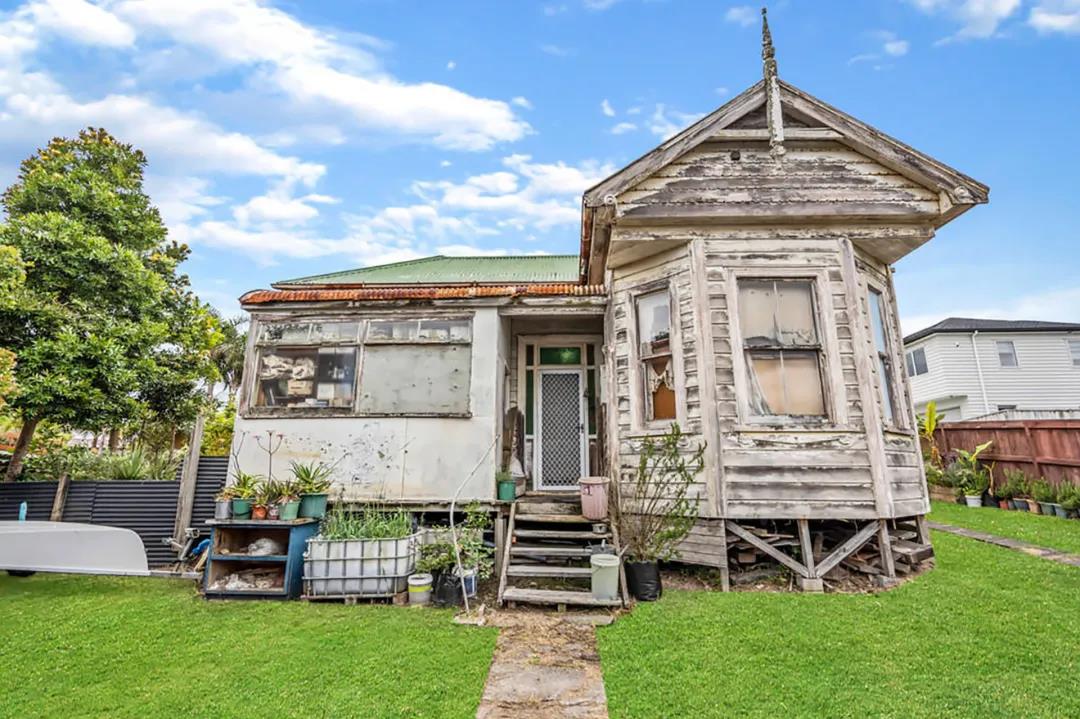
Another common choice is to buy an older home in poorer condition within an affordable price range and neighbourhood.
Should you buy an older home?
In New Zealand, even a twenty-year-old house can be described as ‘relatively new’, while century-old homes are a common sight.
Homes from different eras have different architectural features. Generally, however, older homes tend to have better locations than new builds, with larger sections and wider frontages, giving owners more options for rebuilding later. They also tend to sit further from neighbouring houses, allowing more light through side windows and offering better privacy. Larger sections mean fewer houses within a neighbourhood of the same size, creating a quieter setting.
But their age means older homes may have problems with their structure, plumbing and electrical systems. Ageing fittings and deteriorating quality naturally bring higher maintenance costs. They may contain hazardous building materials such as asbestos, and leaks are not uncommon. An unwary buyer who ends up with a meth-contaminated house could suffer losses on several fronts.
Older homes clearly have significant advantages and disadvantages. Can you enjoy the benefits without the drawbacks? Absolutely! YIJU's editorial team consulted an experienced building inspector to share these little-known secrets with readers. Learn these tips for viewing properties and you may well find that, once you avoid the pitfalls, an older home is a very appealing prospect!
{ad}
What should you look out for when buying an older home?
First, check the background of the property and the agent:
The history of an older property, particularly a century-old home, is well worth investigating. Before buying, use a range of sources to learn about its previous owners, their family circumstances and events that took place there. Do not shy away from the effort: digging deeper can give you greater peace of mind when buying.
For example, methamphetamine manufacture or use in a home may leave no obvious visible signs. Over time, the occupants may move elsewhere, leaving traces of methamphetamine behind. Most troublingly, not all owners arrange meth testing. Even when residues are found and professionally removed, owners may not disclose this to the next buyer or tenant.
The Brogden family bought their home in Pahiatua in March 2015. They later discovered that their dream home had previously tested positive for methamphetamine. The agent, however, had not disclosed this crucial information. The family decided to take the agent and the agency to court, seeking NZ$146,429 in compensation. The agent was ultimately found to have shown serious incompetence and serious misconduct, fined three thousand New Zealand dollars and had their licence suspended for three months. However, the tribunal found insufficient evidence to award compensation. For example, there was not enough evidence that the property's history of meth contamination had reduced its rental income or value.
Glenn Brogden, his wife, daughter and two young grandsons all lived in the so-called ‘meth house’ for several months, with health effects that may be difficult to predict. Selling and buying again after the court case would be difficult, while continuing to live there was hardly realistic.
Buyers therefore need to stay alert and choose their agent carefully. In fact, Brogden's agent was a repeat offender. Rather than expending enormous effort on complaints and compensation claims after something goes wrong, it is better to invest more money and effort beforehand in due diligence on both the agent and the property.
Second, check the electrical system and voltage:
New Zealand has repeatedly experienced high summer temperatures in recent years, prompting more people to consider installing air conditioning. However, many older homes have insufficient voltage. In fact, most do not have enough to support 2 high-powered air-conditioning units, or even 1.
Even without air conditioning, modern households have far more electrical appliances than they did 50 years ago. Prolonged overloading can cause wiring to overheat and crack. Older homes are particularly at risk because ageing and deterioration make their wiring brittle. Sustained overloading accelerates that deterioration, causing insulation to lose its protective function and potentially starting a fire.
Third, check the plumbing materials and condition:
Most household plumbing is installed inside walls and cannot be seen from the outside. Nevertheless, plumbing problems need careful investigation. Repair joints and replace valves where necessary, because a burst pipe that floods the house could cost far more than a few hundred or a few thousand dollars.
Pay attention to pipe materials too. New Zealand houses built in the 80s mainly used copper and polybutylene pipes. Polybutylene pipes are mostly black, are of poor quality and can break and leak at the joints. After leaks were identified 25 years ago, their use was strictly prohibited. Some households have replaced them, but others have not, so they warrant particular attention during a building inspection.
Fourth, check whether the house leaks:
Leaky buildings are New Zealand's best-known and most serious housing problem. From time to time, apartment owners appear in the news tearfully describing how repairs have left them heavily in debt. Their appeals for government assistance come to nothing. Politicians shrug and tell them to hold history responsible.
New Zealand introduced a new Building Act 1991 (Building Act 1991) in 1991, followed by the Building Regulations 1992 (Building Regulation 1992) and the Building Code 1992 (Building Code 1992). However, flawed building standards in the new policies, materials unsuitable for New Zealand conditions and unqualified construction workers meant homes of that era lacked a waterproof cavity between the main timber frame and exterior cladding. The structural timber also lacked treatment against decay and moisture, resulting in large numbers of leaky homes. The problem remains unresolved today, with owners still bearing most of the substantial repair costs.
In 2019, a Chinese buyer in Auckland purchased a property for more than NZ$10,000,000, only to discover it was a leaky home. Another building report also identified several defects that could cause water damage.
After discovering these problems, the owner decided to sell and signed a sale agreement with another buyer for NZ$10,900,000. However, the buyer found problems with the property's foreshore and retaining walls. After assessing the cost of repairing the leaks and upgrading the house, the buyer decided to cancel the agreement. Repairs were confirmed as potentially costing up to NZ$1,500,000. Shen eventually signed a new agreement with the buyer, selling the house for NZ$9,250,000 and losing more than NZ$1,000,000.
Fifth, check for ‘toxic’ building materials:
Here, ‘toxic’ refers to asbestos, rather than the drug manufacture or use discussed above.
Asbestos was once widely used in New Zealand homes because it offered excellent sound and thermal insulation, moisture resistance and protection against insects. It was commonly installed between internal and external walls and between roofs and ceilings.
However, asbestos is a proven potent carcinogen. In particular, inhaled fibres remain in the lungs permanently, causing breathing difficulties and greatly increasing the risk of lung cancer. New Zealand began banning asbestos in the 1980s, but it had already been used in insulation, facing tiles, floor tiles and garage or house roofing in many older properties. This has left a hidden legacy that can expose owners to substantial renovation costs. Removing asbestos from an older house of just over a hundred square metres can cost between seventeen thousand and thirty thousand New Zealand dollars, depending on how much asbestos is present, where it is and how difficult it is to remove.
Drawing on its extensive property-viewing experience, Barfoot & Thompson, which has sold 1/3 of Auckland's homes, has prepared this inspection checklist for YIJU readers:
Building materials - What materials are used for the roof, exterior walls and other parts of the house?
Insulation, ventilation and heating - Find out about the home's insulation, ventilation and heating sources, and whether its windows are double-glazed.
Walls and ceilings - Make sure the walls and ceilings are in good condition.
Doors and windows - Check the condition of all doors and windows, ensuring they open easily and close properly.
Electricity and gas - Check power points, lights and cooking facilities. If the home has gas, check the valves.
Plumbing - Check the shower water pressure, toilets and cisterns.
Drainage and sprinklers - Inspect the drains and check how the sprinklers operate.
Outside the house - Check the exterior walls, roof and gutters, and inspect the condition of decks, piles, gardens and lawns.
Barfoot & Thompson is the real estate agency that knows Auckland best
Barfoot & Thompson accounts for 1/3 of Auckland's home sales,
far ahead of all other real estate agencies.
Our services
- Residential sales
- Commercial property
- Property management
- Residential lettings
- Body corporate
- Project support