
Beware! Developers may use sunset clauses to cancel contracts, sharply increasing risks for home buyers.
Yesterday, YIJU New Zealand’s WeChat article “Can local first-home buyers in New Zealand still get on the property ladder?” (click to read) attracted widespread interest from readers. Achieving the dream of home ownership is far from easy for first-home buyers. So far, more than 4 in ten readers say their wages never rise as quickly as house prices and mortgage rates. How can buying a first home possibly be easy?

Of course, fewer than 6 in ten readers still consider it achievable. Among the responses, 21% believe they can save a deposit through a few years of hard work, 23% think Chinese buyers should manage with support from the “bank of Mum and Dad” back in China, and another 13% believe the Government’s various home-buying assistance schemes can help.
Although most people expressed optimism, reality can sometimes be harsh. When buyers sign an off-the-plan purchase agreement with a developer, the question of a sunset clause frequently arises:
{ad}
What is a sunset clause? Commonly used in off-the-plan purchase agreements, it is primarily intended to protect buyers by allowing them to withdraw if a project suffers prolonged delays. It also protects sellers’ interests. Recently, however, some developers may have been using these clauses to terminate contracts so they can resell at higher prices in a rapidly rising property market, leaving buyers unable to secure a home.
The NZ Herald recently published an RNZ interview with Auckland property lawyer Joanna Pidgeon. She said she had seen four attempts to invoke sunset clauses in this way and had heard of similar cases from other lawyers around the country. She said: “What we are seeing is… clauses that are not there for buyers’ benefit. Some developers intend to cancel agreements to take advantage of rising prices and resell properties for more.”
Campbell Venning, founder of Canterbury’s Property Factory, has witnessed similar situations. He said: “Some companies… are effectively using it as an excuse to resell land or property at substantially higher prices, pushing prices up.” It is difficult to prove, but it is happening! “We have seen people who sold their homes a year ago and are waiting for their new properties to settle, but those properties may never be delivered.”
Another buyer told RNZ that a developer had abandoned him a few months after signing a NZ$710,000 house purchase agreement. “I think signing this kind of contract is completely foolish… a total waste of time and energy. Looking back, the developer never intended to sell me the house in the first place,” he said. He believed the developer only wanted his signature to show the bank as a stepping stone to obtaining finance. While construction market conditions might affect progress, a developer acting in good faith would try to renegotiate the deal rather than hastily cancel the contract.
Lawyer Joanna Pidgeon warned:
“I have heard of cases where the sunset clause allows only four months, with just six months from signing until it takes effect. This is very short-sighted, because developers know their schedules. A normal sunset date should be at least a year after the expected completion date.
“Banning this clause would certainly protect buyers. Sellers can include other safeguards covering whether they have enough pre-sales and have obtained government approvals, and whether sufficient funding is available. You often see these provisions in developers’ contracts.”
Real Estate Institute chief executive Jen Baird said: “Most contracts still balance the rights of buyers and sellers. Developers should care about their reputations. If they want a long-term business, they will absolutely want to honour their commitments to buyers. However, as housing intensification accelerates, the market is changing rapidly, and buyers may act hastily when they fear missing out.” “Particularly at the development stage, you need additional legal advice on whether the agreement you are signing is standard, so you clearly understand what you are signing.”
YIJU has also recently received a similar account from a reader:
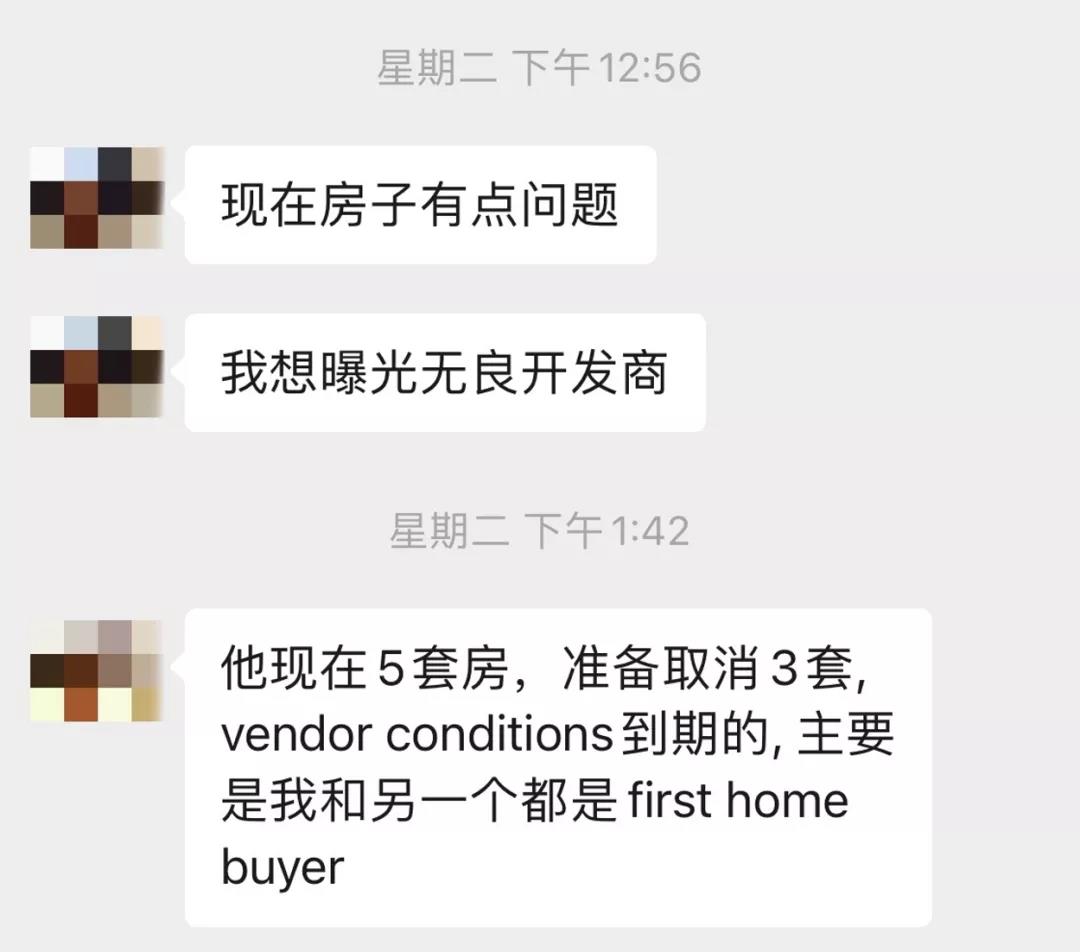
“I bought this off-the-plan house last year on 10 March 2020. The agent advertised handover by the end of 2020. I also met the head of the development company, who confirmed the same thing. Then Covid-19 broke out in April, and we had a Level 4 lockdown for 5 weeks. In May, I thought they would start earthworks and public drainage work. But when I visited the site between March and August 2020, the public drainage was still unfinished after 6 months. Earthworks only began in August, wasting half a year. I asked the sales agent, who said the developer was a friend he had known for 7–8 years and would not deliberately delay things or use dirty tactics. He gave me a construction schedule showing completion by 21 May 2021. Yet on my visits from August 2020 to March 2021, they had only done the foundations. The equally sized project next door had been completed and handed over in less than a year. To me, this also showed they were rushing the neighbouring project while delaying ours. Most alarming was that they removed the project information and photos from their website. Their project manager no longer wanted to discuss construction progress with me, so I emailed the developer asking for an updated schedule. He gave various reasons, saying BNZ had cancelled their loan, without explaining why, and that material shortages meant he could not give me a schedule. I was speechless. How could an experienced builder behave like this? I emailed again saying a delay was fine as long as quality was properly controlled. Meanwhile, the sales agent kept asking occasionally whether I wanted to sell, while continuing to give me false hope about construction progress. In July 2021, the site project manager contacted me and confirmed on WeChat that they would commit fully to this project and there would be no further delays. In mid-August 2021, the agent came back on the developer’s behalf seeking a price increase of $100K to $200K. I said that every time I asked for a construction schedule, he told me it was a turnkey project and I could not ask too many questions. Now he was coming back to ask for more money. I refused. Then, on 28 October 2021, I received a termination letter from the developer, seeking to use vendor escape clause 20.1(a) to avoid responsibility. The reasons given were that they had not obtained Watercare’s final inspection certificate, Auckland Council’s completion certificate or the section 224C certificate, along with material shortages, price increases and Covid delays.
“We obtained the property files from Auckland Council, proving they had received the section 223 title plan on 5 August 2021. This shows that subdivision of our five homes was complete and recorded with LINZ. All that remained was for them to pay the fees and supply the final completion documents to obtain the section 224C certificate. We then checked the original title for 1500 m to the power of 2. The mortgagee listed was CCB Bank, added in the year ,2021 on 15 July. This further supported my suspicion that they had finished the neighbouring project and had more funds available for ours, successfully mortgaged this land to CCB Bank in July 2021, and began looking for ways to cancel our contracts in August 2021. These facts show that they did not use the five buyers’ pre-sale agreements to obtain a loan. I suspect they had been deliberately delaying things since the beginning of the year with the intention of cancelling our sale and purchase agreements.
“I am a quantity surveyor with 15 years’ experience, currently overseeing government and private-sector projects with a combined value exceeding $3. I never expected to encounter this problem with my first home in New Zealand. As someone in the industry, I already have an idea of what has happened. I have reported it to LBP, and today they assigned an investigator, I intend to get the Government involved. I also complained to Master Builders, but they declined to investigate because I am not the developer. Their third-party organisation, Fairway Resolution, has emailed me confirming it will investigate.
“This has left us in a very difficult position. We bought before last year’s Covid-19 lockdown. I believe others also bought off the plan during the subdued housing market after Covid in 2020. I want people to know that small developers and irresponsible developers may well delay construction until the vendor escape clause date, cancel pre-sale agreements, and resell at the peak of the market. Do not be afraid to go to court. We must not encourage this behaviour. Many first-home buyers could become serious victims. I also hope to share how people facing this kind of problem can complain and stand up for their rights…”
In response to this case, YIJU urgently contacted Alfred Zhong, founder of Croftfield Law, hoping to offer readers some insight and food for thought.

Lawyer Alfred Zhong
Q: A reader recently told us she had run into trouble with her off-the-plan home. Once the sunset date passed, the developer decided to cancel the contract. Who do you think is at fault? In the current housing market, is this an isolated case, or will it become common?
Alfred: Without seeing the specific contractual terms, it is difficult to comment in depth. But if that is what the contract says, the developer does indeed have the right to cancel. The construction market is currently affected by several factors, including building material shortages and the pandemic. YIJU’s article on 10 November also mentioned that many developments were facing work stoppages (click to read). I believe more similar problems may arise in future.
Q: As you say, if house prices and construction costs keep rising, this may become an issue many developers and buyers face over the coming years. What advice would you give to help avoid it?
Alfred: Sunset clauses can take different forms. They may allow only the buyer to cancel, only the developer to cancel, or both parties to cancel. Some contracts specify a sunset date but contain less obvious provisions that can extend it, so buyers need to consult a lawyer to understand all the details. I therefore strongly recommend seeking legal advice before signing. My clients always have me review the contract details beforehand. If I find terms that benefit only the developer, I ask the developer to change them. Their response can also indicate their good faith. Finally, I recommend looking into the developer’s financial strength and reputation before signing an off-the-plan agreement. I believe larger developers are less likely to cancel project contracts lightly, because they tend to have more development experience and stronger funding.
YIJU believes off-the-plan investment carries risks for both developers and buyers. Investors secure a relatively low market price and potential capital gains during the construction period, while taking on the corresponding risks. Developers may need pre-sales to obtain bank finance, while also bearing the risk of sharp increases in material, labour and construction costs. If problems arise, whatever the outcome, we hope both parties can negotiate a satisfactory resolution.
If these views do not reflect your own, leave YIJU a comment at the end of the article!