Will new medium-density rules add fuel to New Zealand’s building boom? Hear what experienced developers have to say…
Those following property and construction will probably know that, in the middle of last month, New Zealand’s two major parties made a rare joint appearance to announce new housing policies. These aim to ease the housing crisis in major cities by relaxing approval procedures and accelerating increases in residential density. Will more permissive rules and a vision of higher density add fuel to the current building boom? What should those looking to develop medium-density projects consider?
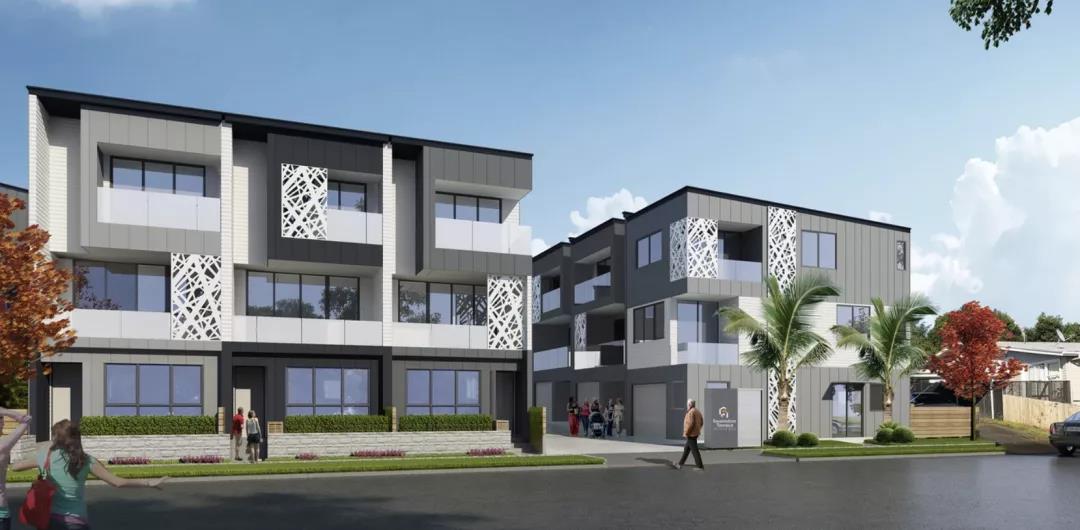

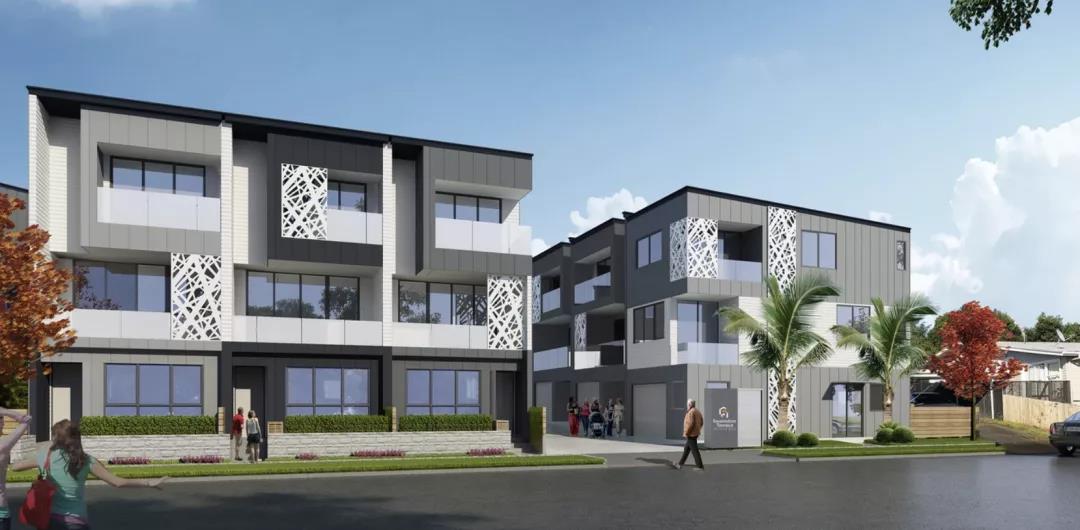
Today, we are pleased to hear from Dreamhome Group executive director Johnny Sun and planning and design director Kanye Kang, who bring more than a decade of local experience in development, subdivision, design and construction.
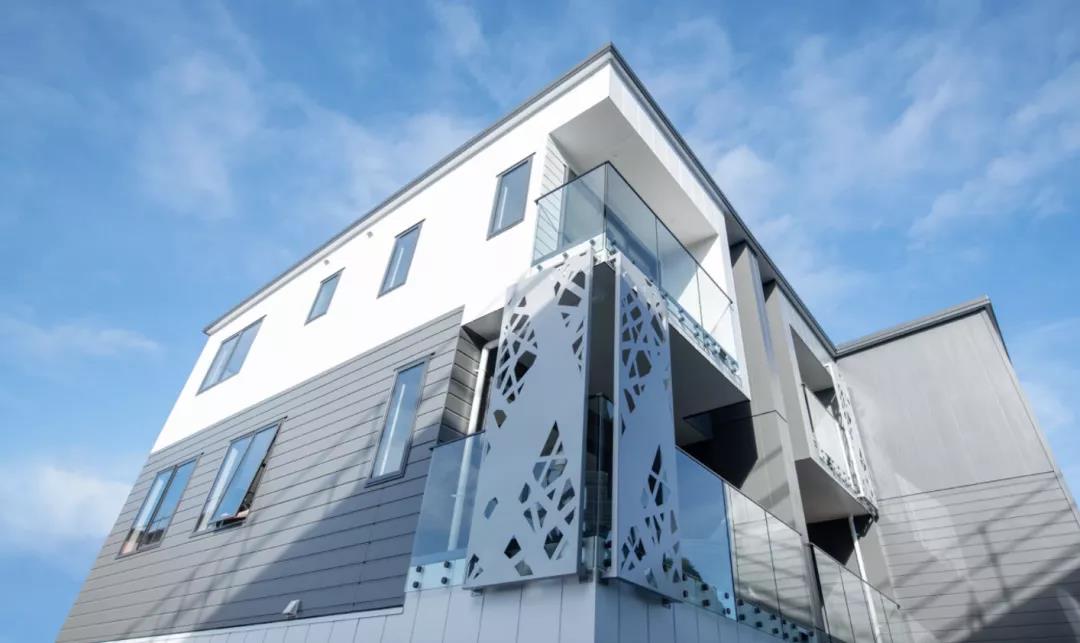
Dreamhome Group developed, designed and built Swainston Terrace
The exterior features James Hardie™ Stria™ cladding and
Linea™ Oblique™weatherboards
How will the new rules change our cities?
New Zealand’s housing problems have become increasingly serious in recent years. Recognising that overly restrictive planning requirements have become an obstacle to increasing housing supply, the Government introduced the National Policy Statement on Urban Development (NPS-UD) last year. It requires major city councils to plan better for the future and encourages greater housing density around employment areas, public transport and community infrastructure.
The Government’s amendments to the Resource Management Act aim to further advance and strengthen the NPS-UD. A new planning process, the ISPP, will enable major cities including Auckland, Hamilton, Tauranga, Wellington and Christchurch to implement NPS-UD requirements at least a year earlier. The new rules also require councils in major cities to adopt the Medium Density Residential Standards (MDRS) from August 2022, allowing three homes of three storeys on most sites, with maximum site coverage of 50%, without resource consent. This measure is said to help add between 48,200 and 105,500 homes in New Zealand’s major cities over the next 5–8 years, permanently changing housing supply, making it more responsive, and creating more compact, efficient and affordable urban housing.
What will the new rules mean for development and construction?
“First, we should acknowledge that the new rules are good news for development and construction, bringing advantages and opportunities,” says Dreamhome Group planning and design director Kanye Kang. “The Auckland Unitary Plan has already provided a good starting point. These new rules mainly encourage other major cities to keep pace, helping improve existing planning and design, relax some restrictions, and increase land-use efficiency and development potential.”
However, we still need to approach this cautiously. Although the gradual implementation of the NPS-UD may open up more opportunities for medium- and high-density development and improve the efficiency of resource consent processing, it does not mean we will be able to bypass that process entirely.
“Under the new rules, building 3 homes of 3 storeys on a typical site will not require resource consent. But as developers, we naturally want to make the most of the land. If we want to subdivide further, we will still need resource consent.”
Dreamhome Group executive director Johnny Sun adds:
“Take our Flatbush project as an example. We could actually have built 80 homes to apartment-building standards. But after weighing up land prices, the living environment and affordability for buyers, we settled on a 50-home scheme. This offers a more comfortable living environment and greater appeal to first-home buyers—a win for both us and our buyers. But looking at it another way, what if we built only 10 homes?”

Dreamhome Group developed the BarryPark Ville project in Flatbush,
with an exterior featuring James Hardie™ vertical Linea™ Oblique™ weatherboards and Stria™ Cladding
“As experienced developers, we take our lead from the market and find a balance between the various factors. Viewed this way, the new rules will actually have a fairly limited impact on many developers,” Johnny says.
By comparison, the new rules are even better news for those wanting to build additional granny flats, townhouses or units in their gardens and backyards. They also apply to tiny homes.

What should developers consider when building medium-density projects under the new rules?
Although the Government supports medium-density development and councils around the country are accelerating implementation of the NPS-UD, its real impact may not emerge until 2024 at the earliest. Before then, the new medium-density housing standards may help some eligible small projects get under way more quickly. However, councils will not begin implementing them until August next year, and projects being developed and built now still require resource consent.
Even once the new rules take effect, qualifying projects that can bypass resource consent will still need building consent and must meet dimensional and safety requirements. Designing and building medium-density homes generally involves more considerations than ordinary houses, including fire protection and sound insulation. This places greater demands on the project team’s experience and choice of building materials.
Dreamhome Group has worked in the New Zealand market for more than a decade, accumulating extensive experience in subdivision, property development and construction. Its Swainston Terrace development and design project was recognised as an outstanding project in the NZCBIA Design Excellence Awards. Sharing his experience, executive director Johnny Sun says:
“We have teams across the entire process, from development, planning and design to project management and construction. Our main strengths are medium- and high-density developments and luxury homes, and we can develop up to a hundred homes a year.
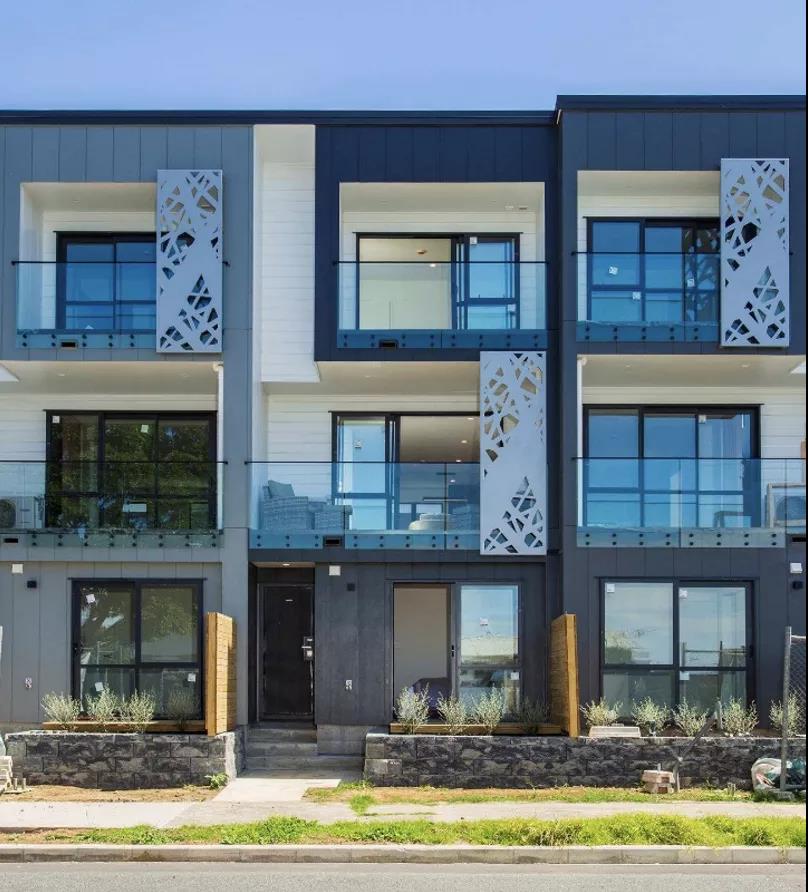
Swainston Terrace The exterior features James Hardie™ Stria™ cladding and
Linea™ Oblique™weatherboards

Swainston Terrace interior design
“Medium- and high-density developments can present many challenges. On our flagship Swainston project, for example, we had to consider geology, landscaping and the cultural character of the surrounding area, among other factors. Our years of experience taught us how to communicate more effectively with the council and meet its requirements, while also helping us position the project more precisely in the market. Ultimately, the project secured consent and received a very positive market response. Its design, which reflects the local character while retaining a modern feel, has also made it a landmark in the established St John neighbourhood,” Johnny says.
Dreamhome Group planning and design director Kanye Kang says:
“For building materials, the project’s exterior mainly uses James Hardie Stria cladding and Linea Oblique weatherboards. James Hardie’s exterior products offer significant performance advantages for medium- and high-density projects. They meet NZBC fire requirements, helping with consent approval, and are strong, durable and relatively inexpensive to maintain. James Hardie also offers a wide product range with clean, simple lines that can be painted any colour. This lets us combine colours and board widths to give Swainston a more contemporary, layered appearance. Many of our medium- and high-density projects use James Hardie materials.”
Since the new rules were announced, expectations and interpretations of the policies have become one of the construction industry’s most discussed topics. But with implementation still some way off, we can only wait and see whether they will add fuel to the building boom.
If you are considering investing in a medium-density project, contact Dreamhome Group’s professional team or visit the Swainston Terrace showroom.
For more news, industry knowledge and outstanding examples of development and design, follow James Hardie New Zealand’s official WeChat account or visit its official Chinese-language website, https://www.cn.jameshardie.co.nz/
References:
https://www.hud.govt.nz/assets/News-and-Resources/News-Articles/Final-fact-sheet-19-10-2021.pdf
https://www.stuff.co.nz/national/politics/300433304/labour-national-announce-sweeping-housing-density-law-threestorey-homes-without-consent
JamesHardieNewZealand
James Hardie New Zealand remains committed to providing New Zealand customers with quality fibre cement building materials. With outstanding durability, fire resistance and low maintenance requirements, our products are popular with building professionals and homeowners. Our flagship Linea weatherboards were developed in New Zealand and have enjoyed an excellent reputation for 20 years. They are now available internationally.