
Does plaster mean a leaky home? Is buying one a bargain or a costly mistake?
More than a decade ago, New Zealand’s property industry faced a disastrous leaky-home crisis. Even today, questions about responsibility, repairs and compensation for leaking plaster-clad exterior walls remain unresolved. Headlines about owners pouring in their life savings appear frequently, leaving buyers so fearful of the word ‘plaster’ that they immediately say no.
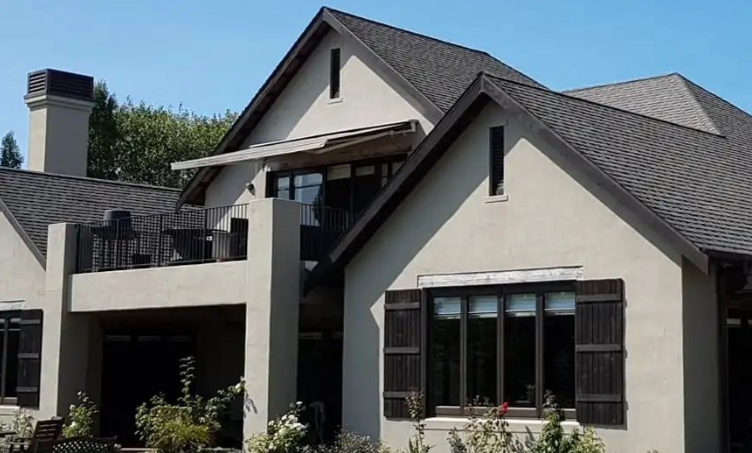
Yet few buyers who recoil at the mention of ‘plaster’ really understand what it is. How does plaster cladding lead to leaks? Are all leaking homes difficult to repair, and must repairs always cost a fortune? Without understanding these fundamentals, is it reasonable to conclude that no plaster-clad home should ever be bought?
In fact, because of this widespread hostility towards plaster cladding, plaster-clad homes generally cost 10%–15% less than weatherboard homes and attract less competition at auction. In Auckland’s property market, where prices change daily and even relentless bidding may not secure a home, a plaster-clad property could offer a chance to pick up a bargain. It would be a real shame to miss a good, reasonably priced home simply through lack of understanding or following the crowd.
YIJU’s editorial team consulted professional designers and building inspectors to trace the history of plaster-clad homes, hoping to help buyers make their decisions:
Plaster: what is it?
As is widely known, New Zealand is prone to earthquakes. Timber structures can effectively reduce earthquake damage to property and harm to people, so most New Zealand homes consist of a main timber frame combined with various exterior cladding materials.
What people call a plaster home generally means a timber-framed house with a continuous plaster-cladding finish. Its exterior walls are usually made from polystyrene or fibre-cement sheets coated with plaster, creating a seamless or smooth appearance, yet such homes have now become synonymous with ‘leaky homes’.
To be fair, plaster is simply a neutral term for an exterior cladding material commonly used in New Zealand, alongside brick, cedar and fibre-cement weatherboards such as Hardiplank. Before the nineteen-nineties, leaky homes were rare in New Zealand. This means plaster homes built before the 90s were no more prone to leaking than homes clad in brick or cedar. In theory, any cladding can leak if poorly maintained.
However, from 1995, plaster homes began to experience more leaking problems:
Plaster: how did it acquire its bad reputation?
In 1991, New Zealand introduced new building legislation, the Building Act 1991 (Building Act 1991). Its central principle was that the government would no longer oversee the entire construction process, but would inspect only the finished product. Responsibility for ensuring housing quality, previously borne by the government, therefore came to depend entirely on the market’s ‘survival of the fittest’ mechanism and developers’ consciences.
Then, in 1995, Standards New Zealand relaxed timber-treatment standards, removing the provision requiring preservative treatment under specified conditions. Although the rules did not formally take effect until 1998, in practice, from 1995, large quantities of untreated timber were already in widespread use. Such timber framing is vulnerable to damp, decay and insect infestation, readily leading to leaking homes.
Another contributing factor was the style that became popular in New Zealand from the early 90s: featuring flat roofs, recessed balconies and monolithic cladding, “Mediterranean-style” homes also exacerbated leaking problems. Mediterranean-style homes were originally designed for dry regions and were unsuited to New Zealand’s rainy maritime climate. Flat roofs without protective eaves and recessed balconies with joints prone to cracking further allowed substantial moisture to pass through the cladding and settle on timber framing, causing damp, decay and ultimately leaks.
In theory, all homes built between 1995 and 2004 could contain untreated timber and therefore face equally serious leaking problems. However, brick, cedar and other claddings have natural or deliberately constructed cavities, making it unlikely that water penetrating the cladding will remain on the timber framing. Plaster cladding has no cavity between the exterior wall and the timber framing, so water cannot drain away naturally. Over time, accumulated moisture can rot the entire timber frame, causing structural problems. Rotting timber can also harbour dangerous fungi, whose spores and odours pose serious health risks.
Relaxed government oversight, inadequate timber treatment and unsuitable building design together caused leaking problems in some plaster homes from this period. Yet plaster cladding alone became the scapegoat. In reality, plaster cladding was the outward face of the leaky-home problem; the underlying issues were the untreated timber framing widely used between 1995 and 2003, and building standards that did not require cavities.
Which Plaster homes should you avoid buying?
As more homes developed structural damage from leaks, Parliament made major amendments to the Building Act in 2004. These required treated timber and cavities, roofs pitched at least 15 degrees, and other measures. By then, the widespread leaky-home problem had been brought to an end, but tens of thousands of leaky homes continued to trouble buyers.
Having read this far, you may still be wondering: if plaster homes should not all be dismissed, which ones should you avoid buying?
Generally, a typical leaky plaster home has the following features:
1. Built between 1990 and 2004;
2. Mediterranean-style townhouses or apartments;
3. Flat roofs, no eaves or very narrow eaves;
4. Recessed balconies, meaning balconies set within the exterior walls;
5. Monolithic plaster cladding;
6. No cavity between the cladding and timber framing. So, when you see Mediterranean-style plaster townhouses or apartments built between 1990 and 2004, exercise the utmost caution.
Compared with townhouses and apartments, standalone plaster homes are less likely to leak because they lack other typical leaky-home features, such as flat roofs and an absence of eaves. To minimise risk, however, prospective buyers are still advised to obtain a building inspection and expert advice. Fully plaster-clad homes warrant particular consideration.
Tips: how can you check a home for signs of leaks?
Outside the home:
- Check exterior cladding for cracks, holes or damage;
- Check for cracks where exterior walls meet doors and windows;
- Check for large cracks where exterior walls meet the roof that could allow water inside;
- Check whether gutters are blocked;
- For tiled roofs, check for bulging, damage or depressions; for metal roofing, check for rusty or protruding screws;
- Check roof flashings for cracks, bulging, looseness or damage;
- Check the flashings around all roof penetrations, including water pipes, vents, aerials and satellite dishes, for cracks, rust or deterioration.
Inside the home:
- Check ceilings for water stains or sagging;
- Check interior walls and ceilings for water stains, mould or bulging;
- Check carpets for mould or signs of water damage, and floors for bulging or unevenness;
- Check for a musty smell indoors;
- Check trims and timber frames around doors and windows for rot or swelling;
- Check indoor screws, door and window hinges, and metal fittings for rust;
- Check wall corners for peeling finishes, mould, blackening and similar signs.
Under what circumstances might Plaster homes be worth buying?
To avoid all risk, some exceptionally cautious people choose to rule out every home built between 1995 and 2004. That is one valid approach. It brings the likelihood of buying a leaky home close to zero, but may also mean missing many opportunities.
Undeniably, plaster carries a higher risk of leaking than other cladding materials. Yet in Auckland’s hot property market, no home is categorically unbuyable: each case needs individual assessment.
For example, a plaster home built in 1986 may have moisture-treated timber framing. If indoor moisture testing meets the required standards, the likelihood of structural damage from leaks is relatively low. This applies only to standalone houses; townhouses and apartments are more complicated. Regular maintenance is still needed after purchase. Because plaster is rigid and does not readily accommodate thermal expansion and contraction, cracks at joints can easily let water in. Routine maintenance, sealing cracks and repainting can address this.
Furthermore, a property at risk of leaking is clearly not ideal if you intend to live in it long term. But what if the buyer plans to subdivide and redevelop? News reports often show dilapidated properties still selling for extraordinary sums. That is because the value of most standalone properties in New Zealand comprises both land and buildings. Even if the house leaks or is uninhabitable, the land can continue to rise in value. What looks like an astronomical price to us may be a sound investment for a professional developer.
Every home has an appropriate price, and plaster homes are no exception. Buyers should therefore thoroughly understand a property’s overall condition before purchasing and factor every disadvantage into the final price. Such an assessment requires considerable property-market experience. If you are new to the market or a recent migrant considering this kind of property, it is best to seek guidance from an agent who understands buildings thoroughly and considers your interests, rather than rejecting all plaster homes without understanding them.