
Have your say: when did you buy your property? A look back at New Zealand's property market over the past decade
For many years, a major driver of the property market has been the long-term decline in inflationary pressure, which has brought interest rates down substantially and encouraged borrowing. This has been particularly evident since the wave of interest rate cuts and overseas quantitative easing policies that followed the global financial crisis in 2008.
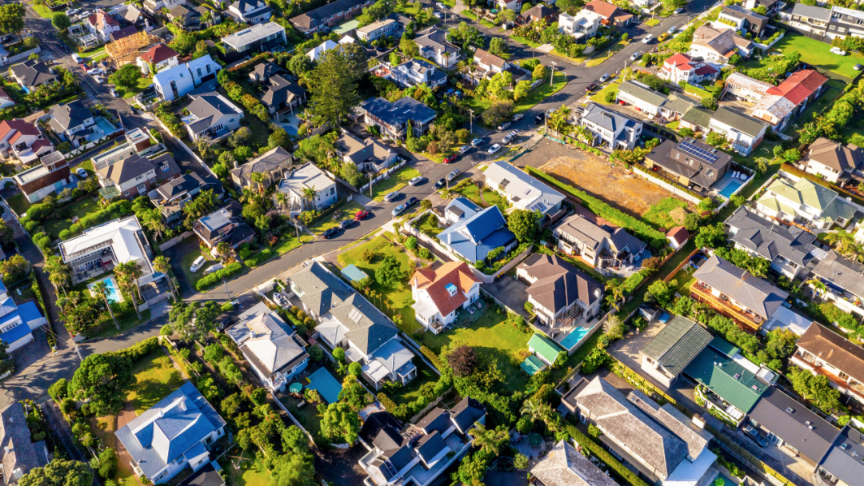
Looking back, New Zealand's property market in 2021 was turbulent and eventful. A series of government stimulus policies for the market also pushed enthusiasm for property investment and building to fever pitch across the country! As the year draws to a close, YIJU New Zealand looks back at the market's ups and downs over the past 10 years, using a series of figures recently released by property data company CoreLogic.
2011 year
Three years after the global financial crisis, the housing market remained relatively quiet. Sales volumes and house prices were stable, and affordability was reasonable, but first-home buyers were not particularly active. Net migration was negative and applications for new home consents were very low. Together, these factors undermined confidence in development, creating a housing shortage that persists today.
{ad}
2012 year
The market began to show signs of warming up, migration became less of a drag and mortgage rates began to fall. New dwelling consent numbers started to recover from their low point, although the increase was modest.
2013 year
This was a milestone year for the property market. Net migration turned positive, employment rose, and both house sales and prices increased at an accelerating pace. Investors remained very active despite rising mortgage rates. First-home buyers were still relatively subdued, but poor housing affordability meant many people needed more than 7 years to save a 20% deposit.
Applications for new home consents were increasing, but the legacy of the global financial crisis remained and the housing shortage was worsening. 2013 was also the year the Reserve Bank of New Zealand introduced loan-to-value ratio (LVR) restrictions, setting the minimum deposit at 10%.
2014 year
Net migration increased sharply, but mortgage rates continued to rise, slowing growth in both sales volumes and house prices.
Investors were very active in the property market, but the government's LVR restrictions dealt a major blow to first-home buyers. Applications for new home consents improved, although they remained well below their peak.
2015 year
This was a boom year for New Zealand's property market, with double-digit growth in sales volumes and prices. Mortgage rates fell, net migration reached a new peak and the employment rate exceeded 69%. First-home buyer enthusiasm recovered slightly, but affordability worsened, with the average time needed to save a deposit rising to more than 8 years. Investors dominated the property market.
The housing shortage worsened as applications for new home consents stagnated. The government introduced the bright-line test, taxing residential investment properties sold within two years of purchase, with an exemption for the buyer's main home. The Reserve Bank changed its LVR rules, requiring Auckland investors to have a 30% deposit and raising the deposit requirement for non-investment properties from 10% to 15%.
2016 year
Another peak year for the property market, with sales volumes and prices rising rapidly. Migration and applications for new dwelling consents continued to grow, but still failed to meet market demand. Mortgage rates were stable and more people entered the workforce.
Affordability continued to deteriorate, with an ordinary household needing more than 9 years to save a deposit. This dampened first-home buyer enthusiasm, but property investors remained active. Rising house prices prompted the Reserve Bank to tighten its LVR requirements again, requiring 40% deposits from investors and 20% from owner-occupiers.
2017 year
This was a turning point for the property market. Many investors withdrew, and overall sales volumes and house price growth slowed. Although saving a deposit took longer, first-home buyers gained a larger share of the market. Mortgage rates and net migration were relatively stable, but the imbalance between housing supply and demand remained evident.
2018 year
The market's most stable year, with most indicators remaining relatively steady.
As the property market cooled, the Reserve Bank adjusted its LVR restrictions again, reducing investors' deposit requirement from 40% to 35%, while raising the owner-occupier requirement to 15%. The new coalition government extended the bright-line test to 5 years and introduced a foreign buyer ban.
2019 year
Another relatively stable year for the market. The Reserve Bank further eased its LVR rules, reducing investors' deposit requirement to 30% while raising the owner-occupier requirement to 20%. Notably, first-home buyers increased their share of property transactions.
Migration and applications for new dwelling consents surged, while mortgage rates fell. The government rejected a proposed capital gains tax but introduced ring-fencing rules that removed tax offsets for rental properties, meaning investors could no longer offset rental losses against income from outside property.
2020 year
At the start of the COVID pandemic in New Zealand, the government and the Reserve Bank made major changes. The Official Cash Rate was cut to 0.25%, LVR restrictions were removed, mortgage repayments could be deferred, a Funding for Lending Programme was launched and quantitative easing was reintroduced. The country entered full lockdown at the end of March, with restrictions continuing until early June. The first prolonged lockdown caused the housing market to decline in April and May, before recovering from June. Healthy Homes legislation caused quite a stir and increased investors' rental property costs.
Although net migration was almost zero, applications for new home consents grew steadily and the housing shortage finally began to ease. For first-home buyers, however, things were not as straightforward as they had imagined, as they needed longer to save a deposit.
2021 year
The market was booming as the COVID support measures introduced in 2020 were gradually withdrawn. The Reserve Bank reinstated and tightened LVR restrictions, raising investors' deposit requirement to 40%. To encourage first-home buyers, the owner-occupier requirement was lowered to 10%, while the government also introduced a shared home ownership policy. The Reserve Bank raised the OCR for the first time in seven years, ended quantitative easing and signalled new lending restrictions such as debt-to-income ratios (DTIs).
In March, the government announced new housing policies intended to level the playing field. Investors were again targeted: the bright-line test for existing properties was extended to 10 years, remaining at 5 years for new builds. Interest deductibility was removed for all newly purchased homes, although it remained available for new builds. Persistently negative net migration continued to bring substantial relief to the housing shortage.
Review and outlook
Property market data from the past decade shows that rising house prices and a booming market are closely tied to government and Reserve Bank policies. If the government merely treats symptoms as they arise, without clear policy guidance for the economy's direction, it could drive New Zealand's housing market into an abyss.
The housing shortage is partly the result of an industry-wide shake-up following the global financial crisis. However, government restrictions on land use and numerous problems with the Resource Management Act have intensified the imbalance between housing supply and demand. The Auckland Unitary Plan and more relaxed resource consent policies appear to be addressing the causes, but greater wisdom from the government will be needed to determine whether they will trigger other knock-on problems.
Looking ahead to 2022, CoreLogic said in its latest Property Pulse report that a surge in new dwellings could shift the property market towards buyers next year. Total housing stock on the market has already begun a sustained rise, and the signs are becoming increasingly clear. For buyers, more choice can only mean less price pressure in due course, with a shift to a buyers' market later in 2022 a certainty.
“For some time, tight housing supply on the market has contrasted sharply with strong demand fuelled by low mortgage rates and abundant credit, driving property values up substantially nationwide.” “Total stock has risen by nearly 40% from its recent low and is now back at its highest level since March.”
The report also said this trend was particularly evident in Wellington and Dunedin, followed by Hamilton, where listings now exceeded levels at the same time in 2019 and 2020. “The turning point now appears to have been reached, and with more sellers emerging, it would be no surprise if listings continued to increase into 2022.” “Overall, in 2022, we are very likely to see a buyers' market for the first time in several years.” That said, a reduction in sellers' bargaining power does not necessarily mean an outright fall in house prices.