
The big debate: will the New Zealand city with last year’s strongest house price growth remain the best place to invest this year?
Which part of New Zealand recorded the strongest house price growth in 2021? Auckland? Wellington? Tauranga? Queenstown?
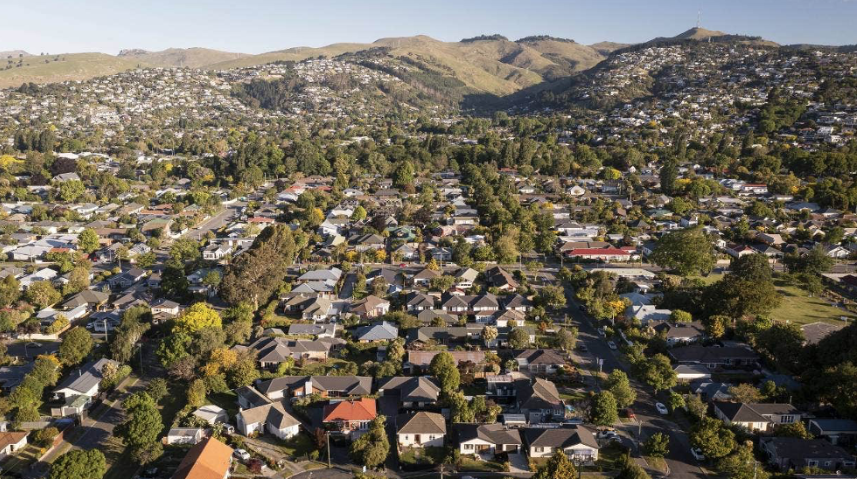
None of those answers is correct. According to the latest Quotable Value (QV) data, Christchurch recorded the strongest growth last year, with its average house price rising an astonishing 40.2% compared with 2021! Prices climbed from NZ$560,000 in January last year to NZ$785,000 in December. This means the city’s homeowners gained an average of NZ$220,000 in asset value over the past year. QV operations manager Paul Corry said this gave Christchurch the ‘unwelcome’ title of the area with the highest house price growth in 2021. He said that although Christchurch house prices had recently dipped slightly, they still recorded double-digit growth of 11.6% in the final three months of 2021.
{ad}
QV data shows that nationwide house prices rose 7.8% in the three months to December, reaching an average of NZ$1,053,315, up 28.4% on the same period last year. Average house prices increased in every New Zealand city and region. Auckland prices rose 9.7% from the previous quarter to an average of NZ$1,527,092. Whangārei, New Plymouth and Hastings also recorded strong quarterly growth of 8.6%, 8.4% and 8.1% respectively, with average prices reaching NZ$827,836, NZ$747,745 and NZ$922,287. In the Wellington region, prices rose 3.2% to an average of NZ$1,086,421. Annual house price growth exceeded 25% in Auckland, Tauranga, Hamilton and Wellington, at 29.1%, 30.5%, 29.1% and 25.5% respectively.
Previous YIJU articles have focused more on changes in the property markets of Auckland and surrounding areas. Today, we explore why Christchurch topped New Zealand’s house price growth rankings in 2021 and where its prices might head next.
Why did Christchurch house prices grow so strongly last year?
Ray White Christchurch Metro director Tony McPherson said Christchurch had experienced a prolonged period of stable house prices while prices elsewhere in New Zealand soared. Christchurch’s growth therefore reflected a catch-up with the historical gap between it and other regions. With post-earthquake rebuilding and recovery progressing well, the city is becoming an attractive place to live.
Andrew Nicol, a partner at property investment company OPES, said Christchurch house prices had risen to levels more consistent with other regions. Ten years after the earthquakes, Christchurch was finding its feet again. Major projects, such as the Parakiore sports facilities and the central city stadium, had created many jobs. Those opportunities, combined with affordable housing prices well below Auckland’s, were helping attract more people to Christchurch.
Jim Davis, Harcourt’s regional manager for Christchurch and the South Island, said 2021 had been a difficult year, with many new buildings under construction in Christchurch’s Merivale area. Although 2021 was a good year for sellers, it was truly difficult for buyers dealing with agents every day and repeatedly missing out on homes.
So, in 2022, will Christchurch continue to lead New Zealand with house price growth far outstripping the rest of the country?
Many experts believe the answer is no.
Economist Tony Alexander said Christchurch house prices were unlikely to grow at last year’s pace. He believed that “growth this year will not exceed 35%, and the average price is unlikely to cross the NZ$1,000,000 mark”. He said 15% growth would take Christchurch’s average house price to around NZ$860,000, while reaching NZ$1,000,000 would have to wait until 2023 or 2024. Christchurch prices are still catching up with other regions, and that will continue this year. In particular, with many people unable to obtain bank mortgages in Auckland and Wellington, more will turn their attention to Christchurch. Although changes to the CCCFA and LVR rules will cool property markets across New Zealand, some buyers will shift their focus to Canterbury and Christchurch.
According to OneRoof’s latest data, average house prices in Auckland, Wellington, Tauranga and Queenstown—four of New Zealand’s seven main cities—have all exceeded NZ$1,000,000. Many buyers may therefore turn to relatively affordable Christchurch, where the average remains below NZ$800,000. Kelvin Davidson, chief economist at property data research company CoreLogic, also believes Christchurch will not reach the NZ$1,000,000 milestone this year, pointing out that 35% growth for two consecutive years is unlikely. For first-home buyers, the 20% deposit requirement has not changed, so higher house prices mean they must raise a larger deposit. Securing more borrowing is difficult when lending is becoming harder to obtain and interest rates are rising. Davidson said Christchurch house prices still had room to grow. Although it was difficult to know whether buyers shut out of markets such as Auckland and Hamilton would flock to Christchurch, three families from Auckland and Waikato had already moved into his street. He predicted Christchurch’s house price growth would exceed the national average. For example, if national house prices rose 5%, Christchurch prices could rise 10% or 15%.
Chris Kennedy, owner of Christchurch’s Harcourts Gold, said an increasing number of established suburbs and some newer areas developed between Fendalton and Prestons had average house prices of NZ$1,000,000. Although he also did not expect Christchurch’s average price to exceed a million New Zealand dollars this year, he said a rise of that size would be good for the city. “I think Christchurch has always been undervalued. Compared with other parts of the country, it is still affordable. It is a beautiful place, with a wonderfully pleasant climate, and it also offers tremendous opportunities for development.” He predicted a different but still strong Christchurch market this year. “I’m not sure we’ll see substantial increases in values, but we will see Christchurch house prices consolidate.” His advice was not to sit and wait for prices to fall: “Once you own a property in the market, you have more choices.”