
One-off visas bring a wave of first-home buyers into the market. Is borrowing set to become even harder? Experts say most people overlook something harder than getting a mortgage!
According to Immigration New Zealand's website, as at 3 July 2022, the agency had received 101,500 applications for the 2021 Resident Visa, covering 204,700 people. It had approved 31,600 applications and 63,700 visas, and declined 40 applications.

According to Immigration New Zealand's website, as at 3 July 2022, the agency had received 101,500 applications for the 2021 Resident Visa, covering 204,700 people. It had approved 31,600 applications and 63,700 visas, and declined 40 applications.
{ad}
Mr Wang's family, whose name has been changed, recently obtained the 2021 Resident Visa. The couple have a deposit of $200,000 and bank approval to borrow $800,000, but their dream of buying a home in a school zone in East Auckland for their child remains some way off. As more people receive the 2021 Resident Visa, a wave of first-home buyers may enter New Zealand's property market. Each buyer's borrowing difficulties are different. New Zealand's largest real estate company, Barfoot & Thompson, focuses on developing property purchase solutions for every client. To address first-home buyers' lending challenges, it has teamed up with Huarong Finance to provide professional mortgage advice.
YIJU: As more One-off visas are approved, a wave of first-home buyers is entering the market. Securing a mortgage will be one of their challenges. What advice do you have for them?
Huarong Finance: In today's rapidly changing market, monthly interest rate changes have recently become the norm. Those applying through the One-off pathway should learn about mortgages and understand their borrowing capacity in advance. If you have not yet received approval, you can speak to a real estate agent and mortgage adviser about current property market conditions to develop a basic understanding of the type of property you want and how much you could borrow.
Those who have obtained residency or are eligible to buy property should try to secure mortgage pre-approval. This gives you a clearer idea of your borrowing limit and total purchase budget, helping you avoid searching aimlessly for unsuitable properties. A mortgage pre-approval letter is generally valid for 3 months, and you can apply for an extension before the 3 months expire. As borrowing becomes harder and interest rates continue to rise, applicants' borrowing limits will be affected. We therefore recommend seeking pre-approval as early as possible if you need to buy a home.
YIJU: Media outlets are reporting that getting a mortgage is difficult, with some calling it the toughest period in 65 years. What is actually happening on the lending front line?
Huarong Finance: Borrowing probably has not yet reached its most difficult stage. Looking back over 18 years of New Zealand interest rates, mortgage rates have previously exceeded 10%. Fluctuations in mortgage rates were normal during the 18 years from 2004 to 2022. As the chart below shows, bank lending rates remained broadly between 4% and 6% over the 10 years from 2009 to 2019. The sharp fall to 2%–3% between 2020 and 2021 was actually an exceptional period.
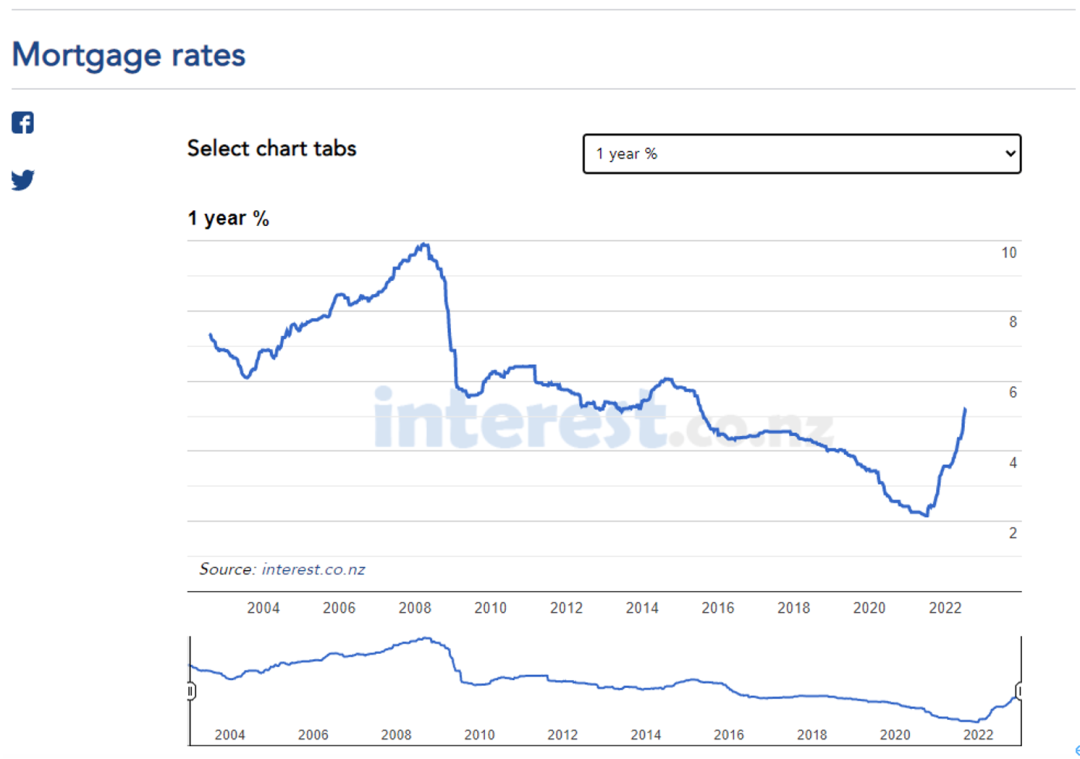
Global economic conditions and monetary policy adjustments through the Official Cash Rate (OCR) have driven repeated interest rate increases during the first half of this year. The CCCFA, the Credit Contracts and Consumer Finance Act, has also made bank approval criteria tougher. However, for buyers with an essential housing need, this will not be the main factor affecting their purchase. Interest rates are higher than last year, but house prices are also lower. The issue needs to be considered from all angles.
Our clients Mr Zhang and his wife, whose names have been changed, currently have no children. Both earn PAYE salaries, with combined annual pre-tax income of NZ$60,000 + NZ$50,000 = NZ$110,000. They planned to buy a three-bedroom home to live in.
We established that the couple's living expenses were reasonable, with no excessive spending, credit cards, other personal overdraft accounts or other loans. Their mortgage adviser suggested that if they wanted a three-bedroom home, they could rent out two bedrooms for additional income. Assuming each bedroom earns NZ$150 a week in rent:
Estimated rental income: NZ$150 per week per bedroom × 2 = NZ$300 per week × 52 weeks = NZ$15,600 per year;
Total household income: $110,000 + $15,600 = $125,600 per year;
With their mortgage adviser's help, the couple successfully borrowed NZ$980,000 and bought the home they wanted.
YIJU: What changes and trends are emerging in the environment in which banks set their policies?
Huarong Finance: The OCR has risen by 50 basis points to 2.5%, which means our interest rates may continue to rise. The Reserve Bank's policy decisions have always been an important influence on interest rates. However, we have observed banks adjusting their policies to help property buyers enter the market. For example, many banks have introduced 1% cashback offers, providing a benefit in another form as interest rates rise. Lending assessment criteria have also eased compared with the very tight conditions at the start of the year. We believe banks are largely seeking to help homebuyers through this difficult period.
YIJU: What factors do banks assess when considering a mortgage applicant?
Huarong Finance: Banks focus on two basic areas when assessing an applicant's ability to repay: their overall income and their monthly personal or household expenses. This is an assessment of affordability: whether applicants can afford a new loan after deducting normal living costs and other financial outgoings from their income.
Banks generally divide customers' expenses into three broad categories:
Fixed financial commitments, such as rent, body corporate fees, private school fees, mortgage payments and home insurance; living expenses, such as water and electricity bills, food, public transport, clothing and travel; and regular recurring expenses, such as internet bills, pay television, personal insurance policies, restaurant meals, gym memberships and buy-now-pay-later services.
Any of these expenses will affect how much you can borrow to some extent.
YIJU: What advice do you have for applicants who want to increase their borrowing limit?
Huarong Finance: Banks do not really favour or dislike particular types of applicants. However, if an applicant has substantial spending funded by borrowing, such as multiple credit cards, personal loans or buy-now-pay-later services like Afterpay, or gambles frequently, the bank will consider whether taking on a mortgage would require changes to their spending habits.
If an applicant already spends their entire income each month, the bank will consider whether they might have no disposable funds left by the time a mortgage repayment falls due. Banks do, after all, expect loans to be repaid, and New Zealand's various regulations require lenders to avoid putting borrowers in greater financial difficulty when recovering loans.
Viewed another way, banks care about whether applicants can afford their debts, including both existing and new borrowing, and whether they demonstrate good account management, such as regular saving, and a good credit history, such as paying credit cards on time.
YIJU: Must first-home buyers have a deposit of 20%?
Huarong Finance: Under bank policies, first-home buyers can have a loan-to-value ratio (LVR) of up to 90%. However, lending above 80% attracts different interest rates, which may be higher than standard rates, and stricter assessment criteria.
Buyers with limited deposit funds who want to purchase with just a 5% deposit can consider the government's Kāinga Ora First Home Partner scheme. Buyers provide their own 5% deposit and apply to the government for assistance with the remainder. The government assesses eligibility and, once approved, contributes towards the deposit.
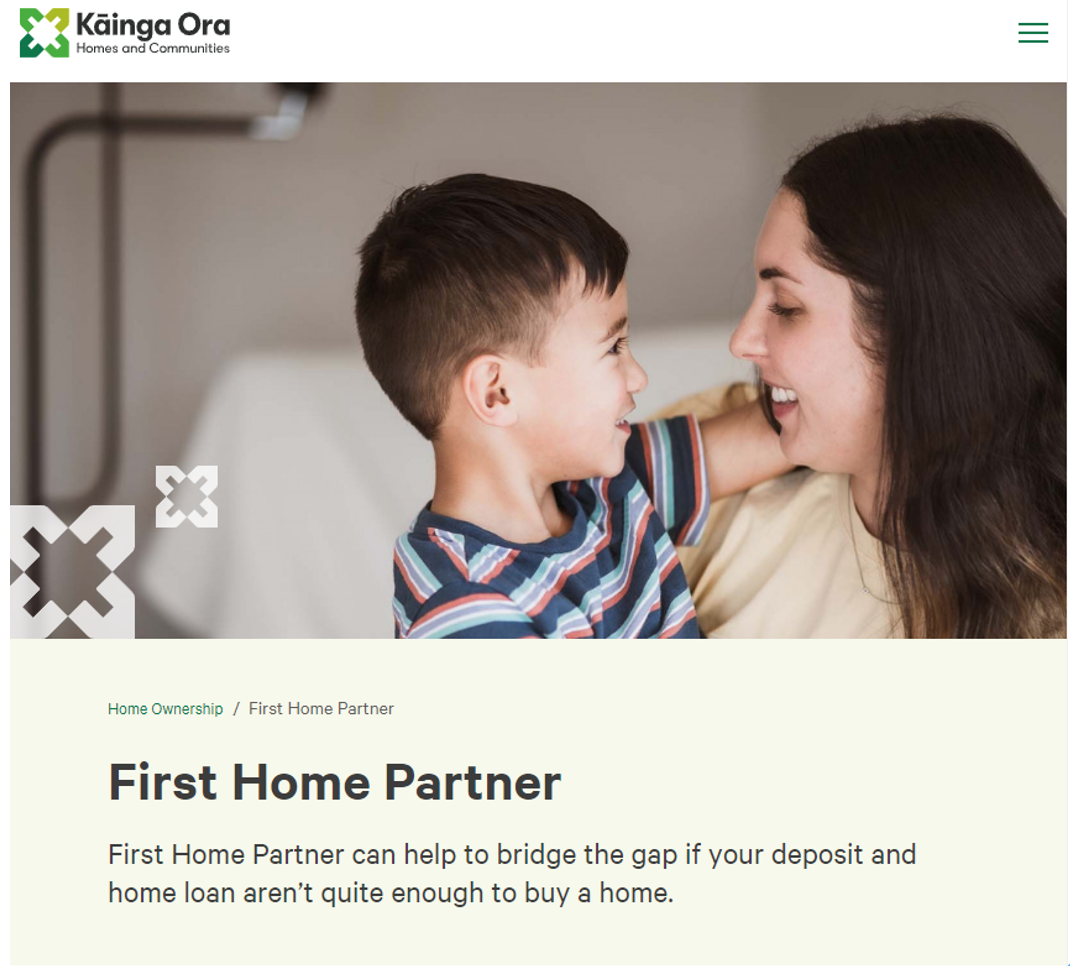
The government places certain restrictions on First Home Loan applications. Applicants generally need to meet the following 3 conditions:
1. Applicants' pre-tax income over the previous 12 months must not exceed the specified limits: NZ$95,000 for a single applicant, or NZ$150,000 for two or more applicants;
2. Applicants must have a deposit of at least 5%;
3. The property being purchased must fall below a specified price limit. In Auckland, for example, the limit for existing or new homes is NZ$875,000.
Applicants who meet these conditions can apply for lending through the First Home Loan scheme. These criteria are stricter than normal bank requirements, but applicants can receive pre-approval when a bank is unable to lend. For the detailed policy, visit the government website: https://kaingaora.govt.nz/
YIJU: What special offers are banks currently providing?
Huarong Finance: There are still many offers available to first-home buyers in the current market, including:
1
Buyers of new homes can access ANZ's Blueprint to Build discounted interest rate, currently 3.58%.
2
The Good Energy Home and Warm Up Home Loan energy assistance loans offer lending below NZ$80,000 and NZ$10,000, at interest rates of 1% and 0%, respectively. They can be used for home energy-efficiency improvements, such as installing insulation; switching to alternative-energy transport, such as buying an electric vehicle; and renewable energy upgrades, such as solar power.
3
Several banks have recently offered 1% cashback on home loans.
4
Several banks have introduced low-deposit home loans and other products for first-home buyers and buyers with essential housing needs.
All these products have different eligibility conditions. Consult your bank manager or mortgage adviser to see whether your needs meet the criteria.
Compared with the mortgage market over the previous two years, this year is certainly difficult. However, looking back over nearly 20 years, there have been many similar periods. Borrowing limits depend mainly on income and expenses. When income is fixed, developing good saving and spending habits may be harder than applying for a mortgage. Yet changing these habits can help increase a customer's borrowing limit, because frequent dining out or entertainment spending reduces it. Understanding and preparing for your mortgage in advance, and developing good spending and saving habits, can all help you enter the market in a stronger position.