
Will doubled work visa quotas across several industries really have employers celebrating? Not so fast: a former immigration officer weighs in
Hospitality operators have recently complained to the media that the new Accredited Employer Work Visa system is hindering their recruitment of new staff.

Hospitality operators have recently complained to the media that the new Accredited Employer Work Visa system is hindering their recruitment of new staff.

Image source: internet (also applies below)
Marcin Kulak runs Mekong Baby, a Southeast Asian restaurant in Ponsonby. As an accredited employer, he can sponsor employees for work visas, but he believes the policy is “more of a hindrance than a help”. He recently hired a Vietnamese chef already living in New Zealand, but when he tried to bring two of the chef’s friends over from Vietnam to work, he found it was not so straightforward. He submitted an application on 28 June, but the chef position is still being “assessed”. An application for a waiter position submitted on 1 July has only reached the “initial assessment” stage. He says he spent NZ$1200 applying for employer accreditation and NZ$600 for each position, and must spend another NZ$2000 each month on recruitment advertising. Yet after spending all that money, he still cannot recruit staff.
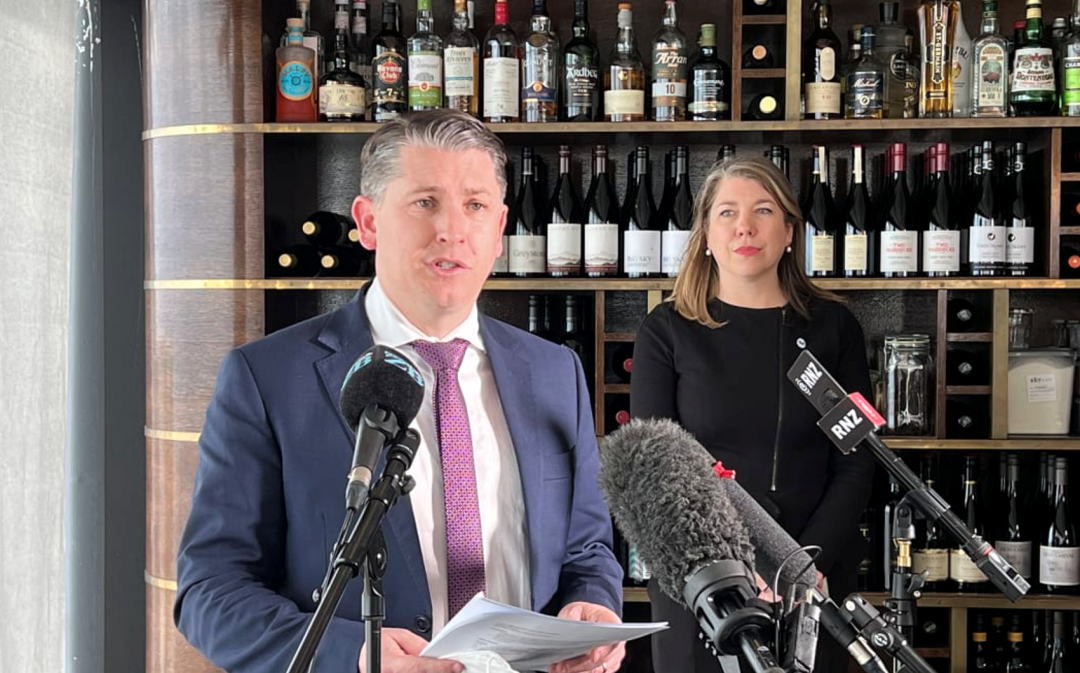
Immigration Minister Michael Wood
To address persistent labour shortages in New Zealand, Immigration Minister Michael Wood announced yesterday afternoon that, from today, the Government would lower wage requirements in some industries, allowing employers to pay overseas migrant workers below the new median wage. Application quotas for the 2022/2023 working holiday visa schemes have also been doubled, and working holiday visa holders’ visa durations extended. Industries receiving exemptions from median wage requirements include aged care, construction, meat processing, seafood, seasonal snow sports and adventure tourism.
Wood said the policy changes were intended to help local businesses hardest hit by labour shortages attract more overseas migrant workers. Each decision also came with expectations for improvement, including implementing workforce transition plans and industry transformation plans. To better address New Zealand’s shortage of temporary workers, the Government will add 12,000 working holiday visa places. Holders already in New Zealand whose working holiday visas expire between 26 August this year and 31 May 2023 will have their visas extended by 6 months. Meanwhile, previous working holiday visa holders who could not travel to New Zealand because of the pandemic will be issued new visas from October, allowing them to enter New Zealand before 31 January 2023 and stay for 12 months. Wood concluded by saying that the pandemic had brought the world to a “standstill”, particularly affecting industries heavily reliant on foreign workers, such as hospitality and tourism. However, this had changed since New Zealand reopened its borders: 4000 working holiday visa holders had now returned, and work applications from more than 21,000 people had been approved.
{ad}
But does the actual state of work visa applications match Immigration Minister Michael Wood’s description? YIJU promptly contacted immigration lawyer and former immigration officer Sonny Lam to explain the latest policies to YIJU readers:

Sonny Lam
Queen City Law Law firm | Immigration lawyer
Immigration New Zealand | Former immigration officer
YIJU: Could you summarise the specific work visa policy changes Immigration New Zealand has announced?
Sonny Lam:There are two main points. 1) Application quotas for the 2022/2023 working holiday visa schemes have doubled, and working holiday visa holders already in New Zealand will have their visas extended by 6 months. 2) The Government has lowered wage requirements in some industries, allowing skilled migrant workers to be paid below the new median wage. The main changes are:
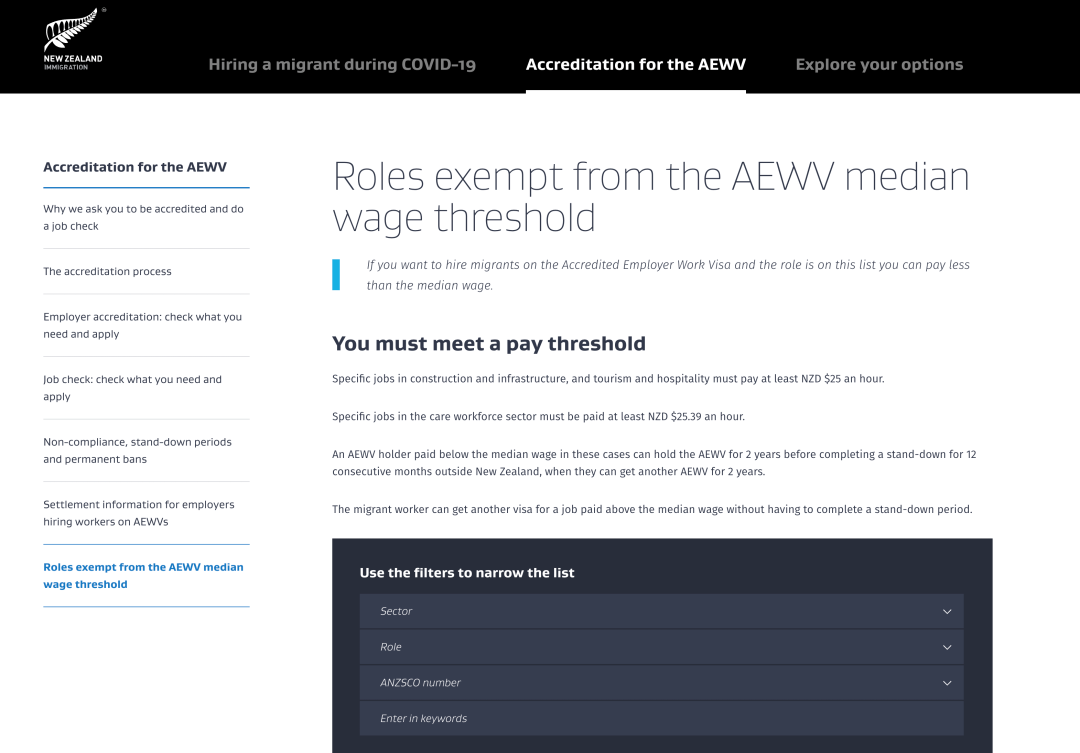
- The wage threshold for most construction-related roles has been lowered to NZ$25 an hour. Applicants will receive two-year work visas, with their pay required to rise annually and ultimately reach at least 90% of the median wage. In other words, if the median wage rises to NZ$29.66 an hour at its next adjustment, the new wage threshold will need to reach NZ$26.69 an hour.
- The wage threshold for healthcare roles has been lowered to NZ$26.16 an hour, with visas valid for two years.
- The wage threshold for meat-processing roles has been lowered to NZ$24.00 an hour. Up to 320 visas may be approved, valid for 7 months.
- The wage threshold for seafood-processing roles has been lowered to NZ$24.00 an hour. Up to 600 visas may be approved, valid for 7 months.
- Foreign fishing crew visas may be granted for up to 12 months, with specific wage requirements.
- Seasonal snow sports and adventure tourism work visas may be granted for up to 7 months, with specific wage requirements.
- Specific wage requirements for other occupations have already been announced, and two-year work visas will be available.
Holders of these visas should note that, after their two-year work visas expire, they must complete a 12-month “stand-down period” before applying for another 2-year work visa. However, workers applying for a standard three-year work visa do not need to wait 12 months.
Immigration New Zealand’s detailed explanation in English is available at this link: https://www.immigration.govt.nz/employ-migrants/new-employer-accreditation-and-work-visa/roles-exempt-from-aewv-median-wage-threshold
YIJU: Why lower the wage thresholds?
Sonny Lam:The previous median wage requirement of NZ$27.76 an hour was too high, driving up employment costs and leaving many business owners reluctant to employ work visa holders. The intention behind the policy was to encourage businesses to hire more local New Zealanders. But the Government has now recognised that the domestic workforce itself is insufficient, with many people having moved to Australia or other places offering higher pay.
YIJU: Can these changes improve the current situation?
Sonny Lam: Personally, I see this policy change as positive, although it may have arrived about 6 months too late. I am not at all surprised that overseas applicant numbers are below expectations, because few employers are willing to pay all these additional application fees. For many businesses, the biggest issue now is not how they exploit staff, but whether they can survive. Continually rising interest rates have severely affected business cash flow, leaving operators in many industries struggling.
YIJU: Does this policy benefit employers or employees?
Sonny Lam:I believe the changes benefit everyone, because more business owners are becoming willing to try sponsoring and supporting overseas workers’ work visa applications. For many small and medium-sized business owners, high wage requirements are a major deterrent. It is difficult to run a profitable business with a median wage requirement of NZ$27.76 an hour.
YIJU: If I already have an approved job check, do I need a new one?
Sonny Lam:Yes. Unfortunately, these wage requirements and work visas are entirely separate from the three-year work visa. Businesses with an approved job check for pay of NZ$27.76 an hour or more must advertise again and apply for a new job check if they want to use the new employment arrangements.
YIJU: What should a business do if it has used up its work visa quota?
Sonny Lam:As the saying goes, the early bird catches the worm. If a business has used up its work visa places, it needs to upgrade to “high-volume” employer accreditation so it can hire more staff.
YIJU: Can New Zealand’s economic conditions support high wages in businesses?
Sonny Lam:These policy changes actually show that Immigration New Zealand and the relevant government agencies lack confidence that businesses can sustain wages of NZ$27.76 an hour or more—at least over the next two years, in my view. If fewer overseas workers than expected want to work in New Zealand, Immigration New Zealand may even continue lowering its requirements until it attracts the number it wants. We are undeniably operating in a changing environment. The Government clearly recognises this and is adjusting policy in response to the latest work visa scheme’s performance. Fewer than 2000 work visa applications were submitted between 4 July and 14 August, showing that Immigration New Zealand previously set its sights too high. I hope to see its work visa policies for overseas workers become more relaxed as next year’s general election approaches. Please contact me if anything above is unclear.