
Major planning changes again: how should buyers respond? Auckland may introduce a new low-density residential zone
Following the close of the initial public consultation period, the new Medium Density Residential Standards (MDRS) officially took effect on day 18 of month 8.
Auckland Unitary Plan Change 78
Following the close of the initial public consultation period, the new Medium Density Residential Standards (MDRS) officially took effect on day 18 of month 8. This means Auckland Council allows up to three homes, such as townhouses, of up to three storeys on most residential sites without resource consent, provided they comply with the MDRS rules. New standards governing property development have been introduced, alongside the Auckland Unitary Plan Change 78 map (Plan Change 78 Map) and guidance on how to use it. Building on the initial MDRS draft, the Auckland Unitary Plan map introduces a new zone: the Low Density Residential Zone.
The proposed changes under Plan Change 78 (Plan Change 78) respond to the Government's National Policy Statement on Urban Development (NPS-UD). These rules allow more high-density housing across Auckland, including buildings of 6 storeys or more within walking distance of Auckland's city centre, its 10 major metropolitan centres and rapid transit stops. Auckland Council says it is currently seeking public feedback on the Auckland Unitary Plan, with submissions open in 2022 from day 18 of month 8 to day 29 of month 9.
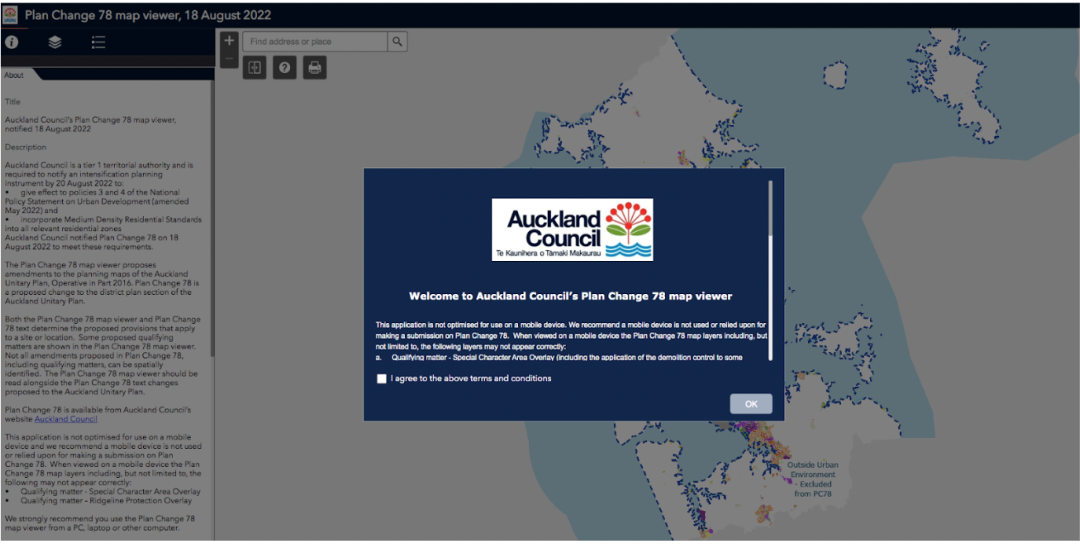
Auckland Council's Plan Change 78 landing page
Auckland Council's general manager of plans and places, John Duguid, says the council encourages people to have their say and make submissions on the forthcoming NPS-UD and MDRS plans. He believes the original Auckland Unitary Plan gave housing and economic development a major boost, and these rule changes will significantly affect the city's development over the coming years. The changes will also substantially increase housing capacity, allowing more high-density buildings within walking distance of urban centres and public transport, and changing the rules governing how people choose to build homes across the city.
Auckland Council's general manager of resource consents, Ian Smallburn, says these changes mark the start of significant and complex amendments to the Auckland Unitary Plan, as the new density rules begin enabling higher-density housing across the city. However, he also stresses that property owners and developers must continue to comply with all other rules and standards under the Resource Management Act, avoiding potential adverse effects on the environment and other people during development.
Debate about medium-density housing continues to intensify both within and outside the industry. At last week's New Zealand International Building Expo and Summit (NZIBES) exhibition and awards dinner, discussion of the topic reached fever pitch. Frank Xu, president of the New Zealand Chinese Building Industry Association, said: “In the medium-density era, the greatest challenges will fall on the construction industry. The market's ‘relatively disordered’ state presents a major challenge for practitioners and businesses of all kinds. Self-discipline and continual improvement are the best response.”
Barfoot & Thompson managing director Peter Thompson chatted warmly with visitors and staff at the exhibition. He said: “New Zealand's construction and property industries face challenges. Seeing so many people from the industry working together towards shared success here is very moving. Behind every business and every individual is a story of working hard through adversity, making decisions in the face of risk and ultimately succeeding.” He added: “Barfoot & Thompson is honoured to be a sponsor again. We sincerely thank the New Zealand Chinese Building Industry Association for its years of effort on behalf of New Zealand's property and construction industries. Our strong connections enhance the value we offer each other and encourage our salespeople to engage with different businesses and sectors, providing professional, high-quality service and advice. We very much look forward to a future of shared success.”

Pauline Gao (left) with Peter Thompson (right)
YIJU founder Pauline Gao shared the latest issue of YIJU b+d magazine with Peter Thompson and invited him to sign it as a memento. Many visitors at the exhibition reportedly consulted Barfoot & Thompson's professional agents about the effects of the new medium-density standards on the property market, as well as properties in the relevant areas.
Plan Change 78 (Plan Change 78) is still open for public feedback, but its release immediately thrust the “medium- and high-density residential standards (MDRS)” back into the spotlight. YIJU spoke with two experienced Barfoot & Thompson property sales consultants who have studied the MDRS closely, asking them to analyse its effects on New Zealand's property market.
{ad}
Interviews
Kai Deng
Barfoot & Thompson Residential/ Rural Sales
Gavin Han
Barfoot & Thompson Residential Sales
YIJU: What are the positive and negative effects on the property market of the MDRS already in force and Plan Change 78, which is still under consultation?
Kai Deng:On the positive side, developments of 3 homes or fewer on sites in many areas can now be designed and submitted for approval directly under the new MDRS provisions. This has been very helpful in unlocking land in Auckland. In particular, relaxed recession plane and floor area ratio controls give designers greater scope when designing new homes. Under the new rules, new homes have the potential for more practical layouts and more attractive exteriors.
On the negative side, from a developer's perspective, although Plan Change 78 substantially relaxes recession plane and floor area ratio controls, it also introduces new design requirements. For example, safety and privacy buffer requirements add a 1-metre-wide buffer alongside the driveway, potentially reducing the interior floor area of homes further. There are also new requirements for the design of external spaces. For example, in developments of more than 4 homes, each home's main living room space must measure 6 metres by 4 metres, whereas developments of 3 homes or fewer require only 4 metres by 4 metres. In other words, although Plan Change 78 increases density, it could result in fewer homes than under the previous policy.
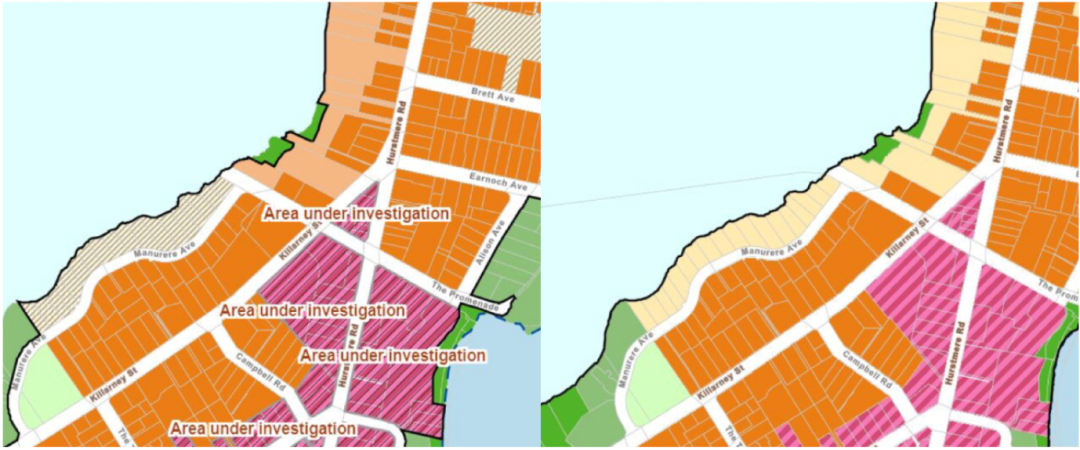
Takapuna Detail of the zoning map
(Left: initial MDRS draft; right: Plan Change 78)
For example, comparing central Takapuna shows that much of the lakeside and coastal land designated Urban Zone in the earlier MDRS plan (left), which in principle allowed buildings up to 12 metres and 3 storeys with a floor area ratio of 50%, has now been rezoned into the new Low Density Residential Zone (right). In principle, this allows only buildings up to 9 metres and 2 storeys, with a floor area ratio of just 35%. These sites can be said to have had their development potential “weakened” in the Plan Change 78 map.
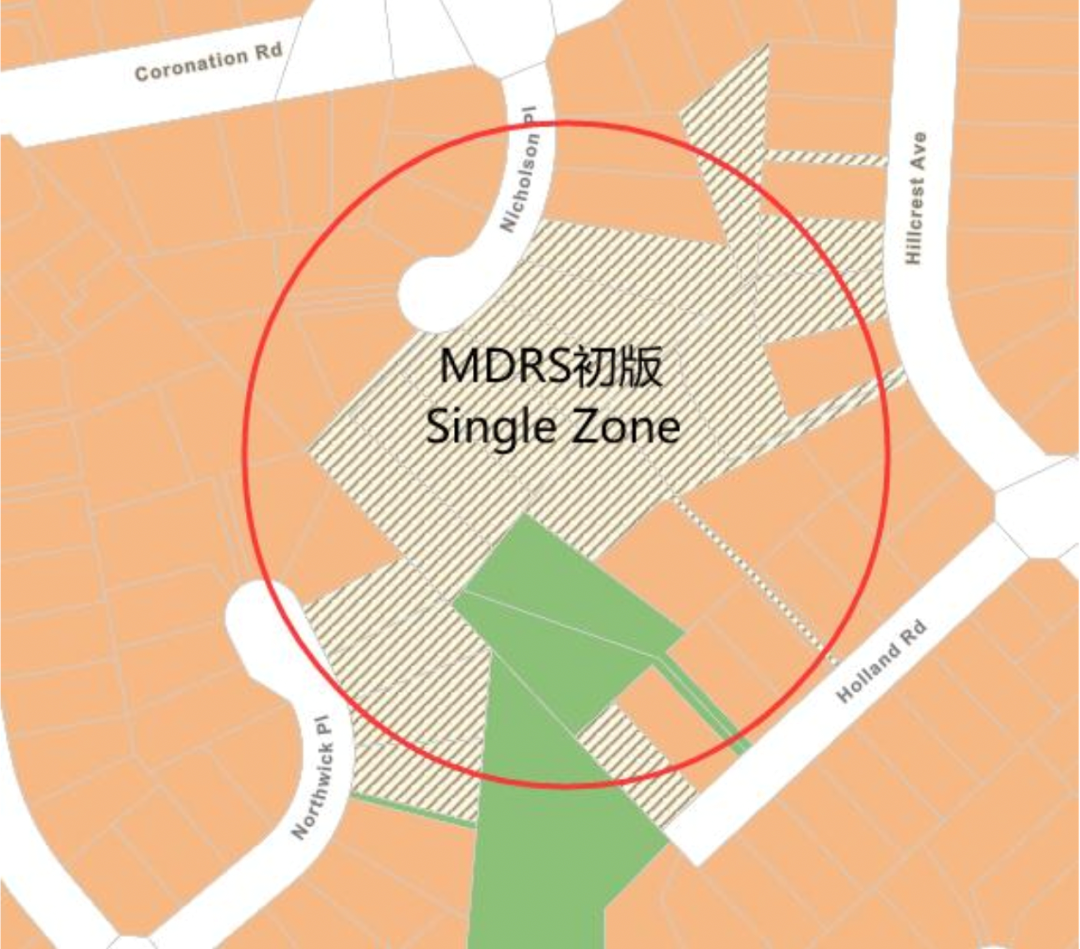
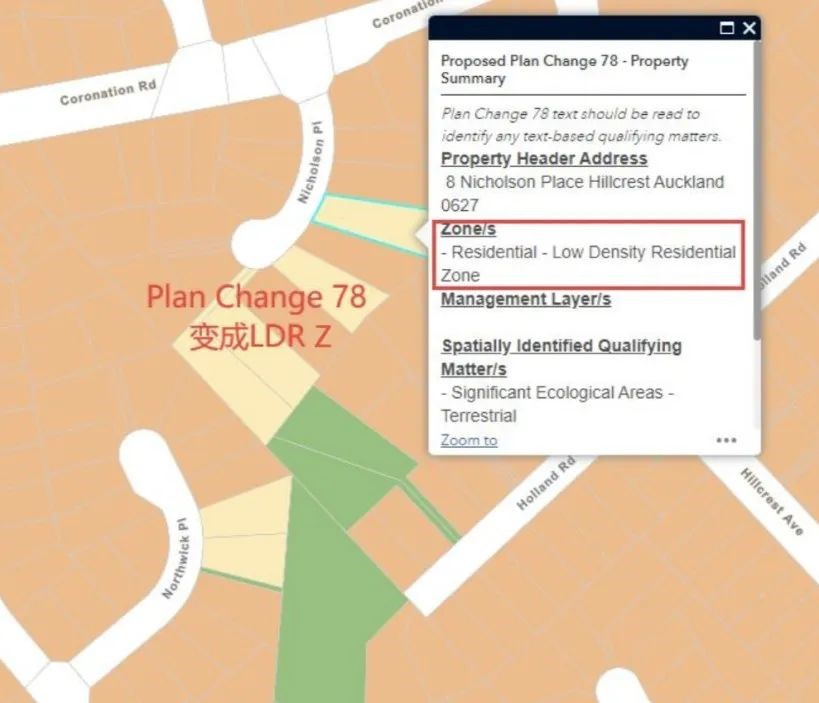
Hillcrest Detail of the zoning map
(Above: initial MDRS draft; below: Plan Change 78)
Meanwhile, some land has gained development potential. For example, these parts of Hillcrest were designated Single Zone in the previous MDRS plan. Under the updated LDR Zone provisions, recession plane controls have been relaxed to 4 metres and 60 degrees. This means multi-home projects can be built in this area with resource consent. Along the Milford/Takapuna coast on the North Shore and around Lake Pupuke (below), entire areas of Single Zone land have been rezoned into the newly introduced LDR Zone.
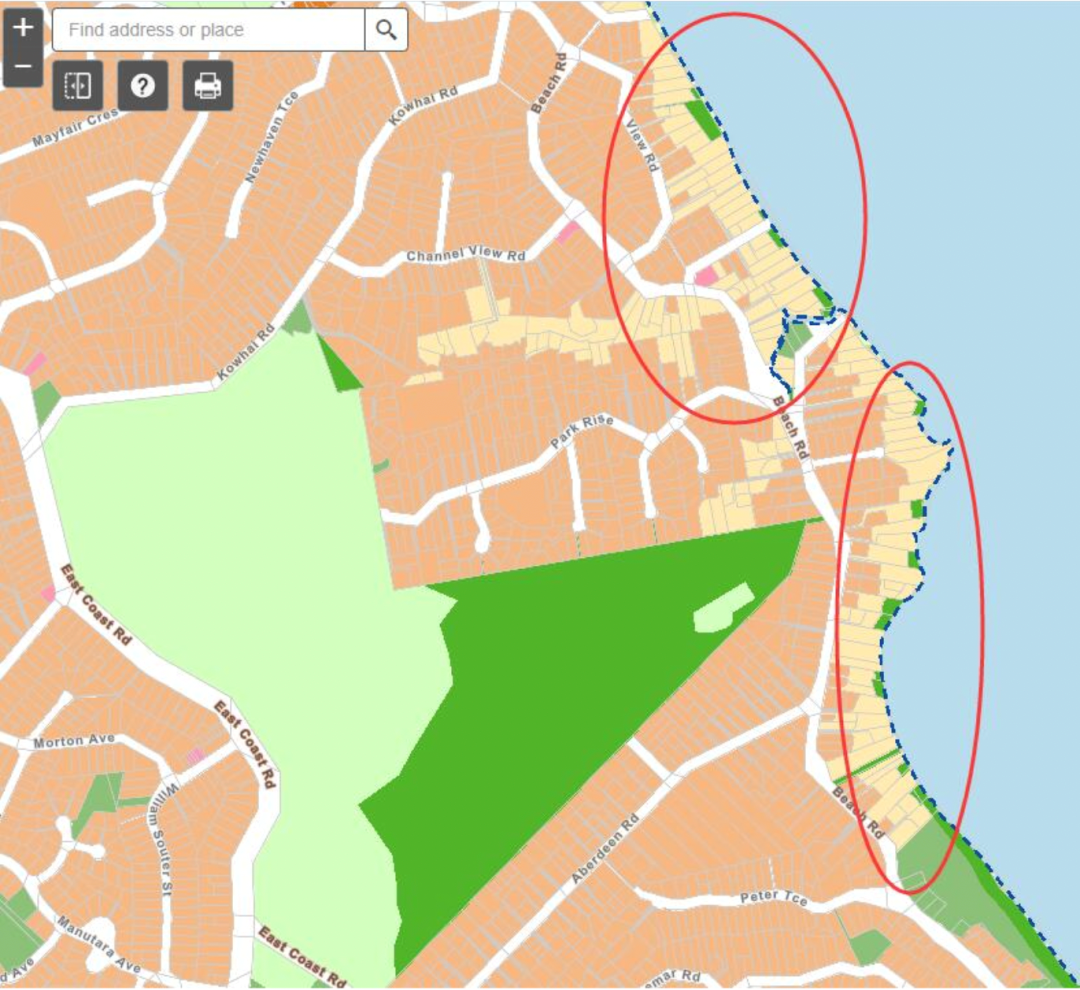
Milford/ Takapuna Detail of the zoning map: Plan Change 78
Many owner-occupier buyers worry that Plan Change 78 will make their existing neighbourhoods more densely developed. In fact, unlocking land and increasing density within the constraints of limited urban infrastructure is a fundamental national policy direction for New Zealand over the next 20 to 30 years, and an inevitable part of urbanisation. In terms of living environments, buyers still have plenty of choices in low-density residential zones and lifestyle areas.
Gavin Han:Changes to the MDRS and progress on Plan Change 78 are transforming New Zealand's distinctive streetscapes of single homes on large sections. In particular, some established neighbourhoods are likely to see many medium-density developments of 2 to 3 storeys, and even apartment buildings reaching 4 to 6 storeys.
YIJU: How can professional property salespeople, buyers and sellers avoid the negative effects of the MDRS?
Kai Deng:For property sales professionals, keeping up with policy changes and improving our professional knowledge are fundamental skills. Understanding our listings and their zoning provisions allows us to provide buyers and sellers with a more professional service, helping them assess the value of their own properties or prospective purchases more accurately.
Gavin Han:Looking back, Auckland has changed enormously. We must keep abreast of changes arising from the MDRS, Plan Change 78 and other policies. These area-wide changes affect not only an individual property but also neighbouring properties and surrounding streets. It is our responsibility to help clients understand the specific circumstances of the homes being sold and the planning policies that apply. Before buying, clients should also ask salespeople more detailed questions to avoid financial losses from buying or investing without sufficient information.
YIJU: What investment advice would you give buyers under the current challenging market conditions and MDRS policy?
Kai Deng:The MDRS is an “upgraded version” of the Auckland Unitary Plan, with relatively stricter standards and additional design requirements. Developer buyers need to investigate a site's characteristics in greater detail and do their research before purchasing land. They should maintain good communication with designers and frontline salespeople, tailoring subsequent design and development work to the site. Research is equally important for owner-occupier buyers. Auckland Council's official website provides planning policy information, particularly on the MDRS. Consulting a trusted, professional property salesperson to interpret and analyse changes in the property market is another efficient way to get informed.
Gavin Han:Buyers need to be clear about their purpose: whether they are buying a home to live in or an investment. This helps property salespeople find a suitable property more accurately. In unfamiliar areas, ask detailed questions about every aspect of the prospective property. For example, could neighbouring properties be subdivided or developed, and what development potential do they have? What type of development could occur, and how would it affect your property? More broadly, would future development in the area increase or reduce the value of your property investment? Also consider whether potential development could affect your privacy, noise levels and safety when living there.