
A step-by-step guide to government home-buying assistance for first-home buyers with insufficient deposits
Data suggests enthusiasm among first-home buyers has reached unprecedented levels since the New Zealand Government introduced its home-buying assistance policies in May this year. In particular, many new migrants recently granted residence under the one-off resident visa programme have joined the house-hunting market. Mortgage advisers also report more first-home buyers seeking advice about mortgage pre-approval. This means the relaxation of government home-buying assistance policies has made more first-home buyers eligible for support. Recently, YIJU New Zealand has received many letters from readers asking: what are the eligibility criteria for First Home Partner, and how do you apply? In response, the YIJU editorial team has focused on first-home buying

Data suggests enthusiasm among first-home buyers has reached unprecedented levels since the New Zealand Government introduced its home-buying assistance policies in May this year. In particular, many new migrants recently granted residence under the one-off resident visa programme have joined the house-hunting market. Mortgage advisers also report more first-home buyers seeking advice about mortgage pre-approval. This means the relaxation of government home-buying assistance policies has made more first-home buyers eligible for support. Recently, YIJU New Zealand has received many letters from readers asking: what are the eligibility criteria for First Home Partner, and how do you apply? In response, the YIJU editorial team has planned a series of practical articles on first-home buying to help readers realise their homeownership dreams sooner.
{ad}
What is the “First Home Partner” scheme?
The scheme helps first-home buyers whose deposits and home loans are insufficient to purchase their desired homes by having the Government share ownership of the property. The Government contributes funding to bridge the shortfall in the purchase price.
What is shared ownership?
Shared ownership means first-home buyers share ownership of their home with the third party that initially purchases it with them—in this case, Kāinga Ora. The ownership shares are determined by several factors, including:
- How much the first-home buyer has for a deposit
- How much a lender, such as a bank, is willing to lend
- How much Kāinga Ora will contribute towards the purchase
For example, a buyer may have saved 10% of the purchase price, with a participating bank willing to lend 75%. Kāinga Ora then contributes 15% to purchase the home jointly with the buyer, in exchange for a 15% ownership share.
How can you successfully apply for the Government's
“First Home Partner” scheme?
If you have decided to join First Home Partner, the following 5 steps can help you realise your homeownership dream.
1
Step 1: Apply through the official Kāinga Ora website at https://kaingaora.govt.nz/home-ownership/first-home-partner/apply-for-first-home-partner/. First, complete a self-assessment to check whether you meet the eligibility criteria:
Be at least 18 years old
Be a New Zealand citizen or permanent resident, or a resident visa holder ordinarily resident in New Zealand; alternatively, apply with someone who meets the citizenship or residency requirements
Have a total household income before tax of no more than NZ$130,000
Have a good credit rating
Be a first-home buyer
Have not previously received support through a Kāinga Ora shared ownership scheme
The home must be for the applicant to live in, with a commitment to occupy it as their principal residence for at least three years from settlement
2
Step 2: After passing the self-assessment, submit the required documents through the website, such as proof of identity, IRD income records and evidence of bank savings, and wait for the government agency's approval.
3
Step 3: Bank pre-approval
As well as meeting Kāinga Ora's shared ownership partner eligibility criteria, buyers must meet a participating bank's lending criteria. Mortgage pre-approval helps buyers understand their potential purchasing power and exactly how much they can borrow. Three banks currently participate in First Home Partner: BNZ, Westpac and SBS. Lending criteria vary slightly between banks and lenders, but the information they require includes:
A letter confirming eligibility as a shared ownership partner with Kāinga Ora
The applicant's employment details
The applicant's annual income and the value of their assets
The deposit amount the applicant can provide
The applicant's current debts, liabilities and household expenses, such as credit cards and hire purchase
Details of the type of home the applicant wants to buy
Mortgage pre-approval usually remains valid for a specified period, such as three months. If an applicant's financial circumstances change, they should update their chosen bank so a new pre-approval letter can be issued
4
Step 4: Find a suitable property
Once buyers have bank pre-approval, they can start looking for a home. First Home Partner applies only to new homes or off-the-plan purchases. A new home means a newly built property that has received a New Zealand Code Compliance Certificate within the past 12 months. Buying off the plan means signing a purchase agreement before construction is complete. Notably, the house and land must be purchased together under a single sale and purchase agreement, meaning First Home Partner does not support purchases involving staged payments or construction loans.
For this article, YIJU was pleased to interview Colliers senior project sales consultant Duncan Macdonald, who explained how his clients successfully used First Home Partner to purchase an apartment in Symphony 303, a boutique development in Epsom, one of Auckland's most sought-after suburbs.

What the first-home buyers wanted
According to Duncan Macdonald, his clients were wage earners who had heard the Government had relaxed lending policies for first-home buyers and wanted to find a new-build home under the new assistance scheme. They also had a child approaching school age. Schools in the area where they were renting had low ratings, so they wanted a home zoned for excellent schools for their child's future. They had been looking for a new development that met their requirements since the beginning of the year, but price, location and school zoning had prevented them from finding a home the whole family liked.
A suitable development
Macdonald said Symphony 303 offered a wide range of layouts to suit different families' living needs and the budgets of wage-earning households, with internal floor areas ranging from 43 to 111 square metres. The freehold development comprises 43 apartments priced from NZ$675,000 to NZ$2,325,000, with completion expected at the end of 2023. Properties in such a prime location are rare: Cornwall Park and One Tree Hill are on the doorstep, and the development sits within excellent school zones, offering particularly good value for the area. It is therefore well suited to first-home buyers, who have more time during construction to save for their deposit while also qualifying for government first-home assistance. The development combines a range of advantages.
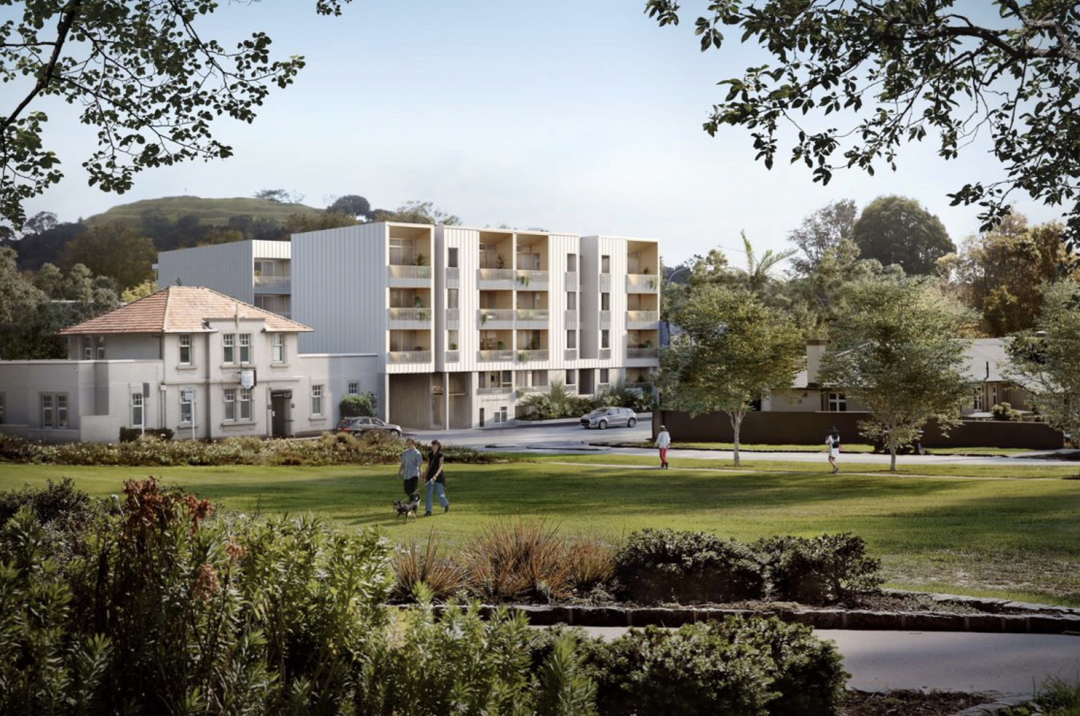
We know how important location is to a property's potential future capital growth. First-home buyers usually find it difficult to purchase in central Epsom, but this opportunity allowed the clients to buy a brand-new apartment and receive assistance under the new first-home support scheme. For the family, buying here meant gaining access to school zones highly coveted by Auckland families. Leading local schools within walking distance include St Cuthbert's College across the road, Dilworth private school, and Epsom boys' and girls' grammar schools.
Macdonald stressed that choosing a well-resourced property developer gives investors and homebuyers confidence, particularly in the current unsettled market, and minimises investment risk. Designed by renowned local architecture firm Jasmax and carefully developed by experienced developer Lamont & Co, the project combines eye-catching interiors with thoughtfully planned amenities, offering a restorative retreat from fast-paced city life and the freedom to enjoy a relaxed lifestyle.
5
Step 5: Become a homeowner
After the sale and purchase agreement is signed with the developer, lawyers for all three parties—the developer, buyer and Government—need to become involved. Unlike an ordinary property transaction, the Government is also a co-owner, so all documents must be signed jointly by the buyer and Government. Macdonald said his clients were very happy with the development, and the whole family looked forward to moving into their new home and having their child attend a leading school as soon as possible.
How much deposit is required?
In this case, Duncan Macdonald's clients purchased a property for NZ$745,000, with bank pre-approval for a NZ$480,000 loan, leaving approximately NZ$265,000 required as a deposit. Under the rule limiting the Government's contribution to no more than 25% or NZ$200,000, the clients were approved for nearly NZ$185,000 in government support. They contributed approximately NZ$80,000 themselves to complete the purchase jointly. Because the Government shares ownership with the buyer, its upfront contribution must, in principle, be repaid within 15 years. Homeowners can pay it off in a lump sum or through smaller individual payments. Once they have fully bought out Kāinga Ora's share, they become the outright owners. If the home is sold while Kāinga Ora remains a co-owner, the sale proceeds are divided in proportion to each party's ownership share. For example, if Kāinga Ora still owns 10% of a property sold for NZ$800,000, the Government is entitled to NZ$80,000 from the sale.