
Landslide leaves half of a luxury home worth nearly ten million NZ dollars hanging over a cliff! How can buyers of sea-view homes in New Zealand avoid the risks?
Many luxury homes in New Zealand enjoy stunning sea views, with quite a few built directly on coastal cliffs. Although the views are uninterrupted, there is a potentially fatal drawback: susceptibility to landslides, which can even leave half a home hanging in mid-air.
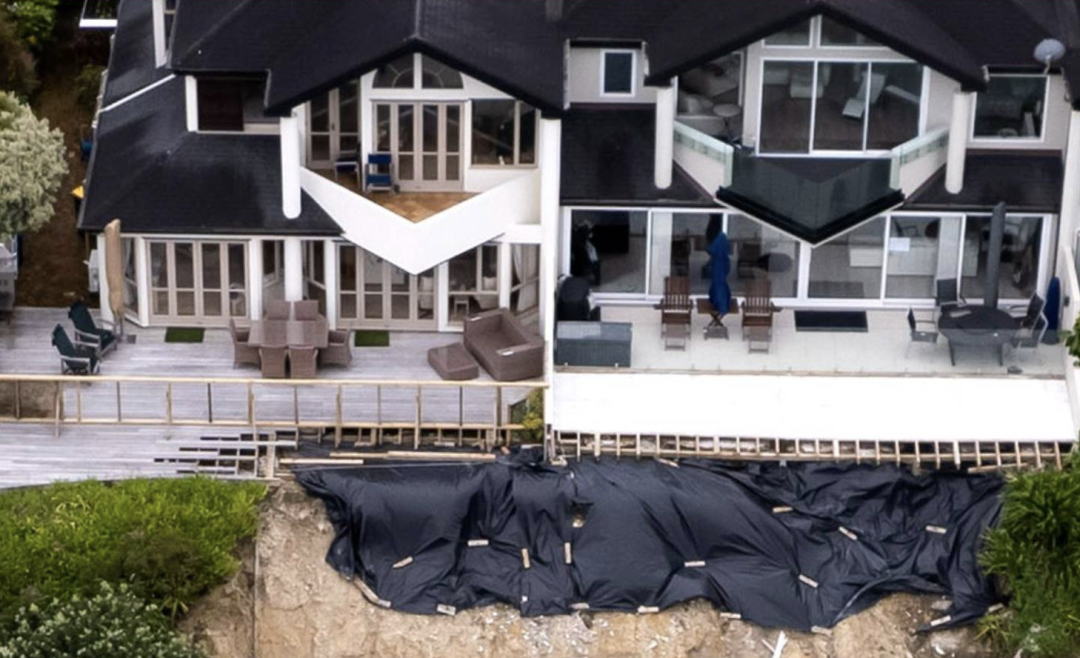
Many luxury homes in New Zealand enjoy stunning sea views, with quite a few built directly on coastal cliffs. Although the views are uninterrupted, there is a potentially fatal drawback: susceptibility to landslides, which can even leave half a home hanging in mid-air.
{ad}
Landslide hits luxury properties worth nearly ten million NZ dollars
Following heavy rain in Auckland in July this year, part of the cliff in front of three townhouses at 73 Stanley Point Rd on the North Shore collapsed. The properties are valued at NZ$9,500,000.
Designed to maximise sea views, these properties still looked very impressive when they were sold in December 2021:
Unexpectedly, just half a year later, the cliff beneath the homes had collapsed like this:
Auckland Council has issued dangerous building notices to the owners. The council's head of engineering resilience, Ross Roberts, said: “The landslide below Stanley Point Rd occurred on 12 July during torrential rain. Following an assessment by council engineers, the landslide was considered a natural occurrence during the heavy rain.”
At one point, the landslide even left half of a home's deck extending beyond the cliff. An owner taking a careless extra step could have fallen straight down the cliff. It looked extremely dangerous.
More frustratingly, although the council issued notices, it will not step in to help. The owners must rely on themselves and their insurers to save the dangerous properties.
Ross Roberts said: “As a result of this incident, compliance officers issued three dangerous building notices relating to deck structures at the top of the cliff. Council staff also advised affected owners that remediation is a private matter that they need to discuss with their insurers.”
Photographs from the site show that the owners have taken some remedial measures, but the decks still look very dangerous.
A report shows that this incident involved natural disaster damage. The middle townhouse lost 10.1 square metres of land in front of it, and the landslide was approximately 28 metres high, equivalent to nine storeys. Engineers believe an anchored underground palisade pile wall is needed to eliminate the risk, but constructing it would be difficult.
In fact, increasing numbers of clifftop homes face landslide risks. In many cases, owners have done nothing wrong: landslides and cliff collapses are natural occurrences following heavy rain.
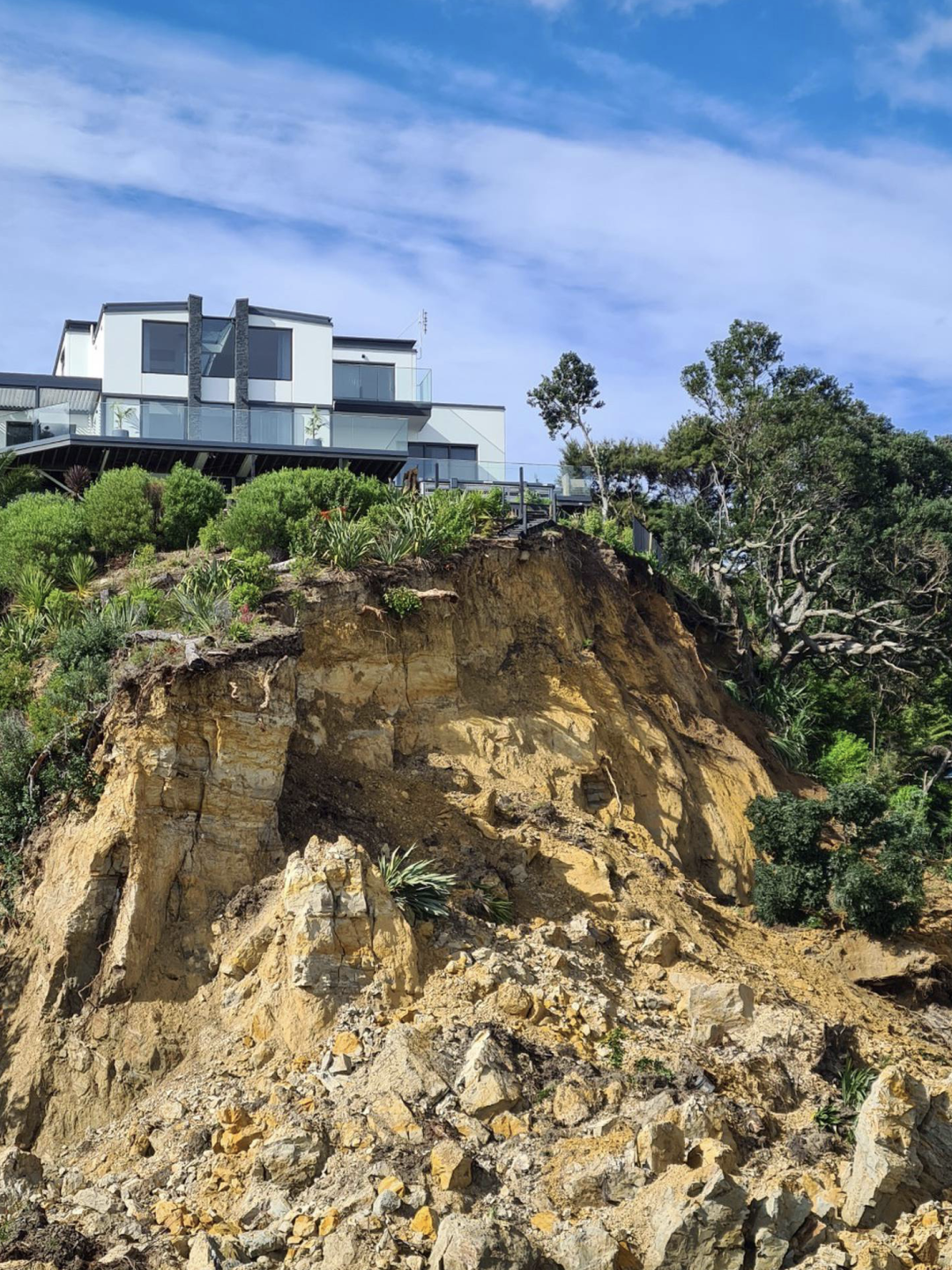
Auckland Beach Haven million-dollar sea-view home hit by landslide
University of Auckland Associate Professor Dr Mark Dickson, an expert in coastal change, says cliffs are naturally unstable landforms, and any structure on a clifftop will eventually be affected by erosion.
He said: “The biggest problem with Auckland's cliffs is that urban development over recent decades has increased the density of properties along cliff edges, while the distance between homes and the edge has become smaller.”
He explained that erosion may not be a regular process. At an unpredictable moment, erosion accumulated over a long period can suddenly cause a large section of cliff to collapse.
How can you avoid the risks when buying a home?
Surrounded by sea, New Zealand has a thriving market for sea-view homes. How can you enjoy the views while avoiding the threat of landslides? Drawing on official New Zealand government guidance, YIJU has compiled some home-buying tips.
First, areas prone to landslides generally have the following characteristics:
- Previous landslides
- Steep slopes
- Drainage channels on steep slopes
- Streams and riverbanks, or
- Coastal cliffs.
Your local Civil Defence Emergency Management Group can tell you whether landslides have previously occurred in the area.
In New Zealand, local authorities have a document for every home called a LIM, or Land Information Memorandum. It records information relating to the property, such as:
- Special characteristics of the land, such as whether the property is in a flood zone or potentially threatened by landslides;
- The locations of private and public stormwater and wastewater drains, which must be considered for future extensions or subdivision;
- Any outstanding charges on the land, including unpaid taxes and penalties;
- Information about buildings on the land, usually including house plans and details of alterations.
Before buying a property, it is advisable to review its LIM to understand its particular circumstances and make an informed decision.
What should you do if you suspect a landslide risk?
If you already own a home and suspect it may be at risk from landslides, inspect it regularly, especially after prolonged drought, earthquakes or heavy rain. Look for:
- Small slips, rockfalls and subsidence at the base of slopes
- Distorted doors and windows
- Gaps caused by doors and windows no longer fitting properly
- Fixed outdoor structures, such as steps, decks and balconies, pulling away from the main building and tilting outwards.
- New cracks or bulges in the ground, roads, footpaths, retaining walls and other hard surfaces; and
- Leaning trees, retaining walls or fences.
What should you do after a landslide?
If your home or the building you are in is hit by a landslide and is in danger:
- Evacuate as quickly as possible, stay alert and watch for further landslides.
- Stay away from the landslide area until the relevant authorities have completed the necessary checks and confirmed it is safe.
- Contact emergency services and your local council. Report damaged utility lines to the relevant authorities.
- Replant damaged ground as soon as possible. Loss of ground cover can lead to flash flooding.
- Help others where possible, particularly those who may need special assistance.
If your home is damaged
- Do nothing that could endanger your safety or cause further damage to your home.
- Contact your insurer as soon as possible.
- If you rent, contact your landlord and contents insurer.
- Photograph the damage. This will help speed up assessment of your claim.
Insurance considerations: major differences between commercial and residential property
Generally, having private home insurance that includes fire cover means you automatically qualify for EQCover, the insurance provided by EQC, the Natural Hazards Commission. However, there are many details to be aware of. YIJU contacted Beini from the SP Insurance team to learn more about EQC.
EQC was previously the Earthquake Commission and has now been renamed the Natural Hazards Commission.
Established in 1945, EQC was originally a New Zealand government agency providing earthquake, war damage and fire insurance. It is now a New Zealand state-owned enterprise. For more than 60 years, it has collected premiums from policyholders and reinvested them to build the Natural Disaster Fund, which held around NZ$5,600,000,000 before the Christchurch earthquakes. In addition to this NZ$5,600,000,000 fund, EQC purchased reinsurance from overseas organisations, and the New Zealand government guarantees that it can meet its claims obligations in all circumstances. EQC pays for damage to insured New Zealand residential properties caused by earthquakes, landslides, volcanic eruptions, floods, tsunamis, storms or fires.
A new law took effect in New Zealand on 1 October 2022, doubling the EQC claim limit for insured homes damaged by natural disasters. The previous limit of NZ$150,000 plus GST is now NZ$300,000 plus GST.
Beini emphasised that EQC is the government's natural disaster and earthquake insurer and covers residential properties only. Home insurance premiums include a premium for EQC cover.
Commercial properties, by contrast, need to obtain this type of cover from commercial insurers, through building insurance involving contract works. During construction, commercial insurance can include natural disaster cover, mainly covering losses caused by flooding, fire, earthquakes, heavy rain and other natural disasters.
For details of policy terms and specific claims circumstances, refer to your own policy or consult SP Insurance.