
Are first-home buyers reluctant to buy townhouses? Frontline agents explain which properties are most popular
The latest property data from CoreLogic shows first-home buyers are steadily returning to the market. Amid subdued trading, their share of purchases has recovered from a recent low of 21.7% to 22.8% in July, rising further to 24.9% in August. This clearly shows that their market share has returned to the relatively high level seen in March this year.
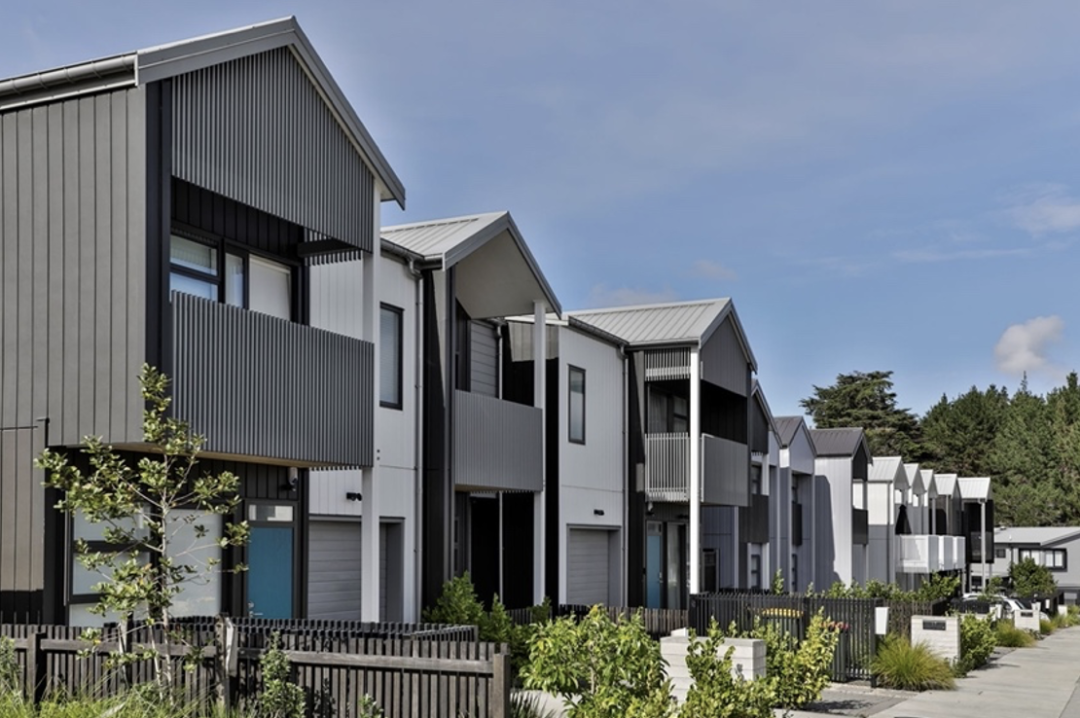
The latest property data from CoreLogic shows first-home buyers are steadily returning to the market. Amid subdued trading, their share of purchases has recovered from a recent low of 21.7% to 22.8% in July, rising further to 24.9% in August. This clearly shows that their market share has returned to the relatively high level seen in March this year. But this raises a question: taking prices, mortgage rates, affordability and other factors into account, which type of property currently suits first-home buyers best?
{ad}
Media reports suggest that around 600 newly built townhouses are currently for sale in Waitakere, but sales figures suggest first-home buyers are not particularly keen on this type of home. Other reports note that, as Auckland house prices steadily decline, many existing homes that were previously out of reach have fallen into a price range first-home buyers can afford, some even below NZ$700,000. These properties have sold after being relisted.
So which is the best choice for first-home buyers: an existing home or a new build?
Let us take a closer look at the fundamental differences between these types of property.
What first-home buyers should consider when buying a new build
Price advantages: In a market with unstable house prices, a fixed sale price can be more attractive to many buyers. It removes the risk of having to bid against others for an existing home and missing out on a favourite property because the price stretches tens of thousands of dollars beyond their budget.
Mortgage advantages: Compared with those buying existing homes, first-home buyers purchasing new builds can receive additional support through government home-buying grants. Many property developers also actively work with mortgage lenders to offer lower-deposit purchasing options.
More scope for personalisation: Many new-build developers offer personalised choices across various home specifications to meet the needs and tastes of different households and owners.
Saving time and money: Once a new build is completed and receives its Code Compliance Certificate (CCC), buyers can move straight in. There is no need to spend extra time and money renovating after moving in, saving both time and effort.
Lower ongoing maintenance and running costs: Many new-build developers now provide long-term building quality cover, such as the Master Builder 10 Year Guarantee and Stamford Building Warranty Insurance, to guarantee construction quality. Built using the latest materials and building standards available, new homes also offer greater energy efficiency and comfort.
Of course, buying a new home off the plans does not guarantee first-home buyers a smooth journey. They need to remain alert and research the market thoroughly. There are always developers ready to walk away, and projects can easily stall if they prove unprofitable or sufficient construction finance cannot be secured. By contrast, developers with strong capabilities will also have good market reputations. They will not focus on the gains or losses of individual projects; to maintain their reputation, they will consistently honour the promises made to buyers when contracts were signed. First-home buyers can also assess a developer's overall capabilities through project plans and the design, style and quality of its showrooms. Careful observation can reveal which projects have investment potential, helping buyers choose projects backed by stronger developers and avoid unfavourable situations.
What first-home buyers should consider when buying an existing home
In the current subdued housing market, many buyers believe bargains are easier to find. Most properties can be sold by negotiation rather than competitive bidding at auction, allowing a price to be found that satisfies both owner and buyer. Buyers also have enough time to obtain property inspection reports. Ensuring there are no major defects is a very important part of buying an existing home. Of course, what attracts countless buyers is the possibility that purchasing a do-up and renovating it could substantially increase its value.
Although do-ups offer considerable potential for future capital gains, banks' continually tightening lending policies may be the biggest obstacle for many first-home buyers purchasing existing homes. For lending purposes, banks divide properties needing renovation into three broad categories, offering different loan proportions for each.
In the first and worst-case category, banks refuse to lend on properties that do not comply with council building requirements. Buyers need to bring the entire home up to current council building standards before renovation and bank lending may become possible. This presents a major challenge for first-home buyers in both time and money.
The second category covers homes requiring renovation that are derelict and uninhabitable. Buyers may only be able to borrow around 80% of the land value, meaning they must fund renovation costs from their own savings. Under banks' current lending criteria, buyers need sufficient income to cover both the mortgage on the land and rent elsewhere. Even if these run-down homes are very attractively priced, they may not be a good choice for first-home buyers who need substantial savings to cover renovations, mortgage payments and rent.
The third category covers homes needing non-structural renovations that can still be lived in during the work. Buyers can, of course, live in them for a few years and save enough money before renovating. Provided the bank's other lending criteria are met, lenders can offer mortgages of up to 90% on these properties.
Generally, first-home buyers purchasing properties in the third category may face fierce competition from investors, pushing up the final purchase cost. The good news is that rising mortgage rates and increasing market uncertainty have driven many property investors out of the market, substantially reducing competition.
For this article, we have considered the advantages and disadvantages of first-home buyers purchasing new builds and existing homes from a theoretical perspective. We have also interviewed three experienced Barfoot & Thompson agents to present the most accurate possible picture of the current market.

Q: Are you currently dealing with many first-home buyers? What proportion do they represent?
James Gai:Around 80% of the clients I deal with who sign contracts are first-home buyers, and they account for more than 90% of enquiries. By contrast, the investors who were previously very active in the market have all but disappeared and have largely left the market.
Aken Yuan:I am currently dealing with a lot of first-home buyers, including Indian, Filipino and some Chinese buyers. Most are relatively young. I roughly estimate that they account for around 70% of the total, with investors making up about 20%. The final 10% are people with some money available who want to buy off the plans, but poor market conditions mean fewer and fewer buyers are purchasing these projects.
Gavin Han:First-home buyers and families buying their first home have recently accounted for a very high proportion of clients asking me about listings and arranging open home visits. Although mortgage rates continue to rise, first-home buyers have a fundamental need for housing, so the impact is relatively limited.
Q: From a market perspective, which type of home do you think best suits first-home buyers, and why?
James Gai:Looking at current sales, new builds have a clear deposit advantage, with deposits as low as 10%, alongside government policy support. Townhouse sales are mainly concentrated in 2-bedroom homes and 2-bedroom homes with a study. Buyers will also consider smaller detached 3-bedroom homes if the price is right.
Aken Yuan:I think two- and three-bedroom properties are more popular with first-home buyers because their entry prices are relatively low and mortgage payments are manageable. They are comfortable for young, small families, with room to accommodate children in future. Whether choosing a new townhouse or an existing home, I think buyers should decide what suits them best based on price and affordability. Townhouses and apartments are both worth considering, while detached homes are a little more expensive.
Gavin Han:Most first-home buyers currently in the market are relatively young and have limited budgets. They therefore tend to favour compact 3-bedroom homes or new 2-bedroom homes on smaller sections that are easy to maintain. These meet both their budgets and the housing needs of each member of a small household. These are the types of home I would recommend to my clients.
Q: How do you view the current market, and what advice would you give first-home buyers?
James Gai:Looking at broad market patterns, the 2 financial crises in 2008 and 2018 both essentially ended within around 2 years. In today's market environment, a repeat of the 10-year Great Depression of the 1930s is virtually impossible. If we use the previous adjustment period of more than 2 years as a guide, we are already halfway through, counting from November last year. In other words, the current market has begun entering its adjustment cycle. The US Federal Reserve also raised its OCR by 75 basis points last month, and New Zealand will probably follow. However, this month's inflation figure of 7.2% shows clear signs of a decline in CPI. This suggests inflation may not necessarily need interest rate rises to bring it under control. The Reserve Bank of New Zealand may therefore not fully match the Federal Reserve's increase of 75 basis points this time, and could opt for 50 basis points instead. If so, bank mortgage rates should stabilise at around 6–7%. Buyers' wait-and-see attitudes would then fade, house prices would stabilise and subsequently rise gradually.
For first-home buyers, the economic downturn has already bottomed out, and the data signals are clear. For developers, construction costs show no sign of falling, and new-home sale prices remain firm. There may still be opportunities to secure a low-priced new home in the short term. Once the market stabilises and buyer enthusiasm rises, this round of house price declines will end and prices will recover. My advice is that first-home buyers who have the means should act promptly.
Aken Yuan:My advice to first-home buyers who find prices in some Auckland areas out of reach is to look at more affordable suburbs, such as New Lynn, Glen Eden, Henderson and Massey in the west. There are plenty of good-value two- and three-bedroom homes to choose from. Market adjustments have brought prices down by 10%–15% since the start of this year, making homes much more affordable for first-home buyers. For example, our team has a two-bedroom home in New Lynn with parking and two bathrooms, currently available for an asking price of NZ$750,000–800,000. It is very suitable for first-home buyers. In Massey, a three-bedroom, two-bathroom home may be available for a little over NZ$800,000. I suggest looking beyond central Auckland and the North Shore and exploring the west. You are welcome to contact us for a chat at any time.
There is another very important point. Many first-home buyers have told me their bank pre-approval offers them two choices: a 20% deposit for an existing home or just 10% for a new build. Government grants for first-home buyers purchasing new builds lower the entry threshold further. Developers can recover their invested funds, which also supports New Zealand's economic development. Our team currently has several projects nearing completion, so my clients may be able to buy completed homes, move straight in and avoid any concerns about contractual default. I believe these will certainly be the first choice for owner-occupiers.
Gavin Han:I think the most important thing for first-home buyers is to stay within their budget, carefully manage their deposit and future mortgage repayment capacity, and prepare for higher mortgage rates. When choosing a home, location is always the most important factor. Buyers also need to understand the character of the area and its surroundings. For example, are there high-voltage power lines? Is it near a motorway? Is there state housing nearby? What are the school zones like? Before signing a contract, have your solicitor review all legal documents and make sure you understand every contractual term. Whether a property is being sold by auction or negotiation, I strongly recommend a building inspection. Finally, carry out a final inspection before settlement and promptly ask the seller to fix any problems identified.