
Mortgage rates staying high? 6 ways to repay your mortgage faster and save money with a few simple steps!
Following several OCR increases by the Reserve Bank of New Zealand, major banks have raised their mortgage rates. This could be a difficult year for mortgage holders.

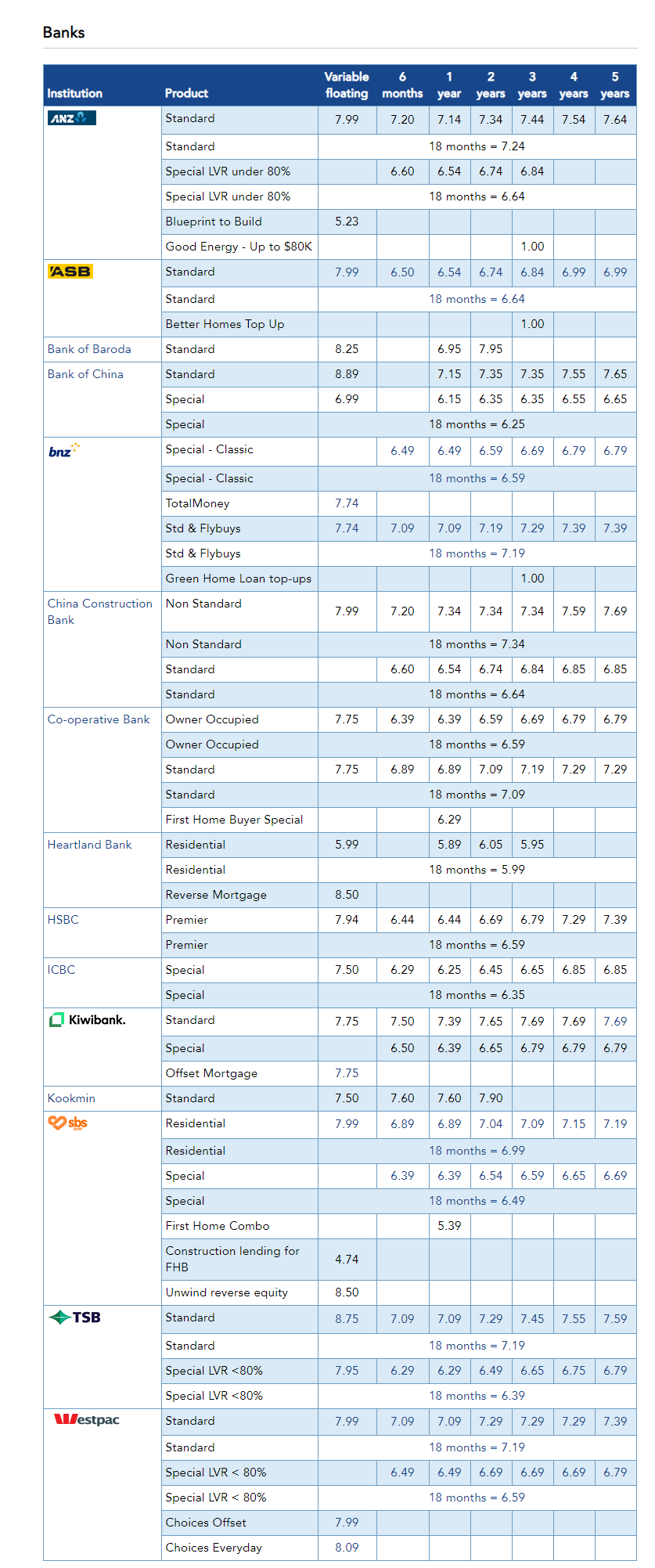
Source: interest.co.nz
A loan of hundreds of thousands of dollars and a 30-year repayment term can make becoming mortgage-free seem a distant goal. Add the extra costs of rising interest rates, and many borrowers find that interest accounts for most of each repayment. So how can you repay your mortgage faster? The YIJU editorial team has compiled some useful tips.Increase your repayments
Several banks say a small increase in mortgage repayments can save borrowers money over the long term. Because home loans run for so long, even a small increase can make a substantial difference. Higher repayments shorten your loan term and reduce the total interest you pay.
Consider this example: you buy a home for $1,000,000, borrowing $800,000 over 30 years at an annual interest rate of 6.54%, with monthly repayments of $5,078—
simply increasing your monthly repayment by $200 could save you as much as $128,791 and shorten your loan term to 26 years and 10 months.
Many people struggling under the weight of a mortgage may feel they cannot find enough money for extra repayments. But there are several ways to “find” that money.
1
Avoid everyday waste
Make a habit of transferring money into your mortgage account at the end of each day or week. You could skip your daily coffee, avoid ordering takeaway food and cut unnecessary spending, then put those small savings towards your mortgage.
2
Review your spending carefully
Most people can find spare money by tracking their income and spending effectively. Despite rising supermarket prices, most items in the trolley are not essentials, and a third of groceries end up being wasted. When you are tempted to spend, consider how putting that money towards your mortgage could actually save you more.
3
Check your bills and cancel unnecessary subscriptions
Online subscriptions have become a popular business model, including Netflix, Spotify, Dropbox and all those apps whose free trials you signed up for, then forgot would turn into paid subscriptions. Each might cost only NZ$8, but together they could add up to a surprising amount.
Change your repayment frequency
Switching from monthly to fortnightly repayments is a small change that can save you a substantial amount. It effectively means making two extra payments each year, helping you repay your loan faster and save on interest over the long term.
Suppose you have a $500,000 loan over 30 years at an annual interest rate of 4.0%. Switching to fortnightly repayments could shorten the loan term by more than four years and save nearly $60,000 in interest.
With repayments spread throughout the year, you may barely notice that you are paying a little extra.

Make a lump-sum payment
If you suddenly receive extra money, such as an inheritance, a tax refund, proceeds from selling assets or shares, a pay rise or a bonus, you may want to use it for a lump-sum payment. Some banks may impose restrictions. Certain fixed-rate mortgages allow annual lump-sum payments of up to 5% of the total loan, and early repayment charges may apply. Other fixed-rate mortgages do not allow any extra repayments. With a floating-rate loan, however, you can make unrestricted lump-sum payments. Unlike regular repayments, 100% of a lump-sum payment goes directly towards the loan principal. This means it can significantly reduce the time and money needed to repay your mortgage. If this is not possible, you can put small amounts into a separate savings account until your next rate renewal, then use the money to reduce your loan.
{ad}
Revolving credit
For some people, a revolving credit loan is the easiest way to make extra repayments. Compared with a traditional loan, revolving credit works like a bank account with an overdraft. You can set up part of your mortgage, such as 50,000 or 100,000, as a revolving credit facility, then pay your salary into the account to offset the loan and draw from it as needed for everyday bills and expenses. Revolving credit is available only at floating interest rates. Interest is calculated on your account’s daily balance, so the longer repayments remain in the account and the lower the balance, where permitted, the less interest you pay. This approach carries risks for individuals or households who struggle to control their spending or want to take on other credit. However, it can be very useful for investors who manage all their rent and expenses through the same account. Some owner-occupiers choose a combination: part revolving credit and part a more traditional mortgage, such as a table loan with regular principal-and-interest repayments, to ensure the principal is repaid.

Consider floating part of your mortgage
If you want to make extra repayments, putting part of your mortgage on a floating rate may be a good idea. There are no penalties for repaying the floating or variable-rate portion early, and you can combine current market rates with a fixed rate. Everyone wants to fix their mortgage at a low rate, but nobody can accurately predict future interest rates. Some people therefore prefer to split their loan across several terms rather than put it all on one rate, avoiding the risk of a sudden rise in weekly repayments when the entire loan comes off its fixed rate at once. The drawback is that switching banks may become harder. Banks will not let borrowers transfer only part of their mortgage to them. However, if a bank believes it can win your business, it may offer to help cover any break fees charged by your current bank.

Be cautious about reducing repayments
Repeated OCR increases by the Reserve Bank of New Zealand have sent mortgage rates at major banks soaring. But we all know such high rates cannot last indefinitely. If rates fall one day, remember to be cautious about reducing your repayments. Whenever your interest rate falls, it can be tempting to take the opportunity to lower your repayments. But over the long term, those few extra dollars in your pocket could end up costing you dearly. If rates fall, the best approach is to keep your repayments at their current level—or increase them if you can. Keeping your mortgage repayments at the level you are already used to ensures a greater proportion goes towards repaying the principal. The faster you repay the principal, the sooner you will be mortgage-free.
With a 25-year or even 30-year loan, paying it off may feel like a lifelong task. But choosing the right loan structure, regularly reviewing repayments and saving diligently could help you clear it sooner than you think. What do you think? Share your views.