
Construction projects always running late? How can the cycle be broken? Industry leaders share their views
Since 2022, however, the construction industry has been under severe strain from shortages of both building materials and construction workers.

The latest survey by industry body Vertical Construction Leadership Group shows that construction project delays have become the norm, with almost all respondents having experienced delays on site, and 37% reporting delays of at least 6 weeks.
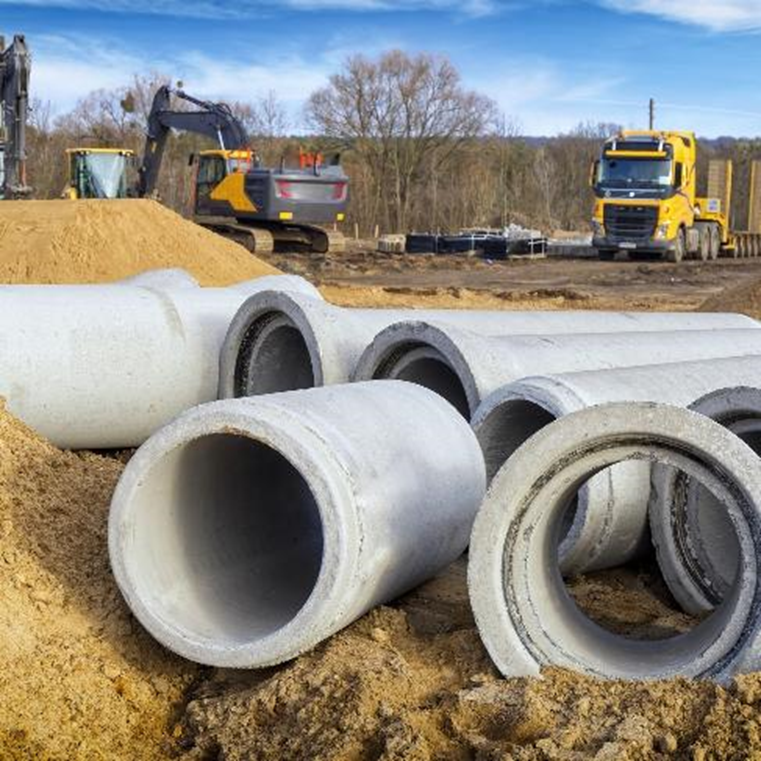 But are construction delays all caused by material and labour shortages? Where does the real problem lie?
Anson Zhang, managing director of Developed, who has been involved in more than a thousand property developments across Auckland, believes many New Zealand developments suffered delays even before material and labour shortages emerged. The main causes include insufficient professional expertise, poor communication across disciplines and lengthy coordination processes. More specifically, these fall into three areas:
{ad}
1
Flawed designs lay the groundwork for construction problems
The construction industry has expanded rapidly in recent years, with widespread shortages of technical specialists and many apprentices and newcomers entering the sector. A lack of practical experience and professional expertise means some projects have inherent flaws at the drawing stage, creating numerous risks during construction and causing delays.
For example, Developed originally prepared the civil engineering drawings for a development on Auckland’s North Shore. After considering a range of factors, it designed the project’s pipework at a relatively deep level. During construction, however, the contractor engaged other engineers to amend the drawings and obtained council approval for the changes. Once construction was complete, it emerged that the revised drawings had not properly accounted for the stormwater pipe levels, leaving the driveway drainage unable to connect to the stormwater system.
As a result, the project’s stormwater design needed to be redone, making delays highly likely.
2
Many disciplines are involved, with blame-shifting when problems arise
Residential and commercial construction projects alike involve many disciplines. Developers typically need to liaise individually with twenty or thirty different trades and professions, requiring considerable time and effort. Most frustratingly, when problems arise, many people choose to shift responsibility rather than solve them, leaving projects repeatedly delayed.
At another property development on Auckland’s North Shore, the council identified a flood risk during construction and ordered work to stop. The foundations had already been completed, but the shutdown lasted more than two years. Throughout that time, the developer searched widely for a solution, but with so many parties involved, no suitable answer was found.
Eventually, with no way forward, the developer approached Developed for help getting work restarted. After carefully studying the site’s flooding issues, Developed concluded that addressing the flood risk itself was not difficult. However, the resulting knock-on effects would raise other issues, such as recession planes and building height limits. Developed believed that treating each problem in isolation would not work: a broader view was needed to devise a comprehensive solution.
The developer has now engaged Developed to address the flooding issue, and Developed has communicated effectively with the relevant Auckland Council departments. There is confidence that work on the project will resume smoothly in the near future.
3
Unfamiliarity with procedures leads to lengthy coordination
Property development involves numerous details and complex procedures, from buying land, design and consent applications through construction and completion, to finally obtaining titles and a Code Compliance Certificate (CCC). Without experience, practitioners can find themselves constantly responding to council queries and preparing documents. Although they appear to be working hard on the project, schedules often slip and efficiency remains low.
Having participated in more than a thousand property development and subdivision projects, Developed is very familiar with the entire subdivision process. It knows exactly what information the council requires at each step and prepares it in advance, rather than waiting for council queries before assembling documents. This can save developers considerable time.
For this reason, Developed has put its efforts into providing clients with an end-to-end land development and subdivision service. From early site selection, design and consent applications through to construction management, subdivision and obtaining titles, Developed’s project management team works with other experienced consultancies and construction companies to manage the entire project.
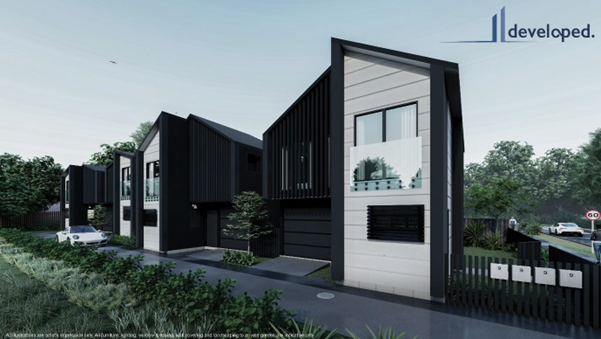
 For example, Developed has been involved throughout a property development in Highland Park, from site selection to civil engineering design, surveying and landscape design, through to construction supervision and subdivision management. It has provided an end-to-end development and subdivision service. The project is currently progressing in an orderly manner and is expected to be completed and listed for sale in 2023.
Most staff in the surveying and engineering teams have more than 5 years’ experience and have worked at leading local engineering consultancies. The team includes several registered engineers and surveyors. Most staff have backgrounds in more than two disciplines. Managing director Anson Zhang, for example, is a registered civil engineer with expertise in surveying and development and subdivision management, while director Michael Rogers has a background in civil engineering, carpentry and construction management.
Many staff have previously worked for New Zealand government agencies or major companies. Director David Miller, for example, has experience reviewing EPA applications for Auckland Council. The company maintains good communication with the council, Auckland Transport, Watercare and other relevant organisations.
Whatever the size of your project, whether you need support throughout the development process or help with a current challenge, Developed’s expert team can provide a professional solution.