
Latest property report released! “Is the pace of house price declines gradually slowing?” These areas deserve attention!
The nationwide quarterly house price decline has eased from its peak of -4.3% in September last year to -3.1% in January this year
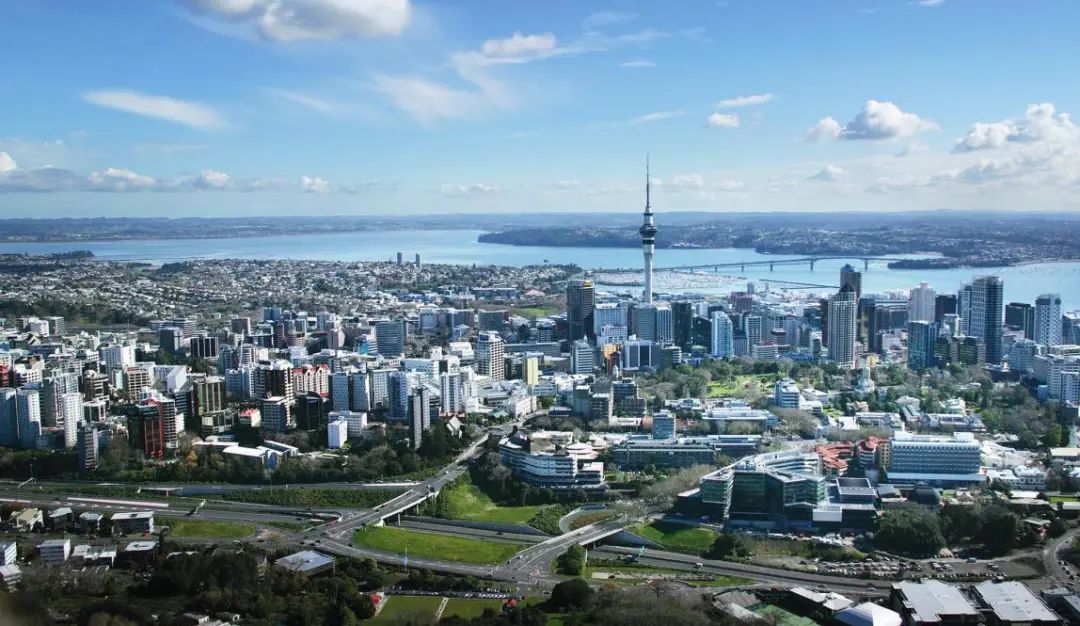
OneRoof’s latest property report shows that although New Zealand’s average residential property price fell by NZ$118,000 over the past 12 months to NZ$977,000, the pace of decline is slowing in some major cities.
The nationwide quarterly house price decline has eased from its peak of -4.3% in September last year to -3.1% in January this year. Over the same period, Auckland’s rate of decline eased from -5% to -3.9%, while Greater Wellington’s eased from a peak of -9% to -4.9%.
Experts say it is too early to declare the worst of the downturn over, but the data suggests buyers and sellers may already have absorbed the shock of rising mortgage rates and living costs. The start of each year is traditionally the property sector’s busiest season, and the volume of new listings in February and March this year will directly influence house prices in the period ahead. Experts predict New Zealand’s inflation rate has peaked, which could well prompt the Reserve Bank to reconsider the size of its next Official Cash Rate (OCR) increase, reassuring potential buyers and sellers who are still waiting on the sidelines.
The latest OneRoof-Valocity House Value Index report shows New Zealand’s housing market remains subdued after experiencing its steepest price falls since the global financial crisis in 2008. Prices in every region except Taranaki and the West Coast are below their levels a year earlier, with homeowners in Auckland and Greater Wellington hardest hit.
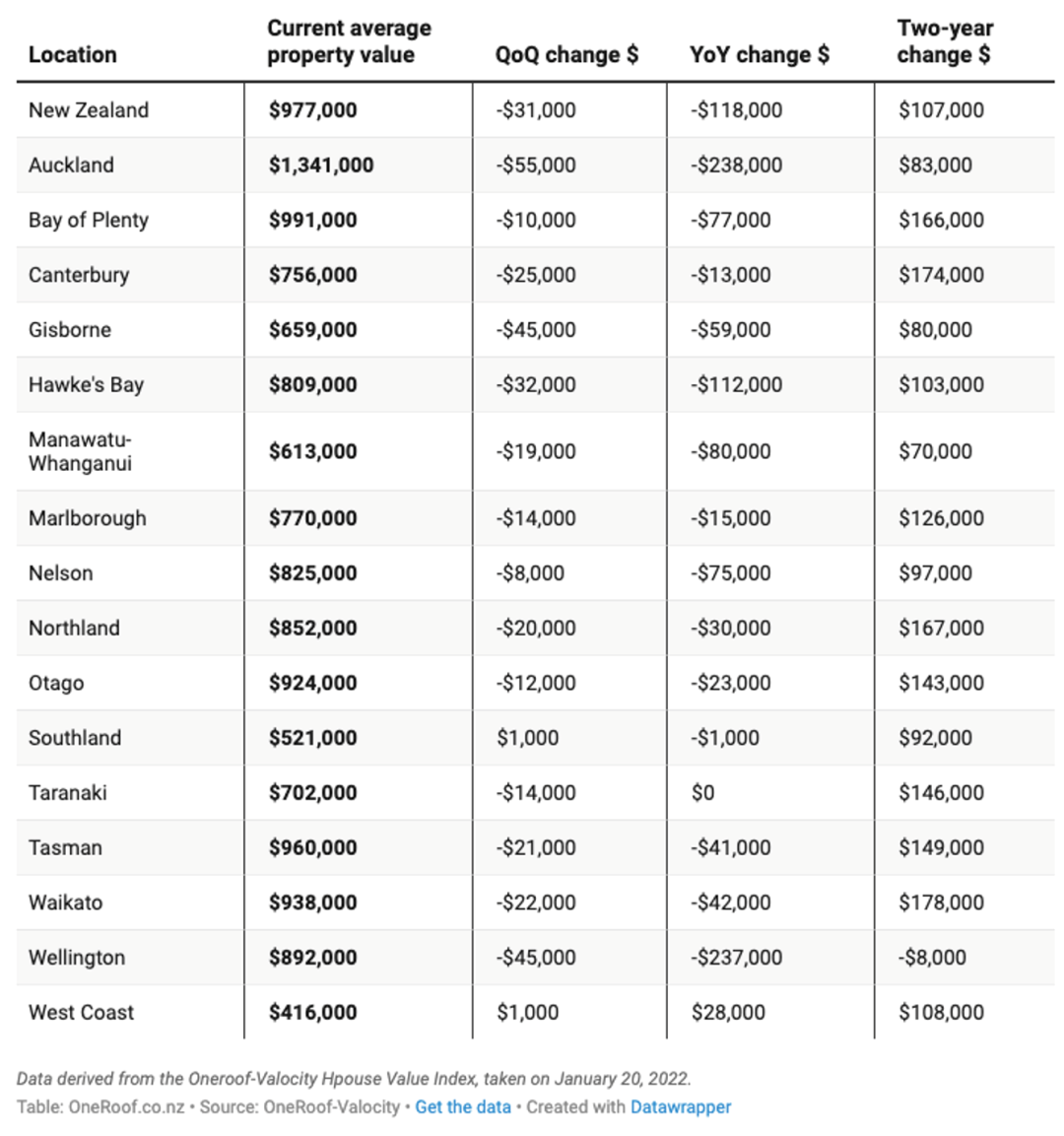
Changes in average property prices in New Zealand’s main cities and regions over the past 1 and 2 years
Over the past 12 months, Auckland’s average house price changed by -15% (or -NZ$238,000), falling to NZ$1,341,000. Greater Wellington recorded a change of -21% (or -NZ$237,000), taking its average to NZ$892,000. Hawke’s Bay and Manawatū-Whanganui also recorded double-digit declines in average house prices.
Taranaki’s average property price currently stands at NZ$702,000, unchanged year on year. The West Coast, New Zealand’s cheapest property market, is the only region to have recorded price growth. Its average house price rose by +7.2% (or NZ$28,000) compared with January 2022, but growth of just +0.2% in the latest quarter suggests it may soon join the rest of the country in recording falling prices.
Southland is another region to record quarterly house price growth. Its average property price currently stands at NZ$521,000. Although this represents a change of -2.53% (or -NZ$13,508) from its peak of NZ$534,000 in May last year, it has recorded modest growth over recent months.
{ad}
Valocity head of valuations James Wilson said the latest data they had examined showed the market was continuing to decline, even though the pace of price falls had slowed in some parts of the country. Prices in 50 districts nationwide are currently below their levels a year earlier. Clutha, Gore and Grey were the strongest performers, all recording modest quarterly price growth, although these are relatively remote areas with relatively low sales volumes.
Of course, the market news is not all bad. New Zealand’s economy remains strong, with growth of 2% in the third quarter of last year and unemployment at a historically low 3.3% over the same period. Although mortgage borrowers may feel increasingly stretched by inflation and rising interest rates, there will not be an increase in mortgagee sales. The return of international tourists, overseas students and migrants is also likely to stimulate housing demand in some parts of New Zealand.
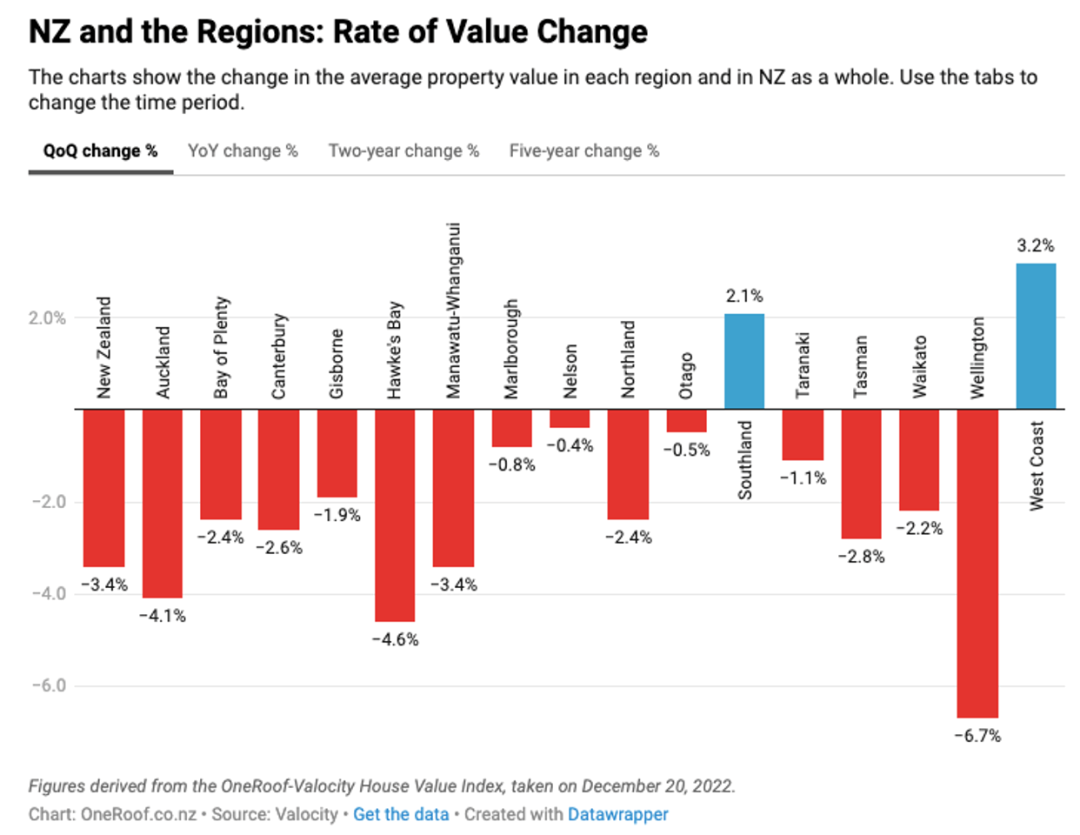
Changes in average house prices across New Zealand’s regions over the past quarter
For homeowners who bought before the pandemic, average property values are now 27% higher than two years ago. This means owners who choose to sell in the current market can still make relatively substantial gains. The data shows homeowners in 55 suburbs have gained more than NZ$500,000 in equity since the pandemic began. The largest property value gains were on Waiheke Island, where average prices rose by NZ$1,100,000 compared with January 2020, and in Ben Lomond, where they rose by NZ$1,060,000 over the same period.
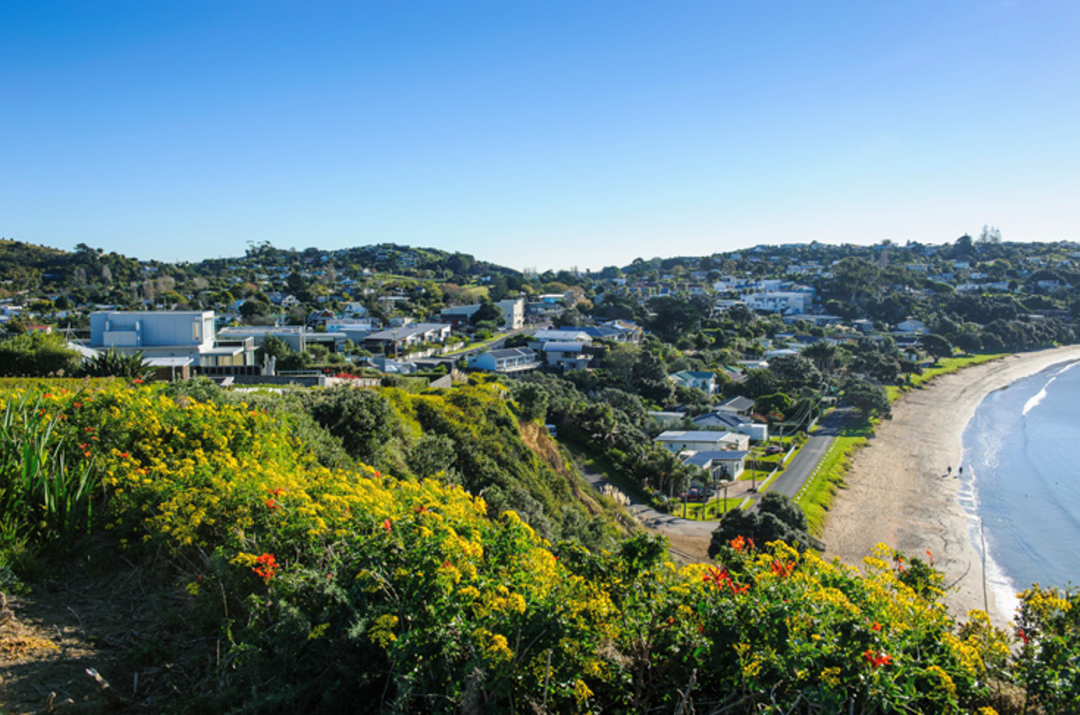
Waiheke Island’s average house price fell 5% over the past three months to NZ$2,184,000, but remains up +32.4% on its pre-pandemic level. Photo: Getty Images
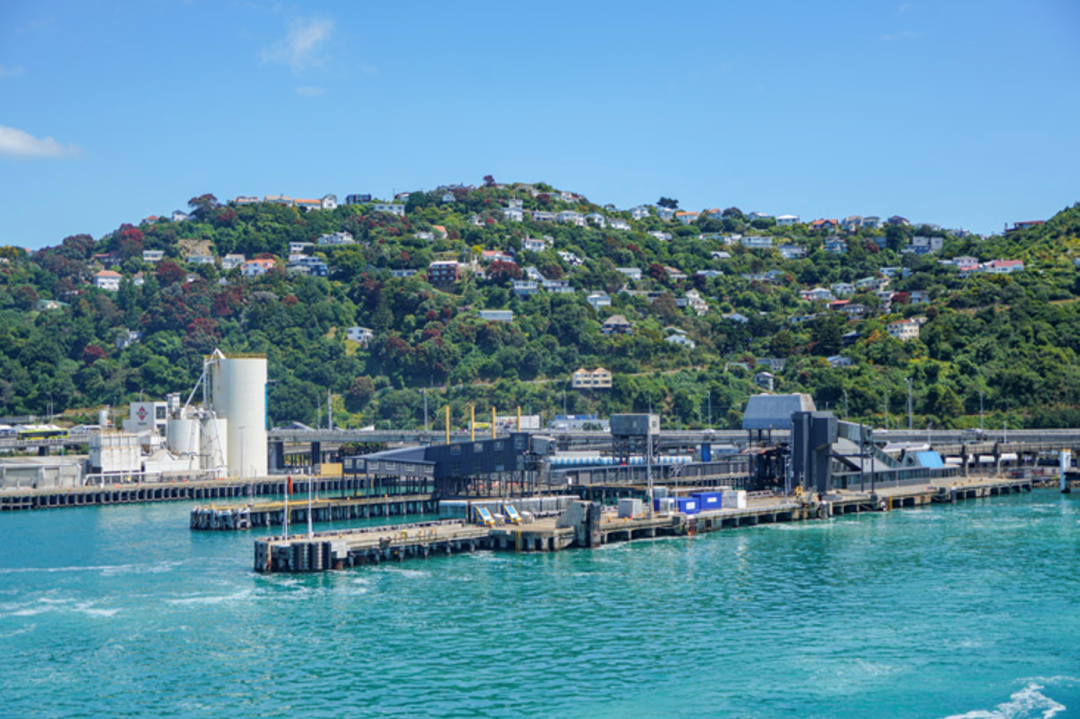
Continuing house price falls have wiped out the gains homeowners in Wellington’s Pipitea made during the property boom. Photo: Getty Images
The data also shows average house prices in 552 of New Zealand’s 1192 suburbs rose by around NZ$200,000 to NZ$500,000 over the past two years, but the continuing economic downturn is rapidly eroding those capital gains. Homeowners in Wellington’s Pipitea have suffered the greatest losses, with average property prices now showing a change of -5.1% (or -NZ$33,000) compared with January 2020. Homeowners in central Wellington, Oriental Bay and Mount Victoria may face the same risks as those in Pipitea. In Oriental Bay, average house prices have recorded a cumulative change of -NZ$605,000 since peaking at NZ$2,750,000 in 2021. Investors appear more willing to put their money into property on Waiheke Island and in Omaha.
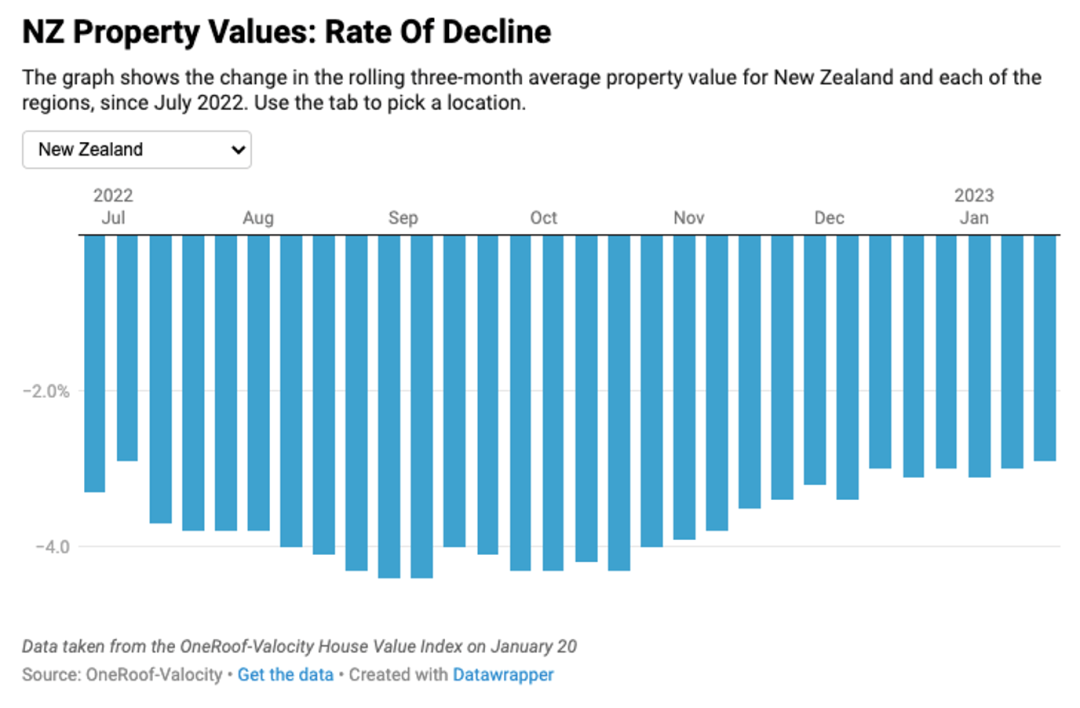
Percentage decline in New Zealand’s average house price over the past six months
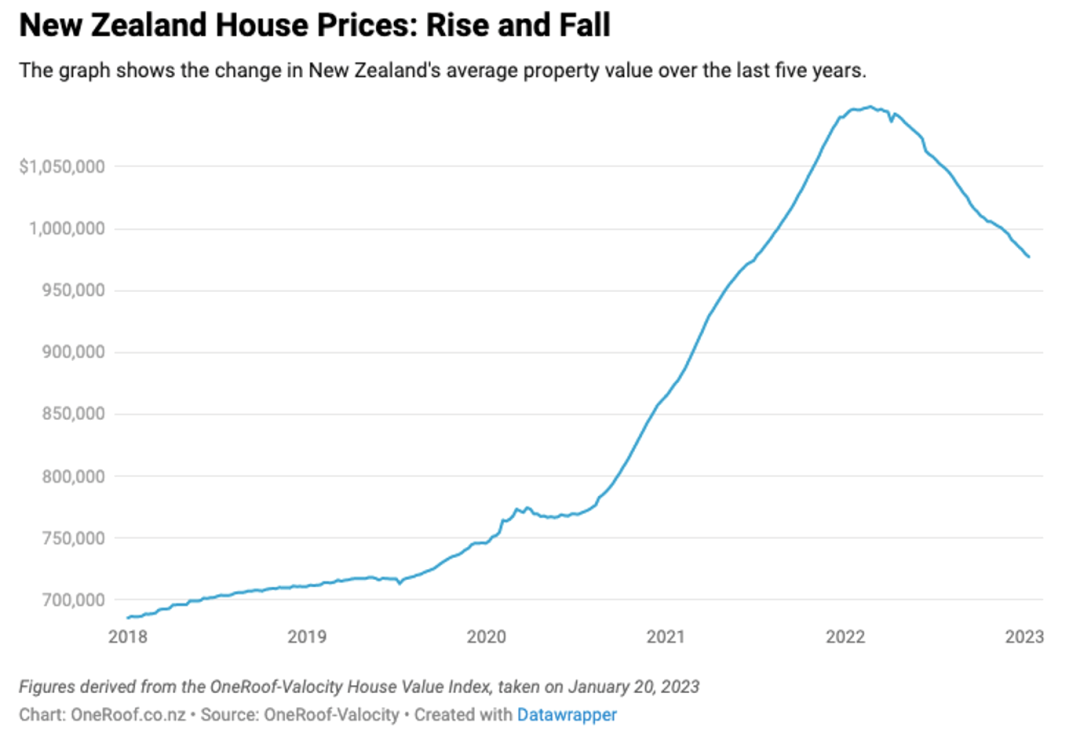
Chart showing changes in New Zealand’s average house price over the past five years
Wilson said falling prices following New Zealand’s exceptional housing boom had created more opportunities for first-home buyers, who now needed NZ$50,000 less for a deposit than at the market’s peak. Valocity senior researcher Wayne Shum said first-home buyers became the largest buyer group in December 2022, with their market share rising from 40.2% the previous month to 42.5%. Although fewer than 2700 properties actually sold that month, well below the 3800 sold in December 2021, the total was still higher than the 2300 sold in November 2022. Investors accounted for 24.3% of the market that month, slightly below their November share but three percentage points higher than a year earlier.
Shum said mortgage rates had reached their highest levels in a decade, and inflation of 7.2% could still prompt the Reserve Bank to raise the OCR again later this month. Some major banks are lowering their longer-term fixed mortgage rates for terms of 3 years or more, which could be a clear sign that the tightening cycle is nearing its end.