
Warning: Cyclone Gabrielle’s threat is far from over! Remember these essential steps for dealing with damage to your home
MetService’s latest severe weather warning shows that Cyclone Gabrielle’s threat to New Zealand is far from over
MetService’s latest severe weather warning shows that Cyclone Gabrielle’s threat to New Zealand is far from over. MetService has issued a severe thunderstorm warning for Bay of Plenty, Rotorua, Taupo, Gisborne and Hawke’s Bay, running from 3h this afternoon until 10h tonight.
MetService says a highly unstable upper-level trough will cross the northern and central North Island this afternoon and evening, with thunderstorms bringing localised heavy rain and hail. Severe thunderstorms are possible in Bay of Plenty, Rotorua, eastern Taupo, Hawke’s Bay and Gisborne, including northern Gisborne. Localised rainfall of 25 to 40 millimetres and hail are expected, with thunderstorm activity expected to end later today.
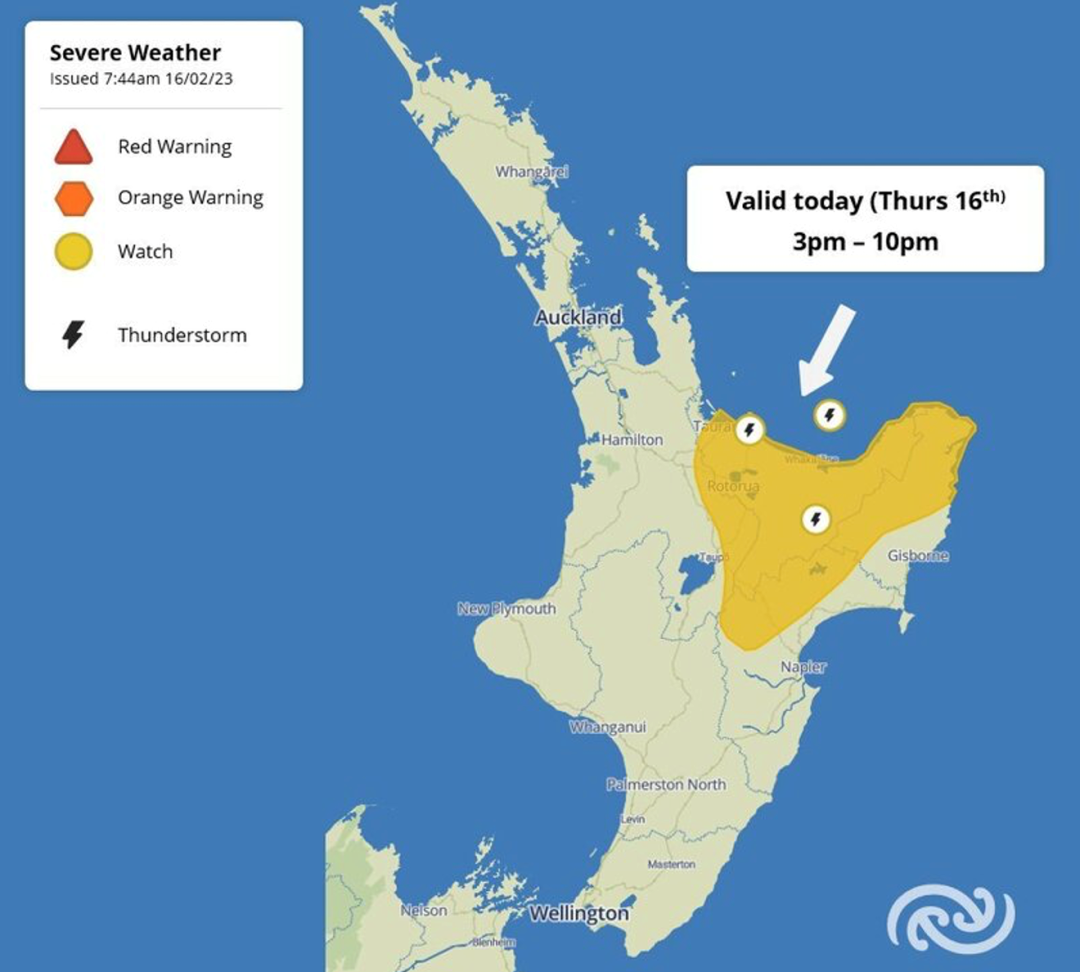
MetService issues another severe weather thunderstorm warning
Cyclone Gabrielle has caused unprecedented, catastrophic destruction in New Zealand. Around 250,000 people across the North Island remain without power; flooding has forced rescue teams to save around 300 people from rooftops in Hawke’s Bay; flooding in Gisborne has also reached a “critical” level; the Clive Bridge connecting Napier and Hastings is open only for essential travel; and many North Island roads remain closed because of flooding…
{ad}
As the severe weather eases and floodwaters recede, once affected residents are allowed to return safely to their homes, the biggest question facing everyone will be how to begin recovery and rebuilding. YIJU New Zealand has compiled some steps to take after flooding, in the hope of helping people keep their losses to a minimum.
Contact your insurer
If your home or belongings have been damaged, New Zealand’s National Emergency Management Agency (NEMA) advises contacting your insurer as soon as possible, before cleaning up your home. If you are a tenant, contact your landlord promptly.
Insurance Council of New Zealand chief executive Tim Grafton says that although flooding can cause residents enormous losses, their insurers can provide essential support and help with rebuilding. This support extends beyond cleaning up after the disaster: most home and contents insurance policies include temporary accommodation, helping people whose homes have become uninhabitable find somewhere to stay.
Grafton adds that people should avoid doing anything that could endanger their safety or cause further property damage. For example, if a car has been submerged in floodwater, do not try to restart it. Similarly, if your home has been flooded, turn off the power to prevent a short circuit causing a fire, and do not use any potentially damaged household appliances that could cause an electric shock. With so many insurance claims being lodged in a short period, insurers may be unable to contact affected people quickly. He therefore encourages residents to photograph and document their losses themselves to help speed up claim assessments.
Protect yourself before cleaning up your damaged home
NEMA advises people to “look before you step”. After flooding, the ground and floors may be slippery or covered in debris, such as broken glass and nails, creating safety hazards.
When starting the clean-up, Grafton recommends “leaving specialist work to the professionals”. Many badly damaged parts of a home, such as walls and floors, need professional repairs. Specialists have the equipment needed to remove and detect mould. He also recommends keeping copies of invoices for these services.
People with asthma, allergies or immune system disorders are also advised to stay away from flood-damaged homes. Mud and sewage residue can remain after floodwaters recede, and mould, cleaning chemicals and sewage can all cause illness.
When taking flood-damaged belongings outside to dry, wear protective equipment, including long trousers, long sleeves, boots, gloves and a mask, to avoid contact with hazardous substances.
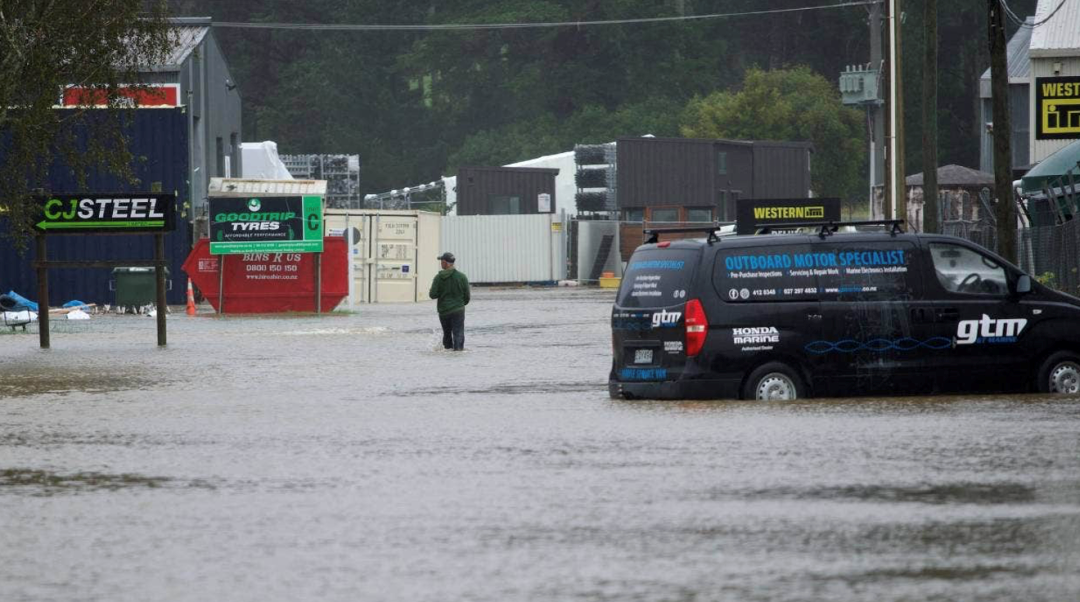
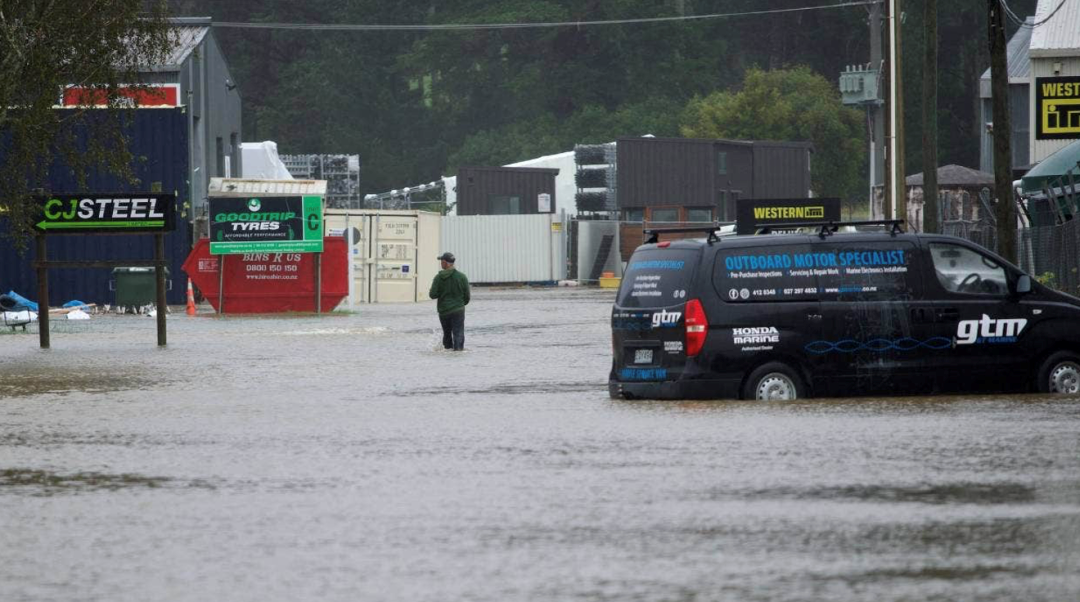
Cyclone Gabrielle caused flooding in Kumeu, Auckland
Dry out your home as soon as possible
Dr Mikael Boulic, a senior lecturer in building technology and public health at Massey University, says mould is a particularly troublesome potential threat. It grows in relatively damp conditions and is often invisible. The most effective way to tackle it is to dry out the house as quickly as possible. If the house has power, he recommends turning on air conditioning or a dehumidifier and keeping doors and windows closed to circulate indoor air more quickly and remove excess moisture. If you only have an electric fan, keep the windows open. If the house has no power, open all doors and windows to allow cross-ventilation when the weather permits.
Dr Boulic does not particularly recommend bleach for cleaning and disinfecting homes. He says wiping walls and surfaces with a mixture of 80% white vinegar and 20% water can achieve the same result while being much less harmful to people. If there is extensive mould in the house, he recommends cleaning and disinfecting it before moving back in.
Discard furniture and household items that may be contaminated with mould
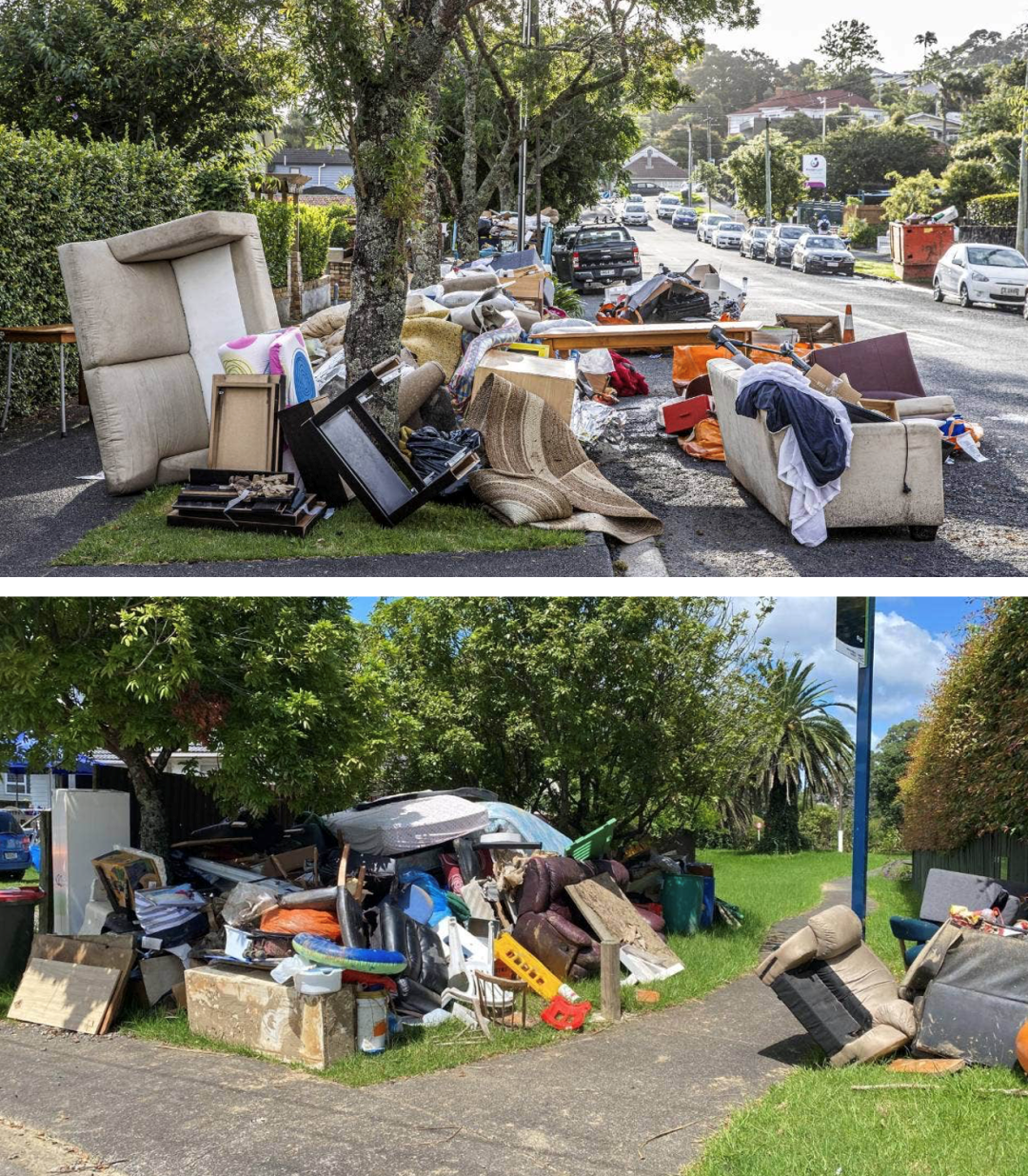
Rubbish strewn everywhere after the Auckland floods
The US Centers for Disease Control and Prevention recommends discarding household items, such as furniture and carpets, that cannot be cleaned and dried within 24 to 48 hours of being flooded. Mould is likely to have developed on these items, making them unsuitable for continued use. Photograph any valuable items before discarding them to support a subsequent insurance claim.
New Zealand’s Ministry of Health recommends taking all movable flood-damaged items, such as carpets, furniture, bedding and clothing, outside to dry as soon as the weather is fine. Fitted carpets and underlay that have been soaked in floodwater should be discarded immediately. Also check for trapped water in wall cavities and beneath showers, baths and cupboards. Remove skirting boards if necessary and replace softened plasterboard in damaged areas. However, replace flooring and wall linings only once the house is completely dry, and take care to prevent mould, blistering and peeling. If there are signs that the foundations have shifted, such as buckled floors, cracked walls or distorted door frames, consult a professional engineer.
Food safety
The Ministry of Health recommends throwing away all meat, dairy products and leftovers if the fridge has been without power for more than four hours. Food in a full freezer remains safe for 48 hours, or 24 hours if it is only half full. It also recommends discarding all food, drinking water and canned food that have come into contact with floodwater, as well as any food in the fridge that has been exposed to sewage.
Electrical safety
A Fire and Emergency New Zealand spokesperson says residents returning to flood-damaged homes must first confirm with their gas and electricity suppliers that it is safe before using electrical appliances or gas installations again.
The Ministry of Health recommends promptly checking small appliances, such as toasters and coffee machines, for frayed or exposed wiring. Larger appliances, such as fridges and washing machines, should be checked by a qualified electrician before use.
Finally, the Ministry of Health reminds residents who are still without power and relying on charcoal or camping stoves for cooking to beware of carbon monoxide poisoning. Do not use these in enclosed spaces, as they can produce a lethal, colourless and odourless gas.
Finally, we have compiled these emergency steps to take after flooding:
- Do not rush indoors: guard against electric shock
- When it is safe to enter, locate the main power switch and turn off the electricity to your home
- If safe, remove items vulnerable to water damage, such as portable appliances, books, clothing, food and furniture
- Photograph and document the damage, and contact your insurer
- Find a professional service provider and equipment to pump out the water,
- Use drying equipment and dehumidifiers to dry out the house
- Clean and disinfect the interior, including carpets, floors and tiles, replacing them where necessary
- Repair furniture and appliances that can be restored
- Treat interior walls and fittings to prevent mould
- Discard contaminated food and belongings
Each of us is vulnerable in the face of natural disasters, but that does not diminish our determination to stand together and overcome them. We hope everyone gets through this difficult time safely.