
Rare official declaration: New Zealand enters a national state of emergency! Politician warns against building homes in the wrong places
On Tuesday morning, the New Zealand Government made a highly unusual decision
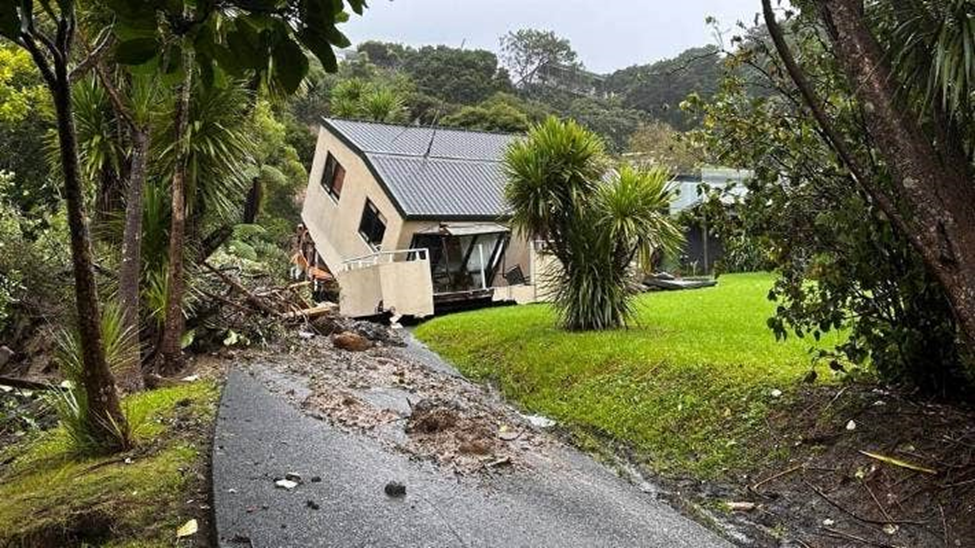
After another night of fierce winds and heavy rain, Cyclone Gabrielle has battered the North Island, causing widespread power cuts, flooding, landslides and property damage. Residents in many areas have been urgently evacuated, some fleeing their homes as though running for their lives. On Tuesday morning, the New Zealand Government made a highly unusual decision: declaring a national state of emergency!
New Zealand declares a national state of emergency
Minister for Emergency Management Kieran McAnulty signed the declaration at 8:43 on Tuesday morning, having secured support from the Prime Minister and the opposition’s emergency management spokesperson. The declaration applies to the six regions that had already declared local states of emergency: Northland, Auckland, Tairāwhiti, Bay of Plenty, Waikato and Hawke’s Bay.
This is a very rare step, marking only the third national state of emergency in New Zealand’s history, following the Christchurch earthquake and the coronavirus pandemic. The Government has also announced NZ$11,500,000 in funding to respond to Cyclone Gabrielle.
“This is an unprecedented weather event that is having major impacts across much of the North Island,” Kieran McAnulty said.
Minister for Emergency Management Kieran McAnulty (right). Photo: 1 News
He said the national state of emergency was intended to enable effective mobilisation of resources: “This declaration will allow the Government to support affected regions, provide additional resources where needed and help set priorities for the response across the country. A national state of emergency gives the National Controller legal authority to use resources nationwide to support a national response. This declaration allows us to coordinate more resources for affected areas.”
Severe damage across the North Island
Some people may feel the destruction caused by this cyclone does not compare with the Christchurch earthquake or the coronavirus pandemic, but a few examples show just how critical the situation has become.
The whole of Coromandel is in crisis and has been cut off from other areas. Civil Defence says almost every road in Coromandel is closed, submerged under metres of water and “absolutely impassable”. There are slips on almost every road, and many places are
without power. Local officials have described the cyclone’s destruction in Coromandel as “carnage”.
In Auckland’s inner-city suburb of Mt Eden, a 30-metre steel tower, 109 years old, could collapse at any moment in the wind and rain. As a precaution, 50 nearby apartments have been evacuated.
In Piha, west Auckland, an astonishing 265 millimetres of rain fell in 12 hours, causing numerous slips on roads. Residents were urgently evacuated as though fleeing for their lives, while a collapsed rock face blocked almost the entire road. Flooding and landslides have left Piha
cut off from the outside world.
Local resident Leanne McMillan said that at around seven o’clock last night, huge rocks rolled down the hillside onto their house. Her husband shouted “Run”, and they grabbed their dog and fled. “Basically, the whole hillside behind us came down and hit
the back of our house, smashing the trees and everything, all the windows.”
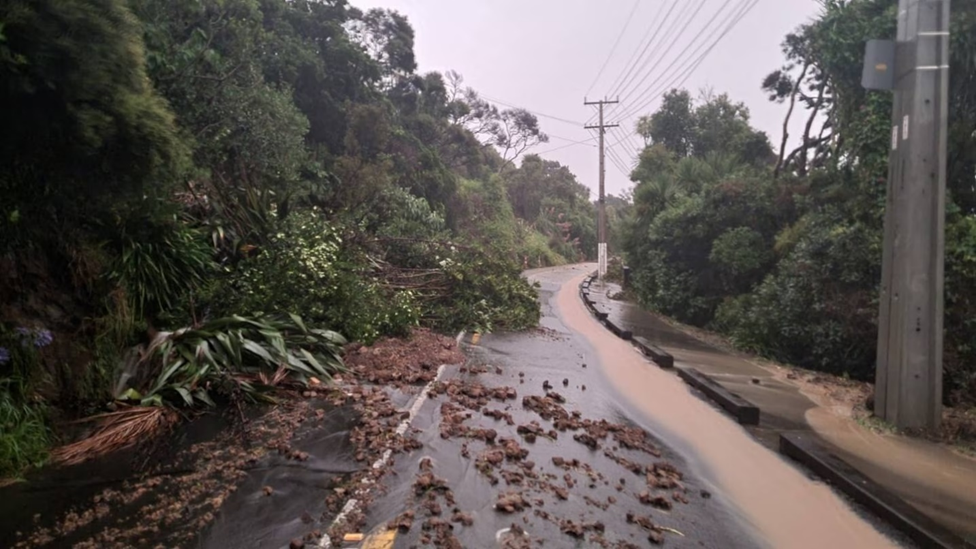
A major landslide on Piha Rd. Photo: Shawn McIsaac
In Muriwai, 106 millimetres of rain fell in 12 hours. A landslide before 11h last night destroyed two houses, trapping a volunteer firefighter in a collapsed home. Another firefighter was rescued and taken to hospital, where they remain in a critical condition. Because of
unstable ground, rescuers had to abandon the search for the trapped firefighter, who has still not been found.
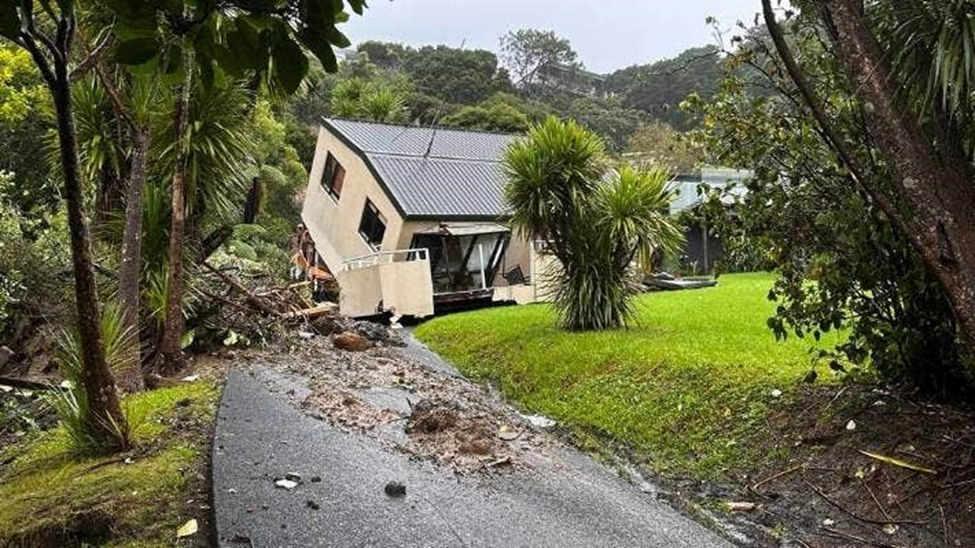
A landslide in Muriwai. Photo: ABIGAIL DOUGHERTY
Meanwhile, around fifteen thousand to twenty thousand households across the North Island have lost power. Auckland Emergency Management said the worst conditions were arriving last night and today, urged people to evacuate if necessary and warned of widespread power cuts. If you see
fallen power lines, do not touch them, and stay away from floodwater.
For residents in the northern North Island, the worst weather may have passed. The storm is moving southeast towards the Tararua Ranges and Wellington, with 120 to 180 millimetres of rain expected in the ranges. However, Auckland will continue to
be battered by strong winds, with speeds reaching 130 kilometres per hour.
Auckland Emergency Management deputy controller Rachel Kelleher warned people to stay away from coastal and low-lying areas and said they should not wait for an official decision before leaving. “I cannot stress this enough: if you see water rising around you, make plans
to leave. If you believe you are in danger, please do not wait to be told to leave. We are not out of the woods yet.”
ACT leader: stop building homes in the wrong places
During this disaster, many homes have been threatened by flooding and landslides, leaving owners to bear the losses. This has prompted questions: are some places simply unsuitable for housing? Can drainage and infrastructure keep pace with the housing market’s growth?
ACT leader and Epsom MP David Seymour wrote in the NZ Herald that Auckland needs to stop building homes in the wrong places.
In 2021, Labour and National announced new legislation allowing buildings of up to three storeys in most urban locations without resource consent: the familiar Medium Density Residential Standards. But David Seymour believes this legislation
makes it harder for local government to address challenges, stripping councils of their ability to coordinate infrastructure upgrades with intensification.

ACT leader David Seymour
“The rain was certainly heavy, but many parts of Auckland were fine while others were not. Stormwater infrastructure made the difference. It is not just about drainage capacity, but also maintenance. A drain full of rubble is useless.”
He cited Tawera Rd, where surging floodwaters lifted enormous manhole covers weighing several tonnes and flowed through nearby homes. He argued that drainage systems can indeed protect homes, but faulty systems can instead channel water into them.
David Seymour said a new government must allow councils to reject mandatory upzoning in areas with vulnerable infrastructure, enabling them to choose not to allow further housebuilding where pipes are overloaded, and fund them to repair and build urgently needed
infrastructure. This would stop vulnerable areas from being made worse.
The trend towards medium-density housing will inevitably bring more properties onto the market, some facing greater risks. Once this cyclone has passed, how will housing supply, demand and prices change? How can buyers avoid risks and choose
a home that truly suits them? How should sellers respond to these multiple challenges? YIJU New Zealand will continue to provide professional insights, and we welcome your views.