
More buyers are returning to the property market! Do they most want standalone houses, townhouses or apartments?
In January, the average sale price of the cheapest 1/4 of properties sold fell sharply across most of New Zealand
Falling house prices give first-home buyers an advantage
According to the latest survey report released by the Real Estate Institute of New Zealand (REINZ), in month 1, the average sale price of the cheapest 1/4 of properties sold fell sharply across most of New Zealand. As this is the price bracket that first-home buyers focus on
, the fall in prices for these properties means affordability has improved considerably for first-home buyers.
The largest fall was in Bay of Plenty, down NZ$96,000 (-13.9%). The average sale price of the cheapest 1/4 of properties sold in the region fell from NZ$692,000 in December last year to NZ$596,000 in January this year. Next was
Manawatu/Whanganui, where the average sale price of comparable properties in January fell by NZ$70,000 (-14.6%) compared with December, followed by Auckland, down NZ$62,000 (-7.6%), and Nelson/Marlborough, down NZ$42,000
(-7.2%), Southland, down NZ$31,000 (-8.8%), Taranaki, down NZ$30,000 (-5.8%), Wellington, down NZ$27,000 (-4.2%), and Canterbury, down NZ$20,000 (-3.8%).
Meanwhile, since regional house prices peaked in November 2021, the average sale price of the cheapest 1/4 of properties sold has fallen by more than NZ$100,000 in six regions. These are Auckland (-NZ$216,000), Bay of Plenty
(-NZ$104,000), Hawke's Bay (-NZ$107,500), Manawatu/Whanganui (-NZ$105,000), Wellington (-NZ$165,000) and Nelson/Marlborough (-NZ$117,000), while
prices for comparable properties in Otago have also fallen by NZ$99,500.
Survey shows first-home buyers are back in the market
Well-known independent New Zealand economist Tony Alexander recently said first-home buyers were returning to the property market as their concerns about rising mortgage rates gradually began to ease. His latest survey of mortgage advisers found that 30% of respondents had recently received more loan enquiries from first-home buyers. This marks a major shift from the end of last year.
Alexander believes a key reason first-home buyers are less worried about rising interest rates is that some commercial banks have recently cut rates, while discussion about rates potentially having peaked has increased. “Most borrowers are not expecting rates to plunge to 3%, but they are no longer panicking about the possibility of rates continuing to soar above 8%. New Zealand's persistently low unemployment also means most people feel their jobs are secure and their wages are steadily rising. Some first-home buyers have realised this could be the best time to enter the housing market, as the property investors they once competed with are less active.
Have house prices really fallen enough for first-home buyers to buy the homes they want?
CoreLogic head of research Nick Goodall recently said there was a serious disconnect between the properties first-home buyers could afford and those they wanted to buy. A newly released survey found that most buyers want standalone houses rather than townhouses or apartments.
Recent survey results released by Stuff NowNext show that 79% of renters say they would like to buy a standalone house, more than twice the proportion choosing townhouses (36%), and substantially more than those wanting units (15%) or apartments (12%).
The harsh reality is that fulfilling the dream of buying a standalone house is difficult, because townhouses, units and apartments are usually much cheaper.
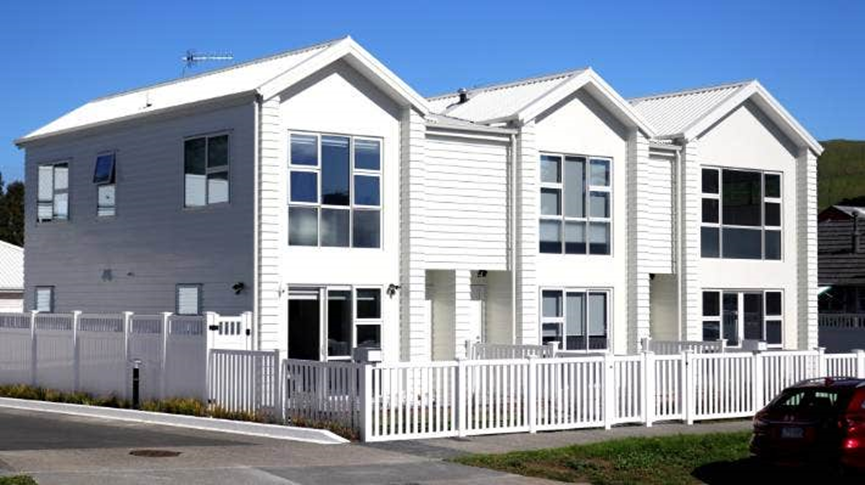
According to the latest Trade Me Property Price Index, national average asking prices for townhouses, units and apartments are NZ$809,100, NZ$556,750 and NZ$714,250 respectively. By comparison, the national average asking price for three- to four-bedroom houses is much higher, at NZ$906,750. Harcourts Property Ventures director Mark Honeybone said actual sale prices for properties other than standalone houses could currently be well below these asking prices. For example, first-home buyers may be able to buy a townhouse in West or South Auckland for between NZ$500,000 and NZ$600,000.
{ad}
Townhouses offer better value than standalone houses
Their lower prices make these property types more affordable options for first-home buyers, but the NowNext survey shows many would prefer a standalone house. Sense Partners economist
Shamubeel Eaqub said there was still a large gap between what people wanted and what they could afford.
He said plainly that buying a standalone house is unrealistic for most buyers, who often end up turning to more affordable options. This is particularly true in places such as Auckland, where land is at a premium and more medium- and high-density properties are available. Buyers'
thinking is also gradually changing. They increasingly favour central locations close to amenities, transport hubs and schools, so they go through a process of weighing up the trade-offs. Many people's hesitation stems from
legacy construction problems in some poorer-quality apartments built early in the 21st century, which have come to light in recent years. However, things are changing for the better: the quality of newly built apartments has improved significantly, easing concerns about apartment quality.
Squirrel founder John Bolton said today's first-home buyers were more flexible and varied in their choices than 15 years ago. Compared with when he entered the industry, the gap between the properties first-home buyers wanted and those they
could afford has narrowed considerably. Back then, nobody would consider apartments, and most people shied away from townhouses too. Soaring house prices have fundamentally changed that.
Even though house prices have now eased, many first-home buyers still lean towards townhouses because their prices are more acceptable to the market. He believes that as major urban centres are redeveloped and medium-density housing
becomes more widespread, demand for townhouses and apartments will continue to rise. People often put comfort first when choosing a property; after all, not every buyer wants the many maintenance chores that come with a large lawn and garden.
CoreLogic chief property economist Kelvin Davidson agrees. He said buyers' needs and wants differed, and the gap between them would change over time. “There will always be buyers who want
a property with a large lawn, but affordability ultimately forces some to choose other property types.”
Buyers' tastes in property are changing, along with their preferred lifestyles and expectations of convenient locations. More people with busy lifestyles are rejecting demanding garden upkeep and long commutes. This means urban
planners and developers need to think carefully about where to locate their next medium-density development if they want to attract more entry-level buyers.