
Exclusive interview with Jen Baird: REINZ exists to champion the real estate industry
In July 2021, Jen Baird joined the Real Estate Institute of New Zealand (,REINZ) as chief executive officer (CEO). REINZ represents more than 16,000 real estate professionals in New Zealand, providing education, data and digital services, and advocacy to support the industry in serving New Zealanders. Jen is the Xth CEO of this distinguished century-old institution and one of its few female CEOs.
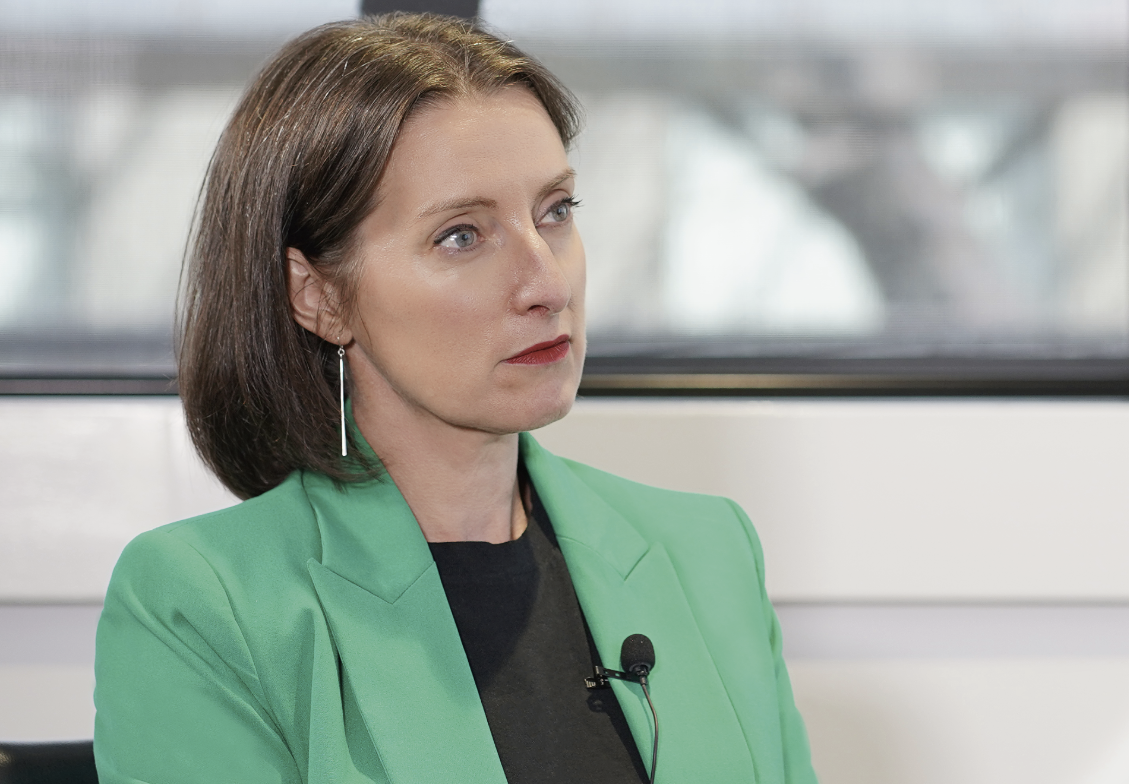
In July 2021, Jen Baird joined the Real Estate Institute of New Zealand (,REINZ) as chief executive officer (CEO). REINZ represents more than 16,000 real estate professionals in New Zealand, providing education, data and digital services, and advocacy to support the industry in serving New Zealanders. Jen is the Xth CEO of this distinguished century-old institution and one of its few female CEOs.
REINZ board chair Bridget Coates said of Jen's appointment: “Jen is a strong strategic thinker with outstanding people management skills who excels at leading teams through challenging periods of change. Her experience working across different teams and with a wide range of stakeholders will be a valuable asset to REINZ.”
Jen has lived up to those expectations.
Just five weeks into her role, Auckland entered lockdown. Jen had to help the real estate industry adapt to new rules and restrictions while also preparing an updated strategy for the organisation. “The board wanted the strategy revised within three months, and we had to hold workshops, presentations and iterations online. Given the lockdown, it was challenging, but I am proud of what our team managed to deliver in new ways.”
Alongside dealing with the lingering effects of Covid-19, Jen has led a pivot in REINZ's digital strategy, renewed its focus on member engagement and developed its organisational culture. Overall, Jen is committed to making REINZ a world-class professional body for real estate.
In real estate, once considered a male-dominated industry, this outstanding female leader has returned with confidence, destined to shine and bring fresh energy and a thriving future to the sector.
“I came into public relations with a building”
YIJU: Growing up, did you ever imagine working in real estate?
Jen:No. Although my brother became a real estate agent, I never considered it. I once dreamed of becoming a truck driver, but my parents thought I would become a teacher because I was always keen to learn new things and enjoyed teaching others. By high school, I had become interested in business. After leaving school, I chose to study for a Bachelor of Management Studies (,BMS) at the University of Waikato, close to home. I chose Chinese, marketing and international management as my majors, an unusual combination at the time.
My first few jobs after university had nothing to do with real estate either. My first job was as a sales representative for Unilever, selling Streets Ice Cream. I covered a large territory across the central and northern North Island. Ice cream was also a very easy product to sell, and during the 18 months I spent in that job, I ate so much that I was “sick of it”.
At 23, I was really drawn to the big city, so I quit my job, moved to Auckland and became a recruitment consultant. Recruitment is a sales job that requires persistence. I gave it everything, but it really wasn't my strength. So when my boss once asked why I hadn't met my revenue target that month, I blurted out: “You know what? Actually, I want to move to the UK.” She said: “That's a very good idea.”
So I moved to the UK. My first job in London was with a private equity firm, looking after marketing and office operations. Later, one of the founders was diagnosed with terminal cancer, so they closed the fund and sublet the offices to a public relations company. They told the new tenants: “You can sublet this building if you keep Jen on.” That is how I ended up in public relations: I came with a building. The new company mainly provided financial services for institutions, while I continued working in marketing and communications.
YIJU: What brought you into real estate?
Jen: After five years working in the UK, I returned to New Zealand and continued doing what I was good at: marketing. After two years as communications and brand manager at Radius Health Group, I changed sectors and joined Barfoot & Thompson
as chief marketing officer (CMO).
That was in 2007, a particularly interesting time for real estate.
There was a lot of change happening, such as everyone getting a website. Marketing was becoming a key part of selling real estate, particularly with the arrival of companies such as Facebook. I worked closely with chief information officer (CIO) Simon Casey to bring marketing and technology together, which was very exciting.
Then the Real Estate Agents Act was introduced in 2008, bringing significant changes to how certain things had previously been handled.
There was also the global financial crisis (GFC) in 2008. A previously very active market gradually slowed, creating enormous challenges and considerable hardship for many real estate agents. Being a real estate agent can be very tough, particularly when you are starting out.
What I am proudest of from my nearly 10 years at Barfoot & Thompson is that we gave salespeople support and tools so they did not have to worry about marketing. Instead, they could focus on building client relationships and providing truly excellent service.
YIJU: You later spent four years at Hamilton City Council, briefly as marketing and communications manager, followed by three years as general manager of city growth. Why did you choose to return to real estate and join REINZ as CEO?
Jen:During the Christmas holidays a few years ago, I felt it was time to leave my role as Hamilton City Council's general manager of city growth and take on a new challenge. After the holidays, a female friend told me the current REINZ CEO had resigned. The timing was wonderful. I kept looking for the job advertisement, but it never appeared. I wondered whether candidates were already being interviewed. So I decided to take the initiative and called the recruitment consultant: “Are you recruiting REINZ's CEO?”
He said yes, and I replied: “Great! I'm interested.” I then went through the full recruitment process and was fortunate to be selected by the board. Two years later, in July 2021, I formally took up the role of REINZ CEO.
You could say I grew up in real estate. Getting this job depended on the ten years of real estate experience I gained as CMO at Barfoot & Thompson. Those ten years also helped me secure my Hamilton City Council role, where I was responsible for the entire development ecosystem, all subdivision consents, the city's long-term planning and even the building consent process…
That gave me a deep understanding of the whole real estate ecosystem, which really helped me stand out as a candidate for this role.
YIJU: If you weren't REINZ REINZ's CEO, what career would you choose?
Jen:Ha ha, that depends on what I could do. If you mean I could choose any career that interested me, without worrying about whether I had the ability or could make a living from it, I would love to be a country music superstar. I love playing guitar and wearing cowboy boots. That would be very cool.
“REINZ exists to champion New Zealand's real estate industry.”
YIJU: Since returning to the real estate industry, what changes have you seen in the market and the industry?
Jen:The industry is much more complex and sophisticated now, both in its use of technology and in the expectations placed on real estate agents and the different roles they must play. They are not simply salespeople: they must also build their personal brands and be expert negotiators. They must be able to navigate legislation and comply with all the different requirements now operating in the industry.
REINZ's role is to support them in providing excellent service. We have built a strong platform around their needs so they can run their businesses with comprehensive support.
Another area I think has changed considerably is property management and how it operates. More landlords are using professional property managers, but this is an unregulated field. REINZ wants the government to consider regulating certain aspects to protect landlords and tenants. It is a growing area, and we have an opportunity to raise standards across the sector.
YIJU: REINZ describes itself as the Voice of Real Estate in NZ. As REINZ's CEO, how would you describe REINZ as an organisation?
Jen:REINZ was founded in the early 1900s and has existed for more than 100 years. In my office, I have a photograph of REINZ's first meeting in 1926. REINZ has an extraordinary history and exists to champion New Zealand's real estate industry. We are here to do the right things together, helping all real estate professionals in New Zealand improve, grow and develop their businesses. The introduction of the Real Estate Agents Act in 2008 changed REINZ's circumstances considerably, so the services we offer now are very different from those we provided when the legislation took effect.
REINZ currently provides many services to members, a substantial part of which is data provision infrastructure. Members supply information to REINZ and benefit from the data we return to them. Over the past few years, we have done a great deal of work to understand exactly what data members need, how they use it and how REINZ can provide it. We have consequently improved the technology and data available to members and helped them use these with their clients. We are seeing substantial investment in technology across the industry, and as an industry body, we work hard to keep pace.
We are also a joint copyright holder of the Agreement for Sale and Purchase of Real Estate, so most New Zealand property transactions use a contract owned by REINZ. It is very important to us that members have a contract that is fit for purpose and offers legal protection.
We also offer a full range of educational products, from qualifications and branch manager training to becoming a licensee, as well as wellbeing and mental health courses. More than half of New Zealand's real estate continuing professional development (CPD) training is delivered through REINZ.
Another very important part of our work is advocating for members' interests and needs across all relevant agencies. We invest considerable time and effort in government relations, understanding forthcoming legislation and urging the government to take members' interests fully into account when considering new legislation or changes to existing laws. We all know real estate has seen considerable change over the past few years. Navigating change on this scale is very challenging for real estate professionals, whether agents or property managers. We have therefore remained strongly focused on members' needs, helping them find ways to satisfy clients while growing their businesses.
YIJU: REINZ's members are what types of people/businesses?
Jen:97% of licensed real estate professionals are REINZ members, although some may not even realise it. Membership gives real estate professionals access to all our data. When someone prepares a Comparative Market Analysis, any data they use beyond that generated by their own business comes from REINZ. The same applies to sale and purchase agreements: many practitioners do not realise that when they log into a system and download an agreement, it comes from REINZ's system. You could say REINZ covers sales, agencies, licence training and issuance, and the real estate market comprehensively.
Residential property management is an area in which we are growing and evolving, and we are very keen to support its professionalisation. It is difficult to estimate the size of this market because it is currently unregulated, so no one knows exactly how many property managers there are in New Zealand. The estimate is around 5000, and REINZ has about 1500 property manager members. The sector has already undergone enormous change, and regulation is approaching. We will do our best to provide members with the specific support they need, keep them informed about developments and ensure they comply with the relevant laws and regulations.
“New Zealand's real estate industry has enormous value”
YIJU: As an industry leader, how important do you think real estate is to New Zealand's economy/market?
Jen:I think New Zealand's real estate industry has enormous value and is very important to the whole country. Most New Zealanders live in homes, so whether you own or rent, you are likely to deal with someone in real estate at some point. And when you think about New Zealand's wealth, the vast majority of New Zealanders' wealth is tied up in property.
Everyone in the real estate ecosystem plays an important role, from developers subdividing land and people building homes to those selling or managing those properties. Housing, in particular, is essential to people's lives and has an enormous impact on the economy and communities.
YIJU: What is your view of the current property market, particularly the residential market?
Jen:Looking at our statistics, I can see that property prices rose rapidly and market activity was very strong in early 2022, with very clear changes. These are the most dramatic rises and falls over time that we have seen since we began collecting data, unlike anything on our other charts. Professionals working in construction, development and real estate will certainly have felt the impact.
The real estate market is influenced by transaction volumes and people's decisions to buy and sell. When transactions slow, that puts pressure on real estate professionals. The changes we have seen over recent months may become the norm for some time: clearly, interest rates will continue to rise, economic uncertainty remains and some people are still predicting a recession. The property market is directly affected by wider economic conditions. Commentators say the market is relatively slow this year, but we are also seeing some early signs that it may be improving.
We know real estate agents on the ground around the country see market changes long before they become data points in sales statistics. We are starting to hear from them that, suddenly, more people are attending open homes, more enquiries are coming in and they are receiving offers vendors are more likely to accept. February and March have traditionally been the busiest months for real estate, so it will be interesting to see whether they are just as busy in 2023.
YIJU: What qualities do you think make a good real estate agent?
Jen:Persistence, resilience, strong social networks and good organisation. Successful real estate agents always have something that sets them apart, and it differs from person to person. Sometimes it is an ability to identify what makes a property different, or they may be an expert networker. The key is recognising that real estate agents need their clients' trust and must be able to offer good advice at every step of the complex process of buying or selling a home.
“Returning to Shanghai felt like landing in a science fiction film”
YIJU: We hear you studied Chinese at university and even have a Chinese name?
Jen:Yes, my Chinese name is Xia Limei. A teacher gave it to me while I was studying at Shanghai International Studies University. In fact, he gave all of us international students Chinese names. That was in 1996. I received the University of Waikato's first-ever scholarship to study in China, which gave me the opportunity to spend six months at Shanghai International Studies University.
I have always loved learning languages and studied Japanese through high school. My interest in Chinese developed in my final year at Hillcrest High School in Hamilton, when I heard a talk by Patrick English, another University of Waikato graduate who later became consul-general and trade commissioner in China. In that talk, Patrick explained the importance of the Chinese market: “Learning Chinese will open doors.”
So I decided to study Chinese at university. Having studied Japanese, I didn't find Chinese particularly difficult. I already knew how to write many of the characters. I may not be able to write many now, but I still use some Chinese characters when taking notes, simply because they are much easier than the English words. So if people want to read my notes, I sometimes have to translate parts for them.
YIJU: What was studying in China like?
Jen:I was 19 and had never left New Zealand before. Studying in Shanghai was a complete culture shock. It was so unfamiliar and wild, so different from Hamilton. There was no way to send emails, so keeping in touch with my family was difficult. I had to send those blue aerogrammes.
After the first six months, I went home for a while before returning to China to undertake a project in Guizhou province as part of my degree research. By then, China had internet cafés, and I could email my family through Hotmail. Both visits were unforgettable; you could even say they helped shape who I am.
During my research, I also travelled from Guizhou to Shanghai to visit friends. I was astonished to discover that, in the 4 and a half months I had been away, four three-storey buildings had gone up on the street where Shanghai International Studies University was located. If projects like that could be completed in four months, it is no wonder Shanghai was a completely different world 20 years later.
YIJU: You returned to Shanghai 20 years later?
Jen:Yes. Returning to Shanghai felt like landing in a science fiction film. It looked so different: all the development and buildings, the people and the sophistication of the technology… The scale of everything was astonishing.
Our plane landed in the evening, and it was getting dark as we took a taxi into the city centre. The buildings flashing past on both sides of the road were all brightly lit, completely different from 20 years earlier. I was deeply struck by it.
We went to Pudong. When I was studying in Shanghai, I often took a taxi to the Oriental Pearl Tower in Pudong, bringing food and drinks to sit beneath it and enjoy the waterfront views opposite. Obviously, we could no longer do that, but simply seeing how Pudong had changed felt quite incredible.
Yet it also seemed unchanged.
Before returning to Shanghai on that trip, I spent five days in Qingdao. The first thing I noticed after landing and arriving in Shanghai was that, 20 years later, it smelled exactly as it had 20 years before. Sensory memory is extraordinary. That familiar smell brought an immediate sense of warmth and familiarity, and it felt wonderful.
YIJU: Have you noticed increasing contributions from Chinese people in New Zealand's real estate industry?
Jen:Yes, quite a few Chinese people choose real estate as a career. It is interesting to observe and analyse how people's career choices evolve over time.
Early on, many Chinese people chose real estate because they struggled to enter the professions they had trained for, whether as professors, engineers or surgeons. These highly experienced people migrated to New Zealand with Chinese qualifications but ended up choosing real estate, because the industry is a great equaliser. Everyone can start at the bottom, and everyone has to build their own network and business. Over time, we have seen these people achieve tremendous success.
Today, people choose real estate as their first-choice career, rather than as a last resort, because it is an attractive industry full of opportunities. I think that is a wonderful change.
What I really hope to see in future is greater diversity in real estate leadership. I completely understand why many people choose to be agents and stay in sales. But as the industry develops and matures, it would be wonderful to see more Chinese people choosing management roles such as sales manager, branch manager and franchise manager, and more Chinese industry leaders emerging.
YIJU: Does REINZ work with any organisations connected with China?
Jen:We have links with an international real estate association, so each year we engage with one of its Asia-Pacific groups, but there is not much collaboration. The markets are very separate. In New Zealand in particular, buying property is challenging if you are not a citizen and are not from Australia or Singapore. Our ability to actually do business with these companies is therefore limited, but we certainly have connections.
YIJU: REINZ has done very well over the past 100 years. Would you consider offering more promotion and services in Chinese in future?
Jen:Absolutely. Real estate is becoming more diverse, and the discussion about diversity is broadening, whether around gender, ethnicity or sexual orientation. Particularly in larger centres, the people we serve are very diverse. Real estate is a wonderful industry in terms of embracing different cultures, offering different groups opportunities to succeed.
From REINZ's perspective, we have always worked to improve our services as members' needs change, speaking widely with members to find the best ways to do that. REINZ is a very small organisation serving a very large market, so we really have to find the best ways to engage.
“I don't think real estate is a male-dominated industry. One reason I love it is that there are so many amazing women.”
YIJU: Real estate is often considered a male-dominated industry. As a female industry leader, what advantages and disadvantages do you think you have?
Jen:Actually, I don't think real estate is a male-dominated industry. I think it has a very balanced gender mix. One reason I love it is that there are so many amazing women.
When I worked at Barfoot & Thompson, I was surrounded by outstanding women with authority and leadership skills. The same is true elsewhere in the industry. I strongly support women fulfilling their potential, because we already have plenty of strength; we just need to keep taking that next small step. Real estate does very well on gender balance.
I should say that I have not thought about particular advantages or disadvantages from the perspective of being a woman. I am REINZ's CEO and a leader, without needing to emphasise “female”. Of course, I have been challenged, and I have asked myself: “What does that mean?” It is simply that some people have outdated ideas, and I just need to deal with what is in front of me. I only need to be myself and show who I really am. That is very easy for me: people will choose how they communicate and work with me, and I just do the best I can.
YIJU: As a woman, have you experienced any particularly challenging moments in your career?
Jen:Absolutely. When I became Hamilton City Council's general manager of city growth, I was the first woman on that leadership team in 15 years.
All the men on the team were over 6 feet (182 cm) tall. They were so tall, and I am so short, that when we stood in the meeting room, their conversations happened over my head. I don't think they realised they had become a boys' club. Their social conversations were so blokey and uninteresting to me that I often had nothing to say. For example, they would organise a dinner with their wives and talk about it together. I could only joke: “Have a great time, but I don't have a wife to bring. Can I still be invited?”
My arrival changed the team's atmosphere and patterns. People often do not recognise those patterns until you actually change a team like that. Sometimes it was very challenging, because I had to stand up for myself. I am very direct, but even so, changing a group's culture is difficult when there are eight or nine people in the team.
That was the pattern throughout my career at Hamilton City Council. As well as being in an all-male team, my work involved dealing with the city's major developers and leading planning and engineering firms, so I was almost always working with men. I was also responsible for Hamilton's civil defence, and even there, everyone around the table was male. They always communicated easily with one another, while I was often left out. But I didn't worry too much. I would stand up for myself, join in my own way and move the conversation forward.
I have always placed great importance on being truly heard, so I never go in unprepared. Thorough preparation gives me confidence in what I want to say and ensures my contribution is valuable and stays on topic, because I have prepared with my audience in mind. That is a “secret” for a woman who wants to be heard in an all-male team. In fact, it is good practice for anyone speaking in any setting where they need to be heard.
YIJU: Which achievements in your career are you particularly pleased with?
Jen:I think my job as a leader is to unlock the potential of the people around me. If a leader can do that, employees' capabilities can multiply. Whatever the country or industry, finding ways to connect with staff and empower them is a fundamental part of leadership, and well worth investing effort in.
I have had many valuable conversations with people reporting to me, helping them recognise their potential and move forward. After those conversations, they did put in the work. I am proud that they chose to believe in themselves and take action. That is an achievement I am very proud of as a leader.
YIJU: Do you have any career regrets?
Jen:No regrets. In fact, I probably wouldn't regret anything. To me, everything is part of life and a learning experience. Everyone makes good and bad decisions. If we make a poor or wrong decision, there is no need for regret. We just need to make another, better decision to put it right.
We see people get stuck when something happens precisely because they cannot make a decision. But if you can make another decision, you can keep moving towards the outcome you ultimately want, rather than remain stuck and suffer.
YIJU: For those wanting to enter New Zealand's real estate industry who are women, what advice would you offer?
Jen:Learn as much as possible from people who have worked in the industry for a while. Real estate is a very supportive industry, and people are happy to share their knowledge and experience. Don't be afraid to ask questions. You are learning; other people simply learned before you did. If you are sure this is the career for you, pursue it boldly and confidently!