
ANZ cuts interest rates! The latest May property market report is out: what does the data say about whether New Zealand house prices have bottomed out?
In recent weeks, many banks have moved to lower longer-term lending rates. ANZ has just announced cuts to its two-year and three-year home loan rates.

ANZ announces lending rate cuts

In recent weeks, many banks have moved to lower longer-term lending rates. ANZ has just announced cuts to its two-year and three-year home loan rates.
From Tuesday, ANZ’s standard two-year home loan rate will fall 10 basis points to 7.09%, with its special two-year rate falling by the same amount to 6.49%. Three-year rates will fall 60 basis points, taking the special rate to 5.99% and the standard rate to 6.59%.
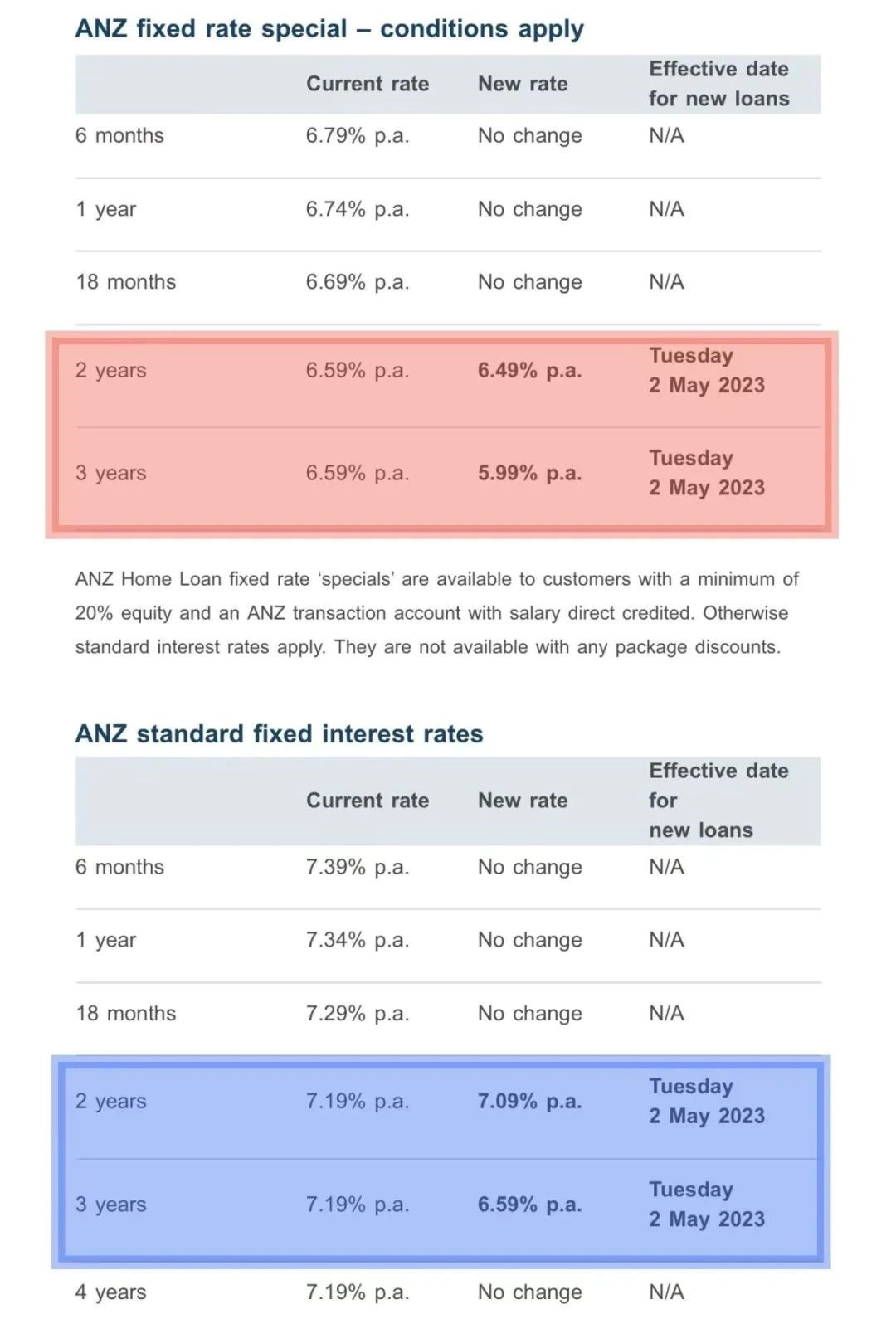
An ANZ spokesperson said the changes reflected movements in wholesale interest rates and ensured the bank remained competitive.
Economist Gareth Kiernan said: “The three-year rate of 6% has two implications. For mortgage holders coming off lower fixed rates, the immediate impact will be less severe than if they had to refix at 6.5% or 7%, so this could temper the slowdown in household demand in the short term. However, it also means current monetary policy could leave homeowners facing higher interest rates for longer.”
“Overall, I expect any sustained reduction in mortgage rates in the short term could increase the likelihood of the Reserve Bank delivering two further official cash rate increases of 25 basis points, rather than the single increase expected by financial markets and most forecasters.”
May house price report released
According to the latest house price index report jointly released by OneRoof and Valocity, New Zealand’s national average house value is currently NZ$958,000, and although house values have been declining in recent years, they remain 23.9%, or NZ$185,000, above their level before the COVID outbreak in March 2020.
The data also suggests the property market downturn could end soon, with the national rate of house value decline slowing from a peak of nearly 5% in September last year to 2% in April this year. The report commented that, although the slowdown in the rate of decline varied by region, properties had clearly retained most of the gains made during the previous upswing.
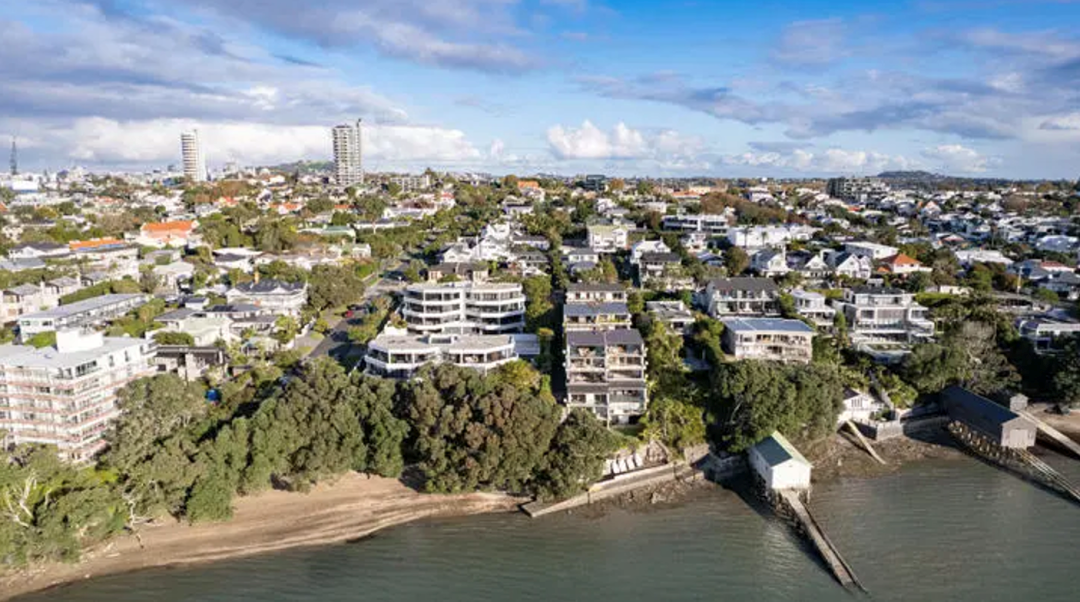
New Zealand house values remain well above pre-pandemic levels after several rounds of declines
Photo: Chris Tarpey
The latest data shows Auckland house values are nearly 17%, or NZ$187,000, above their level in March 2020, while Wellington region values remain 13.6%, or NZ$105,000, above pre-pandemic levels. Both regions have recorded declines of nearly 20% since values peaked in early 2022. Canterbury’s average house value has risen an astonishing 42.4%, or NZ$225,000, over the same period to NZ$755,000, while values there have fallen just 5.4% since the market peak.
{ad}
OneRoof property editor Owen Vaughan said the figures showed that in just three years, we have experienced an entire, unprecedented roller-coaster cycle of sharp rises and falls in New Zealand house values. Although house values briefly fell when the COVID pandemic began, the Reserve Bank of New Zealand averted the risk of a market crash through a series of support measures, including cutting the cash rate to 0.25% and suspending LVR restrictions. At the same time, easier access to lending sparked a nationwide home-buying frenzy, driving average house values up 43%. In less than two years, the national average property value soared from NZ$766,000 to NZ$1,098,000. What happened next is familiar: the Reserve Bank raised interest rates at an unprecedented pace to bring down inflation, and the national average house value has now fallen by a cumulative 12%.
Valocity senior property researcher Wayne Shum said the OneRoof-Valocity house price index data already showed the housing market was stabilising. Although further falls could not be ruled out, the pace of both increases and declines across the regions had slowed markedly compared with the worst of the downturn in the second half of last year. Shum emphasised that Auckland’s rate of decline had slowed from nearly 5% in September last year to 2.6% at the end of April this year. The shift in Wellington was even greater, with its rate of decline slowing from 10% to 2.4% over the same period.
OneRoof and Valocity jointly examined house value changes in 1107 suburbs nationwide that had recorded at least 10 property sales over the past 12 months. They found that values in the vast majority of suburbs — with only 13 exceptions nationwide — remained above their levels when the pandemic began in March 2020. Some areas had recorded capital gains reaching 7 figures over the past three years. The largest losses over that period were in Auckland’s Wainui, where current values are NZ$219,000 below their level in March 2020, and Wellington’s Oriental Bay, down NZ$185,000 over the same period. Otara Park in South Auckland experienced the largest fall since the market peak, with its average house value dropping NZ$905,000 over the past 12 months. Even so, values there remain NZ$130,000 above pre-pandemic levels.
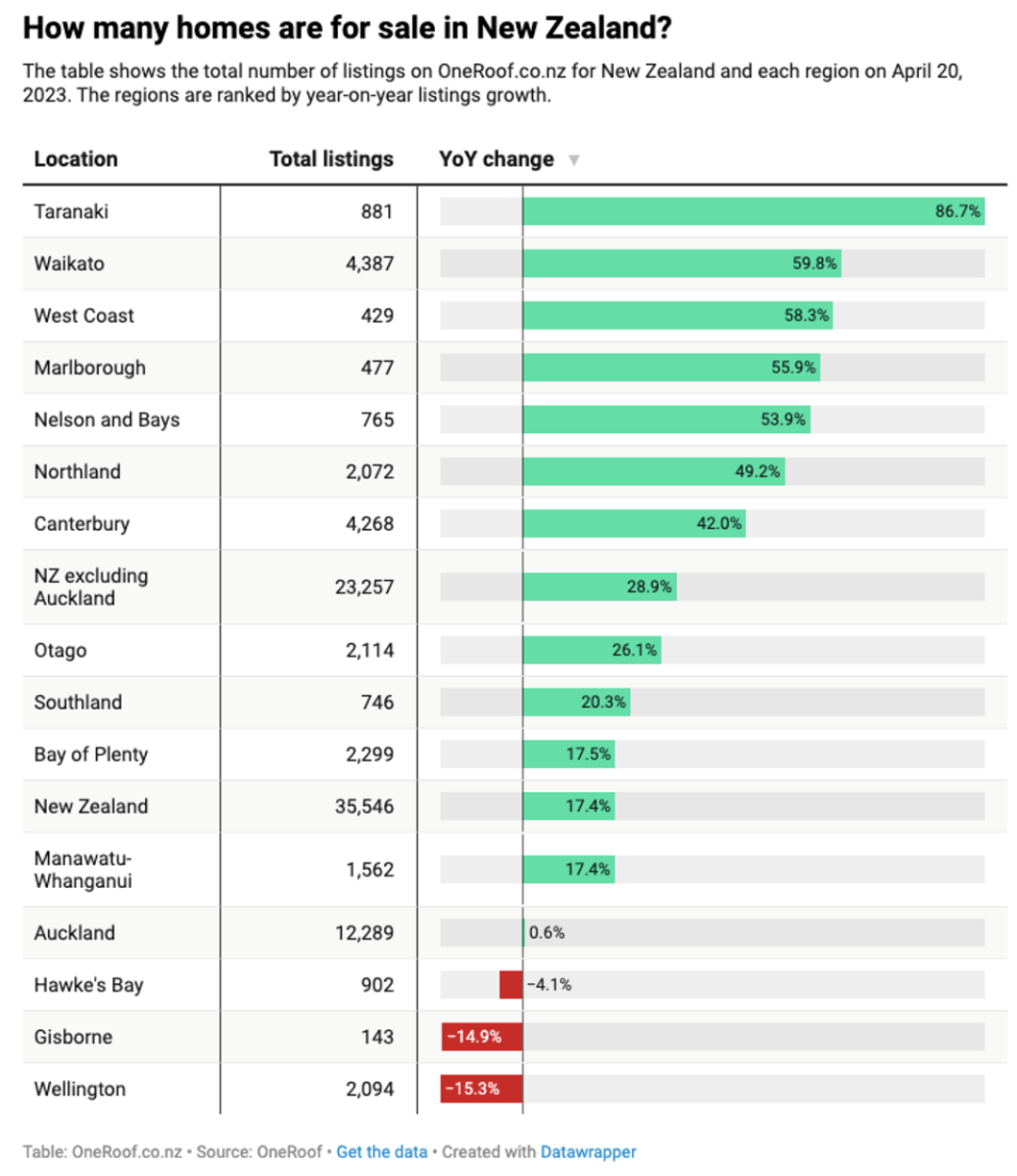
Annual change in the number of properties listed for sale in New Zealand