
Still struggling with the exterior design of your new build? Discover today’s hottest design trends — including this surprising standout!
Many people planning to build or renovate place particular emphasis on their home’s exterior
Many people planning to build or renovate place particular emphasis on their home’s exterior. The exterior is a house’s public face: a clean, contemporary design catches the eye, makes a home feel good to live in and increases its market appeal.
Residential design trends, however, are constantly changing. Over the years, New Zealand has embraced many styles, from Californian bungalows to Mediterranean-inspired homes.
So what design best reflects life in the 21st century while also having the potential to become a classic? One of today’s hottest trends is a contemporary exterior featuring vertical lines. These give homes a modern, elegant appearance with enough drama to make people stop and look.
Traditional home designs often feature horizontal lines, as seen in weatherboard cottages and holiday homes. Using or adding vertical lines can bring a fresh dimension to an exterior and accentuate a home’s design features. The benefits of vertical exterior cladding include:
- Creating a bolder design statement
- Adding depth to exterior walls through joints and grooves
- Pairing attractively with other building materials, such as red brick
- Emphasising roof height and making the roofline appear taller
- Creating a striking contrast with familiar horizontal wall cladding
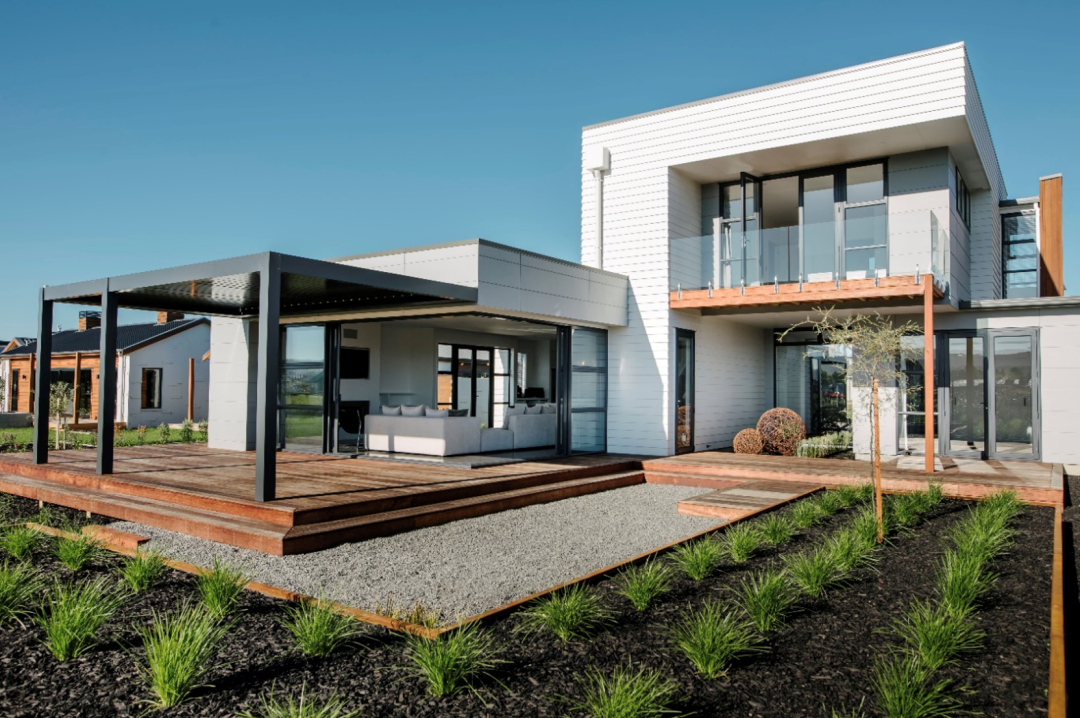
Linea™ weatherboards combined with Stria™ cladding on a holiday home
Stria™ cladding installed vertically alongside red brick creates a classic exterior
Vertical exterior lines help a design stand out
Vertical exterior lines are widely used across a range of home designs, from the currently popular Scandinavian barn style to classic coastal homes. Here are a few examples from New Zealand.
Design example one
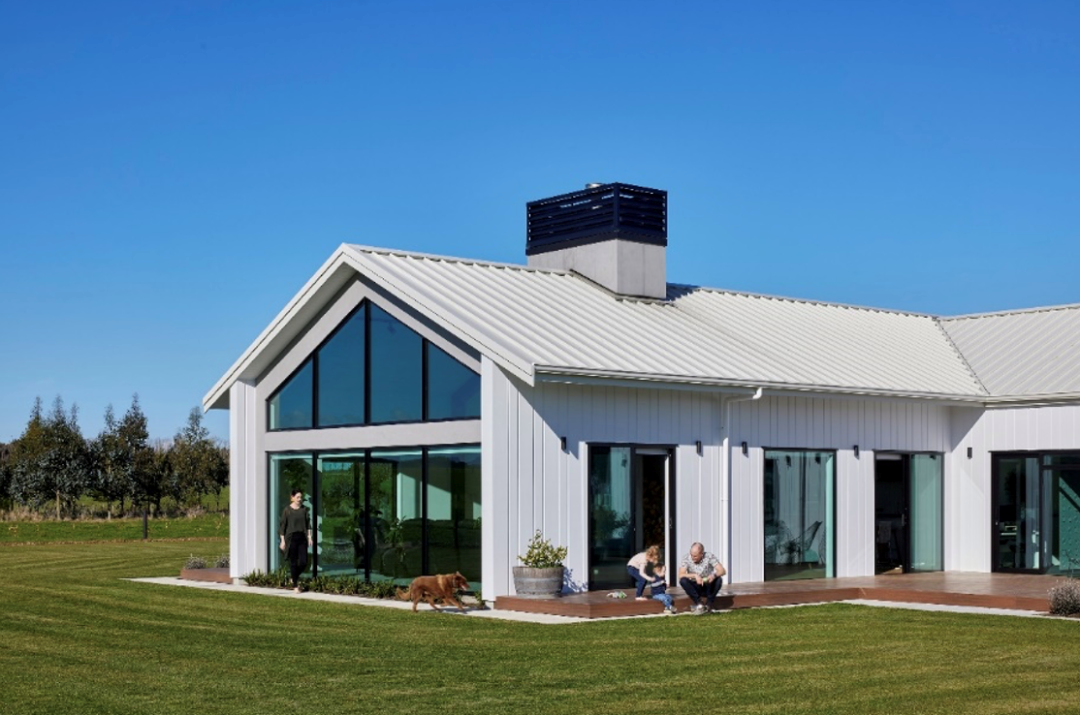
Alternating widths of vertically installed Oblique™ weatherboards create a beautiful contemporary farmhouse
This Scandinavian barn-style home is in Manawatu, where its off-white exterior stands out against the surrounding green countryside. The owners wanted a house that ‘looked different’ and was strong and durable. They chose vertically installed 200mm and 300mm Oblique™ weatherboards, which complement the long roofline perfectly and make the house appear taller. The black aluminium chimney and dark window joinery around the house provide the finishing touches. ‘Sometimes I wonder what it would look like painted black. We also like cedar, but deliberately avoided it because we didn’t want a lot of maintenance,’ says homeowner Jules.
Design example two
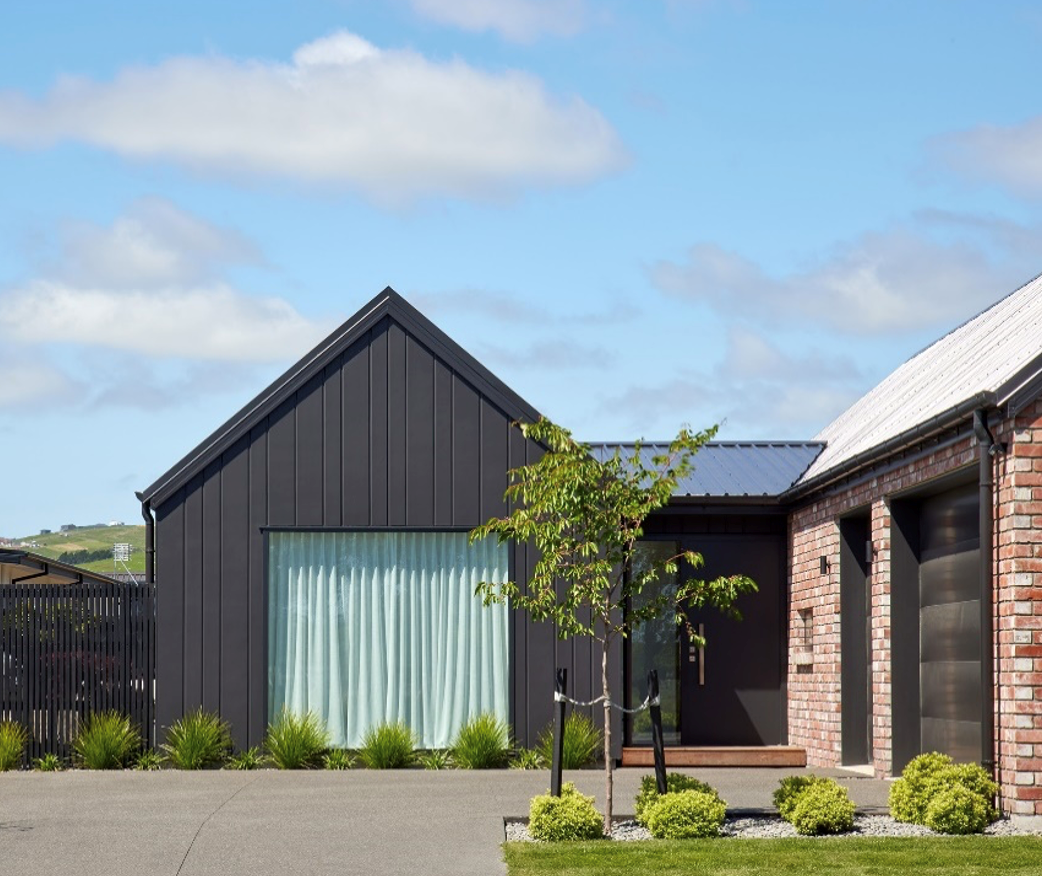
Different widths of Oblique™ weatherboards installed vertically in a random pattern,
paired with recycled red brick
This home in Christchurch’s Halswell neighbourhood takes its design inspiration from The Tannery, the well-known local boutique shopping centre. Earth-toned fibre cement weatherboards are arranged vertically in a random pattern, creating a harmonious contrast with the vintage red brick. The boards’ angled grooves give the walls a richer interplay of light and shade. ‘Compared with the usual alternating wide and narrow weatherboards, randomly mixing different widths of Oblique weatherboards makes our home look more distinctive,’ says homeowner Lucia.
{ad}
Design example three
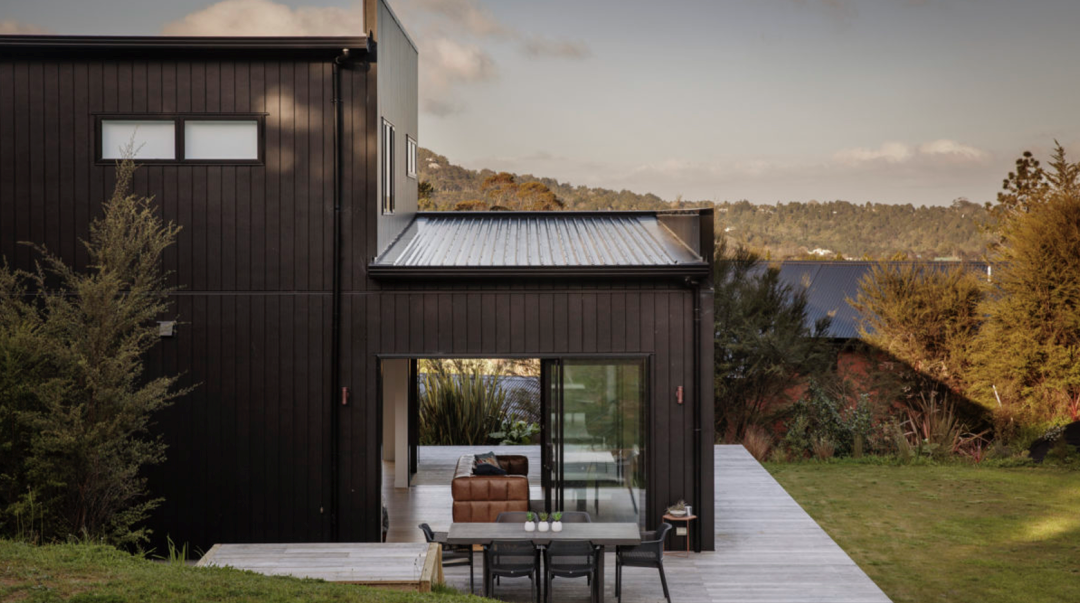
Built by Landmark Homes, this home sits among the dense trees of the Waitakere Ranges. The owners wanted a dark home with a contemporary design and clean lines, and Oblique™ weatherboards brought their vision to life. The timeless vertical lines give the whole exterior a streamlined appearance. Fibre cement’s resistance to fire, rot and moisture damage also makes it particularly suited to the setting. ‘We considered cedar and plywood, but those materials have their limitations and don’t offer the same crisp lines as Oblique weatherboards. Cedar is more expensive than other materials and needs staining. Oblique weatherboards are easy to spray-paint, and the finish lasts a long time,’ says project manager Warkwick Aldridge.
Meeting market demand!
Oblique™ weatherboard thickness to change to 14mm
Many designers, builders and homeowners considering a vertical exterior choose James Hardie’s Oblique™ weatherboards because they are durable, strong, low-maintenance and easy to install.
With demand for vertical cladding continuing to grow, James Hardie recently announced that the thickness of Oblique™ weatherboards will change to 14mm. The updated Oblique™ weatherboards will be easier to combine with Stria™ cladding, which is also 14mm thick, allowing a more coordinated choice of accessories and further increasing design flexibility.