
Has the Auckland Unitary Plan made a difference after 7 years? National points to the underlying problem
The Auckland Unitary Plan is a comprehensive and extensive planning document that clearly defines and regulates activities on land
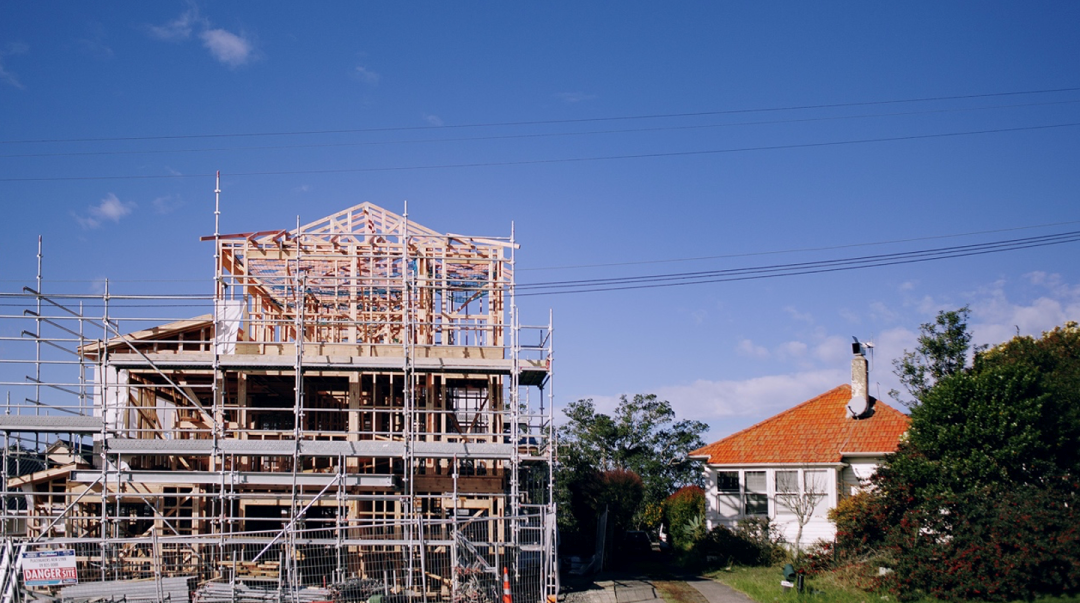
The Auckland Unitary Plan is a comprehensive and extensive planning document that clearly defines and regulates activities on land. It has directly influenced the recent trend towards medium- and high-density housing. What has changed since its implementation began in 2016? And what lies ahead?
Effectively curbing rent increases
{ad}
Recent research published by University of Auckland associate professor of economics Ryan Greenaway-McGrevy shows that implementing the Auckland Unitary Plan has improved rental affordability for Aucklanders over the years. Had Auckland not substantially increased the density of new housing from 2018, ordinary households would be paying at least 1/3 more in rent than they do now.

University of Auckland associate professor of economics
Ryan Greenaway-McGrevy
The paper compared Auckland rents with average rents in other cities and regions. It concluded that, 6 years after the Auckland Unitary Plan was fully implemented, rents for a typical three-bedroom Auckland home were 22% to 35% lower than they would have been without it. The effect on two-bedroom homes was less pronounced, with a difference of just 14% to 22%. Greenaway-McGrevy said the rental analysis showed that Auckland’s extensive planning reforms for medium- and high-density housing had indirectly improved housing affordability for ordinary households.
New Zealand has long had the highest housing costs among developed countries, with median earners spending 22% of their disposable income on mortgage repayments. The figure is even higher for renters, with median earners spending 28% of their wages on rent. Data shows that around 2/5 of Auckland households rent. Many economists and urban planners attribute Auckland’s high house prices partly to restrictive urban development rules. This changed fundamentally in 2016, when the Auckland Unitary Plan encouraged medium- and high-density housing, increased permitted density on around 3/4 of residential land and sparked a regional construction boom.
In the following years, building consent applications for new homes rose substantially each year, and developers built large numbers of medium- and high-density homes. This helped curb sharp rent increases to some extent. Greenaway-McGrevy found that, without Auckland’s reforms, renting an ordinary three-bedroom home in 2022 would have cost 28% to 54% more. That means Auckland’s median rent could have exceeded NZ$800 a week, rather than the NZ$595 a week recorded in the fourth quarter of 2022.
Finding the root of the problem

Treasury chief economic adviser Dominick Stephens
The research also addresses whether renters can become homeowners. In a public speech last year, Treasury chief economic adviser Dominick Stephens said that rising house prices were not caused solely by a housing shortage. As supporting evidence, he noted that rent increases had broadly tracked income growth, while house prices had risen far faster than incomes. For example, over the 20 years to mid-2021, average incomes in Waikato rose 98% and rents rose 114%, while house prices surged by a record 372%.
He believes that runaway house prices can be attributed to falling interest rates and a severe shortage of land available to New Zealand’s property market. If land supply were more responsive and supply and demand were balanced, rents and house prices would rise less when interest rates fell. In reality, highly restricted land supply means falling global interest rates and high land prices caused by scarcity have created an ‘illusion of prosperity’ in the construction industry.
How will future urban and rural planning change?
National Party housing spokesperson Chris Bishop recently said New Zealand needed to ‘break down the many restrictions holding back urban development’. National’s revised housing policy would encourage local councils to loosen land controls and provide funding to help developers secure more urban land that can actually be built on. He also called on local councils to introduce reforms within their areas, encouraging—but not requiring—the adoption of the medium-density residential standards currently in force.
In a recently released progress report on urban land prices, the New Zealand Infrastructure Commission, Te Waihanga, said land zoned for urban development carried a premium of nearly NZ$1,300 per square metre over surrounding rural land. This was far above the premium of less than NZ$200 per square metre a decade earlier, suggesting demand for urban housing was growing faster than planning and infrastructure could respond.
The research shows that the price gap between urban land and surrounding rural land is widening sharply in every major New Zealand city except Christchurch. National’s proposed policy revisions could therefore help address excessive building density within individual areas by opening more farmland to property development.