
Auckland quietly unveils a major plan: just four weeks to decide its future? Chinese community calls for an extension! Are you ready?
Auckland Council’s committee responsible for urban planning, the environment and parks recently decided to begin consultation on 6 June 2023 on the council’s recently proposed strategy for Auckland’s future urban development
Auckland Council’s committee responsible for urban planning, the environment and parks recently decided to hold a 4-week public consultation, starting on 6 June 2023, on its recently proposed draft Future Development Strategy (FDS). The aim is to gather feedback from across the community.
The draft is intended to replace parts of the existing Auckland Plan 2050, the 2018 Development Strategy and the 2017 Future Urban Land Supply Strategy. It also responds to central government’s National Policy Statement on Urban Development 2020 (NPS-UD), which requires Auckland Council to ensure sufficient housing and business development capacity to meet Auckland’s needs for at least the next 30 years. Auckland Council’s proposed Plan 78 indicates that the draft FDS does not specifically identify any additional development areas. However, it provides more detail on the locations, forms of development and timeframes within existing development areas.
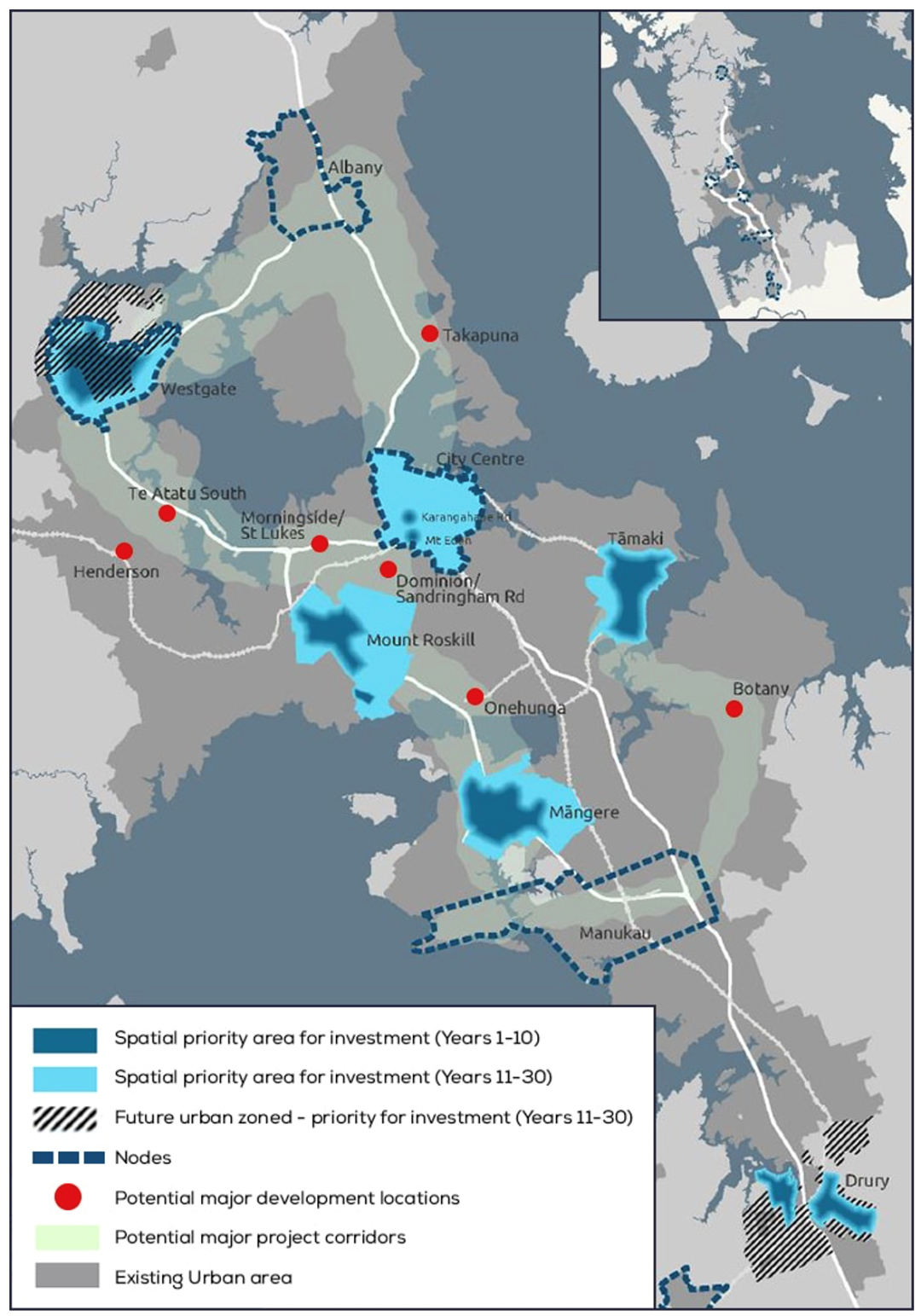
The map below shows areas across Auckland where investment funding, or part of it, is secured, and areas prioritised for development:
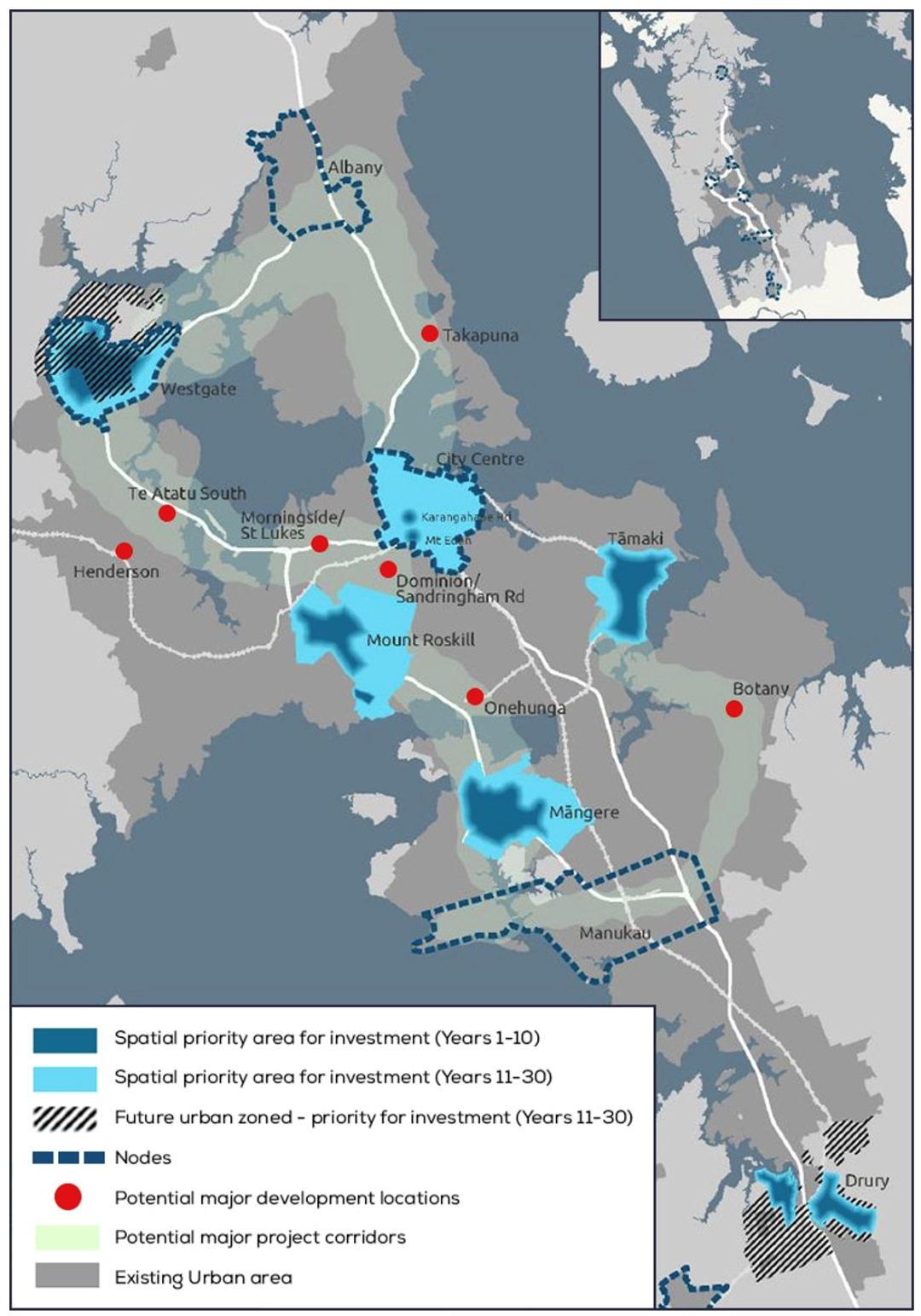
Map of development priorities across Auckland
Short- to medium-term priority areas, covering 1–10 years, include:
- The Auckland Housing Programme in Mt Roskill, Mangere and Tamaki;
- The city centre;
- Westgate;
- And Drury-Opakheke, where development will also be prioritised.
The council believes it is currently unable to determine development priorities for ten years or more into the future. The red dots on the map show the locations of some planned major projects that could become future investment and development priorities. However, more research into these major projects and their impacts is needed before any firm priorities can be set.
The draft FDS also recommends that some or all of the areas previously earmarked for urban development should be removed on grounds relating to the natural environment, heritage, land geology and cultural heritage. In the short term, it recommends removing constrained future development areas and redesignating them as non-urban areas, including Hatfields Beach stage two, parts of Kumeu-Huapai-Riverhead, Takanini and parts of Drury-Opaheke. It also recommends further investigation of areas with moderate development risks, including north-eastern and southern Warkworth, Dairy Flat, eastern Wainui, Orewa, Kumeu-Huapai (the entire FUA), Riverhead, Albany Village 2 and Oruarangi 2.
The draft’s overall objective is to concentrate urban development capacity as much as possible in areas close to employment, services and rapid transit networks. New development areas, including greenfield and future urban areas, are generally brought forward later than planned. If existing infrastructure cannot meet future development needs, amendments will be needed within the first 10-year plan, with plan changes redistributing developable land across a wider area. The draft recommends regularly reviewing infrastructure programmes to ensure they can meet the long-term planning needs shown in the map below.
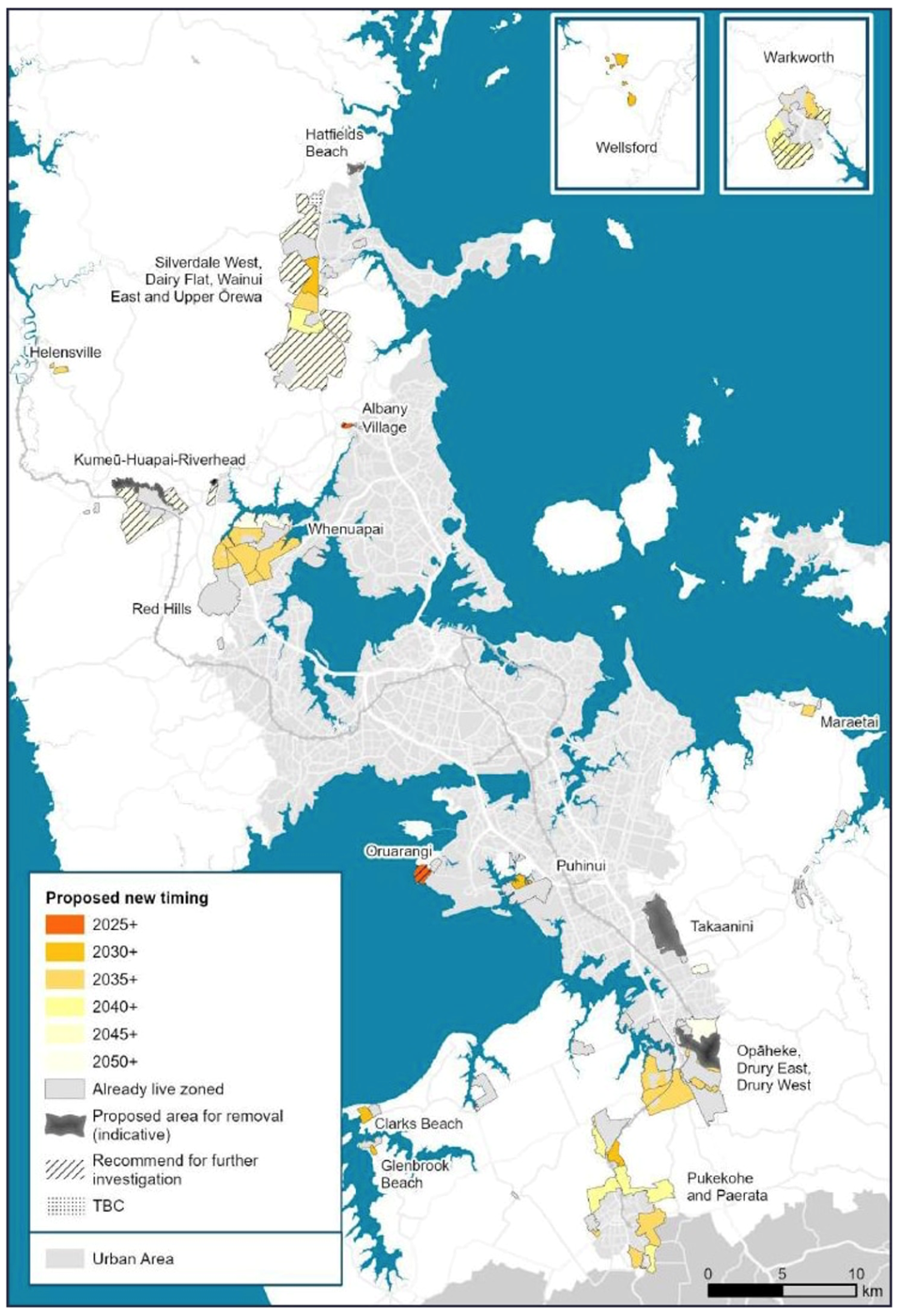
Map of Auckland’s long-term urban planning areas
The council’s planning principle is that, where development is constrained under the plan, reduced investment in some areas will, over time, be balanced overall by the additional investment required for certain projects during development.
Rural housing growth is primarily concentrated in town centres that can serve wider urban and rural areas, such as Warkworth and Pokekohe. Lifestyle property growth, meanwhile, is recommended to be concentrated in areas zoned Countryside Living.
The draft development strategy identifies and supports the implementation of
- changes to the Auckland Unitary Plan (AUP);
- investment priorities;
- and approaches to advocacy and research.
Once the final draft is settled, Auckland Council will prepare a comprehensive implementation plan as required by the NPS-UD. This plan will be reviewed annually and amended as needed to respond to new challenges during implementation.
So now we put the question to you. As noted above, public consultation on Auckland’s draft Future Development Strategy runs for 4 weeks, beginning on 6 June. Details of the draft and the council’s supporting research reports will be published on Auckland Council’s website and in the print media. The public can provide written feedback on specific aspects of the draft for the council to consider. After public consultation closes, local board feedback will be sought in July 2023.
As this draft urban development strategy is closely tied to the construction industry’s future, the New Zealand Chinese Building Industry Association (NZCBIA) hopes more industry professionals will gain a thorough understanding of its contents and share their views. To this end, NZCBIA will hold an online seminar on Thursday 22 June at 4h in the afternoon. Planner Michael Campbell, representatives from Fulton Hogan and consultancy Woods, and NZCBIA members including Kanye Kang and Lucy Ji will join participants for an in-depth explanation and discussion of the draft’s key points.
Date: Thursday 22 June 2023
4:00–5:30 pm
How to join: Zoom ID: 483 233 1769
Meeting passcode: 0622
{ad}