
Breaking news: National wins the election! How will it change New Zealand?
New Zealand takes a new political direction
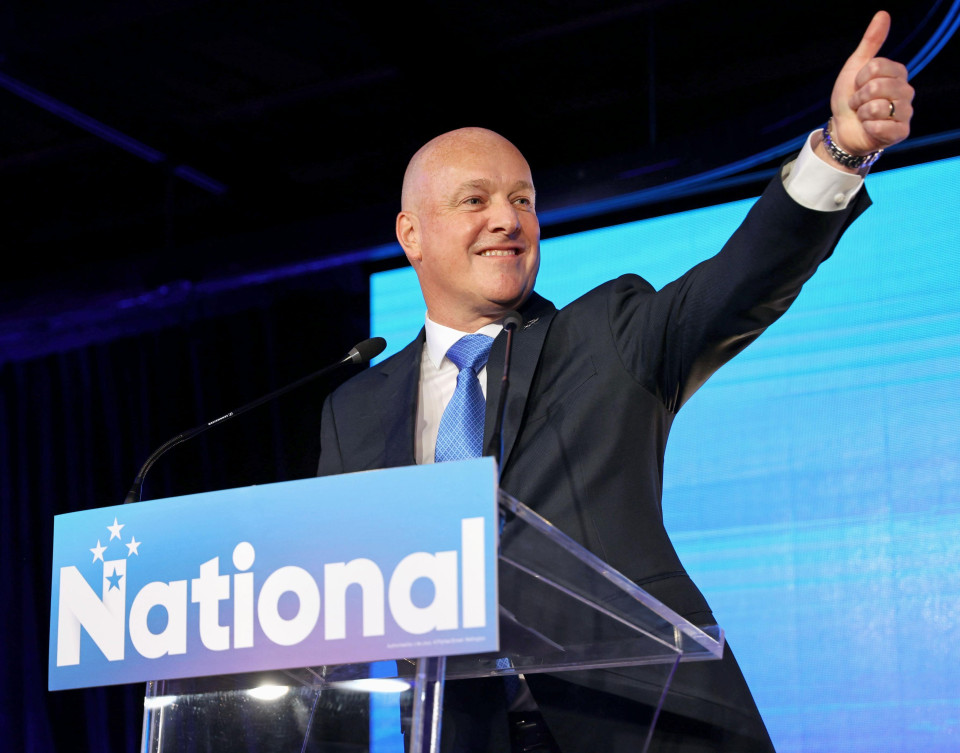
The election that gripped the nation has finally been decided, with National holding a clear lead and declaring victory.
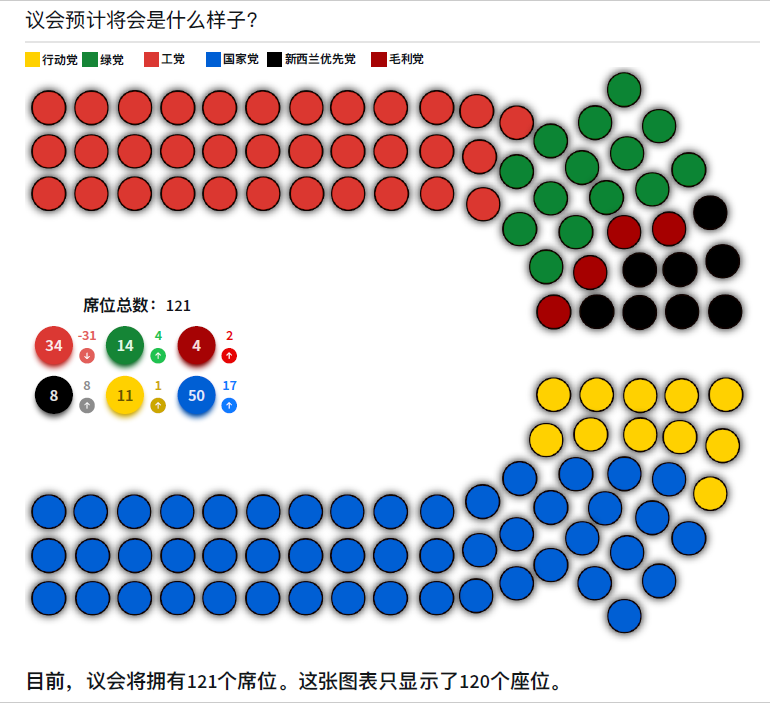
In the early hours of 15 October 2023, Wellington time, the preliminary count for this election showed that National had won 50 seats and was highly likely to form a government with ACT.
Seats won by each party so far, excluding special votes that have yet to be fully counted:
National won 50 seats
Labour won 34 seats
The Green Party won 14 seats
ACT won 11 seats
New Zealand First won 8 seats
Te Pāti Māori won 4 seats
For us in the Chinese community, the highlights of this election were Chinese MP Nancy Lu moving further up the party list and fellow Chinese candidate Carlos Cheung securing a surprise victory in Mt Roskill to enter Parliament. Congratulations to Nancy Lu and Carlos Cheung!
Labour leader and former New Zealand prime minister Chris Hipkins conceded defeat in a speech on election day (14 October), with 85.1% of the vote counted. In his speech, he expressed heartfelt thanks to his Labour colleagues and the family members who had always supported his work. He also expressed gratitude for having had the opportunity to lead New Zealand. Finally, Chris Hipkins congratulated his main rival, Chris Luxon.
Meanwhile, National Party leader Christopher Mark Luxon will also become New Zealand's 42nd prime minister, leading the sixth National government in New Zealand's history.
Before the election, National put forward numerous housing policy promises, attracting considerable attention from people in the property industry. Now that National has won, what changes will New Zealand's property and construction sectors see? And what sort of person is National leader Christopher Luxon?
Today, YIJU answers these questions in turn.
From businessman to politician: a business prodigy from a working-class background
Many people first came to know Christopher Luxon when he became Air New Zealand's CEO. In fact, his business talent may have been in his blood all along. Luxon was born on 19 July 1970 into a working-class family in Christchurch. His father was a sales executive at Johnson & Johnson, and his mother was a psychotherapist and counsellor. As a child, he spent a year living and studying in Howick, Auckland, before returning to Christchurch.
At secondary school, Chris was like most New Zealand students, balancing his studies with fairly basic part-time jobs. He continued working alongside his studies until he graduated from university. This was also when his talents began to emerge: he won a senior debating award and completed a Master of Business Administration.

After graduating, Luxon's expertise in business administration helped him secure a position at the corporate giant Unilever, beginning a career that took him on assignments around the world. He first worked in Wellington in the South Island, before being posted to Sydney, London and other locations as a senior manager. In his 15th year with the company, he became CEO of its Canadian operation.
In 2011, Luxon happened to notice a job advertisement from Air New Zealand. Describing himself as a 'disruptor', he immediately chose to leave his long-standing employer, Unilever, and put himself forward to lead Air New Zealand's international business. The airline's board was ultimately impressed by his experience and drive, and Luxon began leading Air New Zealand through
an internal restructuring and an expansion of its international business.
“Politics is something I have always wanted to do.”
After helping Air New Zealand return to profitability, Chris chose to leave in his 8th year at the airline and prepare for a political career. According to RNZ reporting at the time, his colleagues at Air New Zealand felt he had no particularly obvious political leanings. Chris had even worked with Labour, having been appointed chair of the Business Advisory Council by former New Zealand prime minister Jacinda Arden.

“When he decided to enter politics, he was more likely to become a National MP, but I wouldn't say that was absolutely clear. I would say he is a centrist politician,” said Cam Wallace, who had worked closely with Luxon.
But Chris himself said at the time: “My connection with National, or my intention to align with National, has always been fairly clear. That has always been my party.”
After joining National, Luxon took just 409 days to go from MP to party leader. His ideas for shaping National and his political vision for New Zealand gradually came into public view.
The evangelical Christian label he cannot shake
According to a Stuff report in 2021, Luxon said in his maiden speech to Parliament that his Christian faith had shaped his values and given him a purpose in life. He had also faced considerable criticism for his religiously informed opposition to abortion, but stressed that his faith was a personal matter unrelated to politics. Luxon also said people seemed to have accepted that religion must be 'extreme', and he resented being labelled a Christian.
“Having more children helps New Zealand develop”
According to a Stuff report in 2021, Luxon said in his maiden speech to Parliament that his Christian faith had shaped his values and given him a purpose in life. He had also faced considerable criticism for his religiously informed opposition to abortion, but stressed that his faith was a personal matter unrelated to politics. Luxon also said people seemed to have accepted that religion must be 'extreme', and he resented being labelled a Christian.
Rolling out the red carpet for talent
During the election campaign, Luxon said as party leader that National would offer visas to graduates of the world's top 100 universities. This was part of National's plan to revitalise New Zealand's economy, which needed people with drive and ambition. National's immigration spokesperson called the policy a 'red carpet visa'. In a subsequent interview, Luxon said: “National understands that innovation and growth do not come from government itself, but from the hard work, innovation and risk-taking of private-sector entrepreneurs.” Commentators felt that these remarks and policies aptly conveyed National's liberalism and elitism.
The parties' housing policy promises
With National and ACT joining forces to form a government following this election, some of their earlier housing promises may gradually become reality. These include the closely watched withdrawal from medium-density legislation, restoring interest deductibility to increase landlords' income, shortening the bright-line period from 10 years to 2 years, and allowing overseas buyers back into New Zealand.
So what changes might New Zealand see in housing and taxation? YIJU has compiled the following overview.
|
National's tax policies at a glance:
|
|
National's housing policies at a glance:
|
{ad}
Sources: RNZ and the political parties' official websites