
Why are banks’ mortgage rates still surging when CPI has fallen?
The CPI figures released by Stats NZ last week showed inflation steadily declining. So why did ANZ sharply increase its mortgage rates today?

|
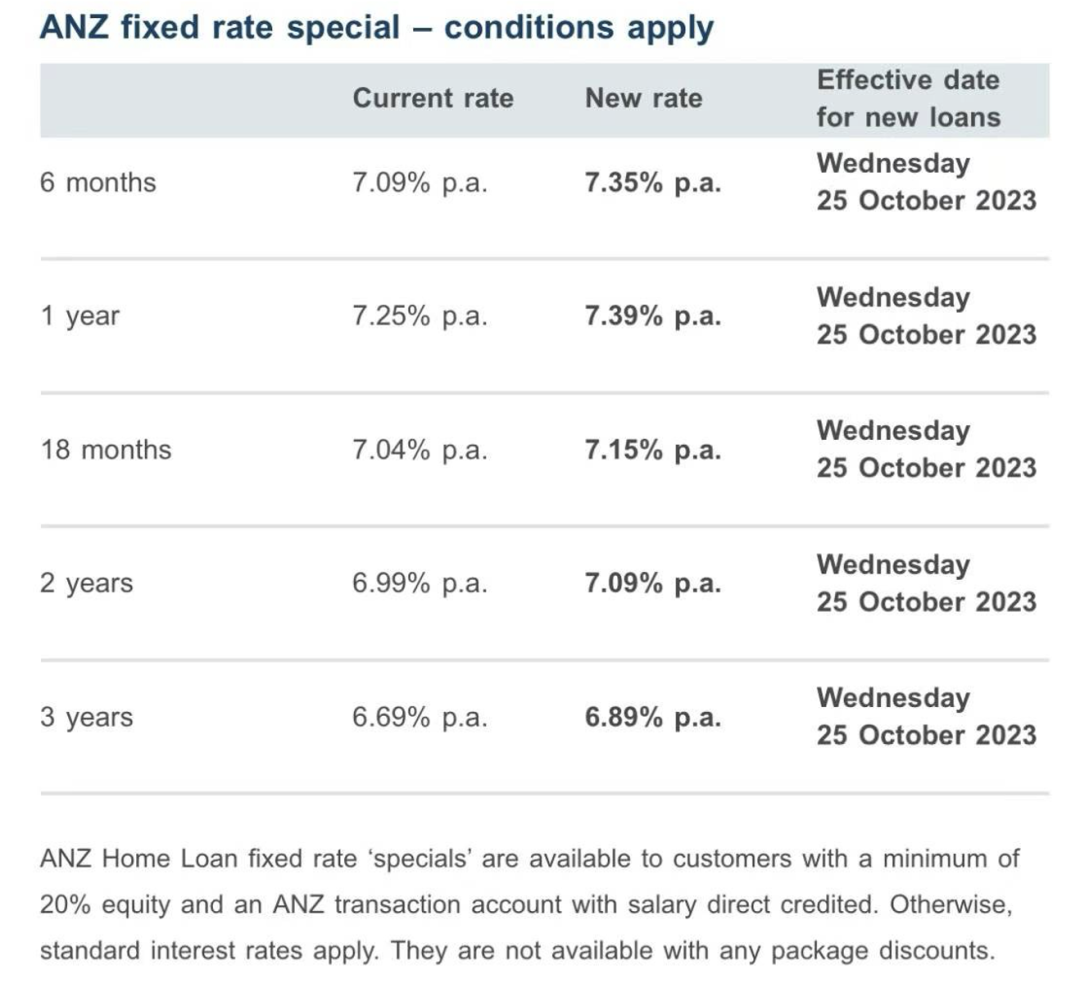
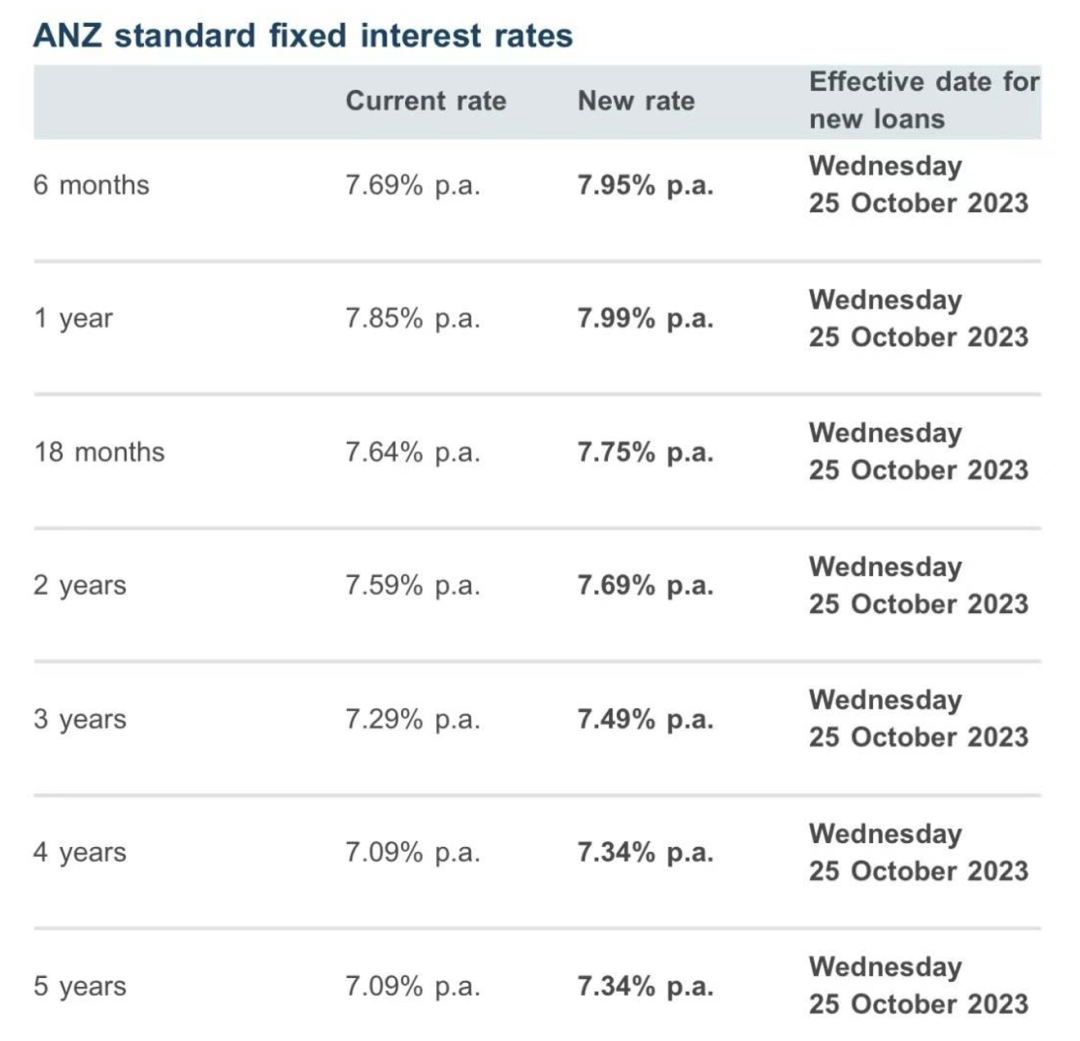 Today’s changes to ANZ mortgage rates
Today, BNZ became the latest major bank to raise mortgage rates. Its one-year standard rate rose from 7.79% to 7.85%, its three-year standard rate increased to 7.45%, and its four- and five-year rates rose to 7.35%.
For borrowers with a deposit of at least 20%, the bank’s one-year special rate rose from 7.19% to 7.25%, its three-year special rate increased from 6.69% to 6.85%, and its four- and five-year rates increased by 0.06% to 6.75%.
Although the Reserve Bank of New Zealand has repeatedly stated that current interest rates are at their highest in fifteen years and have peaked, economists recently warned that mortgage holders could soon face another increase in fixed mortgage rates.
The expert said the average 2-year fixed rate across the five major commercial banks was currently 6.93%, with ASB’s rate reaching 7.05%, but these mortgage rates could soon rise again. The banks’ current average 1-year fixed rate of 7.23% is likely to indicate where two-year fixed rates are heading next. Interestingly, substantially more borrowers have recently chosen a 1-year fixed term than a 2-year term. A large group of borrowers about to refix will face higher rates. A year ago, the average 1-year fixed rate was 5.11%; two years ago, the average 2-year fixed rate was just 2.51%. These two groups will face the greatest repayment pressures.
|
Benchmark rates, domestic wholesale rates and retail rates remain high and keep climbing |
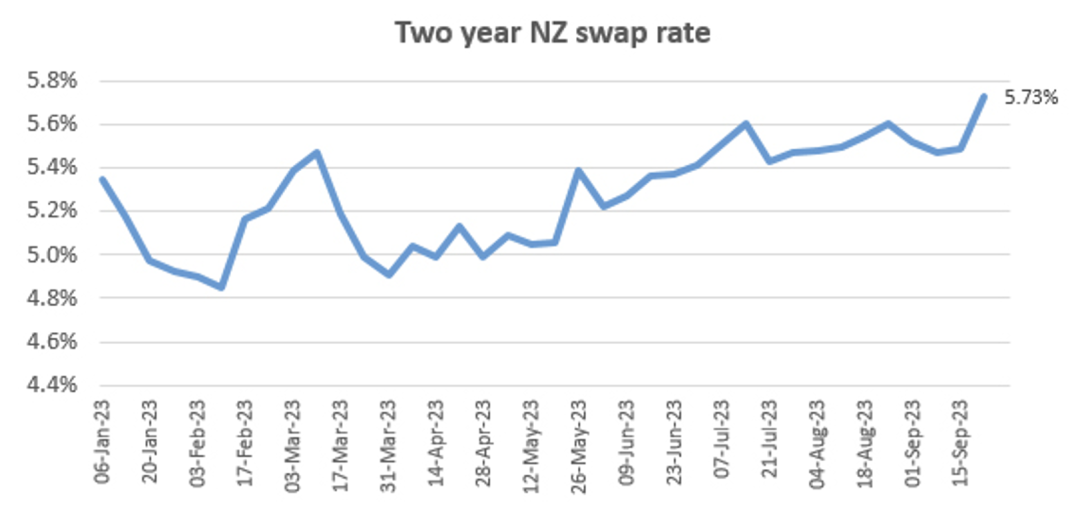 Two-year swap rate chart (source: interest.co.nz; also the source for the charts below)
Interest rates are now at their highest since the global financial crisis, and wholesale markets have already priced in another 25-basis-point increase in the official cash rate (OCR) in the first half of next year. As of last week, the 2-year swap rate was around 5.7%, its highest since 2008.
Retail interest rates paid to savers have likewise reached their highest levels since 2008. Most term deposits run for 6 to 12 months, and four of the five major commercial banks currently offer a high rate of 6% on 1-year term deposits.
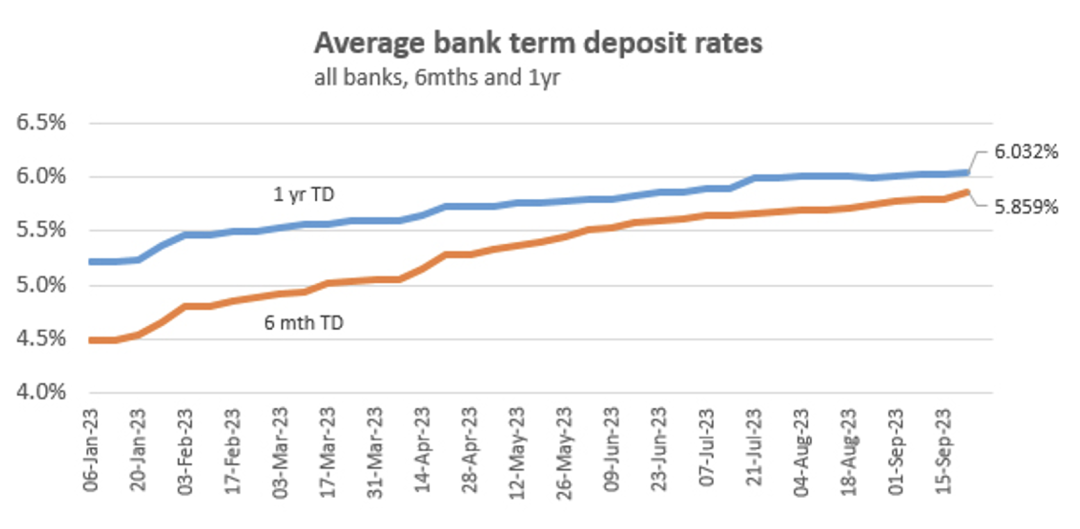
Average commercial bank deposit rates reach a new high
| Bank profit margins have fallen sharply |
Commercial banks have long sought to maintain a spread of around 160 basis points (1.6%) between their quoted fixed rates and wholesale funding costs. But that has been difficult in 2023, with mortgage demand in the doldrums. During weak demand, once banks cross this minimum margin threshold in their efforts to survive, upward pressure on interest rates follows. ASB has already responded, with the tipping point potentially occurring at 120 basis points (1.2%), and other banks will also feel some competitive pressure.
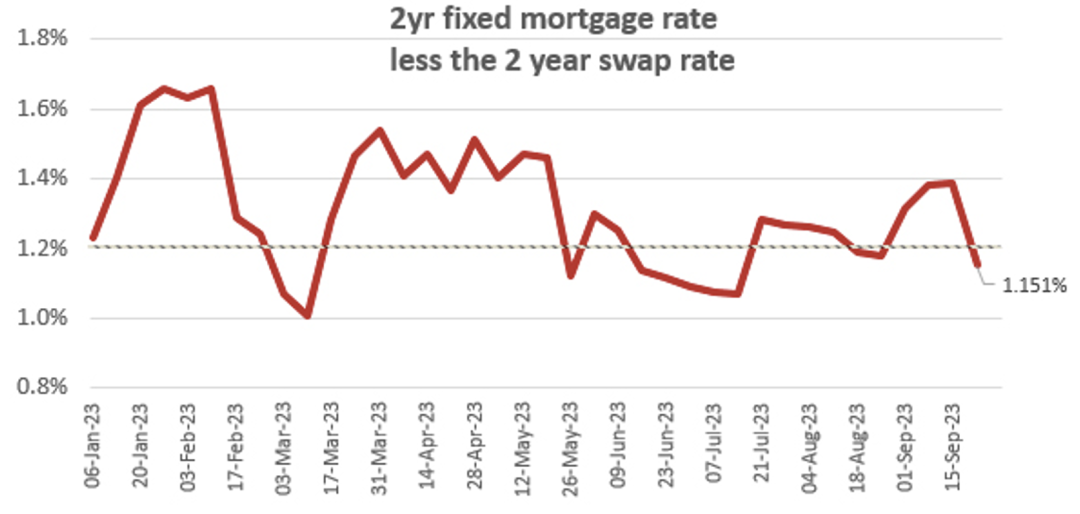 Commercial bank profit margins reach a new low
With benchmark, wholesale and retail funding costs continuing to rise, it is easy to conclude that fixed mortgage rates will soon increase again across the banks.
|
Can borrowers switch banks to ease repayment pressures from high interest rates? |
The latest mortgage lending data released by the Reserve Bank of New Zealand shows that more mortgage borrowers are switching banks. But as interest rates and repayments continue to rise, borrowers appear to have reached their loan-to-value ratio (LVR) limits, leaving highly leveraged borrowers with very limited options.
The proportion of borrowers switching banks is rising, and changing lenders to manage the pressure of higher interest rates is becoming increasingly common. Research shows that 1 in every 8 home loan borrowers has chosen to switch banks. Among these borrowers, an average of 1830 a month accept more attractive interest rate offers from other banks.
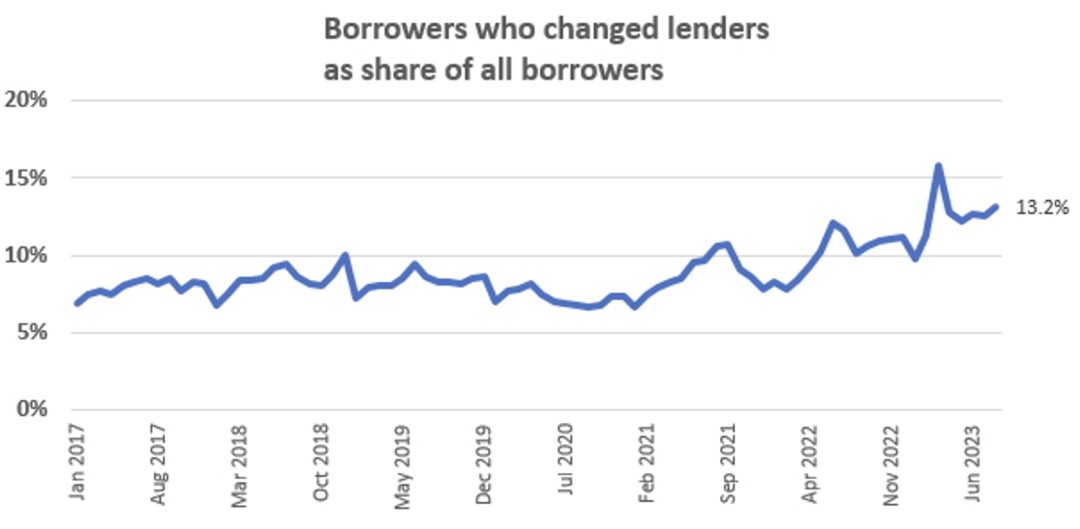 Proportion of borrowers choosing to switch banks, 2017–2023
Switching banks is not easy for high-LVR borrowers. In August this year, only 20 high-LVR loans nationwide were switched in this way. These borrowers face numerous obstacles: having to pay higher “standard” rates, undergoing additional financial scrutiny, and other banks potentially taking a very cautious view of their true reasons for switching. Some borrowers may also be too apprehensive to attempt a switch themselves…
{ad}