
How much will house prices rise next year? Banks' forecasts range from 2.5% to 7.7%. A roundup of the house price outlook for 2024
House prices are climbing steadily, although many parts of the country still have a long way to go before returning to their peaks.

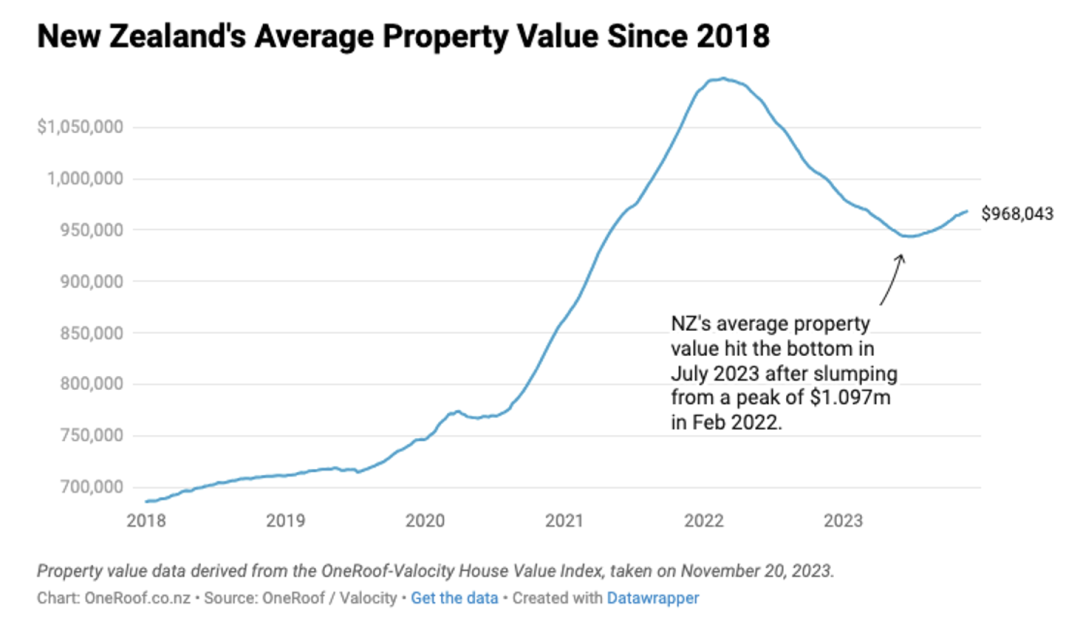
Chart showing changes in New Zealand's average property value from 2018 to the present (Source: OneRoof/Valcocity)
So how much will house prices actually rise in 2024? Let's first look at the latest forecasts from New Zealand's major commercial banks and the Reserve Bank of New Zealand, which may offer some insights.
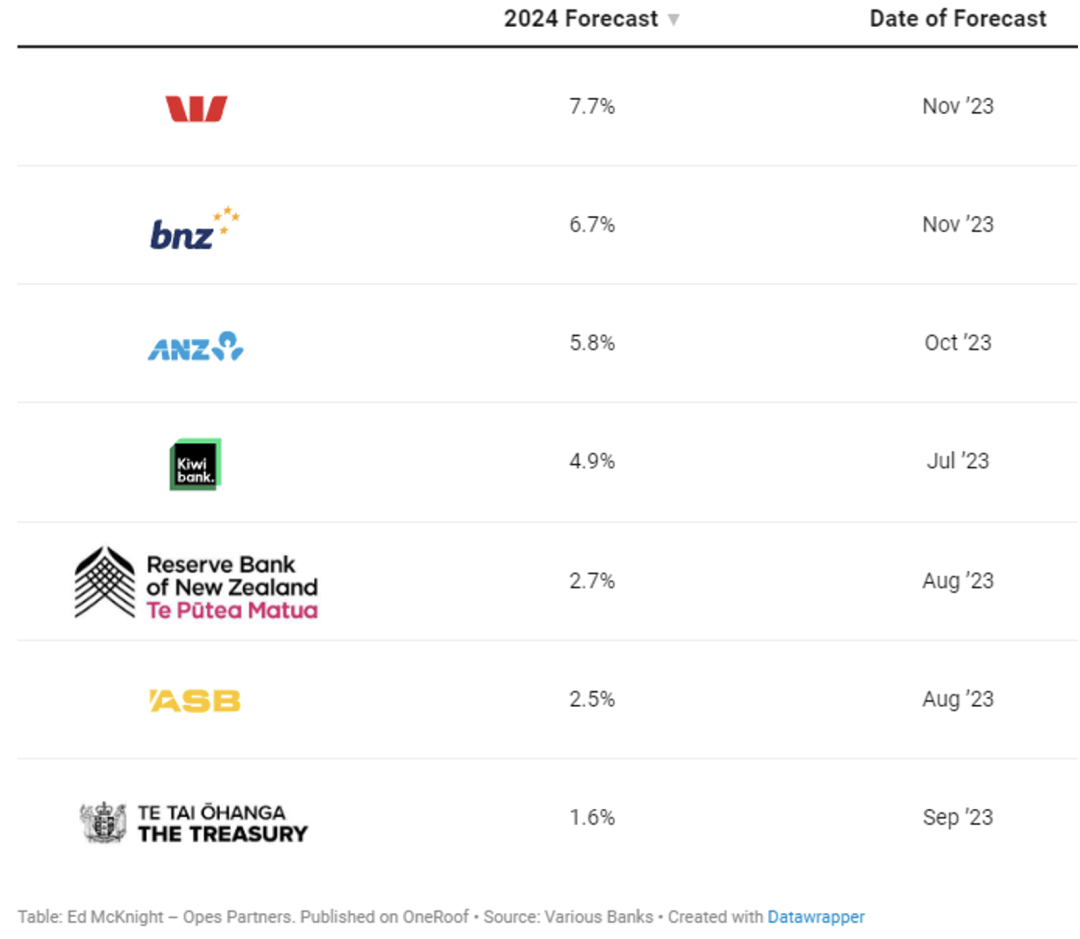
Comparison of banks' house price growth forecasts for 2024 (Source: OneRoof)
Among the commercial banks' forecasts, Westpac is the most bullish, suggesting house prices could rise by 7.7% in 2024. Next are BNZ's forecast of 6.7% and ANZ's 5.8%, while ASB forecasts growth of just 2.5%。Taking an average, the major financial institutions forecast growth of 4.6%.
This raises a question: why do commercial banks' house price forecasts differ so widely, and what underpins them? Should we believe Westpac's 7.7% or ASB's 2.5%?
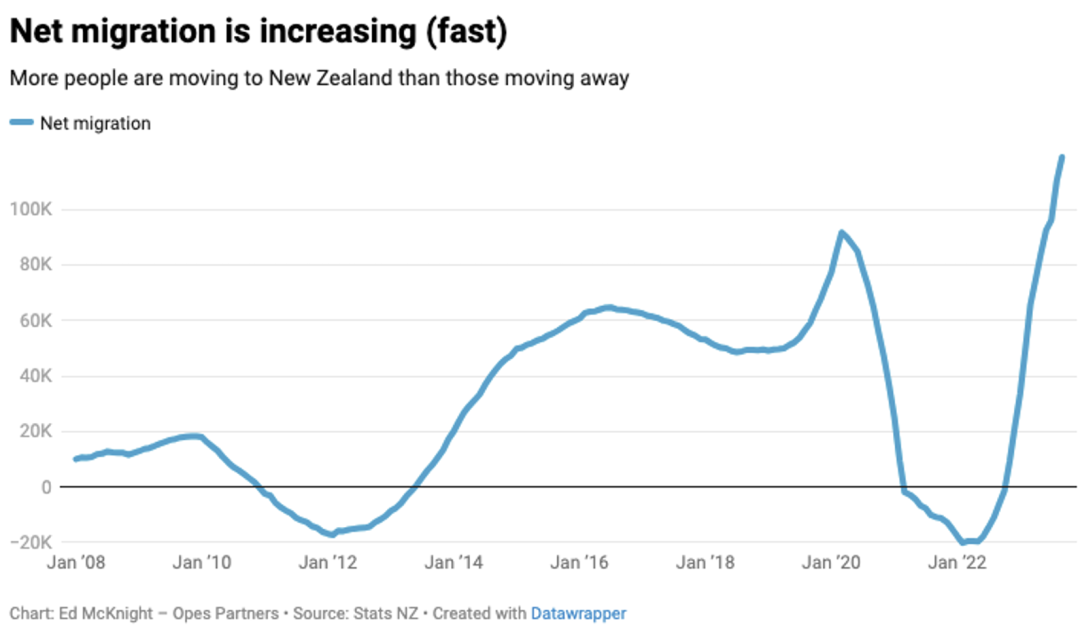
Chart showing changes in New Zealand's net migration from 2008 to the present (Source: Stats NZ)
Westpac chief economist Kelly Eckhold says the surge in New Zealand's net migration is the main basis for its forecast. Over the past 12 months, 164,000 people arrived in New Zealand, while only 45,000 left. This means a net migration gain of 119,000 over the past year, equivalent to around 2% of New Zealand's total population. A migration surge typically takes around 12 months to affect property prices.
Based on its data, Westpac forecasts that migration growth could eventually lift house prices by 15–20%. At the same time, the property market faces some headwinds. For example, banks will maintain high interest rates and strict lending criteria next year, while unemployment is likely to keep rising. These factors will constrain further house price growth. Taking these considerations into account, Westpac forecasts a house price increase of 7.7%.
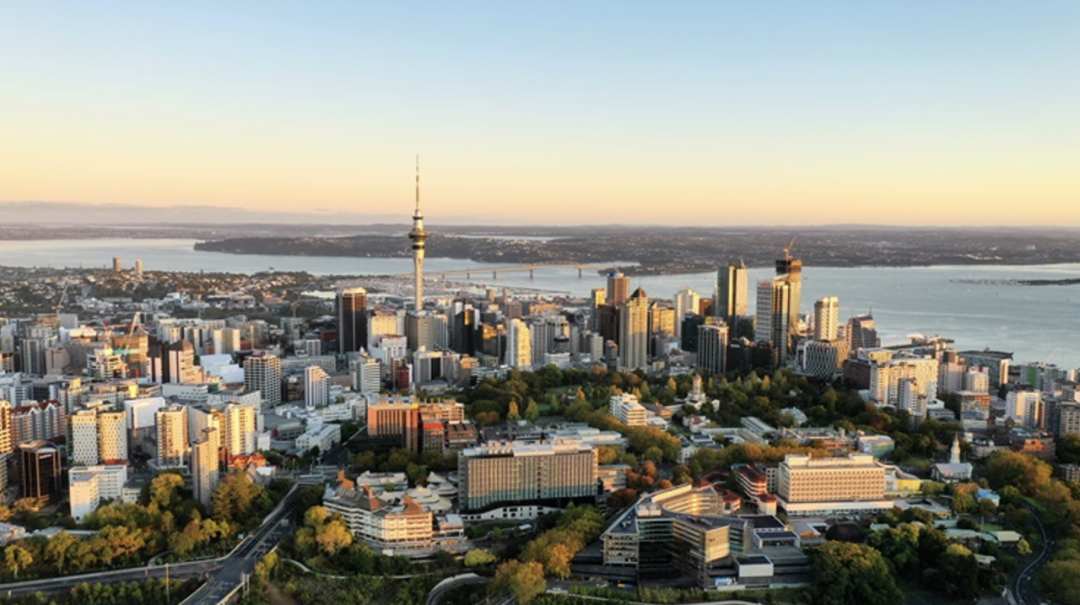
Auckland's housing market is more affected by the surge in net migration than those of other cities
Interestingly, ASB examined the same net migration data but reached a different conclusion. It believes high interest rates and strict bank lending criteria will substantially constrain house price growth. Note that ASB released its forecast in August, three months after Westpac. House prices have now risen for five consecutive months, averaging 0.75% a month, with annualised growth exceeding 9%. This appears to suggest that Westpac's forecast annual growth of 7.7% is closer to reality.
When examining house price forecasts, we also need to remember that they refer to average house prices across New Zealand. This means that even if prices do not rise in some regions, rapid growth in Auckland could create the impression of a nationwide rise. In other words, even if all the major banks forecast rising house prices, this does not mean prices will rise in every part of the country。For example, New Zealand's overall house prices have risen for several consecutive months since bottoming out in 4/May 2023. Yet the latest October data shows that prices in Whangarei are still falling and have yet to reach their low point. This is because market conditions differ, and each region's house price cycle follows a different pattern.
There is no denying that house price growth may be strongest in the places migrants choose to settle. New arrivals tend to settle in the main centres, so there is reason to believe that major cities such as Auckland, Christchurch and Wellington will see rapid house price growth in the period ahead.