Year-end review: will the forces behind New Zealand's property rebound in 2023 continue into 2024?
2024 is already well under way. Looking back at New Zealand's property market in 2023, bottoming out and recovering set the tone for the year. Before looking ahead to 2024, let us first revisit the dramatic ups and downs of 2019–2023.
 During this cycle, Auckland, Wellington, Christchurch and the national average recorded fairly similar price increases, but there were significant differences in how they declined and bottomed out.
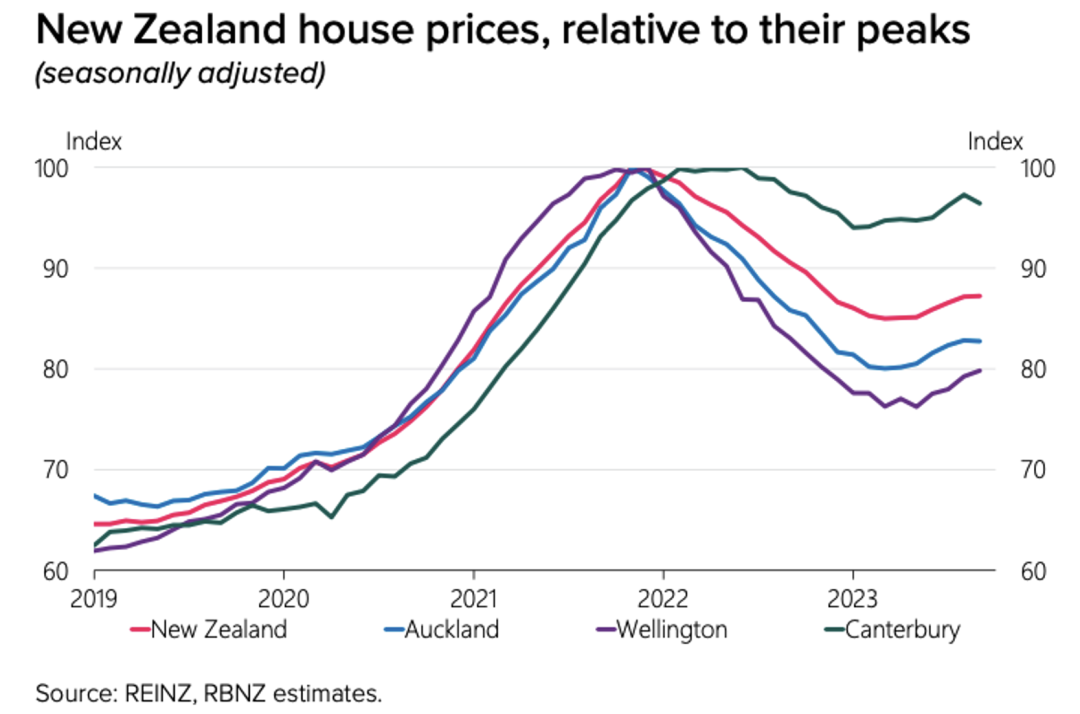
Indexing house prices over the 5 years from 2019 to 2023, with the late-2021 peak set at 100, shows that Auckland, Wellington, Christchurch and the national average were all at 60–70 in 2019.
In other words, over the 3 years beginning in 2019, house prices generally rose by as much as 40–50%. These areas reached their peaks roughly 6 months apart. Christchurch's rise began last, and its peak lasted the longest.
During the 2-year correction beginning in 2022, Auckland and Wellington experienced the largest falls, at 20% and 23% respectively. Christchurch had the smallest decline, at just 6%, while the national average was around 15%.
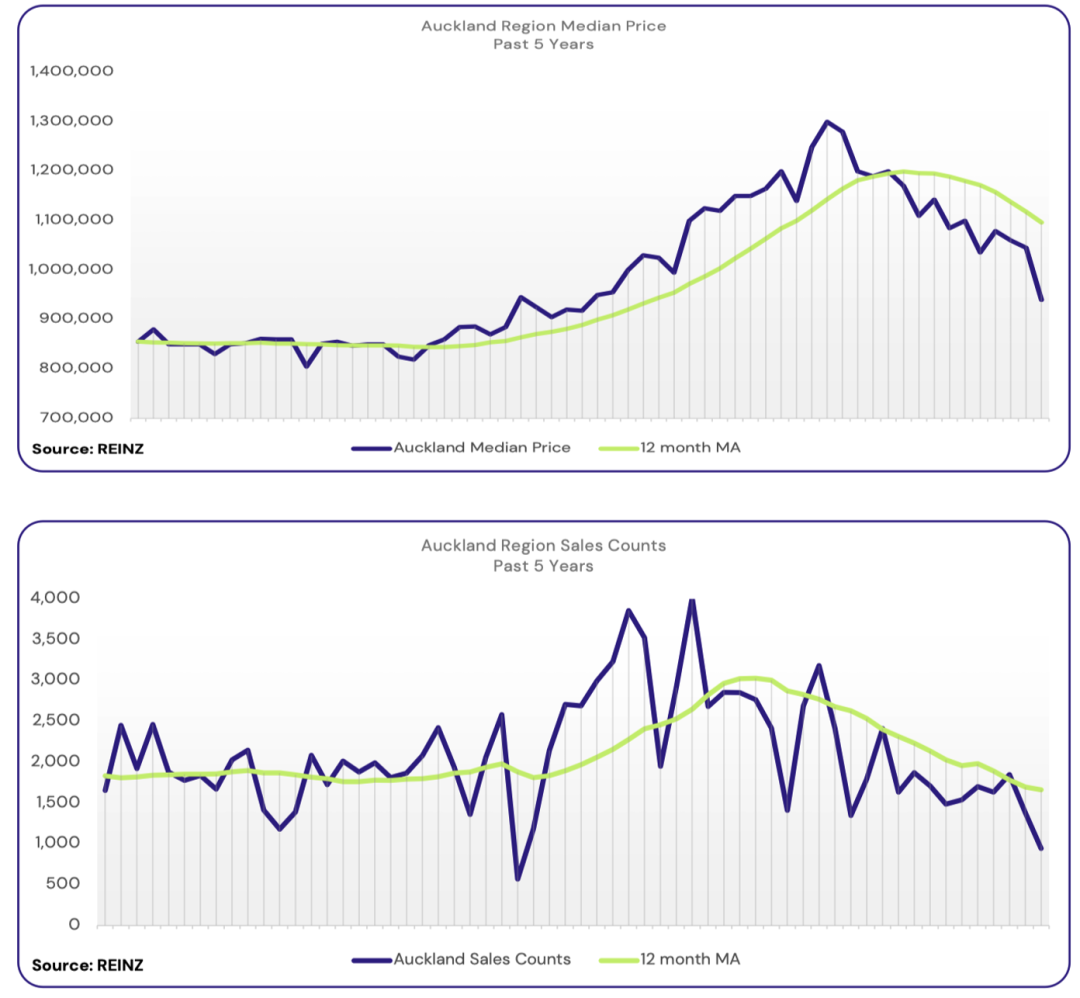
Looking at the house price curve over this period, the trough appears relatively short, lasting around three to four months from month 2 to May in 2023. However, transaction numbers are always low at the bottom of the market. Sales during those three to four months were actually only half the historical volume for the same period, and the time from initial listing to sale was far longer than the historical average. As a result, the process from reaching the bottom to gradually confirming it actually took more than half a year.
The charts below show Auckland house prices and sales volumes in February 2023. Both were subdued at the time, with no end in sight…
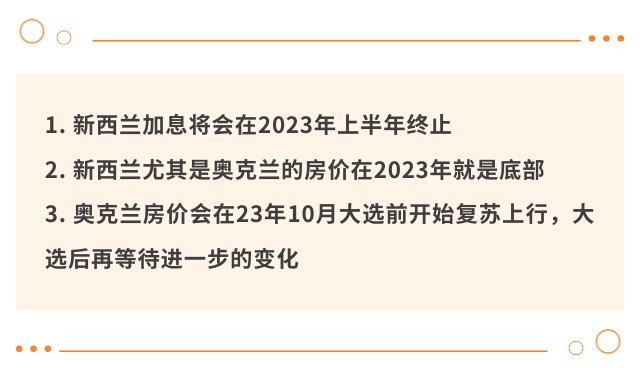
 Our previous articles accurately predicted the following developments:
 It is indisputable that this rise in house prices began with substantial interest rate cuts and monetary easing.
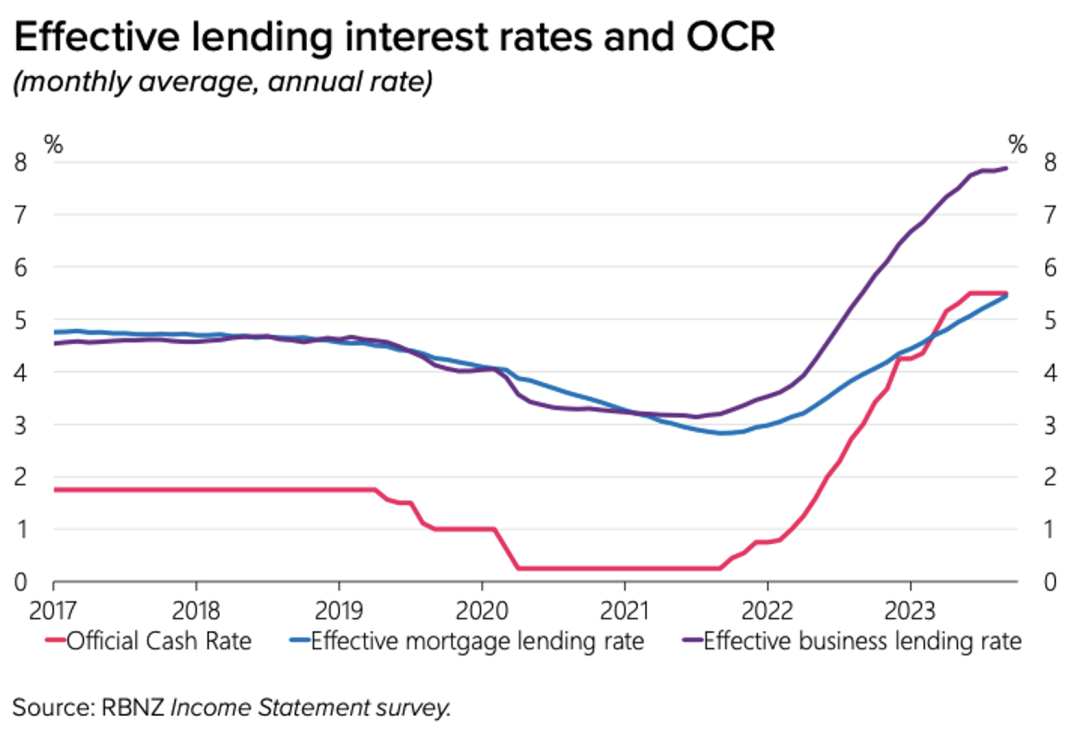
At the end of 2019, the Reserve Bank of New Zealand turned to interest rates to address the then-new threat of COVID. Over the 1-year period from the second half of 2019 to the first half of 2020, interest rates fell by 1.5%. Quantitative easing (QE) was also introduced. Combined with large-scale spending by the Labour government and global demand for safe havens, this ignited New Zealand's property market, driving prices up 40–50% over 2 years.
The surge in inflation that followed caught the Reserve Bank off guard, prompting rapid interest rate rises. From August 2021 to February 2023, a period of almost 1 and a half years, New Zealand raised interest rates by a total of 5.25%. Rates have remained high ever since. Commercial banks' 1-year and 2-year fixed mortgage rates, which are crucial to the property market, have continued to edge up over the past 3 months.
We may therefore conclude that interest rates have played no part in house prices bottoming out and recovering over the past six months.
 The truly important force behind this rebound in New Zealand, particularly in Auckland and Wellington, has been supply and demand.
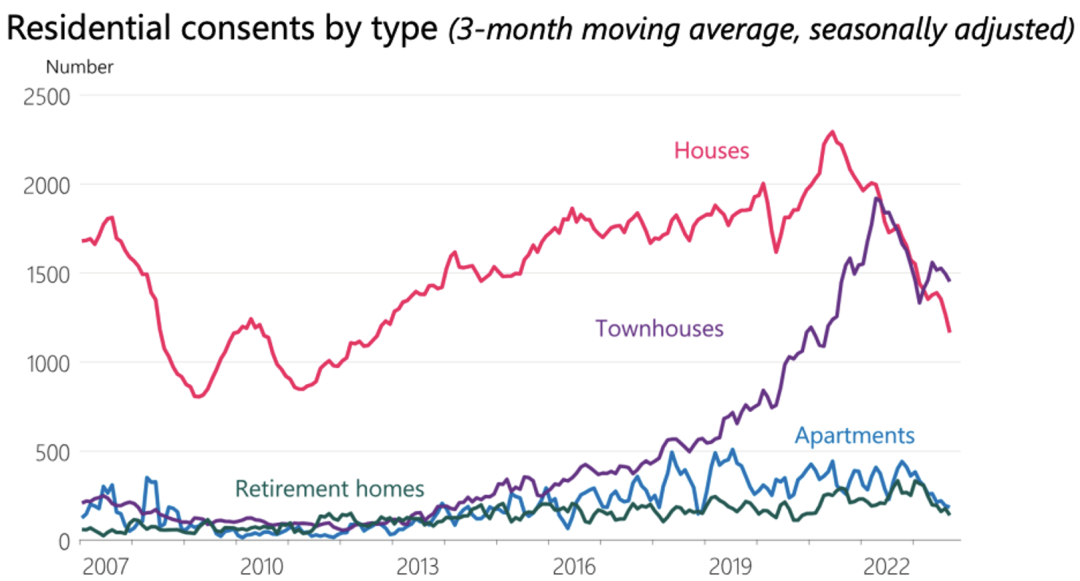
On the supply side, the curve in the chart above shows New Zealand's residential building consents, which have been declining for almost 2 years since peaking in the second half of 2021. In theory, it takes around 12–19 months from obtaining building consent to bringing a home to market. In other words, this will affect the supply of new homes coming onto the market after 18 months.
With the decline beginning in the second half of 2021, the supply of new homes would only start falling materially at the end of 2022 and in the first half of 2023, and would continue to do so for at least 2 years.
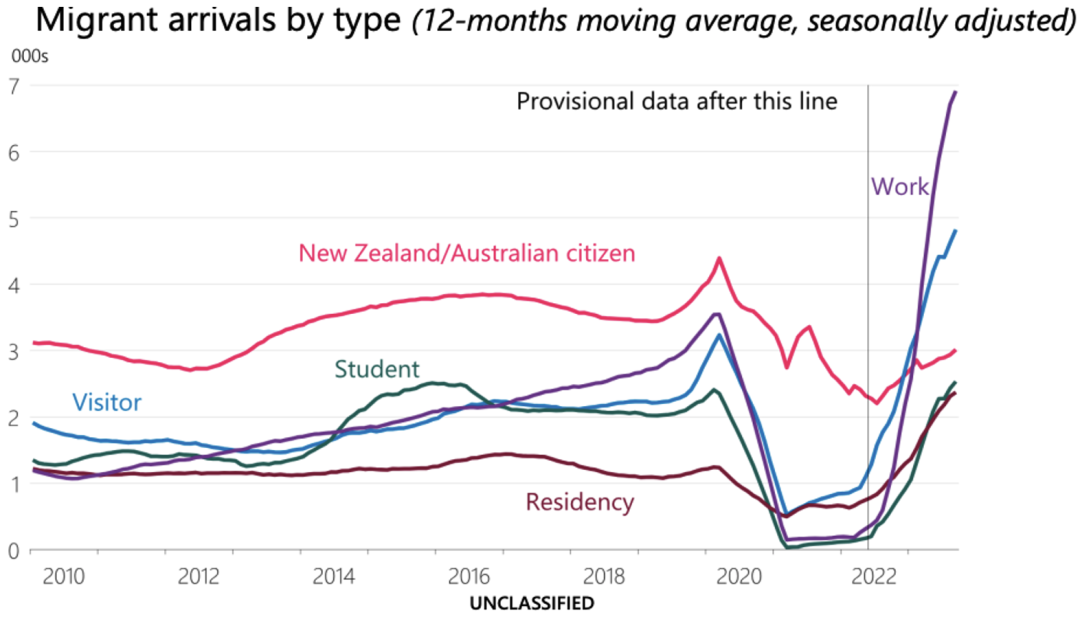
On the demand side, net migration, represented by the blue line in the chart below, has become an important source of housing demand.
Migrants need rental accommodation as soon as they arrive, helping push rents up by nearly 8–10% over the past 1 year. Net migration returned to its 2015–2019 levels around the start of 2023. Together with new housing supply peaking in the second half of 2023, this laid the foundation for house prices to bottom out and recover.
This means the recovery in house prices was supported almost entirely by demand for owner-occupied homes, particularly from first-home buyers.
Other, less important factors also added momentum, such as the National-led coalition's election victory. These may encourage investor activity, but have almost no effect on owner-occupied housing and played no significant part in house prices bottoming out.
 If prices do not rise in 2024, they will certainly rise sharply in 2025. The reason is simple: demand already exceeds supply, and interest rate cuts will inevitably come.
Here are some figures from New Zealand's largest real estate agency, Barfoot & Thompson: 956 homes were sold in November 2023, its highest monthly sales volume in 21 months and an increase of one-third on the same period last year.
The key feature of the November figures was the clear change in selling prices. The median price in November was $1,018,000, the highest in 8 months, while the average selling price was $1,185,000, the highest in 19 months. A total of 91 properties sold for more than NZ$2,000,000, the highest monthly number in 20 months. Of these, 24 sold for more than NZ$3,000,000, also the highest number in 20 months.
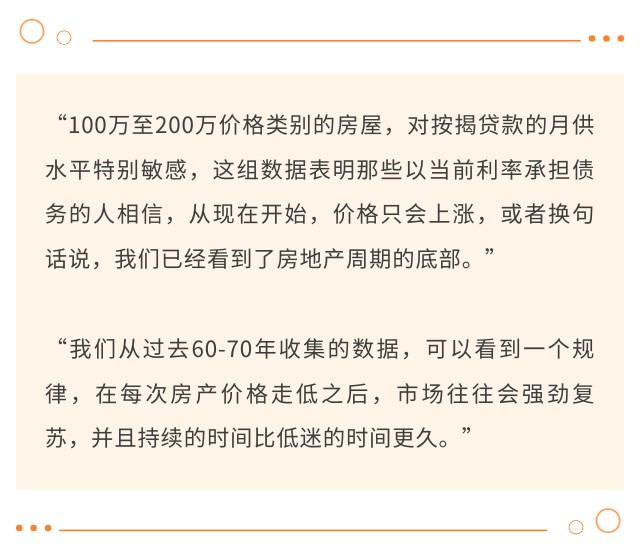
Barfoot & Thompson managing director Peter Thompson told the media:
 Barfoot & Thompson managing director: Peter Thompson
 The National-led coalition has released its policy statement for the new government. The bright-line period for property taxation is very likely to be substantially shortened from the current 10 years to 2 years, while interest deductibility will be restored in stages over the next 2 years.
Of these policies, restoring mortgage interest deductibility is particularly attractive to investors against a backdrop of steadily rising rents. Current policy shows no sign of a rapid tightening of immigration settings in the short term. Meanwhile, the new migrants who have continued to arrive over the past 2 years are bringing over their families as their lives and employment become more settled. Housing demand is strong, and investment property's ability to hedge against inflation will be fully reflected in the rental market.
Finally, the only uncertainty is New Zealand's interest rate policy. Although the Reserve Bank of New Zealand firmly stated in November that it would keep rates high to combat inflation, its concerns are largely driven by caution about rising rents. Domestic inflation has already fallen as expected.
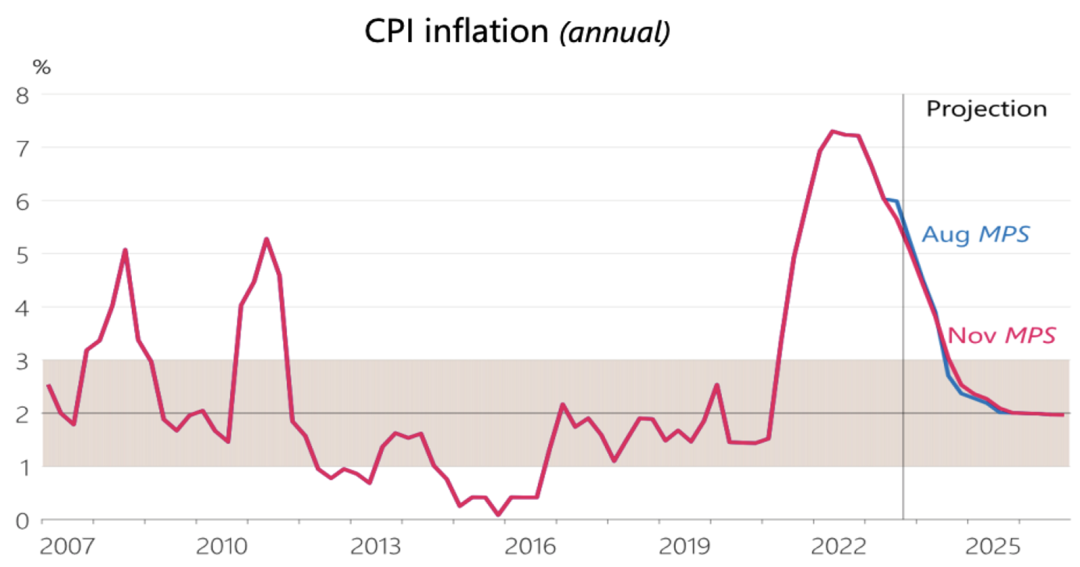
Inflation in the United States and elsewhere around the world is also moving in the desired direction. Markets expect the US federal interest rate to fall by 2.5% between now and 2025, with the policy rate reaching 3% by the end of 2024. Europe announced last week that its latest inflation figure for October had fallen to 2.4%, a substantial decline from 3.2% in September.
The global economy is interconnected, and there is no reason for New Zealand to stand apart. Markets are therefore rather dismissive of the Reserve Bank of New Zealand's monetary policy. For property, what fundamental difference would there be between interest rate cuts in 2024 and cuts in 2025? If there is any difference, it is merely a matter of a few months.
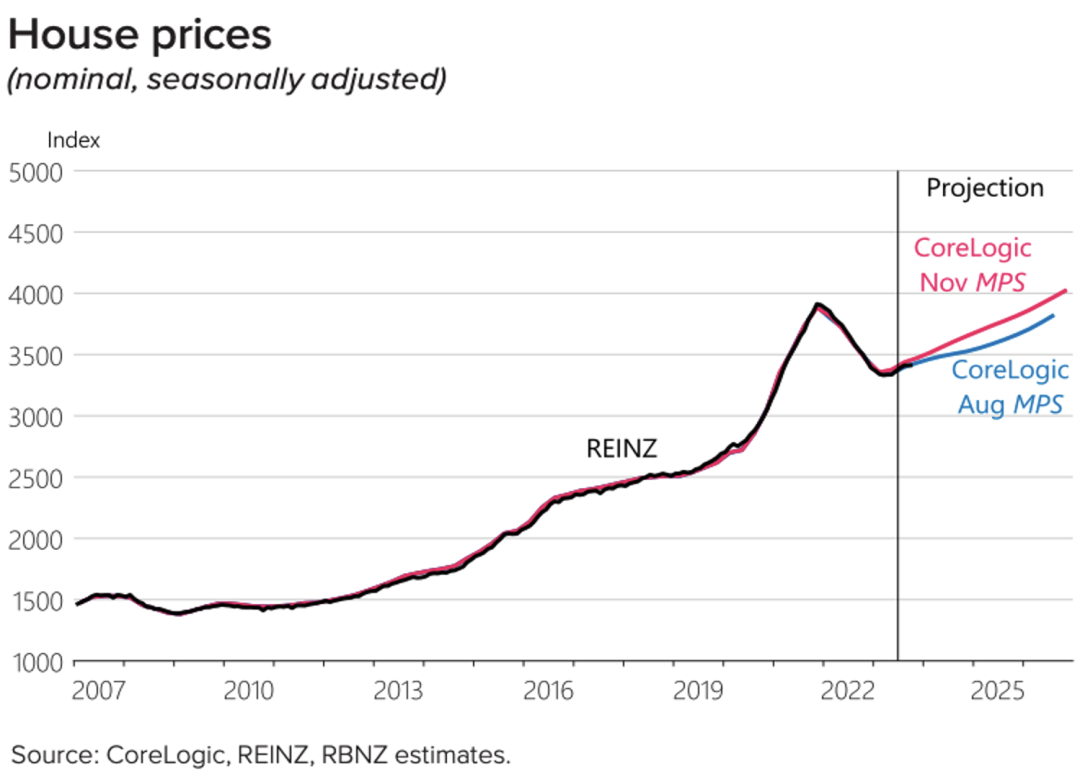
 In fact, the Reserve Bank of New Zealand itself raised its projected pace of house price growth in its November monetary policy document. This can be regarded as official confirmation of the upward trend in property prices:
We believe the Reserve Bank of New Zealand's firm stance on keeping interest rates high will bring a period of calm to the market.
Fear of high interest rates and mortgage pressures will persist, keeping buyers from developing a “fear of missing out”. Sellers under repayment pressure will have a liquid market in which to restructure their finances.
Summer has now begun. After the New Year holidays, New Zealand will enter its busiest selling season.
Sellers are listing in an active market and moving into homes that better suit them, while investors and migrants continue to enter the market and auctions are becoming increasingly busy. The greatest uncertainty has passed. For investors, this is a time when they can freely enter the market and choose.
To borrow the words of Barfoot & Thompson managing director Peter Thompson: “(From now on) a ‘normal’ market will emerge. This is a predictable cycle, and everything has started moving again.”
Barfoot & Thompson is the real estate agency that knows Auckland best
Barfoot & Thompson accounts for 1/3 of Auckland's home sales,
far ahead of all other real estate agencies.