
Will the property market face a prolonged period of slow growth in 2024? Are you ready? This week's key developments for investors
What choices should New Zealand investors make?

 Last week, property research firm CoreLogic released a report covering a range of indicators across New Zealand, including rents, house price changes, investment yields and average days on the market. The data covered both the country's strongest-performing property markets and its weakest. In fact, the figures show that the market's overall performance in 2023 was unremarkable. Even the area with the strongest median house price growth, Sunshine Bay in Queenstown, recorded an increase of just 7% over the past year. (Click to view the full report)
 Sunshine Bay, Queenstown
The report also made some important property industry forecasts for the year ahead. With the economy's capacity still limited, mortgage rates are unlikely to fall substantially before 2025, and debt-to-income limits will be finalised at some point next year. CoreLogic chief economist Kelvin Davidson said 2024 would be a year of “disappointing recovery for the property industry”. Property sales could rise by around 10%, but with such a low starting point, the actual increase would be very limited. Potential house price growth is around 5%, well below market expectations.
Conditions in the labour market will also make people more cautious about entering the property market. These could all be important factors behind a subdued economic outlook for 2024. Data released last week showed that gross domestic product (GDP) fell by 0.3% in the third quarter of this year, while second-quarter growth was also revised down sharply, leaving the figures well below general expectations. Reassuringly, however, the fall in GDP suggests there is more spare capacity in the economy than previously expected, putting downward pressure on inflation and significantly reducing the likelihood of an OCR increase during this cycle.
 Last week, the Reserve Bank of New Zealand released a report examining the interest rate framework over the decade since loan-to-value ratio (LVR) restrictions were first introduced in 2013. However, the report offered little further information of value, simply noting that a low-interest-rate environment had played a part in stabilising the mortgage market and financial system, and that other factors, such as interest rate levels, were also important. The report also noted that debt-to-income limits, potentially to be introduced in 2024, would further strengthen the system's resilience.
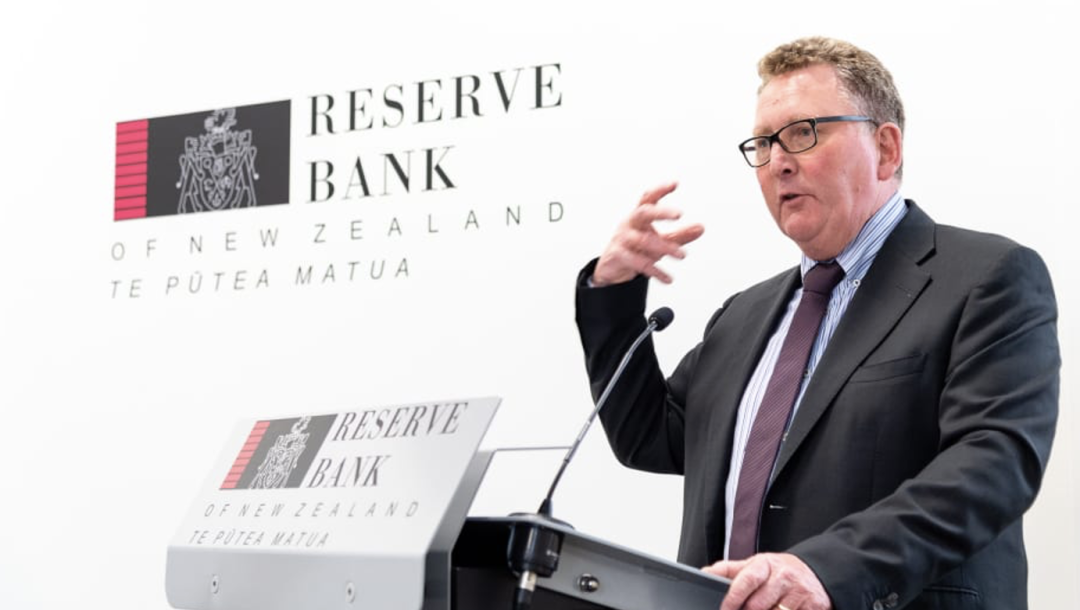 Reserve Bank of New Zealand Governor Adrian Orr
The Reserve Bank's responsibilities have also changed significantly. Previously, the Reserve Bank of New Zealand had a dual mandate: to achieve maximum sustainable employment while keeping inflation within a target range of 1% to 3%. After taking office, however, the new National-led coalition government amended the Reserve Bank of New Zealand's monetary policy mandate, removing consideration of the labour market and leaving the reduction of high inflation as its sole priority in the years ahead. Opponents argue that this policy could make the Reserve Bank overly “enthusiastic” about raising the OCR.
Data released by Stats NZ last week showed that New Zealand's net migration reached another record, totalling 129,000 in the year to the end of October. Although this change will not immediately affect property sales volumes or prices, its impact on rents is very clear, particularly with the number of homes available to tenants at a record low. Rents rose by 5.5% in the year to November. Although this was slightly below the increases seen in recent months, such as the 6–7% recorded from month 8 to October, it remained above the long-term average of 3%.
 According to the latest data, nationwide property sales in November this year rose by 19% compared with the same period last year, marking the seventh consecutive month of growth. However, sales in this upswing started from a 40-year low, so these high growth rates have not translated into substantial increases in actual transaction numbers. In other words, the market's recovery may still be a long, slow process.

There is only one key property-related data release we will be watching over the coming days: the Reserve Bank of New Zealand's mortgage figures for November, due on Thursday afternoon. Various signs suggest that borrowing activity has begun to recover slowly, including lending for home purchases, loan top-ups and switching banks. This week's figures are likely to continue that trend. However, recent data also shows that investors and owner-occupiers still face challenges obtaining low-LVR loans.