A slow recovery, back on track! Key factors to watch in New Zealand's property market in 2024
Where will the property market head this year? Let us explore the key factors below.



First, let us review QV's November house price figures. At the end of November 2023, the national average house price was NZ$914,017, up 2.3% over the preceding 3 months.
Auckland, the country's largest city, offers clear signs of a gradual market recovery. Its average house price was NZ$1,280,000, up 2.8% over the past 3 months. Although Auckland's house sales fell by 40% in 2022, they have since rebounded by 20%. Average time on the market has also fallen from 50 days to 39 days, while house prices have risen 5% since May 2023. Prices continue to rise, indicating that the market's slow recovery is continuing.
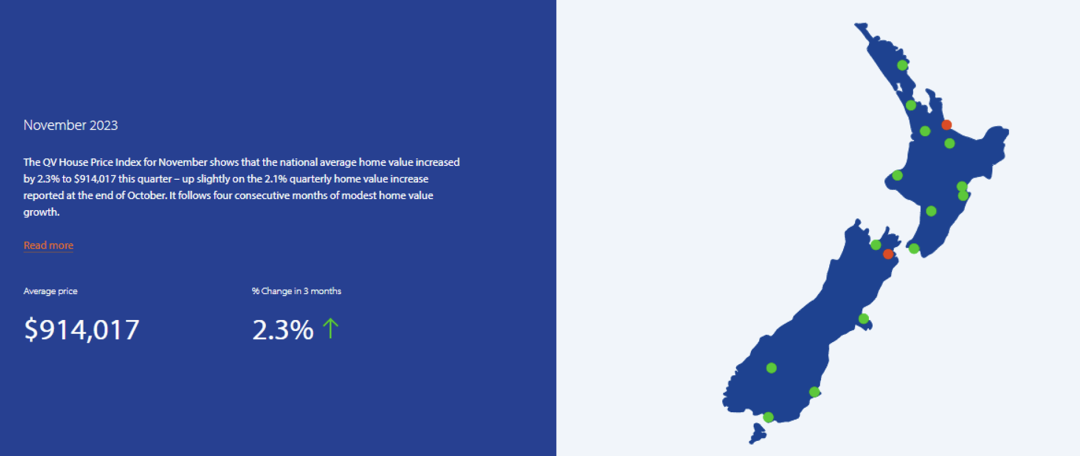
Similarly, Real Estate Institute of New Zealand figures show that the national median house price rose by nearly 4% in the 10 months to the end of October 2023, with most of that increase occurring after April.
Independent figures from OneRoof likewise show that the national average house price has risen 2.57% since prices bottomed out in July this year.
This trend provides a solid foundation for 2024. Will recovery and growth be the main themes this year?

Stats NZ figures show that net migration to New Zealand reached a record 128,900 people in the year to October 2023. For a country with a population of 5,100,000, this represents annual growth of 2.5%. Although population growth will ease in 2024, migration remains strong. The resulting sustained growth in housing demand could give the property market a substantial boost. Nearly 130,000 additional people will need around 40,000–50,000 homes. Although many newly arrived overseas migrants are unlikely to buy immediately, they will put pressure on the rental market, so rent increases in 2024 will be considerable. This will indirectly push more tenants into the home-buying market as first-home buyers (FHBs), so migration will accelerate the housing market's recovery.
Meanwhile, however, building consent numbers in the three months to month 10 of 2023 fell 28% from a year earlier. The supply of new homes is falling sharply from a record 46,000 to around 30,000, potentially creating another supply shortfall.
When housing supply fails to keep pace with demand from new migrants and other buyers, prices naturally respond to the fundamental relationship between supply and demand. Demand-driven price increases will also emerge in some areas.

Mortgage interest rates are another major influence on the housing market.
On one hand, wholesale interest rates have fallen sharply in recent months, with the two-year swap rate down around 35 basis points.
On the other, just before Christmas, the US Federal Reserve held the federal funds rate at 5.25% to 5.5%, while signalling a round of rate cuts. If it begins cutting rates in early 2024, this will undoubtedly encourage central banks around the world, including New Zealand's, to follow suit.
Meanwhile, GDP figures released before the holidays showed an unexpected contraction of 0.3%, with economic momentum also weaker than expected. A softening labour market will ease cost pressures from wage growth. Monthly price indicators also show that food prices fell 0.2% in November 2023 compared with October, suggesting inflation will fall below the Reserve Bank of New Zealand's expectations in the short term.
These factors could prompt the central bank to abandon its earlier hawkish stance and refrain from further rate rises. It is also expected to bring forward cuts to the Official Cash Rate (OCR) in 2024, potentially leading to several corresponding interest rate reductions.
In response to these changes, several major banks cut their two- and three-year mortgage rates before the Christmas holidays. ANZ's 3-year rate was 6.75%, while BNZ's was 6.79%. Although the cuts were modest, they offered some indication of the direction of interest rates in 2024.

The new government's tax policies for investors will also be introduced progressively and play an important role. These include restoring interest deductibility, shortening the bright-line test period to two years, easing the requirements of the Credit Contracts and Consumer Finance Act (CCCFA), and changing tenancy regulations. These policies will all encourage investors to return.
A labour market that remains strong and an unemployment rate close to historical lows also underpin the housing market's recovery. As for whether the DTI policy that has attracted market attention will be introduced, banks' internal test interest rates have long served a similar purpose, so whether DTI restrictions will curb home buying remains to be seen.


Finally, let us consider the various property forecasts for 2024. Before the holidays, major banks revised their house price forecasts for 2024, reflecting the powerful support that interest rates and migration provide for a housing market rebound:
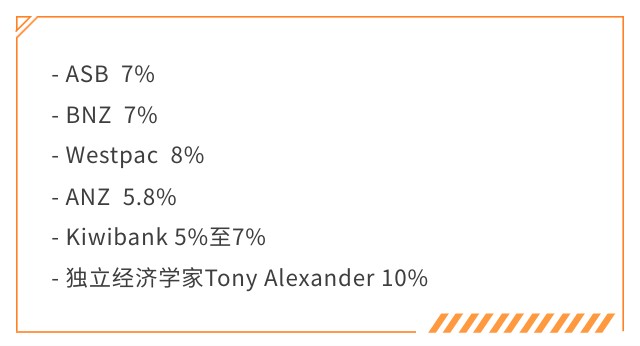
New Zealand began tightening monetary policy earlier than other countries, and its fixed mortgage terms mainly range from one to five years, so its adjustment and recovery are faster than in most countries. As the country's most populous city and a major destination for migrants, Auckland will see house prices rise more quickly, potentially approaching their pandemic peak in the second half of 2024. The ASB Housing Confidence Survey released at the same time showed that a net 34% of New Zealanders expected house prices to rise from current levels. This was the first time since April 2022 that those expecting price rises outnumbered those expecting falls.

Rapid population growth, declining new housing supply and inventory, confidence generated by expectations of interest rate cuts, and the introduction of new property policies and regulations will all help the property market continue its recovery and rise steadily in 2024.
The light at the end of the tunnel will encourage first-home buyers to get onto the property ladder and attract more investors and developers into the market. However, expensive homes, high interest rates and inflation, economic contraction and rising unemployment will continue to pose challenges to the housing market's recovery in 2024.