Shock figures: is New Zealand's construction industry facing its worst wave of insolvencies? The data reveals the industry's difficulties!
Recent reports suggest New Zealand construction companies are being liquidated at twice the rate of other businesses, with some warning that conditions could become even tougher for their survival. But is the market really that bad?
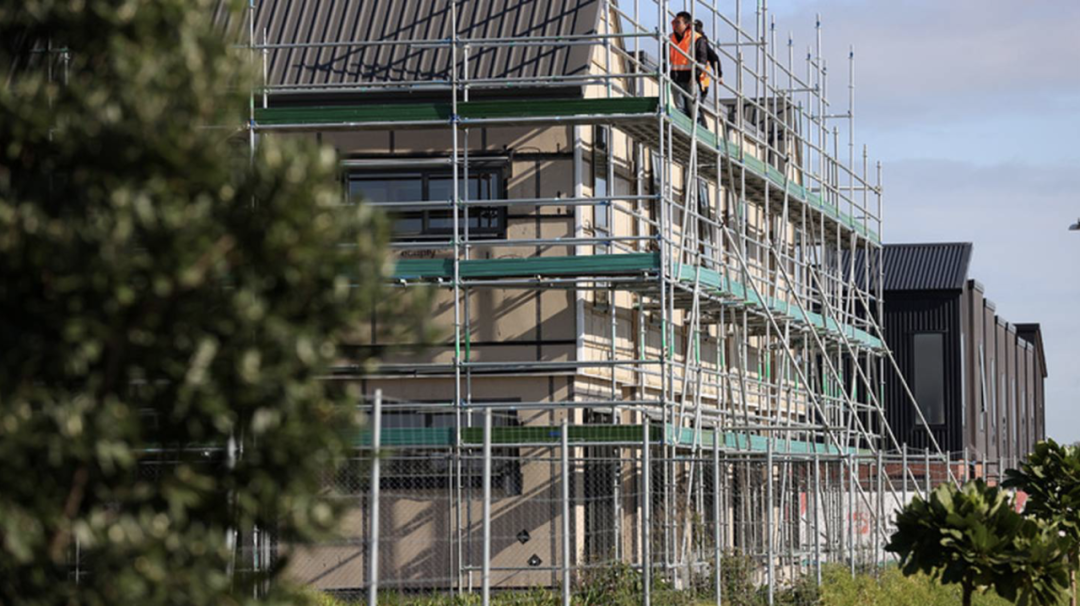

Centrix figures show that 99 construction companies nationwide were liquidated in the fourth quarter of last year, down from 118 in the third quarter and 132 in the second. Excluding the “other” category, real estate had the second-highest number of liquidations, with 57 companies liquidated in the fourth quarter.
Infometrics chief forecaster Gareth Kiernan agreed that the construction industry appeared to be facing difficult times. A quarterly Business Opinion survey found that 38% of construction company respondents had experienced overdue payments in the past three months and were waiting for debtors to pay. This was the second-highest reading since the global financial crisis.
 Infometrics chief forecaster Gareth Kiernan
Centrix figures show that construction company liquidations remained steady at between 50 and 80 per quarter in 2021 and the first half of 2022. In September 2022, however, the number exceeded 100 and has since remained between 100 and 130 per quarter. Centrix found that the number of construction company failures is currently 2.2 times the average for other industries.
Among construction businesses, non-residential building companies are the most likely to be liquidated. However, difficulties are widespread across the industry, with only residential building maintenance businesses recording a liquidation rate below the overall average.
Kiernan said that although the available data was not as bad as during the 2008/2009 financial crisis, he was already seeing signs of widespread pressure across construction. He expected conditions to become progressively tougher, as the sharp decline in building consent applications had yet to be reflected in projects already under way.

Professor John Tookey of AUT's School of Future Environments said many small businesses on the brink of collapse were facing the greatest difficulties. These construction companies often started with little working capital and lacked strategic depth in business formation, operations and finance, quickly exhausting their cash flow.
He also noted that another problem in construction was that most work, from building a single house to delivering major projects, was financed with money borrowed by builders. As borrowing costs rose, less money was available for construction, increasing the burden on businesses and perpetuating a “vicious cycle”.
 Master Builders chief executive David Kelly
 said the construction industry had experienced an “unprecedented cycle of boom and bust” over the past fifty years. Building consent applications reached a record high in 2021, surpassing pre-Second World War figures and driving a surge in demand for builders. Before that, residential construction had already grown for more than a decade, helping attract many newly established construction companies to the market. Since then, however, economic conditions had deteriorated sharply, particularly as prices and interest rates continued to rise.

Kelly said that, unlike the abrupt fall in workloads during the global financial crisis, this downturn had been gradual, giving businesses time to respond to risks. Unfortunately, some businesses had still been unable to adapt effectively to changing market conditions.
Kelly advised homeowners to avoid fixed-price contracts in the current high-inflation environment, seek advice from professional architects and enter contracts with staged payments. In practice, accurately calculating construction costs amid changing conditions was often difficult, putting entire projects at risk of falling through. Master Builders also strongly encouraged all homeowners to purchase building guarantees, which provided an efficient mechanism for resolving issues and protecting their investment if problems arose.

The Ministry of Business, Innovation and Employment this week released a forecast report on nationwide building and construction activity through to 2028. It said the industry was likely to stabilise, returning to pre-pandemic levels.
System strategy and performance manager Michael Warren said several survey indicators showed that post-pandemic demand for residential construction had been unprecedented, with building consents reaching record highs, but demand was now stabilising. His overall outlook for future workloads was positive. Short-term declines in various indicators in the report suggested that the pandemic's effects on construction were easing and the industry was returning to normal. He expected residential building activity to return to a level consistent with the industry's capacity, setting it on a more sustainable path, with supply and demand more closely balanced than before.