Exclusive analysis from a former immigration officer: employers and overseas workers caught in a work visa system beset by fraud and exploitation scandals
We invited experienced immigration lawyer and former immigration officer Sonny Lam to explain how migrants and employers can better protect themselves in this environment.


New Zealand’s immigration policy underwent major changes in 2022, seeking to introduce a “high-trust” model to streamline work visa processing. However, the model Immigration New Zealand adopted to improve efficiency was exploited by opportunists. According to RNZ, fraudulent agents and businesses secretly profited by selling fictitious jobs, earning millions of New Zealand dollars. A single job could sell in Asian markets for as much as NZ$10,000 to NZ$50,000, exposing a shocking black market. Immigration New Zealand evidently failed to give adequate consideration to how easily the rules could be abused, resulting in workers being defrauded and exploited.
Immigration lawyer Alastair McClymont was the first to bring this situation to public attention, describing it as evidence of abuse of the system’s rules. Despite repeated questions about whether Immigration New Zealand (INZ) was aware of the widespread fraud, its responses appeared not to address the issue directly, indicating inadequate official awareness and action.

The most obvious victims of these flaws in policy and implementation are migrants and their families who dream of finding work and a life in New Zealand. According to RNZ, many have been left in difficulty after paying large sums for jobs that did not exist. The stories are countless, ranging from homelessness to families left destitute. In 2023 alone, there were more than 2000 cases of workers seeking redress against accredited employers. RNZ said this could be just the tip of the iceberg. These cases reveal that migrant exploitation over the past year was more serious than before the pandemic.
Although countless news reports describe workers being defrauded, employers with genuine recruitment needs have also been deceived by recruitment agents seeking to profit as middlemen. They have hired candidates whose actual abilities do not match their CVs or what was promised, disrupting work and increasing costs.
According to a Chinese employer known to Sonny, they sought help from a recruitment agency during an acute labour shortage. After adding the employer to a recruitment chat group, the agency introduced numerous seemingly high-quality overseas workers whose CVs showed extensive experience and who answered questions fluently in video interviews. Once on site, however, they appeared to know nothing and needed step-by-step instruction even for the most basic construction work. This raised suspicions of fabricated CVs and coordinated coaching in interview answers.
After investigating further, the employer discovered that candidates in the recruitment group had paid the agency fees ranging from NZ$1000 to NZ$10,000. The agency did not care whether these jobseekers genuinely had the skills required for skilled migration. Its aim was plain: to collect per-person fees from people hoping to take a shortcut to immigration.
The result was a substantial increase in the Chinese employer’s working hours. Despite hiring staff and wanting to help them obtain visas, the employer still had no usable workforce during the busy season. When they tried to seek an explanation from the recruitment agency, they discovered they had been removed from the chat group and the agency had vanished.

In response to these problems, new Immigration Minister Erica Stanford plans to propose immediate reforms to the Accredited Employer Work Visa (AEWV), while beginning longer-term improvements to IT systems and policy. These reforms aim to build a more sensible, better-functioning immigration application system and prevent similar problems from recurring. Whether these efforts will be sufficient, and how they will be implemented, remains unknown.
While the Government was struggling to find the ideal solution, another exploitation allegation emerged, this time involving a company owned by an MP’s husband. According to Stuff and RNZ, Green MP Darleen Tana was suspended over allegations of migrant exploitation at her husband’s company. The Green Party immediately launched an independent investigation after receiving allegations that Tana may have had prior knowledge. Tana has not been a director or shareholder of the company involved since 2019. The incident added to a series of challenges facing the Green Party, which stressed that all overseas migrant workers should be treated with respect and dignity.
Sonny said migrant exploitation is a very serious allegation. Yet it now appears to have become common for work visa holders to claim they have been exploited. He said,
“As an experienced employment lawyer, I know there are always two sides to every story.”
The extensive negative publicity surrounding the employment of migrants will undoubtedly make life harder for overseas workers holding work visas. First, the negative coverage may make employers more reluctant to hire them. Second, Sonny has observed that those suffering the worst exploitation are often too frightened to speak out. Amid a mixture of true and false allegations, those most in need of help are often pushed into an even worse position.

For employers who need staff and workers with genuine abilities who want to migrate on the strength of their skills, this is undoubtedly a lose-lose situation. But they are not without options. Applications for accredited employer status can be expected to face stricter scrutiny, while work visa policies and assessment methods will inevitably change. Sonny, who has ten years’ experience in immigration litigation and previously worked as an immigration officer, therefore advises overseas workers seeking an AEWV to begin their applications promptly.
Sonny has found that, in their eagerness to obtain a Migrant Exploitation Protection Work Visa, a growing number of work visa holders are fabricating allegations in an attempt to secure advantages such as an open work visa without employer restrictions. This conduct causes difficulties for employers and can also create problems for employees when Immigration New Zealand (INZ) investigates. If allegations are found to be false, the work visa holder will usually face deportation, while the employer must bear substantial legal costs to defend themselves. Ultimately, nobody wins: this conduct wastes everyone’s time and resources and makes the problem worse. It is therefore important to take a long-term view when looking for solutions, because chasing quick gains cannot truly resolve the problem and may instead cause further losses.
He also emphasised that Immigration New Zealand (INZ) is investigating the entire work visa and employer accreditation process to ensure applicants can demonstrate a genuine need for work visa holders. This points to a central issue in immigration: whether the demand is genuine. Employers can also use legal advisers to access more reliable recruitment information and staffing resources.
|
He also reminded applicants to remain vigilant when pursuing migration opportunities and avoid paying for fictitious jobs out of eagerness to obtain a visa. Well-run, adequately funded businesses generally do not recruit overseas in ways designed to profit from workers. Applicants can consult official overseas recruitment platforms and try to minimise third-party involvement. Anyone who experiences unfair treatment locally should seek reliable legal assistance immediately. |
About the expert
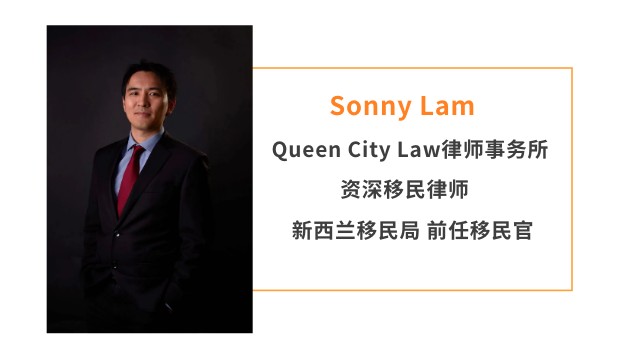
Sonny Lam is a consultant lawyer at Queen City Law. He has worked in employment and immigration since the last global financial crisis. He began in employment disputes before becoming an immigration officer at the Ministry of Business, Innovation and Employment, returning to private practice in 2015. He specialises in niche areas of immigration and employment law. His extensive experience spans clients ranging from major international businesses with New Zealand subsidiaries to individuals seeking to settle in New Zealand.
Scan the QR code to enquire for more information